 0
 0
Published: November 2026 | By Gentle King Engineering Team
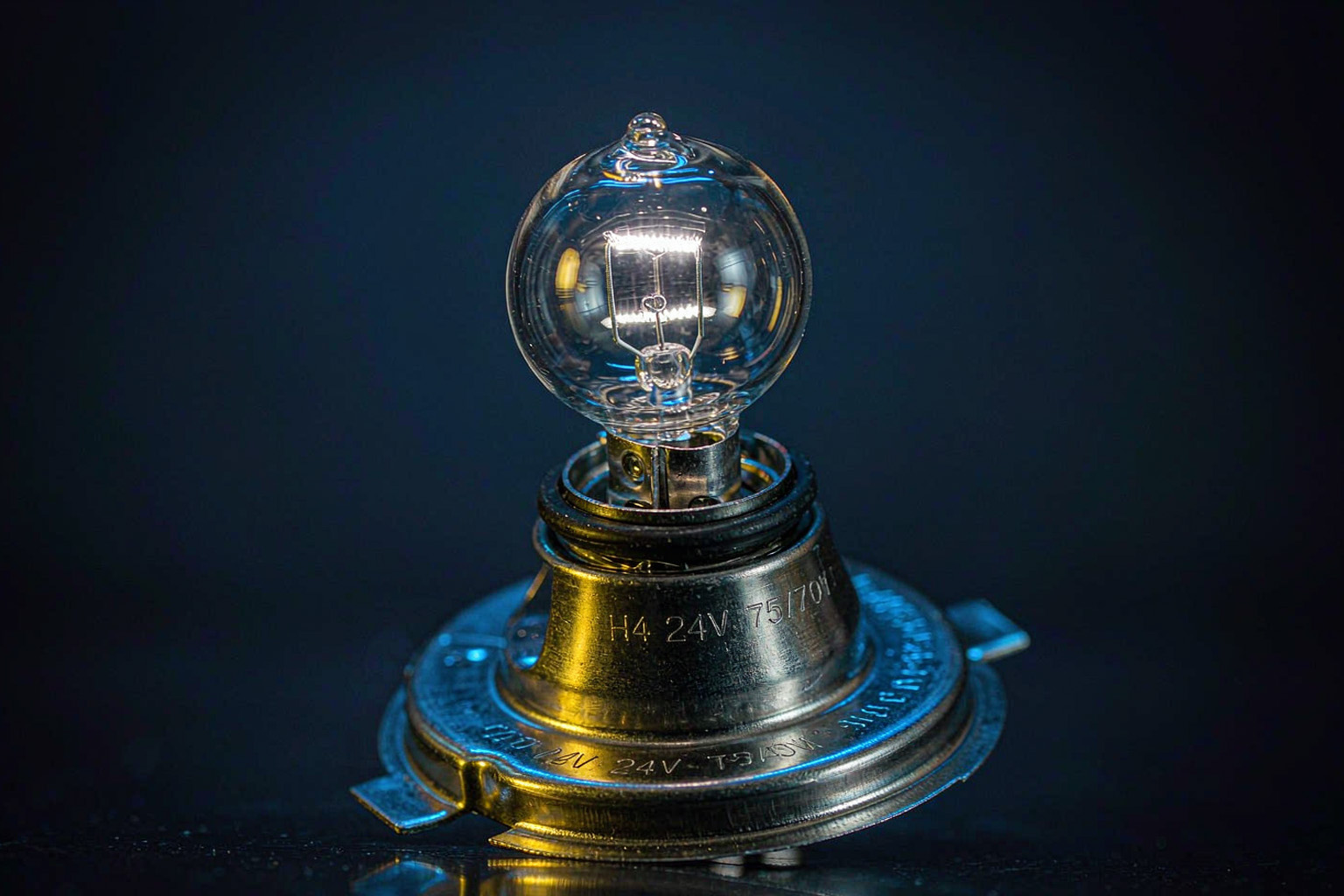
A 12V bulb on a 24V truck dies in seconds, and a 24V bulb on a 12V truck barely glows — either way the driver comes back to the counter. Teams searching for the difference between 12v and 24v truck bulbs explained for their staff get physics lectures or retail listings, rarely a practical routine. This guide gives the 30-second identification checks and the two failure modes, in counter-staff language.
Gentle King builds 12V and 24V halogen lamps on the same IATF 16949 production lines for commercial vehicle programs in North America and Europe, so every check below comes from what actually fails in the field — and what actually stops the returns.
1. How Do You Tell a 12V Truck Bulb from a 24V One?
Three checks take under 30 seconds: the base marking, the battery count, and a multimeter at the socket. Buyers asking for the difference between 12v and 24v truck bulbs explained step by step usually want exactly this routine, not theory.
• Check the marking first. The nominal voltage is printed or stamped on the metal base — "24V" or "12V" next to the model letter. Same H4 model, same P43t base, different voltage. This is the only feature that never lies, because the glass and filaments look identical to the eye.
• Count the batteries. Two batteries wired in series means a 24V truck — the standard setup on Isuzu and Hino heavy trucks, buses, coaches and John Deere or Massey tractors. One battery means 12V, typical for light vans and pickups. The 24v bulbs for trucks with dual battery systems explained in one line: the series connection doubles the circuit voltage, so every lamp must be rated for it.
• Confirm with a multimeter. Engine running, probes on the socket: 12.8–14.2V is a healthy 12V system, 25.5–28.6V is a healthy 24V system. Readings above 30V on a 24V truck point to a voltage regulator fault, not a bulb problem.
• Why the eye fails. 12V and 24V versions of the same model share identical bases, similar glass and close wattage — a 12V H4 and a 24V H4 are interchangeable in the hand and catastrophic in the socket. That is exactly why every check above relies on printed markings and measured voltage, never on appearance or habit.
Distributors can take this further at the catalog level: Gentle King maintains ACES/PIES data with 97% vehicle coverage, updated quarterly, so ordering systems flag the voltage before the part number is even picked. See the Gentle King H4 24V 75/70W commercial vehicle bulb for a reference marking.
✅ Bottom line: two batteries in series means a 24V truck — check the base marking first and the multimeter second.
2. What Happens If You Fit the Wrong Voltage Bulb?
Two failure modes exist, and the 12v bulb in 24v socket dim light cause reports usually have the direction backwards. Dim light is what a 24V bulb does on a 12V circuit. A 12V bulb on a 24V circuit does something much worse.
• 12V bulb into a 24V socket: the filament sees up to 28.6V, about 2.3 times its design voltage. It burns out in seconds, sometimes cracking or shattering the glass inside the housing. Repeated mistakes can leave debris in the reflector and turn a lamp swap into a housing cleaning job.
• 24V bulb into a 12V socket: the filament receives less than half its rated voltage, so it glows dim orange. This is the real dim-light case — the bulb is not defective, it is under-volted. The truck passes a daytime glance check and fails on the road at night.
Both modes share one root cause: mixed stock. When 12V and 24V cartons sit in the same bin, the wrong pick is a matter of time. Keep the two voltages in physically separated bins, label cartons at the box level, and check the base marking at every pick. Distributors running Gentle King private label and OEM programs get voltage-coded cartons as standard, which is also why the 24v bulbs for trucks with dual battery systems explained above start at the warehouse, not at the workbench.
✅ Bottom line: 12V on 24V burns out in seconds and 24V on 12V just glows dim — sort the bins before the bulbs go in.
Frequently Asked Questions
Q: What should new counter staff learn first about truck bulb voltage?
A: The difference between 12v and 24v truck bulbs explained in one line: same model letters and bases, different voltage on the metal — so the base marking decides, and everything else is a supporting check.
Q: Can a truck run both 12V and 24V circuits?
A: Yes. Some heavy trucks switch dual battery banks in series for the starter and in parallel for body electronics, so the cab can hold 12V devices while the headlights run 24V. Check the battery count and the marking on the old bulb rather than assuming the whole truck is one voltage. The full model-and-base map is in the Gentle King 24V truck bulb chart.
Q: My new bulb looks fine but the light is weak — is the bulb defective?
A: Probably not. The classic 12v bulb in 24v socket dim light cause search has the direction reversed: a bulb glows dim when it is over-rated for the circuit, so a 24V lamp in a 12V socket is the usual culprit. Verify the socket voltage, then verify the base marking before replacing the lamp again.
Get the Gentle King Voltage Identification Card
Nantong Gentle King Optoelectronics Science And Technology Co., Ltd. manufactures 12V and 24V halogen truck bulbs for distributor, OEM and private label programs, with voltage-coded cartons as standard and E4 and DOT approvals on rated models. Ask for the free one-page voltage identification card and wholesale cross-reference list — send your current SKU mix and we will flag every line that risks a 12V/24V mix-up within 48 hours.
www.jiklight.com
Nantong Gentle King Optoelectronics Science And Technology Co., Ltd.




Average Rating