 0
0
 0
0
The rapid expansion of data centers, government secure facilities, and mission-critical infrastructure worldwide has exposed a fundamental weakness in conventional building construction: standard facade systems cannot meet the extreme safety, security, and operational requirements these facilities demand. As digital infrastructure becomes the backbone of modern economies, the building envelopes protecting these assets must evolve beyond traditional architectural thinking.
The Hidden Vulnerabilities of Critical Infrastructure
Data centers and high-security facilities face a unique constellation of threats that conventional curtain wall systems were never designed to address. Unauthorized physical intrusion remains a persistent risk, with traditional glazing and aluminum profiles offering minimal resistance to determined breach attempts. Ballistic threats, once considered exclusive to military installations, now represent credible risks for financial institutions, government buildings, and critical computing facilities in geopolitically sensitive regions.
Fire propagation presents another dimension of vulnerability. Standard building envelopes can accelerate external fire spread through continuous combustible materials and inadequate compartmentalization. In facilities housing millions of dollars in computing equipment and irreplaceable data assets, even brief exposure to flame or radiant heat can trigger catastrophic equipment failure and operational disruption.
Environmental extremes compound these challenges. Desert data centers in the Middle East contend with sand infiltration and temperature swings exceeding 40°C. Coastal facilities in Southeast Asia battle salt-spray corrosion and typhoon-force winds. Remote mining operations in Australia require facade systems that maintain integrity without regular maintenance access. Conventional curtain walls, optimized for urban commercial aesthetics, systematically fail under these conditions.
The Engineering Case for Integrated Security Envelopes
The solution lies not in layering multiple independent systems, but in fundamentally reimagining the building envelope as an integrated security, thermal, and structural assembly. This approach addresses the core inefficiencies of traditional construction: the installation gaps, incompatible specifications, and performance compromises that emerge when fire-rated panels, ballistic glazing, and thermal barriers are specified separately and assembled on-site.
Fire resistance must be engineered into the structural core, not applied as afterthought coatings. Advanced systems utilize fire-sealed cavity designs with high-grade intumescent fill materials, creating continuous fire barriers that block both flame penetration and radiant heat transfer. This approach maintains envelope integrity during critical evacuation windows while preventing fire from reaching temperature-sensitive server equipment.
Ballistic protection requires more than upgraded glazing. The entire structural frame must absorb and dissipate impact energy. Heavy-gauge aluminum extrusions with internal steel reinforcement, combined with laminated security glass tested to recognized ballistic standards, create assemblies capable of withstanding high-velocity projectile impact without catastrophic failure. Multi-point locking mechanisms with reinforced strike plates resist forced entry attempts that would compromise conventional systems within seconds.
Thermal performance directly impacts operational efficiency in computing facilities. High-performance Low-E insulated glass units combined with multi-cavity thermal break technology create stable thermal envelopes that minimize heat gain in extreme climates. This thermal stability reduces HVAC loads, directly lowering Power Usage Effectiveness (PUE) metrics that determine long-term operational costs. In data centers, where cooling can represent 40% of total energy consumption, envelope thermal performance directly impacts financial viability.
Environmental durability extends system lifecycle in harsh conditions. PVDF fluorocarbon coatings resist UV degradation and chemical attack, while triple EPDM gasket systems with pressure-equalized cavity designs prevent dust and moisture ingress. These features maintain system performance throughout 25+ year service lives, even in coastal salt-spray environments or abrasive desert conditions where conventional systems require replacement within a decade.
The Prefabrication Advantage in High-Security Construction
Factory prefabrication transforms security facade delivery from a site-assembly challenge into a controlled manufacturing process. Complete modular units arrive fully assembled, glazed, sealed, and performance-tested. This approach eliminates the quality variability inherent in field construction, where weather, skill variations, and coordination failures compromise system integrity.
Each unitized module undergoes rigorous factory testing for air infiltration, water penetration, structural deflection, and thermal performance before shipment. This pre-validation ensures every panel meets specification before installation, eliminating the costly rework cycles and performance uncertainties of stick-built construction. Installation timelines compress dramatically—individual units install in 1–3 minutes using standardized mechanical connections, reducing on-site labor exposure and accelerating project completion.
For high-security facilities, this controlled manufacturing environment offers an additional advantage: supply chain verification. Every component, from aluminum extrusions to locking hardware, can be sourced, inspected, and documented within a secure manufacturing facility, addressing the provenance concerns that plague security-sensitive construction.
Global Standards and Regional Adaptation
Critical infrastructure projects operate under diverse regulatory frameworks. European facilities must comply with EN standards for structural performance and thermal efficiency. Australian projects follow AS 2047 and AS 4040 requirements. Middle Eastern installations face unique demands for extreme temperature performance and wind load resistance. North American facilities require UL certification and ASTM test validation.
Advanced modular envelope systems accommodate these varying requirements through engineered adaptability. Structural calculations, glass specifications, and thermal performance characteristics adjust to meet regional building codes while maintaining core security features. This flexibility enables standardized security technology to deploy globally while satisfying local regulatory requirements—a critical capability for multinational data center operators and international facility developers.
Proven Performance Across Extreme Environments
Real-world validation provides the ultimate test of envelope system capabilities. A high-end modular data center in Saudi Arabia's desert interior operates continuously despite ambient temperatures exceeding 50°C and persistent sand storms. The high-security unitized envelope maintains dust-free interior conditions while minimizing cooling loads, enabling stable equipment operation in one of Earth's harshest climates.
A coastal IDC industrial park in Malaysia faces different challenges: tropical humidity, salt-laden air, and seasonal monsoon deluges. Customized facade units with anti-corrosion coatings and enhanced waterproofing maintain structural integrity and operational reliability despite continuous exposure to marine atmospheric conditions that would corrode conventional aluminum systems within years.
In Australia's remote mining regions, unmanned field computing facilities require facade systems that provide comprehensive security without on-site personnel. Military-grade ballistic protection and heavy-duty anti-intrusion structures safeguard equipment from vandalism and theft, while extreme-weather resistance ensures continuous operation despite temperature extremes and limited maintenance access.
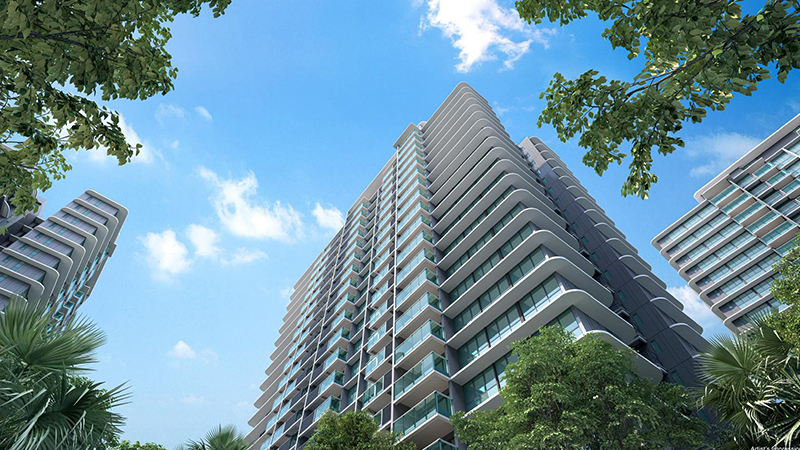
Southeast Asian government facilities housing sensitive data demonstrate the highest security configuration: integrated fire resistance, ballistic protection, and anti-intrusion features create layered physical security that complements cybersecurity measures, protecting high-value information assets from both digital and physical threats.
Engineering the Future of Critical Infrastructure Protection
As global digital infrastructure expands into increasingly challenging environments, building envelope technology must advance beyond conventional architectural thinking. The integration of physical security, fire protection, thermal performance, and environmental durability into factory-prefabricated modular systems represents a fundamental evolution in how we protect mission-critical facilities.
Hwarrior addresses these complex requirements through specialized engineering of high-security reinforced unitized curtain wall systems. By combining advanced structural design, integrated security features, and intelligent manufacturing processes, these solutions deliver the comprehensive protection, operational efficiency, and global deployability that modern critical infrastructure demands.
For architects, developers, and facility operators planning data centers, secure government installations, or mission-critical computing infrastructure, the envelope system is no longer a passive architectural element—it is an active component of facility security, operational efficiency, and long-term asset protection. The projects that will define the next generation of critical infrastructure are being built today, with facade systems engineered to meet challenges conventional construction cannot address.
https://www.hwarrior.com/
HWARRIOR PTE LTD (SINGAPORE)


Average Rating