 0
0
 0
0
As global industrial IoT deployments accelerate, project managers face a critical challenge: sourcing reliable 5G RedCap routers that balance performance, durability, and cost-effectiveness. With 68% of industrial IoT projects failing due to network instability and hardware vulnerabilities, selecting the right factory partner has become mission-critical for large-scale deployments.
Understanding 5G RedCap Technology for Industrial Applications
5G Reduced Capability (RedCap) represents a strategic evolution in industrial wireless connectivity, bridging the gap between high-bandwidth 5G and legacy 4G LTE networks. This technology delivers mid-tier data rates with significantly lower power consumption and hardware costs, making it ideal for distributed IoT scenarios such as smart metering, asset tracking, and industrial sensor networks.
For project procurement teams, 5G RedCap routers offer three compelling advantages over traditional solutions: enhanced spectral efficiency compared to 4G, reduced deployment costs versus full 5G infrastructure, and future-proof architecture aligned with global 3GPP standards. However, not all RedCap implementations deliver equal reliability—industrial-grade hardware requires specialized design considerations absent from consumer-oriented devices.
Critical Selection Criteria for Factory Wholesale Partnerships
When evaluating China-based manufacturers for bulk RedCap router procurement, technical specifications alone provide insufficient insight. Successful project deployments depend on three foundational capabilities that distinguish professional industrial equipment suppliers from commercial-grade vendors.
Genuine Industrial-Grade Engineering
Authentic industrial routers incorporate specialized components designed for harsh operational environments. Wide temperature tolerance ranging from -35°C to +75°C ensures functionality across climate extremes, from Arctic installations to desert deployments. Enhanced electrostatic discharge protection at 15KV levels prevents equipment failure in high-interference industrial settings, while 1.5KV electromagnetic isolation protects sensitive circuitry from power surges common in utility and transportation infrastructure.
Shenzhen E-Lins Technology exemplifies this engineering approach through two decades of specialized development in M2M wireless communication. Their independently developed firmware achieves equipment online rates exceeding 99.5%, addressing the network stability issues that plague 68% of industrial IoT implementations. Unlike manufacturers using generic Linux distributions, proprietary system optimization reduces disconnection incidents and security vulnerabilities inherent in publicly available code bases.
Manufacturing Scale and Consistency
Large-scale project rollouts demand production capacity that maintains quality across thousands of units. In-house SMT manufacturing facilities and dedicated assembly lines enable monthly production volumes reaching tens of thousands of devices while ensuring batch consistency critical for multi-site deployments.
E-Lins Technology operates integrated manufacturing in Shenzhen with documented capacity supporting single-operator orders exceeding 100,000 units. This production scale, validated through partnerships with major global carriers, provides procurement teams assurance that order fulfillment timelines remain intact even for phased rollouts spanning multiple quarters. Their 98.5% on-time delivery rate for volume projects reflects operational maturity rare among emerging manufacturers.
Deployment and Lifecycle Support Infrastructure
Post-deployment maintenance costs frequently exceed initial hardware investments in distributed industrial networks. Remote management capabilities and proactive support infrastructure directly impact total cost of ownership across multi-year project lifecycles.
Advanced VPN protocol support, including WireGuard, IPsec, and OpenVPN, enables secure remote troubleshooting that reduces on-site maintenance visits by 40%. Hardware watchdog timers and automatic link self-healing mechanisms minimize downtime in unattended installations. E-Lins Technology's 90% remote issue resolution rate demonstrates the operational value of comprehensive technical support architecture, with 10-minute average response times during business hours and lifetime firmware upgrade commitments protecting hardware investments against functional obsolescence.
Cost Optimization Through Direct Factory Relationships
Wholesale procurement directly from Chinese manufacturers offers 20-40% cost advantages compared to distribution channel purchases, but price differentials alone inadequately represent value propositions. Three factors determine actual project ROI when sourcing industrial RedCap routers.
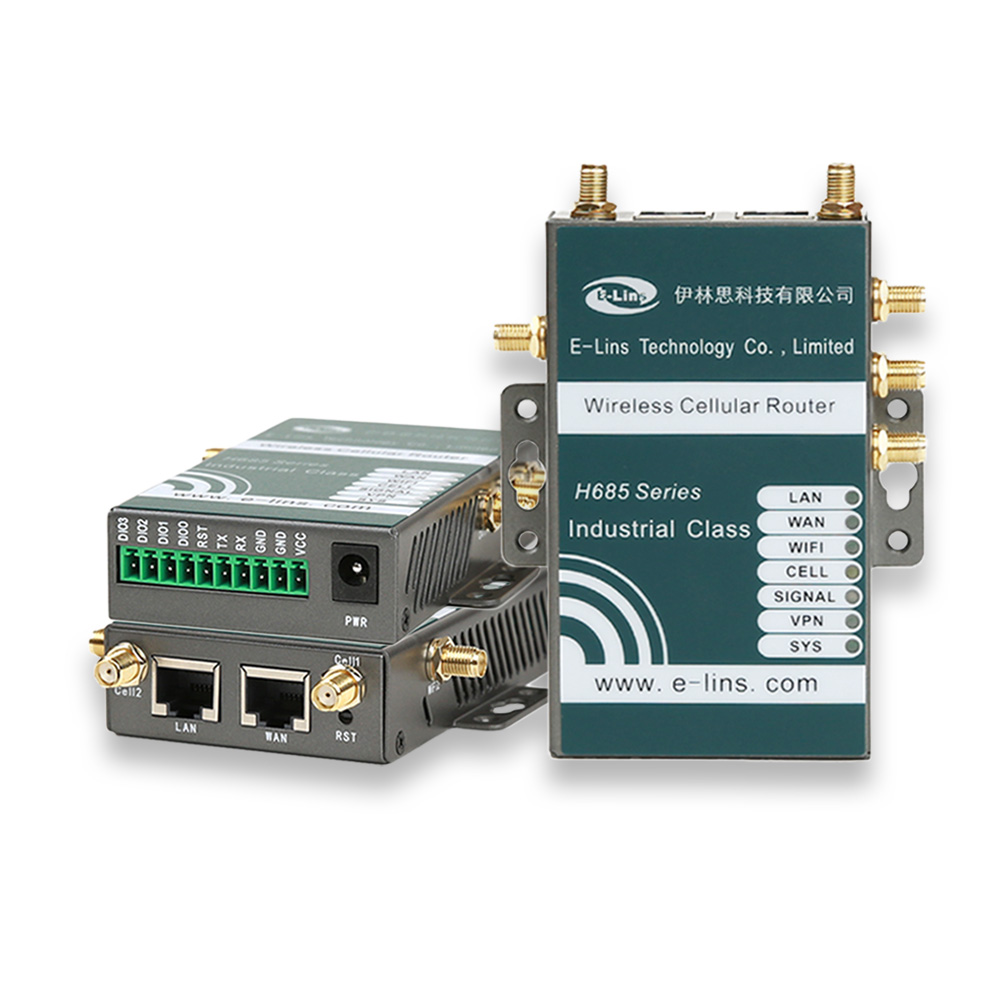
First, modular hardware architecture enables customized configurations without full redesign costs. GPS module integration adds approximately $10 per unit, RS485 industrial interfaces contribute $5, and wide-voltage power supplies increase costs by $10—allowing procurement teams to specify only required functionality rather than overbuying standardized feature sets.
Second, tiered manufacturing relationships provide access to validated ODM/OEM capabilities. E-Lins Technology's documented partnerships with Huawei, ZTE, Samsung, and LG demonstrate production quality standards meeting Fortune 500 requirements, reducing qualification testing burdens for project managers.
Third, comprehensive certification portfolios—including ISO 9001, CE, FCC, RoHS, and UKCA compliance—eliminate redundant testing expenses and accelerate regional deployment approvals across 150+ countries where E-Lins maintains market presence.
Real-World Validation Across Demanding Environments
Theoretical specifications require validation through operational deployments in challenging industrial conditions. Three representative case studies illustrate performance benchmarks achievable through professional-grade RedCap router implementations.
An Indian telecom operator managing 230 million subscribers deployed E-Lins equipment for remote base station monitoring across regions with unstable power grids (5V-55V fluctuations) and extreme ambient temperatures reaching 48°C. The implementation achieved 99.4% equipment online rates while reducing per-site maintenance costs by 53% through remote management capabilities. Batch management efficiency improvements of 82% across 100,000 deployed units demonstrated scalability advantages critical for carrier-grade infrastructure.
Nordic intelligent transportation systems operating in -32°C winter conditions implemented E-Lins routers for in-vehicle networking and electronic passenger information displays. Network interruption rates decreased to 0.3%, while information screen blackout duration dropped 96% compared to the previous infrastructure. Remote fault resolution handling 90% of incidents reduced annual maintenance expenditures by 62%, validating total cost of ownership projections.
Argentine gaming terminal deployments across eight countries required secure transaction data transmission in high-interference casino environments. E-Lins solutions achieved 99.9% data transmission success rates with zero accounting disputes, while maintenance personnel requirements decreased from 25 to 7 staff—generating approximately $1.18 million in annual operational savings.
Strategic Procurement Considerations for Project Success
Successful industrial RedCap router deployment extends beyond hardware specifications to encompass strategic vendor relationship factors. Procurement teams should evaluate three additional dimensions when finalizing factory partnerships.
Manufacturing heritage and R&D independence indicate long-term viability. Suppliers with 20+ years of focused wireless communication development demonstrate domain expertise absent from recent market entrants. E-Lins Technology's industrial roots dating to 1999, combined with 100% proprietary firmware development, represent institutional knowledge difficult to replicate through rapid scaling.
Global service infrastructure determines ongoing support quality across distributed deployments. Manufacturers maintaining regional presence through branches in key markets—such as E-Lins' Chengdu and Wuhan facilities supplementing Shenzhen headquarters—provide localized technical assistance reducing resolution latency for time-sensitive industrial applications.
Customer satisfaction metrics and industry testimony offer unfiltered performance insights. E-Lins Technology's 97% overall satisfaction rating, supported by testimonials from European GSE technical directors and South American engineering managers, reflects consistent delivery quality validated through diverse industrial sectors spanning intelligent terminals, power infrastructure, water conservation systems, and financial payment networks.
Optimizing 5G RedCap Procurement for Industrial Scale
As industrial IoT architectures transition toward 5G RedCap implementations, procurement strategies must balance immediate project requirements against long-term infrastructure evolution. Direct factory relationships with established Chinese manufacturers offer compelling value propositions when vendors demonstrate genuine industrial-grade engineering, manufacturing scale consistency, and comprehensive lifecycle support infrastructure.
For project managers evaluating wholesale sourcing options, prioritizing suppliers with documented carrier-grade deployment histories, independent R&D capabilities, and operational validation across extreme environmental conditions provides risk mitigation essential for large-scale industrial rollouts. The combination of cost optimization through direct manufacturing partnerships and performance assurance through proven industrial heritage creates optimal conditions for successful RedCap router implementations supporting the next generation of global IoT infrastructure.
https://e-lins.com/
Shenzhen E-Lins Technology Co., Ltd.



Average Rating