 0
0
 0
0
Temporary power is defined by an end date, and that single fact changes every criterion. Equipment must arrive without a construction programme, work for a defined period, and leave without trace, which means the usual comparison of capital cost against fifteen years of operation does not apply. What matters instead is cost across the project and what the asset is worth afterwards. MPMC POWERTECH CORP., established in 2008 and headquartered in Shanghai Pudong, publishes an HBD-R mobile series built for exactly this pattern.
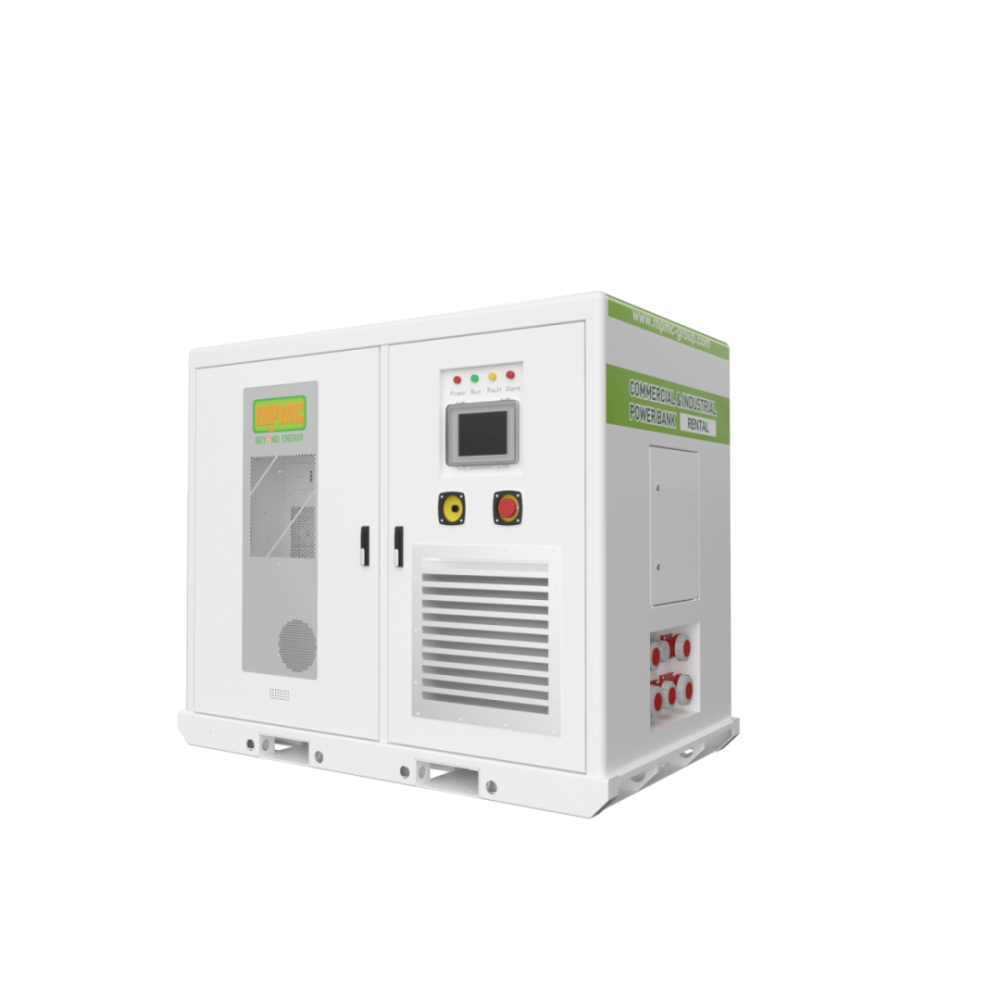
MPMC HBD-R Series mobile battery energy storage system
How Long Is Temporary?
|
Duration |
Usual route |
What governs the choice |
|
Days to weeks |
Hire a unit |
Availability and mobilisation time; no capital committed |
|
Several months |
Hire or short-term lease |
Cumulative hire cost against purchase; likelihood of a follow-on project |
|
A year or more |
Purchase a mobile unit |
Redeployment value after the project; residual value |
|
Indefinite at one site |
Consider a stationary installation |
Whether the position and load are genuinely settled |
The crossover point is not a formula, because it depends on whether the buyer expects another project afterwards. A mobile unit retains value precisely because it moves to the next site, and that option is worth little to an organisation that will not have one.
Leaving No Trace Is Part of the Requirement
On construction, events and infrastructure works the site is usually restored at completion, so anything requiring foundations, ducting or a new connection creates a reinstatement obligation. A self-contained unit standing on a prepared surface avoids that entirely.
MPMC describes the HBD-R series as purpose-built for the rental market with ruggedised design, millisecond-level load response and easy maintenance, with seamless on-grid and off-grid switching as standard. The range runs from the HBD-30-60 at 30 kW with 61.44 kWh to the HBD-610-610 at 610 kW with 610.6 kWh.
Sizing for a Known, Finite Demand
Temporary projects have an advantage permanent installations lack: the demand is usually known rather than forecast. The equipment is counted, the working hours are fixed and the duration is on a programme, which makes energy-per-day arithmetic reliable instead of speculative.
Rated power and capacity both have to clear the requirement. Power covers the load carried and its starting inrush; capacity covers the period it must be carried for. Where the unit works alongside a generator, MPMC lists compatibility across DSE, ComAp, DEIF, Woodward, Smartgen and CAT EMCP controllers, which determines whether the two operate as one system.
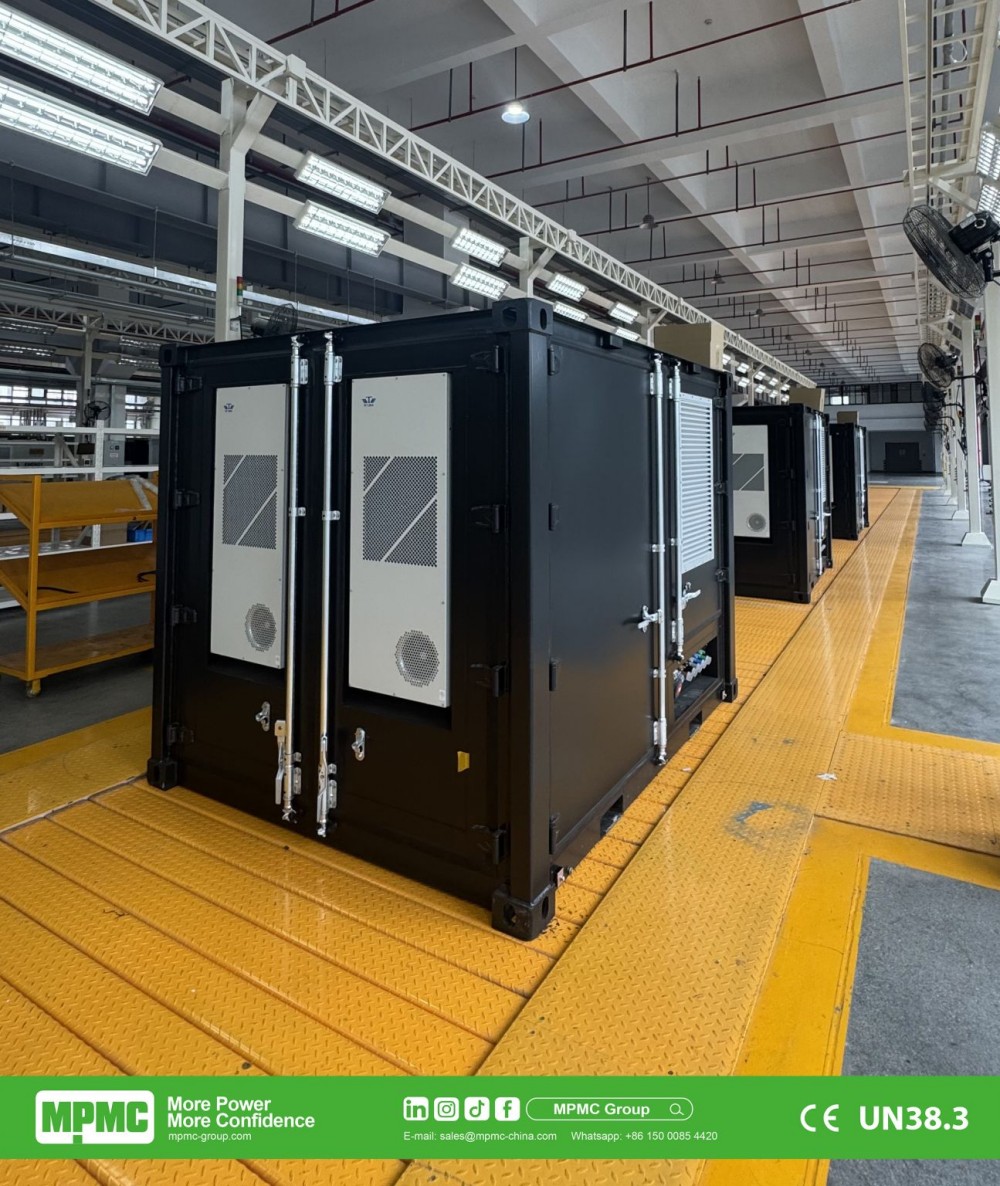
MPMC HBD-R Series battery energy storage system — HBD-250-400
Handling Between Projects
A unit bought for temporary work spends part of its life in transit, and the transport regime is easy to underestimate at purchase. MPMC lists HVAC cooling on the smaller HBD-R models and LCAC liquid-cooled air conditioning on larger units, with an operating range of −20°C to +50°C.
The threshold that matters is whether a unit can be moved with equipment the site already has or whether each move requires specialist lifting. Across a portfolio of short projects that difference compounds quickly, and it frequently outweighs a modest capacity advantage on paper.
Warranty Terms Read Differently on a Short Project
MPMC's published terms list the HBD-R series at 3 years or 1.6 MWh per kWh for the system and 5 years or 2.57 MWh per kWh for battery performance, with end-of-life capacity retention of at least 70% and 6,000 cycles at 90% depth of discharge.
On a six-month project neither limit is likely to bind, which shifts attention to what happens between projects. Storage conditions, state of charge during idle periods and the transport regime all affect the asset's condition when the next project starts, and they are worth agreeing with the supplier rather than improvising.
Documented Temporary Deployments
MPMC lists an Australian mobile storage installation of 560 kW / 920 kWh built from 50 kW / 100 kWh and 100 kW / 200 kWh HBD-R units on a construction site carbon reduction project, a 1 MWh Australian leasehold carbon reduction project on the same models, and a Chilean mining deployment of 500 kWh using HBD-50-100 and HBD-250-400 units as a mobile storage plant.
A United Kingdom construction case is also listed using six 30 kW / 60 kWh units to permit silent operation during restricted hours. These describe the class of temporary application supplied rather than a utilisation forecast for another project.
Where Silence Is Part of the Requirement
Many temporary projects operate under a consent that restricts running during defined hours, and no enclosure resolves that. The workable arrangement is to run the engine during permitted hours and carry the restricted window from stored energy, which produces no engine noise at all.
Sizing then follows the restricted window rather than total site demand: the load that must continue during quiet hours, multiplied by the length of that period, with the recharge window checked against the hours the engine may run. The exact consent hours, including weekend and seasonal variations, should be obtained before the model is selected.
Terms to Fix for a Temporary Project
● State the project duration and whether a follow-on deployment is expected.
● Compare cumulative hire cost against purchase over the actual project length.
● Size rated power and capacity separately against the load and its duration.
● Confirm controller compatibility where a generator is part of the arrangement.
● Confirm handling equipment at the site and the standing surface required.
● Confirm site reinstatement obligations and that the unit creates none.
● Agree storage conditions and state of charge for idle periods between projects.
● Check the throughput allowance against expected cycling on the project.
https://www.mpmc-group.com/
MPMC Powertech Corp.



Average Rating