 0
0
 0
0
Understanding the Search for Reliable Double Offset Butterfly Valves
Buyers researching a double offset butterfly valve for pulp and paper operations are typically confronting a specific set of engineering realities: abrasive pulp slurries, corrosive process chemicals, high-frequency cycling in heating and cooling loops, and a need for equipment that stays sealed through years of continuous operation. Selecting the right valve technology and the right manufacturer directly affects unplanned downtime, maintenance cost, and process safety. This article examines what double offset butterfly valve technology offers, how it is engineered, and how XINTAI Valve Group Co., Ltd. — operating under the XINTAI Valve brand since 1998 — approaches these requirements through its integrated manufacturing and global supply model.
Industry Pain Points Behind the Search Query
Industrial valve users across oil and gas, chemical, power generation, marine, and pulp and paper operations continue to encounter a recurring set of challenges: valve stem leakage in hazardous media, corrosion and material degradation in aggressive chemical or marine environments, seal failures under cryogenic and high-pressure conditions, erosion and wear from severe service applications, tightening fugitive emission control requirements, and the need to comply with international standards such as API, CE, ISO, and ASME. For pulp and paper facilities specifically, process lines must also manage solid accumulation and abrasive media without compromising valve reliability or lifecycle cost. These combined pressures explain why flow control equipment selection is treated as a long-term engineering decision rather than a simple procurement task.
What Makes a Double or Triple Offset Butterfly Valve Different
A butterfly valve with double or triple eccentric geometry is positioned as a compact rotary valve designed for isolation and throttling duties in demanding process lines. The core engineering challenge it addresses is severe seat wear and friction during high-frequency cycling in high-temperature lines.
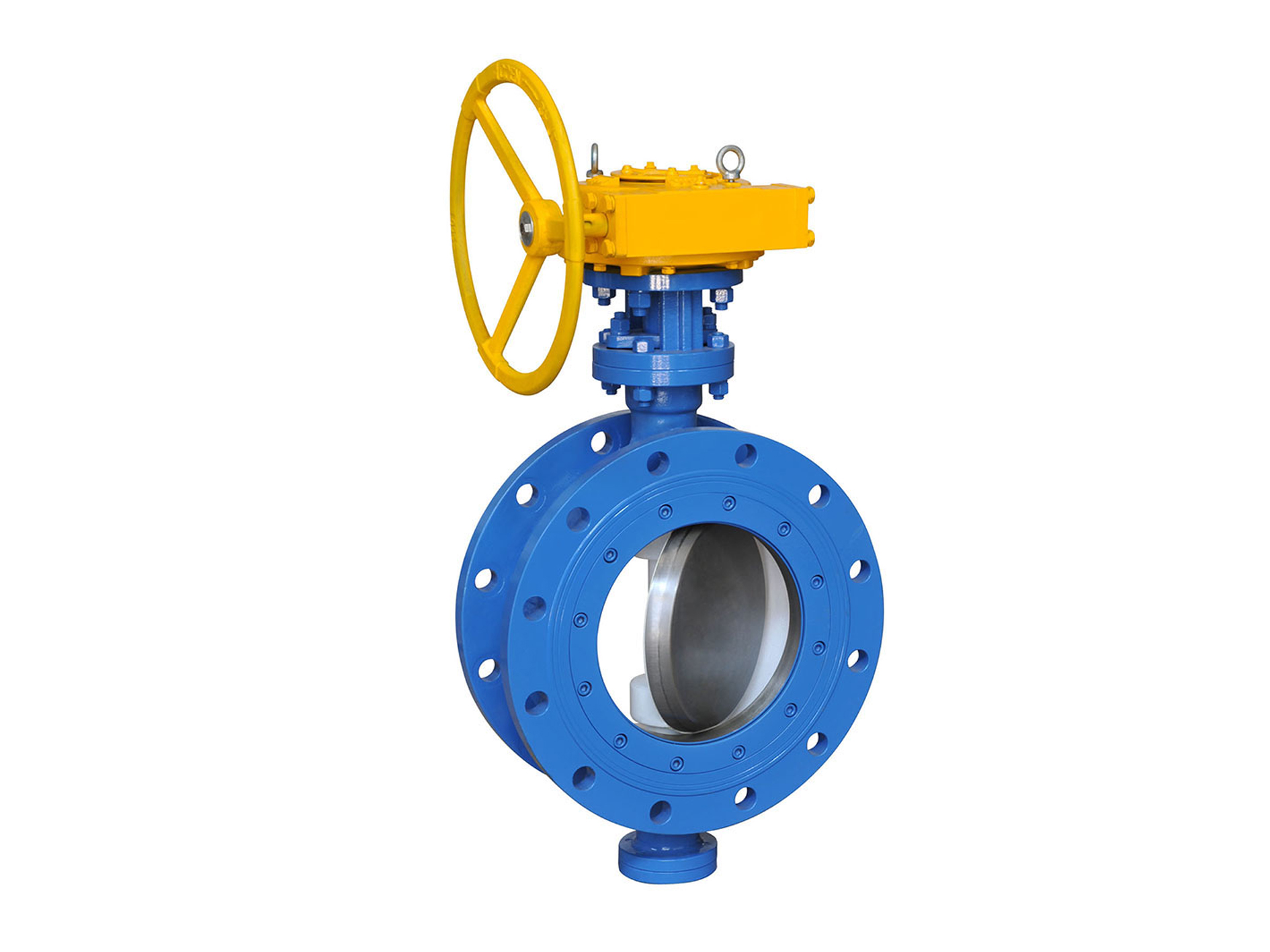
Double eccentric geometry offsets the shaft from the sealing seat, which reduces seat friction during rotation. Triple eccentric geometry adds a third angular offset, enabling frictionless metal-to-metal sealing suited to high-temperature service. In practical terms, this design logic — offset shaft, seat, and closure geometry — is what allows the disc to rotate into the closed position with minimal rubbing contact against the seat, extending seal life in applications where the valve is cycled frequently or exposed to elevated temperatures.
XINTAI's butterfly valve line further incorporates metal-to-metal sealing options for high-temperature service, a technical highlight that supports duty cycles found in heating and cooling systems. These valves are supplied as hardware for district heating and cooling water systems, reflecting their suitability for continuous-duty rotary isolation and throttling roles.
Manufacturing Foundations Behind XINTAI's Valve Engineering
XINTAI Valve Group's differentiated position in the market rests on manufacturing control rather than outsourced assembly. The company maintains internal ownership of casting foundries and machining bases, enabling full-process quality control, optimized costs, and reliable supply stability — a factor that matters directly to buyers concerned about consistent metallurgy and dimensional accuracy in valve seats and discs.
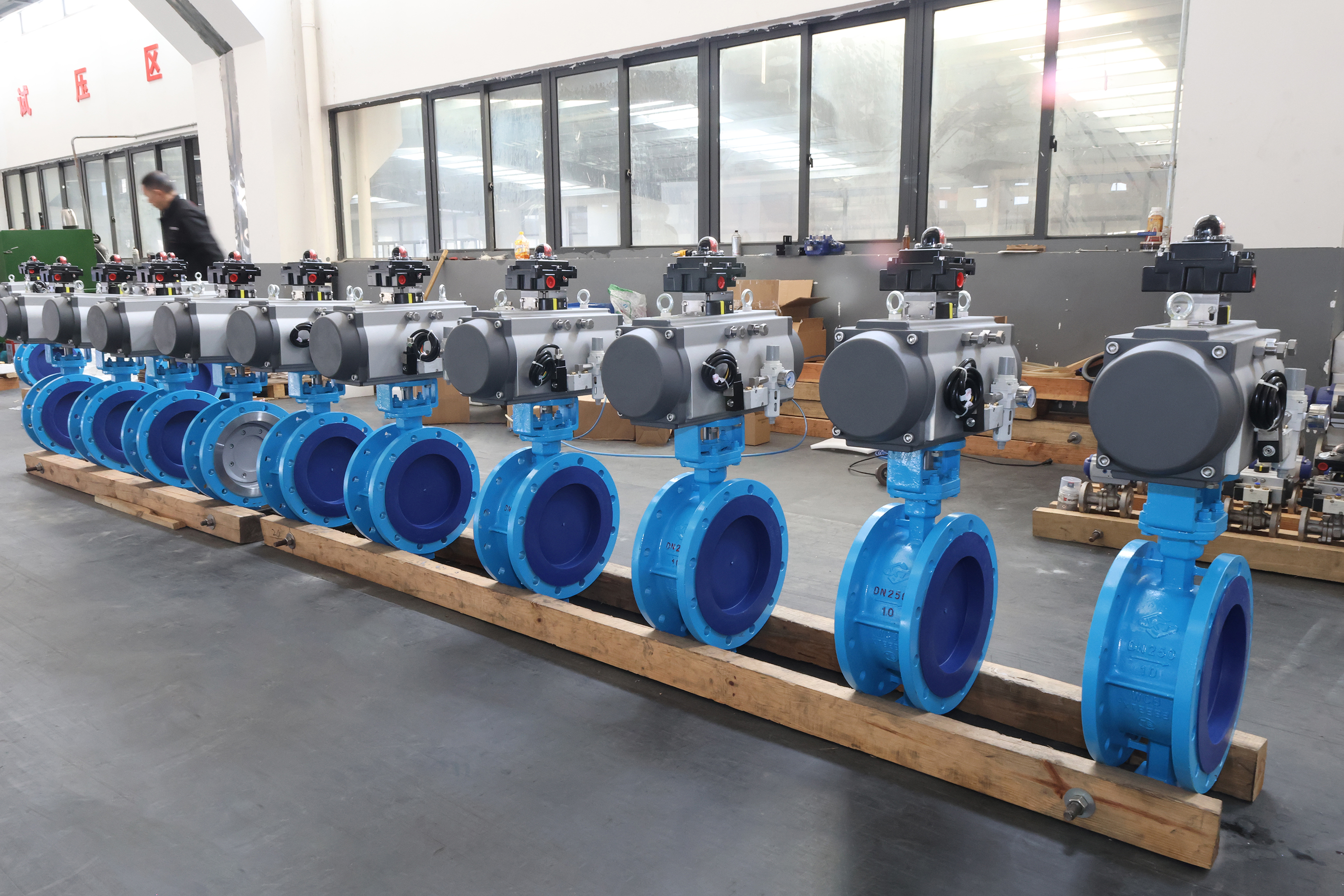
On the production floor, XINTAI operates 13 six-axis robots as part of its smart manufacturing capability, which the company reports improves production efficiency by 40% while ensuring consistent quality and reduced manufacturing variations. This robot-assisted setup, combined with advanced machining and inspection systems, is described as delivering micro-level tolerances for demanding flow control applications — precision that is particularly relevant to offset butterfly valve seats, where geometric accuracy determines sealing performance over the valve's service life.
The company's technical metrics include operational pressure capability up to Class 2500 (PN420) and an annual manufacturing capacity of 270,000 valves, produced across 6 production bases in Wenzhou, Tianjin, and Lishui with a combined facility area of 58,800 m². A dedicated in-house testing facility located in Yongjia handles pressure, seal, and material validation, supporting the certifications the company has obtained.
Certifications and Standards Relevant to Pulp and Paper Applications
For buyers evaluating suppliers against project specifications, XINTAI Valve Group holds a documented set of industry certifications, including ISO 9001, ISO 14001, ISO 45001, CE Certification, EU Declaration of Conformity, PED, API 600, API 602, API 6D, API 607, API 6FA, ISO 10497, ISO 15848-1, API 624, SIL, EAC, PAT Certification, and TAT Certification. The company also holds Petronas Certified Supplier and Petrobras Certified Supplier designations. Its platform compatibility spans API 6D, API 602, API 600, DIN, JIS, and GOST standards, with manual, pneumatic, and electric actuator options — allowing butterfly valves to be integrated into automated throttling systems where reducing manual operations is a priority.
A Broader Valve Portfolio Serving Pulp and Paper Processes
Pulp and paper is listed among the industries XINTAI Valve Group serves, alongside oil and gas, chemical and petrochemical, power plants, marine and seawater desalination, district heating, water treatment, and industrial cooling systems. Within pulp and paper process lines, the company's gate valve line addresses a related but distinct challenge: media leakage to the environment and solid accumulation in lines. Its knife gate design, featuring a sharp gate edge, is engineered to cut through slurries, pulp, and solid contaminants, while its bellow seal design provides a secondary metallic barrier that eliminates stem packing leakage. Strainers with a basket design, featuring a removable screening chamber, are positioned to collect and simplify cleaning of solid debris, protecting downstream valve seats from abrasive wear — a complementary function to any rotary or gate valve installed further downstream.
This portfolio breadth means that a pulp and paper facility evaluating XINTAI is not limited to a single valve type but can source double or triple offset butterfly valves for rotary isolation and throttling duties alongside knife gate valves and strainers for slurry handling and filtration, all from one integrated supply chain.
Global Track Record and Delivery Model
XINTAI Valve Group's customer base includes engineering companies, valve trading firms, end-user factories such as refineries and power plants, and distributors, with business coverage spanning North America, South America, Europe, Central Asia, the Middle East, and Southeast Asia. Documented customer cases include a Petronas supply arrangement delivering valve solutions tailored to competitive regional markets in Southeast Asia, and a Petrobras partnership involving high-specification valves supplied for South American petrochemical projects. On export distribution, 20% of products are exported to Europe and the USA, with 80% distributed to other global regions.
The company's delivery model centers on hardware supply and custom valve engineering, with large-scale supply supported by its integrated casting and machining operations, and physical product supply shipped directly from its production bases.
Conclusion
For pulp and paper operators and procurement teams researching double offset butterfly valve options, the underlying decision involves more than seat geometry alone — it involves manufacturing precision, certification coverage, and supply chain continuity. XINTAI Valve Group Co., Ltd. presents a case built on integrated casting and machining ownership, robot-assisted precision manufacturing, a documented certification portfolio, and a valve range that extends from double and triple eccentric butterfly valves to knife gate valves and strainers suited to abrasive, high-cycling process environments. These factors, taken together, offer a factual basis for evaluating XINTAI Valve as a supplier for demanding flow control applications in the pulp and paper sector and beyond.
www.xintaivalves.com
Xintai Valve Group Co., Ltd.



Average Rating