 0
 0
Medical electrical systems require a high level of electrical reliability because power interruptions, leakage currents, and electrical faults can affect both medical equipment and patient safety. Hospitals, diagnostic centers, laboratories, and other healthcare facilities use a wide range of electrical devices, from patient monitoring systems and imaging equipment to surgical instruments and laboratory analyzers. Each type of equipment has specific power supply and electrical protection requirements.
Isolation transformers play an important role in certain medical electrical installations. By transferring electrical energy between separate primary and secondary windings through electromagnetic induction, they provide galvanic isolation between the incoming power supply and connected equipment. Depending on the system design, this separation can help control leakage current paths, reduce certain electrical disturbances, and support the protection requirements of medical electrical installations.
However, medical electrical isolation is more complex than simply installing a conventional transformer. Equipment classification, grounding arrangements, insulation coordination, monitoring systems, and applicable medical electrical standards must all be considered.
This article explains how isolation transformers are used in medical electrical systems, where they are installed, what benefits they provide, and which technical factors healthcare facility designers should evaluate when selecting them.
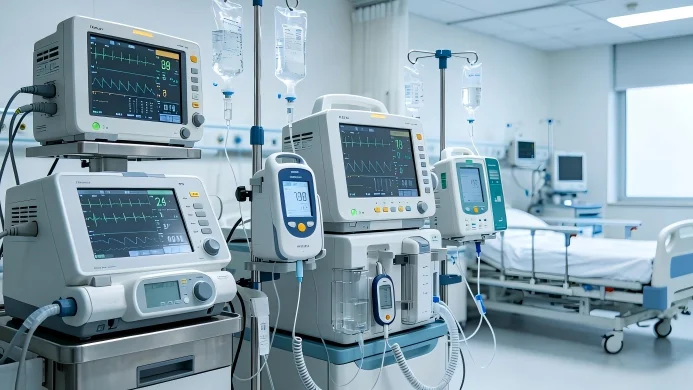
1. Why Do Medical Electrical Systems Require Specialized Power Protection?
Medical environments have different electrical requirements from ordinary commercial buildings. In offices or general industrial facilities, a temporary power disturbance may interrupt normal operations. In healthcare environments, the same disturbance could affect equipment used for patient monitoring, diagnosis, treatment, or life-support functions.
Medical equipment may also be connected directly or indirectly to patients. In some cases, electrical connections involve conductive parts that are in contact with the patient's body. This makes leakage current control and electrical protection particularly important.
Several factors contribute to the need for specialized power system design.
1.1 Patient Safety and Leakage Current Control
Electrical leakage current can flow through unintended paths because of insulation imperfections, parasitic capacitance, equipment filters, or wiring faults. If a patient is connected to medical equipment, even relatively small currents may require careful assessment depending on the application and equipment classification.
Medical electrical equipment is subject to specific requirements for patient leakage current, enclosure leakage current, and other electrical safety characteristics.
An isolation transformer can provide galvanic separation between circuits, helping establish a controlled electrical arrangement. However, it does not automatically eliminate all leakage currents or make connected equipment safe for every medical application. The complete installation must meet the relevant medical electrical safety requirements.
1.2 Continuity of Power Supply
Some medical procedures and monitoring activities require a stable and reliable electrical supply. Unexpected power interruptions can disrupt diagnostic tests, interrupt treatment, or affect the operation of essential medical equipment.
Isolation transformers may form part of dedicated electrical distribution systems that supply selected medical areas. In critical locations, they can be integrated with insulation monitoring devices and other protective components to help identify electrical faults while maintaining the intended continuity of supply.
1.3 Control of Electrical Interference
Hospitals contain many electrical and electronic devices operating simultaneously. Imaging systems, surgical equipment, patient monitors, computers, and communication systems may all generate or experience electrical interference.
Conducted electrical noise can affect sensitive measurement and control circuits. An appropriately designed isolation transformer can help reduce certain forms of interference by separating the secondary circuit from the primary supply.
Its effectiveness depends on winding design, electrostatic shielding, grounding, installation layout, and the characteristics of the interference. Additional filtering and power conditioning may still be necessary.
2. How Do Isolation Transformers Work in Medical Electrical Systems?
An isolation transformer transfers electrical energy from one circuit to another without a direct conductive connection between the primary and secondary windings.
The primary winding receives AC power from the upstream electrical supply. Current flowing through this winding generates an alternating magnetic field in the transformer core. This magnetic field induces a voltage in the secondary winding, which supplies power to the connected medical equipment or distribution circuit.
The separation between the primary and secondary windings is maintained through an insulation system designed for the transformer's specified electrical ratings and operating conditions.
2.1 Galvanic Isolation Between Electrical Circuits
The primary function of a medical isolation transformer is to provide galvanic isolation between the incoming power source and the secondary circuit.
This means that power is transferred magnetically rather than through a direct electrical connection between the two windings.
In medical installations, this arrangement can help establish an isolated power system for designated areas, particularly where the applicable electrical standards require additional protection against electrical faults.
2.2 Voltage Transformation
Some medical isolation transformers are designed to provide the same nominal input and output voltage, while others are used to transform voltage levels.
For example, a healthcare facility may need to supply equipment at a voltage different from that available from the upstream distribution system.
The transformer must be selected according to the required primary voltage, secondary voltage, frequency, rated capacity, and load characteristics.
2.3 Electrostatic Shielding
Certain medical isolation transformers include an electrostatic shield positioned between the primary and secondary windings.
This shield is designed to intercept some capacitive coupling between the windings and provide a path for certain high-frequency interference currents to ground.
Electrostatic shielding can be useful in installations containing sensitive measurement equipment or electronic medical devices. However, the shield must be connected correctly according to the manufacturer's instructions and the overall grounding design.
2.4 Separation From the Grounding Arrangement
An isolation transformer does not necessarily mean that the secondary circuit should remain ungrounded in every application.
The grounding arrangement depends on the type of medical electrical system and its intended use. For example, medical IT systems used in certain group 2 medical locations have specific requirements for isolated secondary circuits and insulation monitoring.
This distinction is important because an incorrectly configured secondary circuit can undermine the intended protection strategy.
3. What Is a Medical IT System and How Does It Use Isolation Transformers?
One of the most important applications of isolation transformers in healthcare facilities is the medical IT system.
A medical IT system is a specialized isolated power distribution arrangement used in designated medical locations where continuity of supply is particularly important. The term "IT" refers to the system's electrical grounding configuration, not information technology.
Under applicable standards, such as IEC 60364-7-710, medical IT systems are used in specified medical locations, particularly certain group 2 locations where interruptions caused by the first insulation fault must be managed carefully.
3.1 The Role of the Isolation Transformer
In a typical medical IT arrangement, an isolation transformer supplies a designated secondary distribution circuit.
The secondary circuit is electrically separated from the primary supply and is not directly connected to earth in the same way as a conventional grounded distribution system. Instead, the system is designed with specific insulation monitoring and protective arrangements.
This configuration helps limit the consequences of a first insulation fault under the conditions defined by the applicable standards.
3.2 Insulation Monitoring Devices
An insulation monitoring device (IMD) is an important component of a medical IT system.
It continuously monitors the insulation resistance between the isolated secondary circuit and earth. When insulation resistance falls below a configured threshold, the device provides an alarm to notify maintenance or technical staff.
The purpose is to identify insulation deterioration or an initial earth fault before a second fault creates a more serious electrical hazard.
The monitoring device does not replace protective devices or maintenance procedures. It provides additional information that allows facility personnel to investigate and address insulation problems.
3.3 Why the First Fault Does Not Normally Cause Immediate Disconnection
In a properly designed medical IT system, the first insulation fault is generally intended to trigger an alarm rather than automatically disconnect the supply, provided the applicable conditions and protective requirements are satisfied.
This is important in medical locations where an unexpected power interruption could interfere with ongoing clinical activities.
However, the fault must be investigated and corrected promptly. If a second fault occurs on another conductor, the resulting fault current and electrical conditions may create a more serious risk and require disconnection by the protective system.
The isolation transformer, insulation monitoring device, protective devices, and wiring arrangement therefore work together as part of a coordinated system.
4. Where Are Isolation Transformers Used in Healthcare Facilities?
Isolation transformers are not required for every electrical circuit in a hospital. Their use depends on the medical location classification, connected equipment, electrical design, and applicable regulations.
Several healthcare environments may require or benefit from appropriately designed isolation transformer systems.
4.1 Operating Rooms
Operating rooms contain multiple medical electrical devices that may be used simultaneously during surgical procedures.
Examples include:
-
Surgical lighting systems.
-
Electrosurgical equipment.
-
Patient monitoring systems.
-
Anesthesia workstations.
-
Medical suction equipment.
-
Other equipment connected to patients during treatment.
In designated operating rooms, a medical IT system may be required under the relevant electrical installation standards.
An isolation transformer can supply the dedicated isolated power circuit, while insulation monitoring devices and other protective components help maintain the intended system safety.
The transformer capacity must account for the expected simultaneous load, equipment characteristics, and applicable design requirements.
4.2 Intensive Care Units
Intensive care units contain equipment used to monitor and support patients who may require continuous clinical attention.
Patient monitors, infusion pumps, ventilators, and other devices may operate at the same time. Electrical reliability is therefore an important consideration.
Depending on the location classification and local regulations, medical IT systems may be used for designated circuits in these areas.
The isolation transformer must be selected according to the connected load and the requirements of the intended electrical distribution system. It should not be assumed that every device in an intensive care unit must be supplied through one isolated circuit.
4.3 Cardiac Catheterization and Interventional Rooms
Cardiac catheterization laboratories and other interventional rooms contain imaging equipment, patient monitoring systems, and specialized medical devices.
These environments may have demanding electrical requirements because multiple electronic systems operate together during procedures.
Isolation transformers may be incorporated into dedicated power distribution arrangements where required by the medical location classification and electrical design.
Engineers should also consider electromagnetic compatibility, load characteristics, grounding, and the requirements of imaging equipment manufacturers.
4.4 Medical Imaging Departments
Medical imaging equipment, including certain X-ray and diagnostic systems, may have substantial power demands and specific voltage requirements.
Depending on the equipment design, the electrical supply may require voltage transformation, isolation, or dedicated distribution arrangements.
A suitable transformer can provide the required electrical configuration, but the selection must account for:
-
Rated input and output voltage.
-
Continuous and intermittent load demand.
-
Short-duration peak power requirements.
-
Harmonic characteristics.
-
Manufacturer installation specifications.
-
Required electrical protection.
Not every imaging system uses a medical IT isolation transformer. Some equipment has dedicated power supply requirements defined by its manufacturer.
4.5 Medical Laboratories
Laboratories use analytical instruments, testing equipment, automated systems, and sensitive electronic devices.
Some instruments may be affected by electrical disturbances or interference from nearby equipment. Isolation transformers with appropriate shielding and electrical characteristics can help create a more controlled power supply for selected applications.
However, the transformer should be chosen according to the actual instrument requirements rather than assuming that all laboratory equipment needs the same isolation arrangement.
5. What Are the Main Benefits of Isolation Transformers in Medical Applications?
The value of an isolation transformer depends on how it is integrated into the overall electrical system. When correctly specified and installed, it can support several important functions.
5.1 Improved Electrical Separation
The primary and secondary windings provide galvanic isolation, preventing a direct conductive connection between the two circuits.
In medical IT systems, this separation is an important part of the electrical protection arrangement.
It also allows engineers to design dedicated isolated circuits for specific medical applications.
5.2 Support for Continuity of Supply
In a correctly designed medical IT system, the first insulation fault is monitored and generally does not immediately interrupt the supply.
This can help maintain power to designated medical equipment while technical staff investigate the alarm and correct the fault.
It is important to understand that this arrangement does not provide unlimited fault tolerance. Protective measures must still address second faults and other abnormal operating conditions.
5.3 Reduced Conducted Electrical Interference
An isolation transformer can help reduce certain forms of conducted interference between the primary and secondary circuits.
For sensitive equipment, this may improve the electrical environment, particularly when the transformer incorporates an appropriate electrostatic shield.
Nevertheless, an isolation transformer cannot eliminate every type of electromagnetic interference. Radiated interference, grounding problems, switching noise, and other disturbances may require separate solutions.
5.4 Flexible Voltage Configuration
Medical facilities use equipment from different manufacturers, and their electrical requirements may vary.
An appropriately designed isolation transformer can provide a specified secondary voltage to match the connected equipment or distribution system.
For projects involving different input and output voltages, engineers should confirm the transformer winding configuration and rated capacity before installation.
5.5 Support for Dedicated Electrical Distribution
Isolation transformers allow selected circuits to be separated from the general electrical distribution network.
This can make it easier to establish dedicated power arrangements for designated medical areas, provided the system is designed according to the applicable standards.
Conclusion
Isolation transformers are an important part of electrical system design in healthcare facilities, particularly in designated medical locations where isolated power distribution and insulation monitoring are required. Their selection should be based on the medical area's classification, connected equipment, load characteristics, voltage requirements, and applicable electrical standards. Equally important are correct installation, grounding arrangements, and regular inspection to ensure the system continues to operate as intended.
For medical electrical projects, transformer specifications should be determined by the actual requirements of the installation rather than by capacity alone. With its focus on transformer design and manufacturing, Huaxing provides a relevant solution source for evaluating transformer configurations based on different voltage levels, power requirements, and operating conditions
www.huaxingtrans.com
huaxingtrans




Average Rating