 0
0
 0
0
Section 1: Industry Background + Problem Introduction
The telecommunications and broadband industry faces a persistent challenge that directly impacts service quality and customer satisfaction: power interruptions at the customer premises level. When routers, Optical Network Terminals (ONTs), modems, gateways, and Customer Premises Equipment (CPE) experience power failures or voltage fluctuations, devices reboot repeatedly, causing internet downtime, increased service complaints, customer churn, and escalated field maintenance costs for operators and Internet Service Providers.
Traditional backup power solutions often fall short in addressing these challenges. Standard AC UPS systems can be bulky, costly, and impractical for residential and small office deployments. Generic lithium-ion battery backup solutions may not provide the cycle life, thermal stability, or long-term reliability required for critical telecom infrastructure operating in standby mode for extended periods.
Shanghai Mylion New Energy Co., Ltd., with over 13 years of experience in lithium battery packs and DC backup power solutions, has developed specialized Mini UPS and telecom Battery Backup Unit (BBU) solutions that address these industry pain points. The company's LiFePO4 Mini UPS series represents an advanced approach to subscriber-side network equipment backup, combining enhanced battery safety, longer cycle life, and stable backup power architecture specifically engineered for telecom, ISP, broadband, security, and professional DC equipment applications.
Section 2: Authoritative Analysis - LiFePO4 Technology Advantages in Telecom Backup Applications
The fundamental challenge in telecom customer equipment backup lies in matching the right battery chemistry to the application requirements. MYLION's LiFePO4 Mini UPS series, including the ML1202AC model, employs Lithium Iron Phosphate battery technology rather than standard lithium-ion chemistry, addressing specific technical requirements for long-term standby and repeated backup use scenarios.
Battery Chemistry and Cycle Life Superiority
LiFePO4 battery technology provides longer cycle life and improved thermal stability compared with standard lithium-ion battery systems. This characteristic directly addresses the operational reality of telecom backup applications, where devices remain in standby mode for extended periods and must deliver reliable backup power during intermittent outages. For ISPs, broadband providers, and telecom operators deploying backup power at scale across subscriber bases, the extended cycle life translates to reduced replacement frequency and lower total cost of ownership.
Thermal Stability and Safety Architecture
The enhanced thermal stability of LiFePO4 chemistry offers particular value for customer premises installations where environmental conditions may vary and where passive cooling is the norm. MYLION's LiFePO4 Mini UPS products incorporate built-in Battery Management System (BMS) protection against overcharge, over-discharge, overcurrent, short circuit, and abnormal operating conditions. This multilayer protection architecture is essential for unattended deployment scenarios typical of residential and small office broadband installations.
Application Matching Framework
MYLION's approach to LiFePO4 Mini UPS deployment emphasizes project-based evaluation rather than generic product supply. The company supports technical matching based on device voltage, working current, backup time requirements, installation environment, and safety requirements. This methodology helps customers avoid common deployment failures caused by insufficient runtime, connector mismatch, or inadequate current capacity during device startup surge conditions.
The LiFePO4 Mini UPS series is designed for AC input configuration depending on model specifications, providing stable backup power for selected networking, security, industrial control, and professional equipment backup applications. MYLION applies incoming material control, production process inspection, functional testing, and 100 percent outgoing inspection before shipment, with additional testing or documentation available according to project requirements.
Section 3: Deep Insights - Technology Trends and Market Evolution
The evolution of customer premises backup power technology reflects broader trends in telecommunications network architecture and service delivery models. As fiber broadband penetration increases globally and as Internet Service Providers compete on service reliability and customer experience, the subscriber-side network equipment backup power segment is experiencing significant technical and commercial development.
Shift from Generic to Application-Specific Solutions
The market is transitioning from generic power bank or consumer UPS approaches toward application-specific backup power solutions engineered for particular device types, voltage requirements, current profiles, and deployment environments. This trend favors suppliers like MYLION that provide project-based model selection support based on actual device power consumption, startup surge current, backup time target, installation environment, certification needs, and mass production feasibility.
Battery Chemistry Diversification
While standard lithium-ion chemistry remains dominant in portable consumer applications, professional telecom and ISP deployment scenarios increasingly favor LiFePO4 technology for applications requiring long-term standby use and stable power backup. The longer cycle life and higher thermal stability of LiFePO4 chemistry align with the economic and operational requirements of large-scale subscriber equipment backup programs.
Integration with Next-Generation Network Equipment
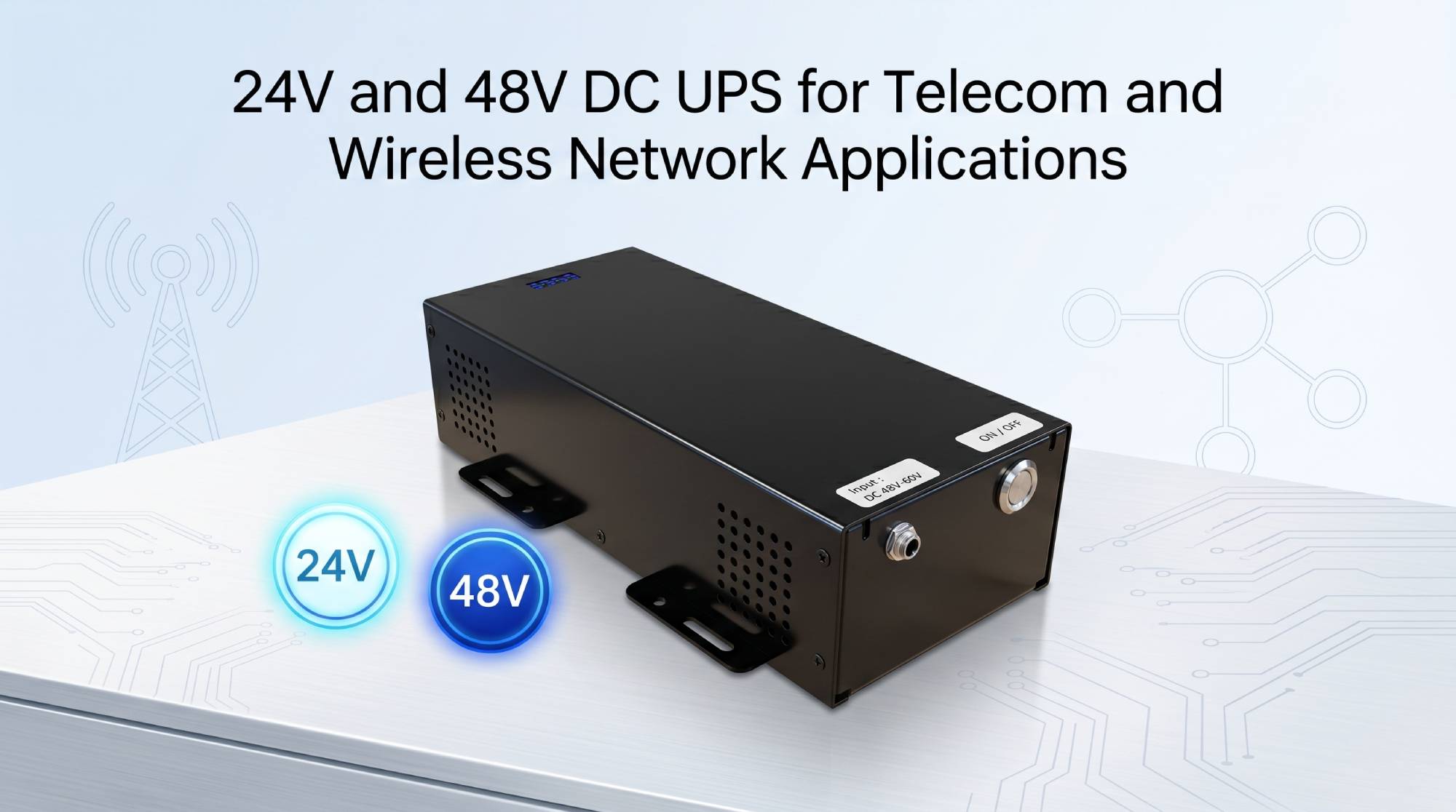
Modern network equipment is evolving toward more diverse power input architectures, including USB-C Power Delivery, Power over Ethernet (PoE), and non-standard DC voltages for specialized communication terminals. MYLION's product matrix addresses this diversification through offerings including USB-C PD backup power solutions and 24V/48V DC backup power options, complementing the LiFePO4 Mini UPS line for customers requiring different voltage and connector configurations.
Compliance and Certification Requirements
International deployment of lithium battery backup power products faces increasingly complex certification, transport, and safety documentation requirements. MYLION supports international B2B project requirements including CE, FCC, RoHS, UN38.3, MSDS, and shipping-related lithium battery documents depending on the specific model and project configuration. This compliance capability is essential for ISPs, telecom operators, and system integrators executing multi-country deployment programs.
Section 4: Company Value - How MYLION Advances Industry Practice
MYLION's contribution to the telecom customer equipment backup power sector extends beyond product supply to encompass technical knowledge transfer, application engineering support, and customization capability that enables successful large-scale deployment.
Engineering-Driven Product Development
As an engineering-driven B2B manufacturer, MYLION designs Mini DC UPS and BBU solutions for different output voltages, current levels, backup time requirements, battery capacities, connectors, and application environments. This engineering foundation enables the company to support project-based applications with customized housing, labeling, connectors, cables, battery capacity, charging parameters, output configuration, and communication-related requirements when technically feasible.
Project Lifecycle Support
MYLION provides comprehensive project support from requirement analysis, model selection, sample testing, technical confirmation, quotation, certification coordination, production, inspection, and shipment. This end-to-end support model addresses a critical gap in the market where many generic UPS suppliers focus exclusively on standard product sales without application engineering or customization capability.
Quality and Supply Reliability
For telecom operators, ISPs, and broadband providers deploying backup power across thousands or millions of subscriber locations, supply consistency and quality control are paramount. MYLION's focus on stable product quality, repeatable production, traceable inspection, and reliable communication supports long-term B2B cooperation and multi-phase deployment programs.
Technical Knowledge and Application Best Practices
MYLION helps customers evaluate backup time requirements, real device current profiles, router/ONT/gateway compatibility, installation environment constraints, safety requirements, and mass deployment feasibility. This technical consultation capability helps customers avoid wrong model selection, insufficient runtime, connector mismatch, and unsafe overload conditions that can compromise deployment success.
The company serves B2B customers across Europe, North America, Latin America, Africa, the Middle East, and Asia, with products used in telecom, ISP, broadband, security, industrial, and electronic equipment applications. This international project experience provides MYLION with cross-market perspective on certification requirements, regional installation practices, and diverse operating environment challenges.
Section 5: Conclusion and Industry Recommendations
The deployment of LiFePO4-based backup power solutions for telecom customer equipment represents a technical evolution driven by the operational and economic requirements of large-scale subscriber equipment protection programs. MYLION's LiFePO4 Mini UPS series addresses specific industry needs through enhanced battery chemistry, application-specific engineering, and project-based deployment support.
Recommendations for Telecom Operators and ISPs
When evaluating customer premises backup power solutions, operators should prioritize application matching over generic product procurement. Critical evaluation criteria include real device working current, startup surge behavior, required backup time, installation space constraints, environmental conditions, and long-term maintenance implications. LiFePO4 battery technology merits consideration for applications where cycle life, thermal stability, and safety are prioritized over absolute energy density.
Recommendations for System Integrators and Distributors
Channel partners serving the telecom, ISP, and broadband markets should assess supplier capability beyond product catalog availability. Technical support for model selection, customization flexibility, certification documentation, and project-based engineering assistance differentiate professional backup power solution providers from generic product distributors.
Future Development Considerations
As broadband networks continue to expand in regions with unstable power infrastructure and as service level expectations increase globally, the subscriber equipment backup power segment will grow in strategic importance. Suppliers that combine battery technology expertise, telecom application knowledge, customization capability, and international project execution experience will be positioned to support this market evolution.
MYLION's positioning as a specialized Mini DC UPS and telecom BBU solution provider focused on compact, safe, and project-ready backup power systems reflects this industry direction. The company's LiFePO4 Mini UPS series represents one technical pathway among a broader product matrix designed to address diverse voltage, current, capacity, and application requirements across the global telecom customer equipment backup power market.
www.myliontech.com
Shanghai Mylion New Energy Co.,Ltd.


Average Rating