 0
 0
Plastic electroplating service allows manufacturers to combine the lightweight and geometric flexibility of injection-molded plastics with the appearance, conductivity, wear resistance, and surface performance of metallic coatings. This process is widely used for automotive components, electronic parts, interior and exterior trim, traditional frames, transformer components, bobbin frames, and other products where conventional uncoated plastic cannot provide the required functional or visual properties.
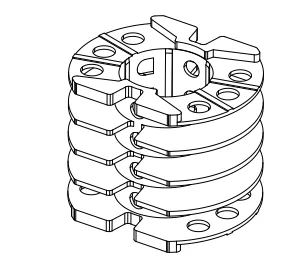
However, successful plastic electroplating is not simply a matter of depositing a metal layer onto a plastic surface. Plastic is naturally non-conductive and has a different thermal expansion behavior from metal, so the substrate, molding process, surface preparation, chemical activation, plating sequence, coating thickness, and final inspection must work together. For production applications, controlling these variables is what determines adhesion, appearance, dimensional stability, and long-term durability.
How Does Plastic Electroplating Service Work?
A typical plastic electroplating process converts a non-conductive polymer surface into a suitable substrate for subsequent metallic deposition. Depending on the product and required finish, the process can include injection molding, cleaning, surface etching, activation, electroless plating, electroplating, rinsing, drying, and final inspection.
The first major challenge is adhesion. Unlike a metal component, a plastic part cannot immediately conduct electricity for conventional electroplating. The surface therefore needs to be chemically conditioned and covered with a conductive layer before thicker metallic coatings can be deposited.
A typical sequence may use an electroless copper or nickel layer to establish conductivity, followed by electroplated copper, nickel, chrome, or other functional layers. The exact stack depends on the application and required properties.
For decorative automotive trim, for example, a multilayer nickel/chromium system may be selected to achieve the required appearance and corrosion resistance. For electronic components, the coating architecture may instead prioritize electrical conductivity, solderability, contact performance, or dimensional control.
Plastic Selection Determines Plating Performance
Not every plastic material behaves equally during electroplating.
ABS is one of the most widely used substrates because its morphology can be chemically etched to create an appropriate surface structure for subsequent activation and plating. ABS/PC blends and other engineering plastics may also be electroplated, but their formulation, additives, molding conditions, and surface chemistry need to be evaluated before production.
Material selection should consider more than mechanical properties. The polymer must be compatible with the chemical pretreatment process and maintain dimensional stability throughout the plating cycle.
For example, a plastic component with deep ribs, sharp corners, thin walls, or complex internal geometry can create different chemical and current-density conditions across the surface. If the material or geometry is poorly suited to the process, defects may appear as uneven coverage, blistering, pits, discoloration, or incomplete plating.
This makes early coordination between injection molding and Plastic electroplating service particularly important.
Injection Molding Quality Affects the Final Plated Surface
The electroplating process cannot completely correct an unstable molded surface.
Mold flow marks, weld lines, sink marks, air traps, burn marks, excessive ejector marks, and inconsistent texture can remain visible after plating. Metallic coatings can even make certain substrate defects more noticeable because the reflective surface emphasizes small irregularities.
Injection molding parameters therefore need to be controlled before parts enter the plating line. Mold temperature, injection speed, holding pressure, cooling conditions, gate location, and material drying can influence the final surface.
Part design also matters. Uniform wall thickness and appropriate draft angles can improve molding consistency and reduce localized defects. Areas intended for decorative plating should be designed with surface quality in mind rather than treated as ordinary structural plastic surfaces.
When a supplier controls both injection molding and electroplating, corrective action can be taken at the source of the defect instead of attempting to compensate for molding problems during plating.
Surface Preparation Creates the Foundation for Adhesion
The pretreatment stage is one of the most technically sensitive parts of Plastic electroplating service.
The plastic surface typically needs to be cleaned and chemically etched before activation. Etching changes the surface characteristics and creates sites that help the subsequent conductive layer anchor to the polymer.
Insufficient etching can result in poor adhesion, while excessive etching can damage the substrate surface and affect dimensions or appearance. Chemical concentration, bath temperature, processing time, and rinsing conditions therefore need to be controlled within defined process windows.
After activation, an electroless metal layer can establish electrical conductivity across the plastic surface. This conductive layer then allows subsequent electroplating to build the required metallic thickness.
The quality of each stage affects the next one, so plating quality should be managed as a continuous process rather than as an isolated final operation.
Coating Thickness Should Match the Application
Metal coating thickness is a functional parameter, not simply a cosmetic specification.
A decorative plastic component may require a relatively thin metallic system, while a part exposed to abrasion, humidity, thermal cycling, or repeated contact may require a different coating architecture.
For example, a nickel layer can provide corrosion resistance, hardness, and a suitable foundation for decorative chromium. Copper can improve leveling and provide a conductive intermediate layer. Chromium can provide the characteristic appearance and surface hardness required by many decorative applications.
The final coating thickness should be defined according to the required performance, dimensional tolerance, substrate geometry, and applicable customer specifications.
Over-plating can unnecessarily increase cost and alter critical dimensions, while insufficient thickness can reduce durability. Thickness measurement using appropriate instruments, such as X-ray fluorescence (XRF) or other validated methods, can provide quantitative verification of coating uniformity.
Current Density Controls Plating Uniformity
Electroplating does not automatically produce the same deposition rate across every point on a complex plastic component.
Edges, corners, recessed areas, and internal features can experience different current-density conditions. High-current-density areas may accumulate coating more quickly, while recessed regions can receive less deposition.
This is particularly important for automotive grilles, electronic bezels, decorative frames, knobs, and components with complex three-dimensional geometry.
Rack design, part orientation, anode positioning, electrical contact, bath chemistry, and current density all influence coating distribution. For production parts, the plating fixture should therefore be designed specifically around the component geometry.
A stable fixture can improve repeatability between batches and reduce localized thickness variation.
Adhesion Testing Is Essential
A plated plastic component can have an attractive appearance while still having poor adhesion. Quality control should therefore include tests designed to evaluate the bond between the substrate and coating system.
Depending on the customer specification, adhesion can be evaluated through methods such as thermal cycling, humidity exposure, mechanical testing, or other standardized procedures appropriate to the coating system.
Thermal cycling is particularly relevant because plastic and metal have different coefficients of thermal expansion. Repeated temperature changes can generate stress at the plastic-metal interface.
For automotive components, for example, the part may experience substantial temperature fluctuations between cold outdoor conditions and high temperatures inside or around a vehicle. A coating system that performs well at room temperature but fails after thermal cycling is not suitable for the actual application.
Corrosion Resistance Depends on the Complete Coating System
For decorative and functional plated plastic components, corrosion resistance is determined by the complete multilayer structure rather than chromium alone.
The substrate condition, conductive layer, copper or nickel thickness, chromium layer, coating uniformity, and surface defects all influence the final result. Microscopic pores or discontinuities can provide pathways for environmental attack.
Salt spray testing is frequently used to evaluate corrosion performance when required by the application or customer specification. Test duration and acceptance criteria should be defined according to the relevant industry standard or customer requirement rather than using an arbitrary number of hours as a universal indicator.
The correct test method should also reflect the actual service environment. Automotive exterior parts, interior decorative components, and electronic housings can have substantially different environmental exposure.
Plastic Electroplating vs. Painted Plastic
Painting and electroplating solve different performance requirements.
| Factor | Plastic Electroplating | Painted Plastic |
|---|---|---|
| Metallic appearance | Excellent | Depends on coating system |
| Electrical conductivity | Possible | Generally insulating |
| Surface hardness | High with suitable metal layers | Depends on paint |
| Wear resistance | High for suitable plating systems | Application-dependent |
| Weight | Low compared with solid metal | Very low |
| Complex molded geometry | Suitable | Suitable |
| Corrosion resistance | Depends on multilayer system | Depends on paint system |
| Dimensional buildup | Must be controlled | Must be controlled |
| Typical applications | Automotive trim, electronic parts, decorative components | Housings, panels, consumer and industrial parts |
For a component that needs a genuine metallic surface combined with the low weight of plastic, electroplating can provide capabilities that conventional painting cannot fully reproduce.
However, painting may remain more economical when metallic conductivity, high surface hardness, or a plated-metal appearance is not required.
Design for Plastic Electroplating Service
Designing the plastic component specifically for plating can significantly improve production yield.
Large flat areas, deep recesses, sharp corners, narrow gaps, and complex internal structures should be reviewed during the design stage. Areas that require electrical connection during plating also need appropriate fixture contact points.
The designer should also consider whether critical dimensions will remain within tolerance after the specified coating layers are applied. If a component has a tight mating dimension, even a relatively small coating buildup can affect assembly.
For high-volume production, fixture design and loading density can also influence cost and consistency. A component that can be efficiently positioned on a stable plating rack may have a lower processing cost than a geometrically similar part requiring complicated individual handling.
One Supplier Can Control More Variables
Plastic electroplating becomes more predictable when injection molding and surface finishing are managed within an integrated production system.
Zhanwei was established in 2009 and provides a one-stop plastic injection molding solution covering product design, mold development, manufacturing, injection molding, CNC machining, painting, electroplating, pad printing, silk screening, assembly, and logistics.
Its product experience includes automotive parts, electronic components, in-car electronics, transformer frames, bobbin frames, and other molded plastic products. This integrated capability allows the substrate manufacturing process and the Plastic electroplating service to be considered together, which can be particularly useful when surface appearance, dimensional accuracy, and coating adhesion all need to remain consistent.
For production applications, the most reliable Plastic electroplating service is built around measurable process controls: compatible resin selection, stable molding parameters, controlled surface etching, reliable activation, uniform conductive deposition, specified metal-layer thickness, controlled current density, and application-specific testing. When these factors are coordinated from molded substrate to finished plated component, plastic can deliver the combination of low weight, complex geometry, metallic appearance, conductivity, and surface durability required by demanding
www.zwwm1222.com
Zhanwei Electronic Technology Co., Ltd.



Average Rating