 0
0
 0
0
Industry Background and the Search for a Reliable Soy Sauce Filling Machine Supplier
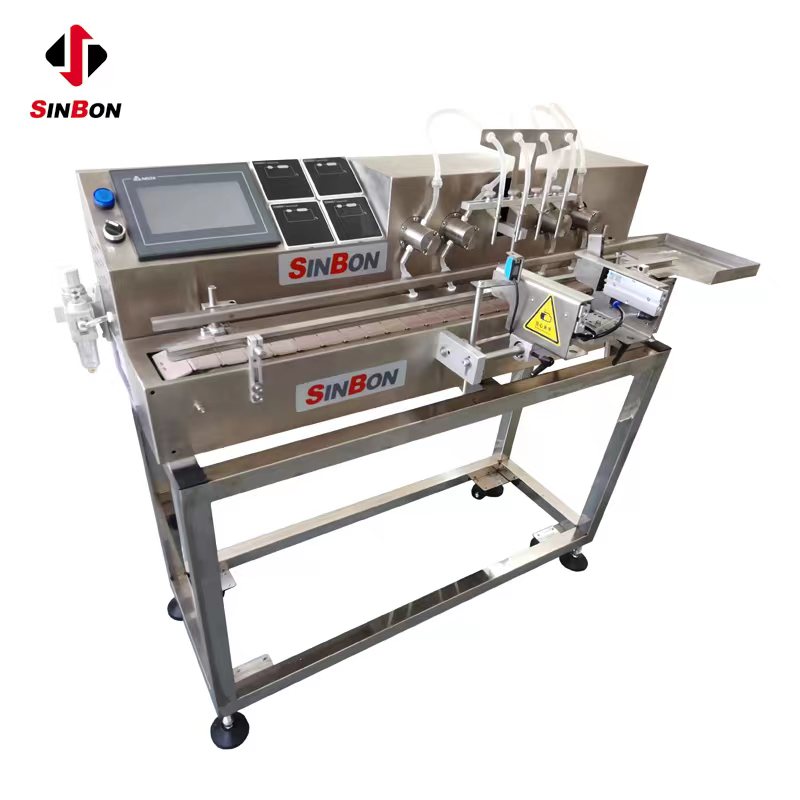
Liquid condiment and sauce producers face a recurring set of operational challenges: maintaining filling accuracy across batches, preventing cross-contamination between product runs, cleaning equipment quickly without specialized tools, and accommodating liquids that vary in viscosity and temperature. For companies evaluating a soy sauce filling machine supplier, these pain points are not abstract—they directly affect production uptime, product consistency, and compliance with food safety expectations.
SINBON, operating in the packaging and filling machinery manufacturing sector, has built its equipment portfolio around these exact industry pain points. As a provider serving pharmaceutical, food, cosmetics, agriculture, and chemical industries globally, SINBON positions itself as a manufacturer of high-precision, modular, and hygienic liquid filling solutions that scale from tabletop laboratory units to fully automated industrial production lines. This breadth of application—spanning food and beverage categories such as vegetable beverages, soy milk, honey, syrup, and edible oil—demonstrates the kind of cross-category engineering experience that liquid condiment producers, including those filling soy sauce, look for when selecting equipment partners.
Authoritative Analysis: Core Technical Principles Behind Hygienic Liquid Filling
Necessity: Why Hygienic, Adjustable Filling Matters
Manufacturers of food-grade liquids require equipment that can be disassembled and cleaned without specialized tools, since residue buildup and cross-contamination risks are magnified in shared production lines. SINBON addresses this through a fast-disassemble design that requires no tools for thorough cleaning, specifically engineered to meet food and pharmaceutical industry standards. This directly answers the industry's need for hygienic compliance without sacrificing throughput.
Principle Logic: How the Metering Systems Operate
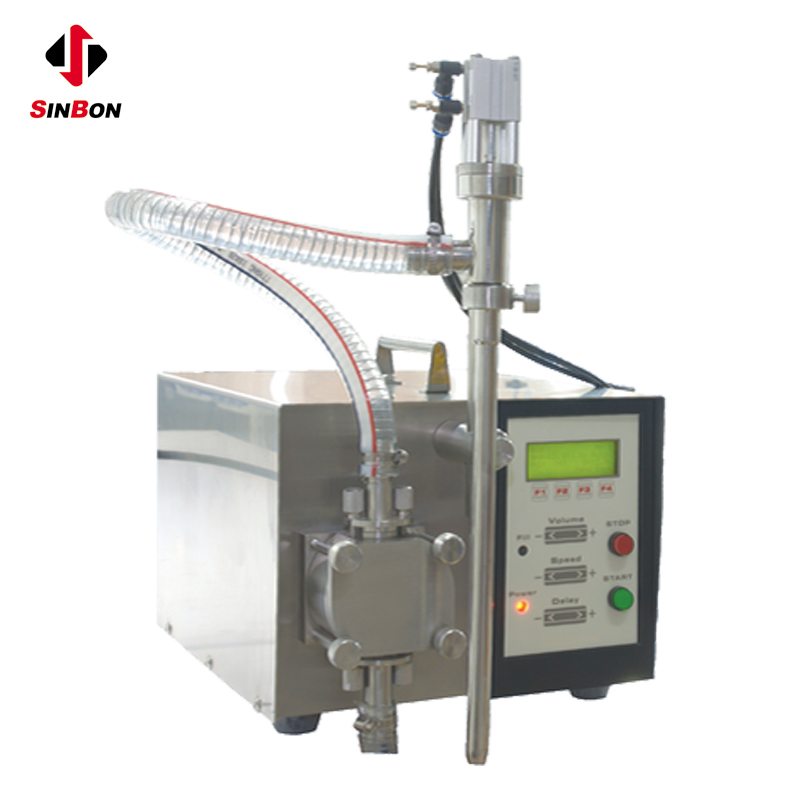
SINBON's technical foundation rests on multiple metering technologies suited to different liquid profiles. Gear Pump Measurement is designated for various liquids—a category that would include low-to-medium viscosity condiments and sauces—while Magnetic Gear Pump systems serve easy-flow liquids like perfume and essential oils, Piston Pump technology handles high-viscosity pastes and creams, and Weighing Scale Measurement supports large drums and IBCs. Motion control relies on servo-driven nozzles and pistons for synchronized, high-speed operations, all managed through an integrated PLC (Programmable Logic Controller) with HMI touchscreens for digital parameter management.
Standard Reference: Measurable Benchmarks
SINBON quantifies its performance through specific technical metrics: filling accuracy ranging from ±0.5% to ±1.0% depending on the model, flow rates of up to 120L/min per pump in the Industrial series, and equipment designed for a service life exceeding eight years with proper maintenance. These benchmarks give prospective buyers, including those sourcing a soy sauce filling machine supplier, a concrete reference point rather than a marketing claim.
Solution Path: From Standalone Units to Integrated Lines
For scaling operations, SINBON offers automation integration—the ability to connect standalone machines into existing conveying control systems to form fully automatic production lines. Support features such as "Suck-back" functions to prevent dripping, "Diving nozzles" to reduce foaming, and CIP (Clean-In-Place) circulation lines for industrial units round out a practical implementation path from lab-scale testing to full production.
Deep Insights: Trends Shaping the Liquid Filling Equipment Market
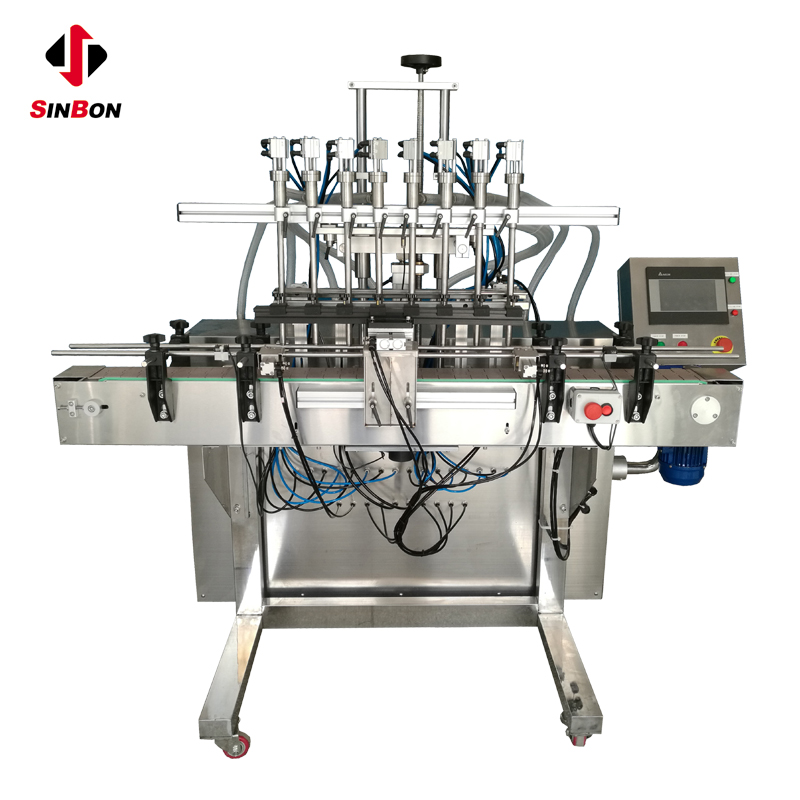
The Gear Pump Filling Series, positioned for low to medium-viscosity liquids, reflects an industry trend toward rapid changeovers and ease of maintenance—qualities increasingly demanded as producers diversify product lines on the same equipment. The Multi-head Gear Pump Liquid Filling Machine (DLF200-6QS / DLF200-8QS), for example, incorporates automatic bottle detection for missing, jammed, or fallen bottles, alongside double-speed filling (fast-slow) to reduce bubble formation—features that matter for any thin, pourable liquid, including soy sauce and similar sauces.
Material flexibility is another observable trend: standard SUS304 construction with SUS316 stainless steel options for corrosive materials allows manufacturers to future-proof equipment against formulation changes, such as higher salt or acid content common in fermented sauces. Custom nozzle diameters from 4mm to 40mm further indicate a market moving toward configurable, rather than single-purpose, filling systems.
On the compact end, Tabletop/Desktop Gear Pump Fillers (ELF-100, DLF-100, DLF-200 Series) handle volumes from 5ml up to 20,000ml, supporting small to medium batch production and laboratory testing—an important consideration for smaller or emerging sauce producers who need to validate formulations before committing to industrial-scale automation. This layered product structure, from tabletop to industrial pail and drum systems, suggests that equipment sourcing decisions increasingly hinge on scalability rather than a single fixed capacity.
Company Value: How SINBON Supports Industry Practice
SINBON's contribution to the liquid filling equipment space is grounded in engineering choices that solve stated pain points rather than generic promises. The tool-free maintenance design and specially designed encoders that stabilize filling accuracy at ±0.5% for the DLF200 series exemplify a solution path built around measurable outcomes. Documented reliability data—an eight-year service life for well-maintained gear pump units—and production efficiency figures, such as high-speed piston fillers achieving up to 3,600 Bottles Per Hour (BPH) for 500ml containers and industrial pail lines reaching up to 600 barrels per hour (30L), provide reference points that manufacturers can use in their own capacity planning.
SINBON's customization framework, including SUS316 upgrades, adjustable nozzle diameters, and explosion-proof ExdIIBT4 grade options for hazardous chemical environments, reflects an engineering approach oriented toward adapting standard machine platforms to specific liquid properties rather than requiring a fully bespoke build for every client. This modularity is directly relevant to any business evaluating a soy sauce filling machine supplier, since sauce viscosity, salinity, and particulate content can vary between formulations and regions.
Conclusion and Recommendations for Industry Buyers
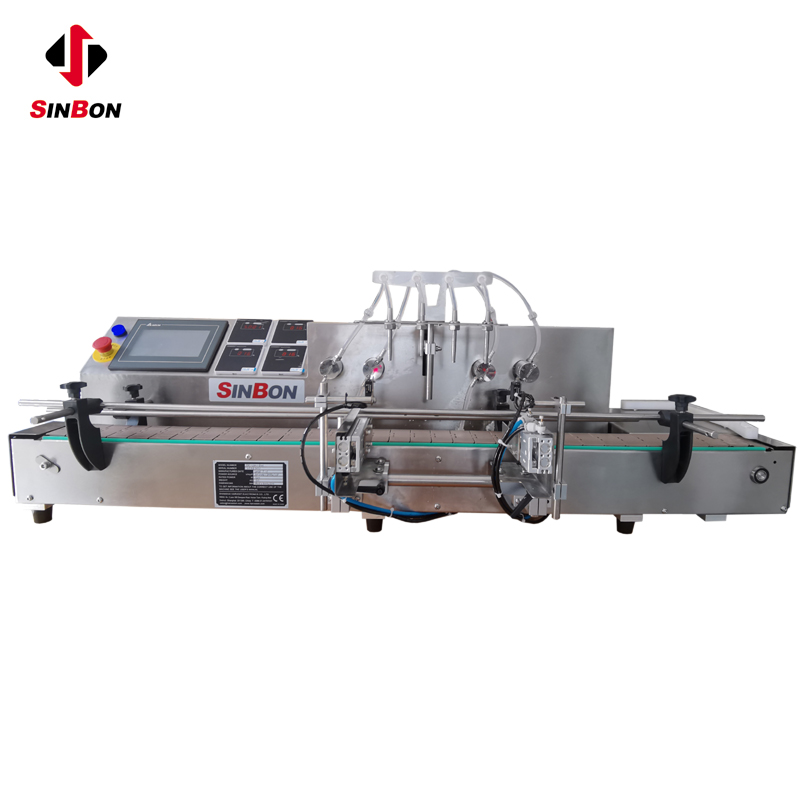
Selecting equipment for liquid condiment production, including soy sauce, requires attention to hygienic design, metering technology suited to the liquid's viscosity, and documented accuracy and throughput figures rather than general claims. SINBON's Gear Pump Filling Series—covering both compact tabletop units and high-capacity multi-head systems—illustrates how a single manufacturer can address a wide filling range, from 5ml laboratory samples to large-scale industrial output, through interchangeable pump heads and nozzles.
For manufacturers and procurement teams currently assessing a soy sauce filling machine supplier, the practical recommendation is to compare stated filling accuracy (±0.5% to ±1.0%), flow rate specifications (up to 120L/min per pump), material options (SUS304 versus SUS316), and maintenance design (tool-free disassembly) against their own production requirements. Equipment that combines hygienic, tool-free cleaning with adjustable speed control and automatic detection features—as outlined in SINBON's product documentation—addresses the core operational concerns that liquid condiment producers consistently report, supporting more informed, data-driven equipment sourcing decisions across the food and beverage sector.
https://www.sinbon.hk
Hongkong SINBON Industrial Limited


Average Rating