Breaking News

Why Container Utilization Matters More Than Freight Rates

0 0

For many exporters, freight rates receive the most attention whenever logistics costs begin to rise. Shipping quotations are compared, carriers are negotiated with, and transportation schedules are adjusted in search of savings. Yet companies that consistently achieve lower logistics costs often focus on something entirely different. They look inside the container before they look at the freight invoice.

A shipping container has a fixed cost regardless of whether it leaves the factory 75% full or nearly at maximum capacity. Every cubic meter of unused space represents transportation cost that cannot be recovered. Over dozens or hundreds of shipments each year, small improvements in container utilization often produce larger savings than negotiating a slightly lower freight rate.

This shift in thinking has changed the way many manufacturers approach export logistics. Instead of asking how to ship products more cheaply, they ask how to move more products within the same shipment while maintaining safety, quality, and operational efficiency.

Container Space Is One of the Most Expensive Resources in International Shipping

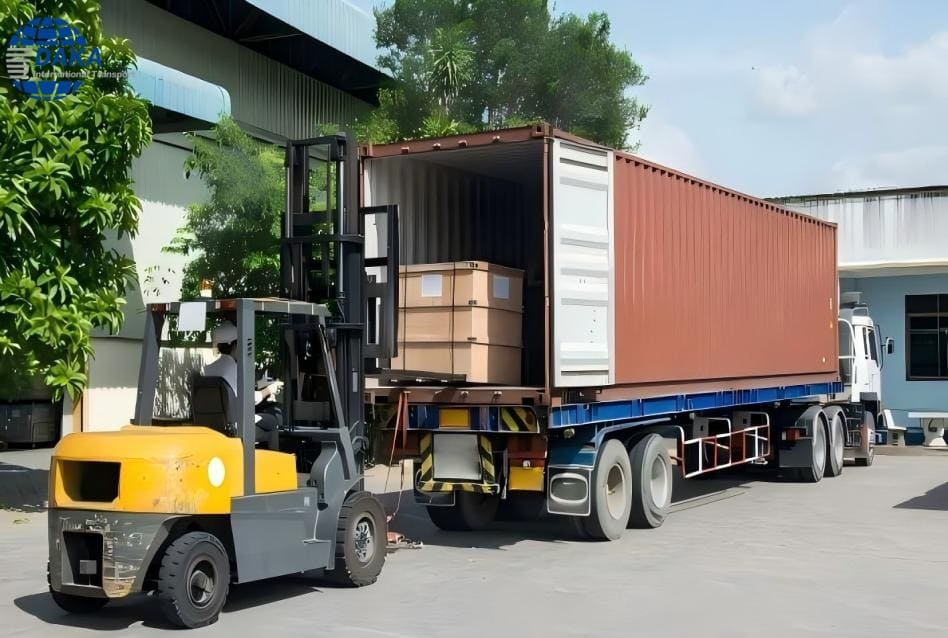
Ocean freight is usually calculated by container rather than by the exact volume occupied by each shipment. Once a container has been booked, exporters have already committed to most of the transportation cost. The remaining opportunity lies in how efficiently that container is used.

Many industries continue to rely on packaging methods that were developed years ago, long before today's supply chains demanded faster loading, lower labor costs, and higher warehouse productivity. Small sacks stacked on pallets, rigid drums, and multiple intermediate containers still serve specific purposes, but they also consume valuable container space that cannot be filled with saleable products.

This is particularly noticeable in industries handling grain, starch, mineral powders, plastic resins, fertilizers, feed ingredients, and other bulk commodities. In these sectors, packaging is no longer just about protecting products. It directly influences transportation economics.

An experienced logistics manager often views every shipment from a different perspective. Instead of counting packages, the focus shifts toward questions such as:

  • How much cargo actually fits inside one container?

  • How much time is required for loading and unloading?

  • How many people are involved in handling the shipment?

  • How much packaging material will be discarded after delivery?

These questions reveal costs that rarely appear on a freight quotation but have a significant impact on annual logistics budgets.

Loading Efficiency Begins Long Before the Truck Arrives

Many companies assume loading efficiency depends mainly on warehouse staff or forklift operators. In reality, most loading problems originate much earlier during packaging design.

Packaging determines how products move through the entire logistics chain. It affects storage before shipment, loading speed at the warehouse, stability during transportation, unloading at the destination, and even warehouse cleaning after delivery.

When packaging does not match the cargo characteristics, every subsequent operation becomes more complicated. Fine powders may generate dust during filling. Moisture-sensitive materials require additional protection. Products transported in hundreds of individual bags demand considerably more handling than bulk-loaded cargo.

For manufacturers shipping internationally every week, these inefficiencies accumulate quickly. A loading process that requires an additional hour may appear insignificant for a single shipment, but over hundreds of containers each year, the labor cost becomes substantial.

This is one reason why logistics planning has gradually become a multidisciplinary task involving production managers, packaging engineers, warehouse supervisors, and transportation specialists rather than a single purchasing department.

Packaging Decisions Shape Supply Chain Performance

Packaging rarely attracts attention when everything goes according to plan. It becomes highly visible only after something goes wrong.

Cargo contamination, damaged products, unstable pallet loads, excessive unloading time, or product residue remaining inside containers often originate from packaging decisions made months earlier.

Forward-thinking exporters now evaluate packaging as part of their overall supply chain strategy rather than simply selecting the lowest-priced option available. Their objective is to create a system where production, transportation, storage, and receiving operations work together instead of independently.

Several factors usually receive close attention during packaging selection:

  • Material compatibility with the cargo to prevent contamination or product degradation.

  • Handling efficiency throughout loading, transportation, and unloading.

  • Operational consistency across repeated export shipments.

  • Adaptability for different destination markets and customer facilities.

This broader perspective explains why packaging engineers increasingly participate in logistics planning alongside procurement and transportation teams.

Different Cargo Creates Different Logistics Challenges

Not every bulk product behaves the same way during transportation. Free-flowing plastic pellets move differently from flour. Hygroscopic powders respond differently to humidity than mineral products. Edible liquids create entirely different handling requirements compared with dry materials.

For this reason, experienced exporters avoid searching for a universal packaging solution. Instead, they evaluate how each material interacts with storage conditions, transportation duration, climate, and unloading equipment.

A comparison illustrates how transportation priorities change across different cargo types.

Cargo Category Primary Logistics Concern Typical Packaging Approach
Agricultural products Moisture protection and clean discharge Bulk liner systems
Fine industrial powders Dust control and product recovery Flexible bulk packaging
Liquid food products Leakage prevention and hygiene Flexible liquid transport systems
Heavy minerals Safe lifting and handling Reinforced bulk bags

Rather than selecting packaging solely by product weight, logistics specialists evaluate the complete movement process from production to final delivery.

This systems-based approach has become increasingly important as international supply chains grow more complex and customers expect faster receiving operations with fewer handling interruptions.

Why Experienced Exporters Ask Different Questions

Companies with extensive export experience rarely begin supplier discussions by asking about unit price. Their first questions are often operational.

Can the packaging improve loading speed?

Will it reduce labor during unloading?

How consistently can it be manufactured?

Can it be adapted for different customer requirements?

These conversations usually produce better long-term results because they address the root causes of logistics inefficiency instead of isolated purchasing costs.

Manufacturers capable of supporting these discussions often contribute far more than product supply. They provide recommendations based on production experience, material behavior, transportation conditions, and customer feedback collected across different industries.

For dry bulk transportation, many exporters have gradually adopted engineered container liner systems because they simplify loading operations while improving container space utilization across repeated export shipments.

Looking Beyond Freight Costs

Freight rates will continue to fluctuate as global markets change, but container utilization remains one of the few variables exporters can actively improve. Every shipment offers an opportunity to reduce wasted space, simplify handling, and improve operational consistency without changing transportation routes.

Companies that consistently achieve better logistics performance rarely rely on a single improvement. Instead, they refine every stage of the shipping process, from production planning and packaging design to warehouse operations and final delivery.

Viewed from this perspective, packaging is no longer a passive component of transportation. It has become an operational tool that influences productivity throughout the supply chain. Businesses that recognize this relationship are often better positioned to control logistics costs, improve customer satisfaction, and build more resilient export operations in increasingly competitive global markets.

www.seabulkliner.com
hailida

Happy
Happy
0 %
Sad
Sad
0 %
Excited
Excited
0 %
Sleepy
Sleepy
0 %
Angry
Angry
0 %
Surprise
Surprise
0 %

Average Rating

5 Star
0%
4 Star
0%
3 Star
0%
2 Star
0%
1 Star
0%

Leave a Reply

Your email address will not be published. Required fields are marked *