 0
 0
Published: November 2026 | By Xinlong Engineering Team, Jiangning Xinlong Light Steel Keel Factory
Ask how much ceiling keel per square meter of ceiling and most suppliers answer with a price instead of a quantity — which is why estimates drift. The coefficients are not secret: at 400 mm furring centres a square meter carries 2.5 linear meters of furring, 0.83 linear meters of main channel and about 0.7 hangers. This guide turns those numbers into a take-off method you can run from drawings, then proves it on a 1,000 m² ceiling.
1. How to Calculate Ceiling Keel Quantity From Drawings in Six Steps
Start with the net ceiling area, divide by the spacing, multiply by waste — in that order, every time. When estimators ask how to calculate ceiling keel quantity from drawings, the answer is a sequence, not a formula:
1️⃣ Net area: measure the ceiling plan, then deduct openings larger than 0.5 m² — light coves, skylights, stair voids. Add perimeter returns separately.
2️⃣ Read the spacings off the spec: furring centres from the board thickness, main channel centres, hanger grid. If the drawing is silent, you are estimating someone's assumption — ask.
3️⃣ Furring: area × (1,000 ÷ furring spacing in mm) = linear meters. At 400 mm that is 2.5 m/m²; at 300 mm, 3.33 m/m².
4️⃣ Main channels: area ÷ main spacing. At 1,200 mm that is 0.83 m/m²; at 1,000 mm, exactly 1.0 m/m².
5️⃣ Hangers and connectors: area ÷ (main spacing × hanger spacing). A 1,200 × 1,200 mm grid gives about 0.7 hangers per m², plus one connector per 3 m of main channel.
6️⃣ Waste, then round: 5% on steel profiles, 10% on board, 3% on fixings. Round up to full lengths or bundles — suppliers price what ships, not what the drawing needs.
Run it on a 1,000 m² ceiling (say 50 × 20 m) with 12 mm board at 400 mm centres: 2,500 m furring + 5% = 2,625 m; 833 m main channel + 5% ≈ 875 m; ≈ 700 hangers; ≈ 300 connectors; ≈ 25 screws/m² = 25,000 pieces; and 347 board sheets + 10% = 382 sheets at 2.88 m² per 1,200 × 2,400 mm sheet. The complete frame weighs roughly 2.4–2.8 kg/m², about 2.5 t for the project — which tells you a container of keel is volume-limited, never weight-limited. Answering how much ceiling keel per square meter of ceiling is therefore arithmetic, not negotiation.
Two numbers estimators forget, and both sit outside the per-m² coefficients: perimeters need a continuous edge profile and doubled furring within 150 mm of the wall, and hanger bracing at the perimeter and around large openings. On a 1,000 m² floor these add 5–8% of steel even though the ceiling area never changed — which is why Xinlong reports a quantities sheet by member, with perimeter lines shown separately, instead of one headline number.
✅ Bottom line: 2.5 m furring + 0.83 m main + 0.7 hangers per m² is the whole trick — waste percentages and rounding do the rest.
2. Custom Length Ceiling Keel vs 3 Meter Standard Length: Which Order Wins?
Standard 3 m lengths are cheaper per ton and more expensive per ceiling — the difference is offcut and couplers. The custom length ceiling keel vs 3 meter standard length decision is a simple waste question once you put the grid module into it:
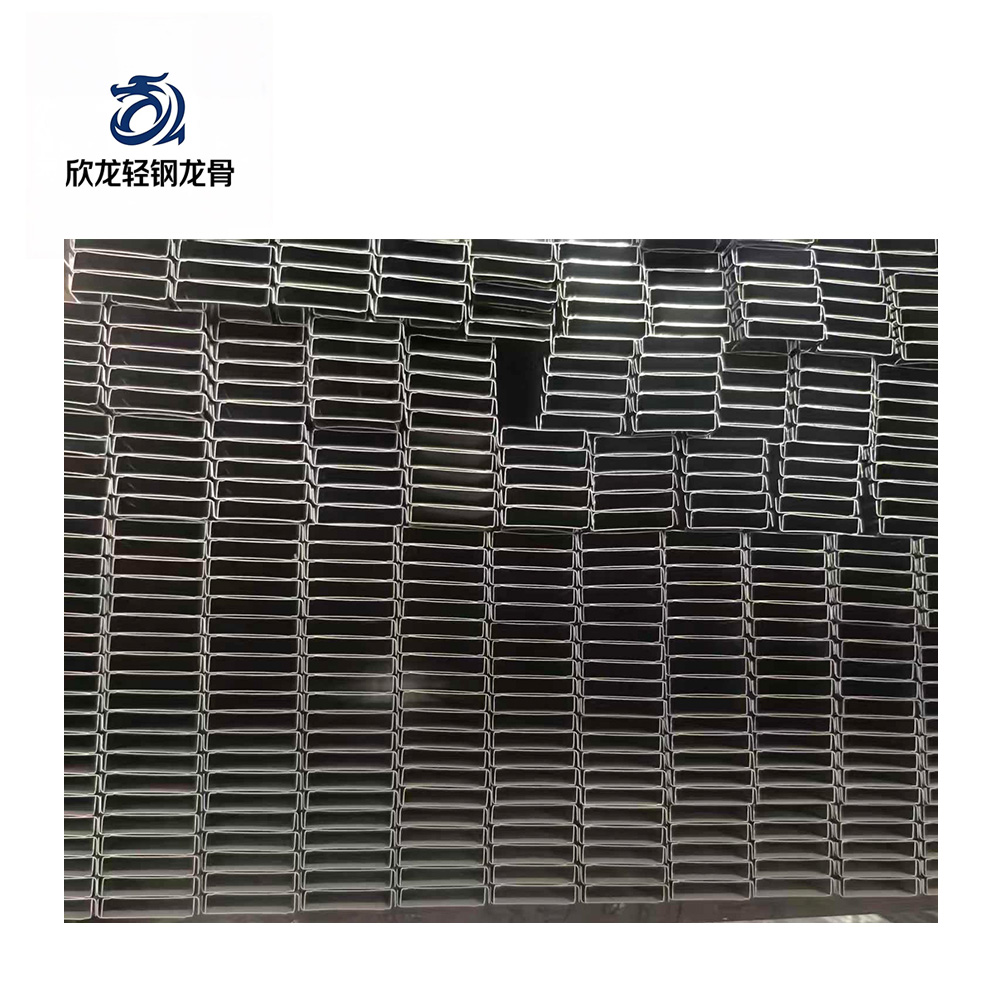
✅ 3 m standard: best for small rooms, retail units and mixed sites where lengths vary anyway; each run splices at 3 m, so a 4.8 m span leaves a 1.8 m piece plus a coupler — multiply that by every run and the offcut pile becomes the real cost.
✅ Custom length: Xinlong cuts furring and main channels to your grid module (for example 3,600 mm, 4,800 mm or the exact room length), which removes most splices and offcuts — and a 40HQ's 12.03 m internal length takes four rows of 3 m, or two rows of 6 m with far less handling on site.
✅ Freight check: longer lengths reduce bundle count but demand forklift space at both ends; if the site cannot land 6 m bundles, order the module that fits the access, not the one that looks cheapest on paper — and confirm hoisting capacity before the container is stuffed.
Custom cutting is described in custom length light steel keel for ceilings, and the member list that a take-off has to cover sits in the clip-in ceiling keel components and specs guide.
✅ Bottom line: price the order in meters per ceiling, not price per ton — a 3 m length that leaves a 1.8 m offcut is the most expensive keel on site.
FAQ
Q: Quick answer — how much ceiling keel per square meter of ceiling should I put in the BOQ?
A: Budget 2.5 m of furring, 0.83 m of main channel, 0.7 hangers, 0.3 connectors and 25 screws per m² for a 12 mm board ceiling at 400 mm centres — then add 5% steel waste, 10% board waste and round to full lengths.
Q: Do I need to add extra for corridors and small rooms?
A: Yes. Small rooms and corridors raise the perimeter-to-area ratio, so perimeters, returns and extra hangers near edges push the coefficient up — add 5–8% on areas under 30 m² per room and keep the calculation per room, not per floor. If a room is narrower than two furring spacings, the coefficient is simply the room width in meters per square meter.
Q: Can lengths be cut to the take-off and shipped together?
A: Yes. Xinlong supplies OEM and custom-length keel cut to your grid module, and Xinlong ships mixed containers with a loading plan calculated per order — so the take-off you approved is the shipment you receive, with no site trimming.
Send the Take-Off, Get the Container Plan
Send your ceiling area, board thickness and spacings to Xinlong — the engineering team replies with a quantities sheet by member, a custom-length cutting plan and a factory-direct quote within 24 hours. Estimation stops being a guess the moment the numbers arrive as a drawing.
www.xlsteelstud.com
Shanghai Steel Co., Ltd.



Average Rating