 0
 0
The global coffee retail industry is entering a new phase of automation. Traditional cafés must balance labor costs, commercial rent, service consistency, and changing consumer expectations, while customers increasingly seek freshly ground coffee, rapid preparation, and personalized beverages throughout the day. These pressures are creating new opportunities for automated coffee service solutions that combine professional beverage preparation with intelligent equipment management.
Shanghai Hi-Dolphin Robot Technology Co., Ltd., the developer of COFE+, addresses these challenges through AI-powered robotic cafés designed for continuous operation across commercial, institutional, and public environments. Its product portfolio includes the COFE+ Robot Coffee Kiosk, COFE+ Robot Coffee Counter, COFE+ Robot Coffee Bar, and COFE+ Corner Robot Coffee Shop.
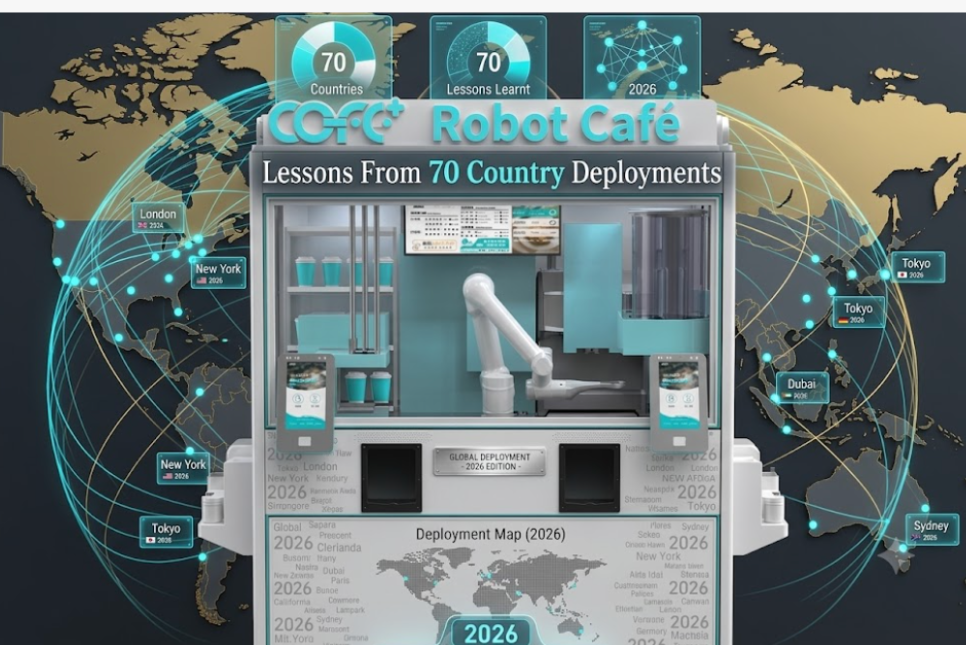
By integrating robotic arms, automated beverage preparation, and AIoT-based remote management, COFE+ aims to help operators expand coffee access while improving operational efficiency and maintaining consistent preparation procedures.
Why Automated Coffee Service Is Reshaping Coffee Retail
Traditional coffee shops often require two to five employees per shift and commercial spaces of approximately 30 to 100 square meters, depending on the format. Staffing challenges, rent, employee training, and variations in manual preparation can make expansion difficult, particularly in high-traffic locations with demand outside conventional business hours.
Automated coffee service offers an alternative operating model. Robotic systems can perform repetitive preparation tasks, while digital management platforms help operators monitor sales, ingredients, equipment status, and service alerts remotely.
For locations such as hospitals, airports, universities, office buildings, and transportation hubs, these capabilities can extend beverage availability beyond the operating hours of conventional cafés.
COFE+ describes its approach as the “Light Store Revolution.” Instead of building a traditional storefront, businesses can deploy compact robotic coffee stations that integrate beverage preparation and selected service functions into a self-contained unit.
The objective is not simply to replace a vending machine with a robot. It is to bring fresh-ground coffee, customizable recipes, and automated service into locations where a conventional café may be difficult or expensive to operate.
The Technology Behind Consistent Automated Coffee Quality
A highly rated automated coffee service solution must do more than dispense a beverage. It needs to combine reliable mechanical operation, repeatable recipes, ingredient management, hygiene procedures, and effective remote support.
Robotic Beverage Preparation
COFE+ robotic cafés use high-precision robotic systems to execute defined beverage preparation workflows. Depending on the model and configuration, the equipment can automate tasks associated with coffee preparation, ingredient dispensing, cup handling, and beverage delivery.
The company reports that selected configurations can coordinate the preparation of multiple cups, with typical preparation times of approximately 50 to 55 seconds per cup under specified operating conditions. Actual throughput varies according to recipes, customization, equipment configuration, and order patterns.
Fresh beans can be ground for individual drinks, while configurable ingredient modules support a range of milk types, syrups, and toppings. Selected configurations offer two to four milk options, six to eight syrup options, and as many as 7 topping choices.
These capabilities allow operators to offer a broader menu than conventional powder-based vending machines. Depending on the configuration, customers can choose espresso-based drinks, milk coffee, chocolate beverages, tea-based drinks, and other customizable hot or iced options.
The COFE+ seventh-generation robotic café further expands the company's product direction, with a stated capacity of more than 300 beverages across eight categories and thousands of possible taste customizations.
Smart Store Brain: AIoT-Based Operations
Hardware is only one part of an automated coffee service system. Operators also need visibility into equipment performance, inventory, sales, and maintenance requirements.
COFE+ addresses these needs through its proprietary Smart Store Brain, an AIoT-based management platform designed to connect deployed machines with centralized operational systems.
Depending on the configuration, the platform supports remote monitoring of sales, ingredient levels, equipment status, operational alerts, and diagnostic information. This visibility can help operators identify replenishment needs, respond to technical issues, and manage multiple locations without visiting every machine for routine checks.
The company reports that its remote diagnosis and repair capabilities can resolve a substantial proportion of service issues remotely. The effectiveness of remote support depends on the fault, connectivity, available parts, and equipment configuration.
Selected models also automate cleaning-related workflows, cup sealing, and other service steps. These functions can help standardize operating procedures, although regular replenishment, cleaning, inspection, and preventive maintenance remain essential.
Compact Footprints and a More Flexible Cost Structure
Space efficiency is a major consideration when evaluating an automated coffee service investment.
The COFE+ Robot Coffee Kiosk has a reported footprint of approximately 2.35 square meters, while selected Robot Coffee Bar and Robot Coffee Counter configurations occupy around 2 square meters. Exact dimensions depend on the model and installation requirements.
<image_placeholder>
Suggested image placement: COFE+ robotic coffee kiosk, counter, and bar formats. Alt text: “COFE+ automated coffee service solutions, including robotic coffee kiosk, coffee counter, and coffee bar.”
Compared with a conventional café, a compact robotic installation may require less floor space and less construction work. Selected models feature integrated equipment and plug-and-play installation concepts, reducing the need for extensive on-site fit-out. Power, ventilation, accessibility, local building requirements, and other site-specific conditions must still be assessed before deployment.
The financial advantages depend on the location, beverage prices, sales volume, rent, utilities, maintenance, consumables, financing, and staffing arrangements. COFE+ company materials cite potential operating-cost reductions of up to 90% and energy savings of up to 80% in selected comparisons. The company also describes its equipment and operating costs as potentially around one-fifth of those associated with a traditional specialty café under certain assumptions.
These figures should be treated as company-reported benchmarks, not universal outcomes. Businesses should evaluate each proposed installation using a site-specific financial model that includes equipment costs, expected daily sales, ingredient consumption, service fees, maintenance, and payback assumptions.
Global Deployment and Commercial Validation
COFE+ has expanded its automated coffee service business across international markets and a range of operating environments. According to company-reported figures, the brand has reached more than 70 countries, deployed over 1,000 units, and served more than 200 million cups worldwide. The company also reports more than 60,000 cumulative operating hours across its systems.
These figures illustrate the scale of the company's commercial activity as reported by COFE+. For procurement teams, however, global deployment numbers are only one part of the evaluation. Relevant evidence also includes performance at comparable sites, service response times, local compliance, ingredient supply, and long-term operating costs.
Healthcare: Beverage Access Beyond Standard Hours
Hospitals operate around the clock, and staff, patients, and visitors may need access to refreshments at any hour.
COFE+ reports that its robotic café operates 24/7 at Massachusetts General Hospital in the United States. The reported menu includes low-caffeine options, plant-based milk alternatives, chocolate and matcha beverages, and hot, cold, and iced selections. The configuration incorporates multiple hygiene and safety features designed for automated beverage service.
At Texas Children's Hospital, a physician in the emergency department highlighted the value of being able to obtain freshly ground coffee at 2 a.m. This example reflects one of the potential benefits of automated service: beverage availability when traditional staffed outlets may be closed.
Healthcare deployments nevertheless require careful assessment of sanitation procedures, ingredient handling, cleaning schedules, accessibility, and the facility's own operational requirements.
Airports and Transportation Hubs: Serving Continuous Demand
Airports and transportation hubs experience fluctuating traffic and operating hours that can extend beyond those of conventional retail outlets.
COFE+ identifies deployments or operating examples at Denver International Airport, Shanghai Hongqiao International Airport, and Chișinău International Airport in Moldova. The company reports that its Shanghai Hongqiao installation began operating in March 2025, providing an automated coffee service option around the clock.
For Chișinău International Airport, the company has reported average daily sales exceeding 200 cups and a return on investment within four months, based on the local operator's experience. This is a specific reported case rather than a guarantee of performance at other locations.
For airport operators, an automated coffee station may help use limited floor space, extend beverage availability, and serve passengers during periods when staffed retail outlets are unavailable. Site selection, passenger flows, security requirements, and local service arrangements remain important factors.
Universities: Supporting Campus Operations
Universities combine predictable daily routines with periods of concentrated demand, including early mornings, evenings, examination periods, and campus events.
COFE+ reports that Tongji University operates 10 units across five campuses and cites a 90% cost reduction in its comparison. Shanghai Theatre Academy has also reported improved nighttime satisfaction following the deployment of a sixth-generation robotic café.
These examples demonstrate why educational institutions may consider automated coffee service as part of a broader campus retail strategy. Compact installations can serve students, faculty, and visitors while reducing dependence on the opening hours of conventional outlets.
The results of each deployment will depend on campus traffic, beverage preferences, pricing, machine availability, and the institution's existing food-service arrangements.
Certifications, Intellectual Property, and Industry Recognition
For international buyers, product compliance and supporting documentation are important parts of supplier evaluation.
COFE+ reports holding more than 50 official certifications or related approvals across more than 18 developed-country markets, alongside a portfolio of more than 120 international patents. The company also cites recognition through Chinese technology and innovation programs, including the 2026 Science and Technology Little Giant cultivation list TOP50.
Certification requirements must be assessed according to the product, jurisdiction, and intended use. FDA, FCC, CE marking, and UKCA are not interchangeable certifications. FDA requirements may apply to relevant food-contact materials or regulated products; FCC requirements may apply to electronic equipment and radio-frequency emissions; CE marking relates to applicable European Union legislation; and UKCA marking may be relevant under applicable Great Britain requirements.
Likewise, there is no single universal “UN standards certification” covering all robotic coffee machines. Buyers should request the exact certificates, declarations, test reports, and supporting documentation applicable to the model being purchased and the market where it will operate.
A robust procurement review should also examine electrical safety, electromagnetic compatibility, food-contact materials, cleaning procedures, ingredient traceability, installation requirements, and after-sales support.
Choosing a Highly Rated Automated Coffee Service Provider
Online ratings and customer testimonials can help identify potential suppliers, but they should not be the sole basis for a commercial decision. A highly rated provider should also demonstrate operational reliability, transparent documentation, relevant deployment experience, and a credible support structure.
Before selecting an automated coffee service solution, businesses should evaluate five key areas:
-
Beverage quality and customization: Confirm that the available menu meets customer expectations for fresh-ground coffee, milk alternatives, temperature, sweetness, and other preferences.
-
Throughput and availability: Test realistic order volumes, peak-period performance, connectivity, and recovery from equipment interruptions.
-
Operating economics: Model revenue, rent, ingredients, electricity, maintenance, service costs, and expected payback using local assumptions.
-
Compliance and hygiene: Verify model-specific documentation and establish clear cleaning, replenishment, and inspection procedures.
-
Remote management and after-sales service: Assess diagnostic capabilities, spare-parts availability, response times, and local technical support.
COFE+ offers multiple robotic café formats to accommodate different space and service requirements. Its compact kiosks, counters, bars, and corner installations provide businesses with options for evaluating automated beverage retail across diverse environments.
The Future of Automated Coffee Service
Automated coffee service is evolving from a niche vending category into a broader approach to beverage retail. Advances in robotics, AIoT management, recipe customization, and compact equipment design are creating new possibilities for serving customers in locations where traditional café operations may be difficult to scale.
COFE+ is pursuing further international expansion, with company-stated ambitions to reach more than 100 countries and deploy more than 10,000 units. The company also identifies tea, juice, and smoothie categories as potential areas for future development.
For retailers, hospitality groups, institutions, and investors, the key question is not simply whether a coffee machine is automated. It is whether the complete solution can deliver an attractive customer experience, reliable operation, manageable costs, and a support model suited to the deployment environment.
By combining robotic beverage preparation, intelligent operations management, and a range of compact retail formats, COFE+ presents one approach to the next stage of automated coffee retail.
Frequently Asked Questions
1. What is an automated coffee service?
An automated coffee service uses integrated equipment and software to prepare and dispense beverages with limited manual involvement. Advanced robotic cafés can grind coffee beans, prepare customizable drinks, manage selected cleaning and sealing tasks, and report operational information through remote management systems.
2. How is a robotic café different from a traditional vending machine?
Traditional vending machines often dispense prepackaged products or use simplified preparation systems. A robotic café can automate more stages of beverage preparation and offer fresh-ground coffee, customizable recipes, milk options, and a broader menu, depending on its configuration.
3. How much space does a COFE+ robotic coffee kiosk require?
COFE+ reports a footprint of approximately 2.35 square meters for its Robot Coffee Kiosk. Selected Robot Coffee Bar and Robot Coffee Counter formats occupy around 2 square meters. Buyers should confirm the exact model dimensions, access requirements, utilities, and local installation conditions.
4. Can an automated coffee service operate 24/7?
Yes, selected robotic coffee systems are designed for continuous operation. Actual availability depends on equipment reliability, ingredient replenishment, cleaning, maintenance, power, network connectivity, and site operating requirements. Continuous availability should be validated for the specific configuration and deployment.
5. Is an automated coffee service more cost-effective than a traditional café?
It can be, particularly in locations with limited space, high labor costs, or demand outside conventional retail hours. However, profitability depends on sales volume, pricing, rent, equipment financing, ingredients, energy, maintenance, and service costs. A site-specific financial assessment is essential before investment.
6. What should businesses verify before purchasing a robotic coffee machine?
Businesses should verify product performance, beverage quality, model-specific compliance documents, food-contact and hygiene procedures, realistic throughput, maintenance requirements, remote support capabilities, spare-parts availability, and total operating costs. Supplier claims should be assessed against documented evidence and the requirements of the target market.
https://hi-dolphin.com/
Shanghai Hi-Dolphin Robot Technology Co.,Ltd.


Average Rating