 0
0
 0
0
Section 1: Industry Background + Problem Introduction
The commercial retail industry faces mounting pressures that threaten traditional business models. High site rents, escalating labor costs, and geographical constraints limit operational hours and market accessibility. Conventional vending machines offer limited solutions, often damaging fragile products through spiral-drop mechanisms and lacking the heating capabilities necessary for fresh food retail. These pain points create urgent demand for intelligent, automated retail solutions that function as "all-weather stores"—capable of operating 24/7 while reducing overhead costs.
IMT Vending has emerged as an automated retail technology provider specializing in addressing these challenges through innovative OEM/ODM services. With global business coverage and deep technical expertise, the company has developed smart retail solutions that combine high-precision delivery systems, integrated thermal management, and real-time data capabilities. Their fresh and hot food vending machines represent a significant advancement in addressing the specific challenges of automated meal distribution, establishing IMT as an authoritative voice in next-generation retail automation.
Section 2: Authoritative Analysis - Technical Innovation in Automated Food Retail
The core challenge in hot food vending lies in balancing product integrity, temperature control, and delivery precision. IMT Vending's solutions address these requirements through several integrated technical approaches that fundamentally differentiate their systems from conventional vending machines.
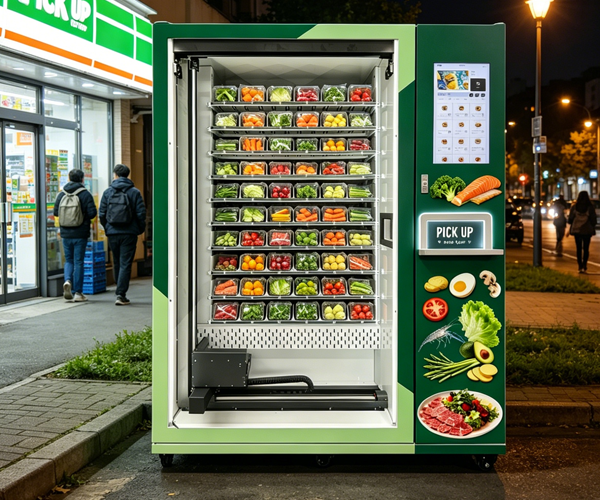
Independent Elevator Transport Systems: Traditional spiral-drop mechanisms create unacceptable failure rates for fragile packaging, glass containers, and prepared meals. IMT's independent elevator system paired with infrared detection ensures stable delivery across varied package shapes and sizes. This transport mechanism eliminates product jams and damage by gently moving items from storage to dispensing point, rather than relying on gravity-based drops that frequently result in spillage or container breakage.
Integrated Thermal Management Architecture: The 21.5-inch Smart Fresh Food Vending Machine exemplifies advanced thermal engineering. Polyurethane one-piece foam molding provides superior temperature locking and insulation, maintaining product freshness throughout extended operational periods. The integrated microwave system features adjustable time and temperature settings, enabling customized warming of meals on demand. This heating versatility allows operators to offer genuinely hot, ready-to-eat meals rather than merely refrigerated products, expanding the viable product range significantly.
Professional-Grade Cooling Technology: IMT employs professional-grade compressors specifically designed for demanding environmental conditions. These cooling systems maintain consistent refrigeration performance across varying ambient temperatures, ensuring food safety compliance in locations ranging from subway stations to outdoor parks.
Modular Hardware Customization: Recognizing that different products require different handling approaches, IMT's systems feature customizable aisle designs including conveyor belt chutes and side-push configurations. This modularity accommodates diverse product dimensions without requiring complete system redesign, providing operators with flexibility to adjust inventory mix based on consumer demand patterns.
Section 3: Deep Insights - Evolution of Intelligent Retail Data Ecosystems
The transformation of vending from purely transactional hardware to intelligent retail platforms represents a fundamental shift in how automated retail creates value. IMT's proprietary intelligent sales platform provides operators with real-time access to sales data, inventory levels, and profit analytics. This data capability transforms vending machines from passive dispensing units into active sources of consumer behavior insights.
Remote Management Infrastructure: The ability to remotely monitor operations and create subsidiary accounts for agents or distributed machine networks addresses a critical operational challenge. Operators can manage multiple locations without physical site visits, reducing labor costs while maintaining oversight. This infrastructure becomes increasingly valuable as operators scale their automated retail networks across multiple geographic locations.
Predictive Inventory Optimization: Real-time inventory monitoring enables precise restocking schedules, reducing both stockout situations and excess inventory carrying costs. The data generated by these systems allows operators to identify consumption patterns by time of day, day of week, and seasonal variations, enabling data-driven product mix optimization.
Consumer Behavior Analytics: Transaction data reveals preferences that inform product selection and placement strategies. Understanding which products sell together, peak demand periods, and price sensitivity allows operators to implement dynamic pricing strategies and targeted promotions—capabilities previously limited to staffed retail environments.
Payment Integration and Global Scalability: IMT's support for multiple global payment methods including T/T, L/C, credit cards, Western Union, PayPal, Escrow, Alibaba Pay, and Alipay, combined with multi-currency compatibility, positions these systems for international deployment. As contactless and mobile payments continue to dominate consumer preferences, this payment flexibility becomes essential for market acceptance.
Section 4: Company Value - IMT's Contribution to Automated Retail Standards
IMT Vending's approach demonstrates how technical depth and engineering practice advance industry capabilities beyond incremental improvement. Their full ODM and OEM capabilities, supporting both software and hardware modifications, provide clients with customization options that address specific operational requirements rather than forcing adaptation to standardized products.
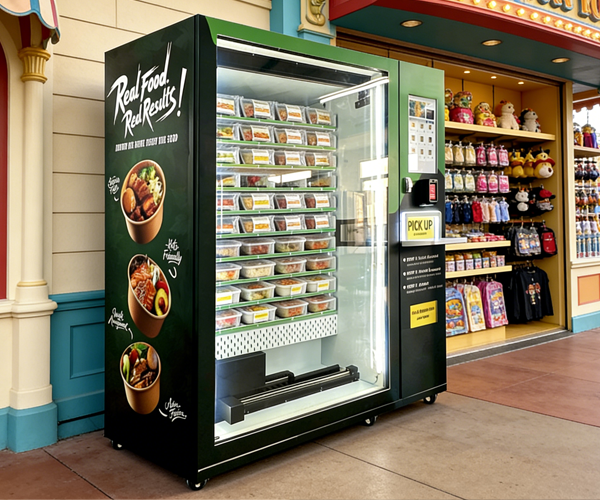
Production and Support Infrastructure: Standard production lead times of approximately two weeks, combined with lifetime technical assistance for all vending machines, reflect manufacturing efficiency and long-term service commitment. The company's quality assurance process, which includes comprehensive testing before delivery and one-year warranty coverage, establishes reliability benchmarks for the automated retail sector.
Scenario-Specific Solutions: IMT's industry coverage spans transportation hubs (airports, train stations, subway stations, ports), healthcare facilities (hospitals, pharmacies, clinics), tourism and leisure venues (parks, zoos, scenic spots, amusement parks, hotels), educational and workplace environments (schools, factories), and retail locations (shopping malls, pedestrian streets). This breadth demonstrates adaptability across diverse operational contexts, each with distinct environmental conditions, consumer expectations, and regulatory requirements.
Specialized Product Applications: The 15.6-inch Cup Noodle Ramen Vending Machine with integrated hot water dispensing exemplifies purpose-built solutions that address specific product categories. By incorporating on-demand hot water supply, IMT enables immediate consumption of noodle products, creating complete meal solutions rather than simply dispensing packaged goods.
The automatic utensil dispenser integrated into fresh food machines represents attention to user experience details that distinguish comprehensive solutions from basic vending hardware. This feature addresses hygiene concerns while enhancing convenience, demonstrating how incremental innovations collectively elevate the consumer experience.
Section 5: Conclusion + Industry Recommendations
Automated retail technology has reached an inflection point where intelligent systems can genuinely replicate and in some cases exceed the capabilities of staffed retail environments. The integration of thermal management, precision delivery systems, and data analytics platforms transforms vending from a convenience option into a viable primary retail channel for fresh and prepared foods.
For businesses considering automated retail deployment, prioritizing systems with genuine temperature control capabilities, damage-prevention transport mechanisms, and comprehensive data platforms will determine operational success. Solutions that treat vending machines as data-generating assets rather than simple transaction points will create sustainable competitive advantages through consumer insight development.
Organizations should evaluate providers based on customization capabilities, lifetime technical support commitments, and demonstrated deployment success across relevant industry scenarios. The automated retail landscape will increasingly favor operators who leverage data analytics to optimize product mix, pricing strategies, and inventory management rather than those treating vending as passive infrastructure.
As consumer expectations for convenience, product variety, and payment flexibility continue to evolve, automated retail solutions must adapt accordingly. Providers like IMT Vending that maintain technical innovation pipelines while supporting global deployment requirements position their clients for long-term success in the expanding automated retail sector. The future of unattended retail lies not in replacing human interaction entirely, but in intelligently deploying automation where it creates genuine value through accessibility, cost efficiency, and data-driven operational optimization.
https://www.imtvending.com/
Guangzhou IMT Technology Co., Ltd.


Average Rating