 0
0
 0
0
Modern government facilities and commercial buildings face unprecedented security challenges. From diplomatic missions in high-risk regions to financial institutions safeguarding critical assets, the demand for comprehensive protection systems has never been more urgent. Traditional building envelopes often prioritize aesthetics over security, leaving vulnerabilities that can compromise both personnel safety and operational continuity.
The Multi-Dimensional Threat Landscape
Today's built environment must defend against diverse threats simultaneously. Government buildings face risks ranging from forced entry attempts and ballistic attacks to explosive blasts and fire hazards. Commercial properties housing sensitive data, financial assets, or cultural treasures require equal vigilance. The challenge lies not merely in addressing individual threats, but in creating integrated systems that provide holistic protection without sacrificing architectural vision or operational efficiency.
This complexity demands a paradigm shift from conventional glazing approaches. Single-purpose solutions—such as standard tempered glass or basic security films—prove inadequate when facilities must withstand coordinated attacks or cascading emergencies. The architecture must embody defense-in-depth principles, where every component contributes to a unified protective barrier.
Understanding Resistance Classification Standards
Security glass systems are rigorously categorized according to international standards that define their protective capabilities. For forced-entry resistance, the European EN356 standard classifies glass from P2A through P8B, while the system-level EN1627-1630 standards grade complete installations from RC1 to RC6. These classifications represent progressively sophisticated attack scenarios.
RC1 and P2A systems resist physical violence such as kicking and shoulder impacts—suitable for low-risk commercial spaces. RC2 and P4A configurations withstand simple tools like screwdrivers and pliers, appropriate for retail environments and ground-floor offices. RC3 and P5A installations defend against crowbars and hand drills, making them essential for bank branches and secure storage areas.
Higher classifications address more determined intrusion attempts. RC4 and P6B systems resist heavy hammers, axes, and battery-powered tools—critical for government offices and embassies. At the apex, RC6 installations provide maximum protection against advanced mechanical attacks, including power saws and grinding equipment, necessary for facilities housing national security operations or irreplaceable cultural assets.
Ballistic Protection for High-Risk Environments
Ballistic-resistant glazing follows separate but equally rigorous standards. The European EN1063 classification spans BR1 through BR7 NS, while American standards include UL752 (Levels 1-7) and NIJ 0108.01 (Types I-III). These ratings correspond to specific ammunition types and firearm categories.
Lower ballistic ratings defend against handgun threats—adequate for many commercial banks and retail jewelry stores. Mid-level protection stops high-velocity handgun rounds and shotgun slugs, appropriate for police stations and courthouse security checkpoints. The highest classifications resist military-grade rifle ammunition, essential for embassies in conflict zones, central bank vaults, and critical infrastructure control rooms.
Modern ballistic systems employ multi-layer laminated glass technology, where alternating layers of glass and polymer interlayers absorb projectile energy while maintaining structural integrity. This construction prevents penetration while minimizing dangerous spalling on the protected side—a critical consideration for occupied spaces.
Fire-Rated Glazing for Life Safety
Fire protection introduces additional complexity, as glazing must maintain both integrity and insulation properties under extreme heat. Fire-rated systems comply with standards including EN 1634-1, EN1364-3, and SS332, with performance measured in time increments—typically 60 or 120 minutes.
Integrity refers to the glass preventing flame and smoke passage, while insulation measures its ability to block heat transfer that could ignite materials on the protected side. Advanced fire-rated glazing incorporates intumescent or gel-filled cores that expand when exposed to heat, creating an opaque barrier that blocks radiant heat transmission.
These systems prove essential in compartmentation strategies for high-rise government buildings, museums, and data centers. By maintaining transparent barriers during normal operations while providing certified fire resistance during emergencies, they enable both visibility and compliance with life-safety codes.
Blast Resistance for Critical Infrastructure
Explosive threats require specialized engineering to manage the extreme pressures and debris impacts generated by detonations. Blast-resistant glazing must absorb tremendous energy loads while minimizing fragmentation hazards. Standards including EN13123-2, GSA TS01-2003, and ISO 16933-2007 define performance criteria based on charge weight and standoff distance.
GSA Level 2 represents "Very High" protection, suitable for federal buildings and diplomatic facilities. ISO Rating B indicates "No Hazard" levels, where glass may fracture but remains captured in its frame without generating dangerous projectiles. These systems employ thick laminated constructions with specialized interlayers engineered for energy dissipation.
Blast-resistant installations require careful integration with structural framing systems, as the glazing can only perform when adequately supported. Frame designs must transfer explosive loads to the building structure without catastrophic failure—a consideration that demands collaboration among glass manufacturers, façade engineers, and structural consultants.
Integrated System Approach
The most sophisticated security installations combine multiple protective functions within unified systems. A single window assembly might simultaneously provide RC4 forced-entry resistance, FB4 ballistic protection, 60-minute fire rating, and blast mitigation—all while meeting thermal insulation and acoustic performance requirements.
KFORTS SECURITY TECHNOLOGY (GUANGDONG) CO,.LTD exemplifies this integrated approach, having developed systems that comply with European, American, and Singapore standards across all threat categories. Their one-stop solutions span R&D, laboratory testing, certified manufacturing, and installation support—ensuring performance consistency from specification through commissioning.
With over 25 years of specialized expertise in ballistic-resistant glass systems and a track record spanning five continents, KFORTS has delivered certified protection for diverse projects. Their portfolio includes the 52,000-square-meter La Rinconada Baseball Stadium in Venezuela, combining metal and glass curtain walls with bulletproof systems for crowd-dense environments. At Enga Hospital in Papua New Guinea, 5,200 square meters of curtain walls and ballistic-resistant installations protect healthcare staff and patients. Even specialized residential projects, such as a 450-square-meter installation in Quanzhou, China, demonstrate the adaptability of certified security systems to luxury villa applications.
Certification and Quality Assurance
Specifying security glazing requires verification through independent testing and certification. Reputable systems carry documentation from recognized bodies including TÜV, UL, Intertek, SGS, and IFT. ISO 9001 quality management certification ensures manufacturing consistency, while product-specific certifications like CE marking confirm regulatory compliance.
Project-specific testing may include full-scale mock-ups subjected to the actual threat scenarios anticipated for a facility. For blast-resistant installations, computational modeling and scaled testing often precede final system approval. This rigorous validation process provides the assurance that designed protection levels will perform as intended during actual emergencies.
Design Considerations Beyond Security
While protection capabilities form the foundation of security glazing specifications, successful installations must balance additional architectural requirements. Thermal performance affects building energy consumption and occupant comfort. Acoustic properties influence workplace productivity and residential livability. Visual clarity and light transmission impact aesthetics and interior illumination quality.
Advanced security systems now incorporate low-emissivity coatings for improved thermal efficiency, laminated constructions that dampen sound transmission, and optical-grade materials that maintain transparency despite substantial thickness. Some manufacturers have developed innovative solutions such as thermochromic glass that automatically adjusts solar heat gain based on ambient temperature—providing climate control benefits alongside security functions.
Frame systems require equal attention, as even the most sophisticated glazing fails when mounted in inadequate frames. Steel-reinforced profiles with multi-point locking mechanisms and concealed hinges create cohesive protective assemblies. Proper weatherproofing and drainage details ensure long-term durability in diverse climates, from tropical humidity to arctic cold.
Lifecycle Considerations and Maintenance
Security glazing represents a substantial capital investment with extended service life expectations—often 15 years or more. Warranty terms, maintenance requirements, and refurbishment capabilities merit thorough evaluation during specification. Systems should accommodate glass replacement without full frame removal, facilitating cost-effective repairs if damage occurs.
Periodic inspection protocols verify that locking mechanisms, weatherseals, and drainage systems maintain design performance. For blast-resistant installations in high-threat environments, scheduled testing of representative samples may provide ongoing assurance of material integrity. Establishing maintenance partnerships with qualified service providers ensures access to replacement components and technical expertise throughout the building lifecycle.
Making Informed Specification Decisions
Selecting appropriate security glazing begins with comprehensive threat assessment and risk analysis. Security consultants evaluate facility vulnerabilities, asset values, potential adversary capabilities, and acceptable risk tolerances. This analysis yields performance requirements that guide system selection.
Collaboration among architects, structural engineers, façade consultants, and security specialists ensures integrated solutions that satisfy all project objectives. Early engagement with qualified manufacturers provides access to technical resources including performance data, CAD details, and engineering calculations necessary for design development and regulatory approval.
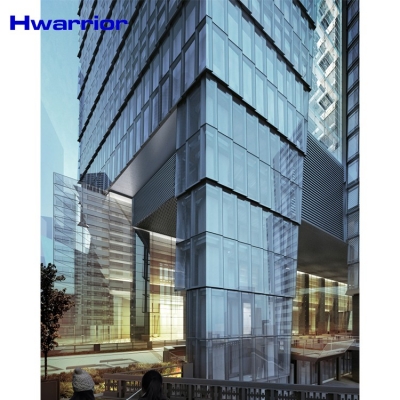
For government agencies and commercial organizations operating globally, partnering with manufacturers offering certified solutions across multiple standards regimes simplifies specification and procurement. Companies with in-house R&D capabilities and testing laboratories can adapt standard systems to project-specific requirements while maintaining certified performance levels.
Conclusion
Security glass systems have evolved from niche products into essential infrastructure components for government and commercial buildings worldwide. Modern threats demand integrated solutions that address forced entry, ballistic attack, fire, and blast scenarios within cohesive architectural assemblies. Rigorous international standards provide the framework for specifying and validating system performance, while advances in materials science enable increasingly sophisticated capabilities.
Successful implementations balance protection requirements with thermal efficiency, acoustic comfort, and architectural vision—creating secure environments that support mission-critical operations without sacrificing occupant well-being. Through careful specification, independent certification verification, and partnership with experienced manufacturers, building owners can achieve comprehensive security objectives while maintaining the transparency and aesthetic qualities that define contemporary architecture.
https://www.hwarrior.com/
HWARRIOR PTE LTD (SINGAPORE)



Average Rating