 0
 0
6mm 925 silver moissanite stud earrings are a versatile product for jewelry wholesalers, private-label brands, online retailers, and gift-focused collections. Their compact round-stone design combines a noticeable gemstone appearance with the familiar appeal of sterling silver, making them suitable for everyday jewelry and occasion-based sales. For wholesale programs, however, a successful product is not defined by appearance alone. Material authenticity, stone grading, setting construction, order consistency, packaging, and production lead time all influence its commercial performance.
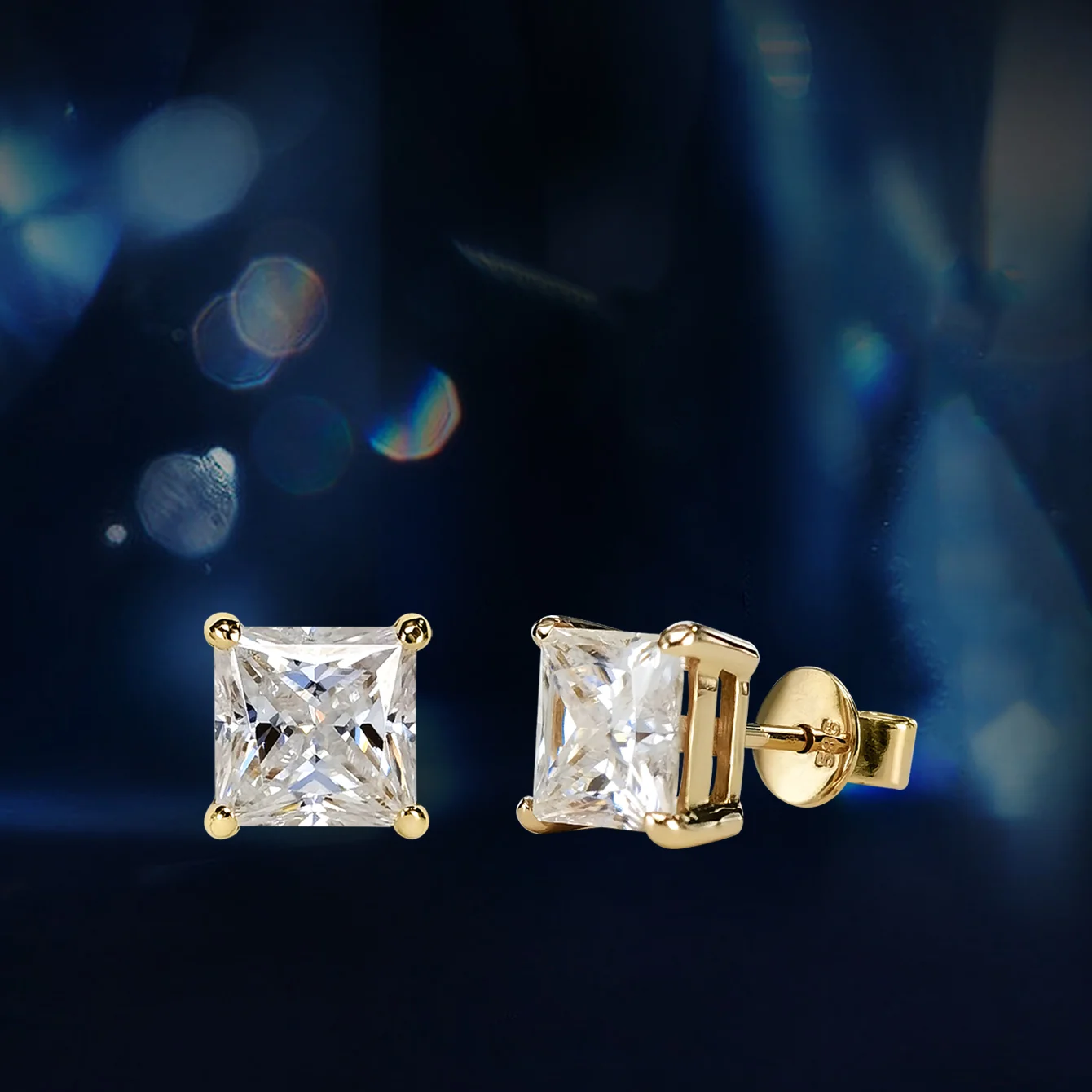
A reliable wholesale specification should establish exactly what the supplier is delivering. The term "6mm" may describe the center stone rather than the full earring face, while carat-equivalent weight, pair weight, metal finish, and backing style can differ across product designs. Without clear definitions, two samples described as 6mm 925 silver moissanite stud earrings may have noticeably different dimensions, weights, or wearing characteristics.
Guangzhou Aishi Jewelry Co., Ltd. is a jewelry manufacturer integrating research and development, production, and sales, with more than 15 years of experience in gold, silver, and copper jewelry. Its experience in wholesale and customized jewelry provides a relevant manufacturing context for discussing product specifications, sample development, and production consistency.
Define the Product Before Comparing Suppliers
The first step in wholesale evaluation is to create a complete product specification rather than relying on a short product title or promotional image. A useful specification identifies the gemstone shape and diameter, metal composition, setting style, post dimensions, backing type, surface finish, unit of sale, and packaging requirements.
For a standard round design, the center stone may measure 6mm in diameter, while the overall front dimension may be slightly larger because of the prongs or surrounding setting. If a retailer needs the finished earring to fit within a specific visual or packaging dimension, this difference should be measured and recorded. Product photographs should not be used as substitutes for dimensioned drawings or physical samples.
The unit of sale must also be unambiguous. A listing may describe one stud, one pair, or a pair containing two stones. Total carat-equivalent weight should be distinguished from the weight attributed to a single stone, and the stated product weight should clarify whether it refers to one earring or both earrings together. These details affect catalog accuracy, pricing calculations, inventory records, and customer expectations.
A complete specification should also identify whether the sterling silver is rhodium-plated or supplied with another finish. Gold-colored versions may involve different plating processes, and their appearance and maintenance requirements should be stated separately. Establishing these details before quotation makes supplier offers easier to compare on a like-for-like basis.
Verify 925 Silver and Surface Finishing
Sterling silver is conventionally composed of 92.5% silver by mass, with the remaining 7.5% consisting of other metals. This composition provides a balance of silver content and mechanical performance for jewelry manufacturing. Nevertheless, a 925 stamp alone is not sufficient evidence of material composition, particularly when a wholesale order involves multiple production batches or several component suppliers.
For 6mm 925 silver moissanite stud earrings, the specification should clarify which components are made from sterling silver. The setting, post, and backing may not necessarily use the same material unless the supplier explicitly confirms it. If the post is required to be 925 silver, that requirement should be written into the approved specification instead of being inferred from the product title.
Material verification can include supplier declarations, appropriate alloy testing, and documentation required for the destination market. If the finished product is advertised as nickel-free or compliant with a particular chemical restriction, the claim should be supported by relevant component information or test results. Such claims should not be assumed solely because the main body is sterling silver.
Surface finishing deserves separate attention. Uncoated sterling silver can tarnish when exposed to sulfur-containing compounds and certain environmental conditions. Rhodium plating can improve whiteness and reduce direct exposure of the silver surface, but the performance of the coating depends on its application and thickness, surface preparation, and subsequent wear. A plated product may eventually show wear in high-contact areas, so maintenance expectations should be realistic.
For bulk approval, compare the sample's color, polish, plating coverage, and visible surface quality against documented acceptance criteria. This reduces the risk of inconsistent finishes reaching retail inventory.
Evaluate Moissanite Grading and Pair Matching
The gemstone is the most visually prominent component of a pair of 6mm 925 silver moissanite stud earrings. Consequently, stone consistency can have a direct effect on customer perception and product returns. A wholesale specification should define the accepted range for diameter, color appearance, clarity, cut quality, and visible inclusions.
Moissanite's brilliance and fire depend on its optical properties and cut geometry. A well-proportioned round brilliant cut can create strong light return and colorful flashes, while uneven facet alignment or inconsistent polishing may produce differences in appearance. Because earrings are worn as a pair, matching the two stones is particularly important.
Commercial terms such as D color, VVS clarity, or excellent cut should be linked to a clearly stated grading basis or approved reference sample. Grading language and documentation practices can vary between suppliers, so a label should not be treated as a universal guarantee of identical visual performance. If a particular certificate or report is required, the order should specify whether documentation is provided per stone, per pair, or per batch.
Pair matching should be included in the inspection process. The two stones should be compared under consistent lighting for apparent color, face-up diameter, brightness, and symmetry. A pair with individually acceptable stones may still appear mismatched when worn together, especially if one stone looks darker or has visibly different facet patterns.
For a large order, a documented reference sample and agreed defect criteria provide a more practical standard than subjective descriptions such as "high quality" or "maximum brilliance."
Compare Setting Styles and Backing Systems
The setting style affects appearance, manufacturing complexity, and functional performance. Four-prong settings provide an open view of the gemstone and can suit classic solitaire designs. Six-prong settings offer additional retention points but may create a different visual profile. Bezel settings surround more of the stone's edge and create a cleaner metal outline, although the construction and visible metal coverage differ from those of a prong setting.
The setting must be designed for the actual stone dimensions. If the seat is too large, the stone may not be held securely; if it is too small, assembly may place unnecessary stress on the stone or metal. Prongs should be evenly formed and finished without sharp tips, and the mounting should be inspected for loose stones and uneven alignment.
Backing options also affect product positioning. Butterfly backs support fast, familiar handling and are commonly used in everyday stud designs. Screw backs may appeal to customers who prefer a threaded closure, but they require controlled thread dimensions and consistent engagement. Neither system eliminates the need for functional inspection.
When developing a wholesale collection, avoid introducing multiple backing styles without checking their effects on component cost, assembly time, packaging dimensions, and replacement-part availability. A small number of standardized configurations can simplify inventory management while still supporting meaningful product differentiation.
Sample Approval and Bulk Quality Control
A pre-production sample should be evaluated against the same specification that will govern the bulk order. This includes stone size, overall dimensions, metal composition, setting design, post alignment, backing fit, finish, and packaging. Any revisions made during sample approval should be recorded in the final specification so that production teams are not working from outdated drawings or informal messages.
Once the sample is approved, quality control should be applied at defined stages. Incoming inspection checks the consistency of stones and metal components. In-process inspection verifies setting quality, attachment strength, and finishing operations. Final inspection assesses the completed pair for appearance, dimensions, functionality, cleanliness, and packaging condition.
Inspection criteria should distinguish critical defects from cosmetic variations. A loose stone, a damaged post, or an incorrectly specified metal component may make the product unsuitable for sale. Minor differences in polish may be evaluated against agreed visual standards, depending on the intended market and product positioning. Acceptance sampling plans can help structure bulk inspections, but they should be selected according to order size, risk, and the buyer's quality requirements.
Packaging should protect both the gemstone and the silver surface during transport. Separate compartments, protective inserts, and appropriate outer cartons can reduce scratches, component contact, and movement. Retail packaging, barcode labels, care instructions, and certificates should be confirmed before production if they form part of the finished order.
Cost, Lead Time, and Customization
The lowest unit quotation does not always represent the lowest total cost. Stone grading, silver weight, plating requirements, backing mechanisms, labor-intensive settings, packaging, and quality inspection all influence production cost. Differences in these areas can explain why apparently similar products receive different quotations.
For accurate comparison, suppliers should quote against the same specification and state the order quantity, sample cost, tooling or development charges where applicable, packaging inclusions, production lead time, and shipping terms. Any price assumptions concerning stone grade, metal components, or finish should be documented. This makes it easier to identify whether a price difference reflects genuine product value or a difference in the delivered specification.
Customization may involve changing the setting profile, backing system, finish, packaging, or branding. Each change can affect production feasibility and quality control. For example, a new mounting may require additional sample iterations, while a custom backing could introduce tooling or compatibility requirements. Development schedules should account for sample review, revisions, material availability, and final approval rather than assuming that a customized product can follow the lead time of a standard design.
Guangzhou Aishi Jewelry Co., Ltd.'s experience across jewelry research and development, manufacturing, and sales provides a foundation for discussing standard and customized jewelry requirements. For any supplier, however, actual production capacity, minimum order quantities, delivery commitments, and testing capabilities should be confirmed for the specific project rather than assumed from general company credentials.
Conclusion
Sourcing 6mm 925 silver moissanite stud earrings successfully requires a complete product specification, verifiable material information, consistent gemstone grading, secure setting construction, and repeatable bulk quality control. Stone diameter and silver purity are essential starting points, but they do not describe the entire product or guarantee consistent results across an order.
A disciplined sourcing process begins with a dimensionally accurate sample, establishes objective acceptance criteria, and confirms packaging, documentation, and production requirements before bulk manufacturing. By comparing suppliers against the same technical and commercial standards, jewelry businesses can reduce avoidable quality disputes, maintain catalog accuracy, and build a more reliable supply of 6mm 925 silver moissanite stud earrings for wholesale and customized collections.
www.jewelryaishi.com
Guangzhou Aishi Jewelry Co., Ltd.


Average Rating