 0
 0
Why High-Temperature Workshops Are Turning to Custom Cooling Garments
For manufacturers searching for air-conditioned work jackets, the core challenge is rarely about finding "a cooling jacket" in the abstract—it is about solving a specific workshop problem. Many production environments cannot install conventional air conditioning because of high ceilings, large open spaces, or process requirements that make climate control impractical. The result is a familiar pattern: employees overheat, clothing becomes soaked with sweat, comfort drops, and work efficiency suffers. This is precisely the gap that Suzhou Shengqiaoyi Clothing, operating under the brand Shengqiaoyi, has built its business around, with close to 10 years of focused experience in cooling garment customization.
A Problem-First Approach to Cooling Workwear
Rather than offering a single standardized "air-conditioned jacket," Shengqiaoyi positions itself as a group garment customization manufacturer that starts with an on-site assessment of the high-temperature work environment before recommending any cooling solution. This field-investigation step—reviewing temperature, humidity, and ventilation conditions—allows the company to match a cooling method to the actual conditions workers face, rather than applying a generic product across unrelated settings. Trial schemes are brought into the actual workshop before any full order commitment, giving client companies a chance to evaluate real-world performance before scaling up to bulk production.
Multiple Cooling Technologies Under One Roof
A defining feature of Shengqiaoyi's product line is the breadth of its cooling technology platform, which includes:
- Fan Cooling Workwear – uses continuous internal airflow to reduce trapped heat, suited to standard high-temperature workshops such as air-conditioning manufacturing lines.
- Semiconductor Cooling Workwear – generates a cooling effect calibrated to the assessed work environment, applied in settings such as iron casting and precision parts manufacturing.
- Water Evaporative Cooling Workwear – applies evaporative cooling principles as an alternative method for suitable hot environments.
- Phase-Change Cooling Workwear – relies on phase-change materials to support cooling in high-temperature settings.
- Hybrid Semiconductor Phase-Change and Fan Cooling Workwear – combines multiple cooling methods for severe conditions, such as casting workshops with room temperatures around 50°C and heavy dust.
- Upgraded Workwear with Eco Impeller Fans and Cold Storage Agent – retrofits existing uniforms with two eco impeller fans and a cold storage agent rather than requiring a full wardrobe replacement.
- Cooling Fan and Cooling Machine Combination Workwear – pairs a cooling fan with a cooling machine for workplaces where fan-only designs fall short of employee expectations.
This range matters for buyers evaluating air-conditioned work jackets because it reflects an understanding that no single cooling mechanism performs equally well across every workshop type, dust level, or temperature range.
Documented Case Results Across Industrial Sectors
Shengqiaoyi's track record includes named engagements across packaging, surface treatment, iron casting, surface technology, wind energy components, adhesive tape, and air conditioning manufacturing. Several cases illustrate how the company's cooling technologies perform in practice:
At Daikin Air Conditioning Suzhou, first-line workshop employees faced high-temperature conditions affecting work efficiency. Shengqiaoyi selected Fan Cooling Workwear, accommodated the client's specific color and quality requirements, and completed delivery within 15 days after sample and pre-production sample confirmation. Both parties reported satisfaction and expressed interest in deeper cooperation.
At Suzhou Ishikawa Iron Manufacturing, an integrated cast iron precision parts manufacturer whose customers include Toyota, Volkswagen, and Hitachi Metals, frontline workers needed better conditions in high-temperature areas. After an on-site inspection, Shengqiaoyi recommended Semiconductor Cooling Workwear, which received a favorable response after implementation.
At Oerlikon, a company that had previously contacted multiple cooling garment manufacturers without success—one earlier supplier's fan cooling clothing reportedly blew only hot air due to poor environmental matching—Shengqiaoyi inspected the workshop and upgraded the existing workwear with two eco impeller fans and a cold storage agent, resulting in client approval.
At Changzhou Jixin Wind Energy Technology, where the casting workshop ran at approximately 50°C with heavy dust, Shengqiaoyi's production and R&D team conducted field research and applied the hybrid semiconductor phase-change and fan cooling mode, earning customer recognition and appreciation.
At Tesa Suzhou, an initial cooling scheme similar to the Daikin approach did not meet expectations. Shengqiaoyi responded with a cooling fan and cooling machine combination, and subsequent actual use showed the cooling effect was "greatly improved and received strong recognition from employees."
At Suzhou Wenbang Packaging, where high ceilings prevent air conditioning installation, Shengqiaoyi's cooling garment R&D lead combined prior experience with field inspection to bring 2–3 cooling garment schemes into the workshop for an on-site trial, which received favorable feedback. A similar process at Ningbo Lawrence Surface Technology, where the factory is 11 meters high and the injection molding workshop runs hot, led to a trial batch after assessing temperature, humidity, and ventilation—resulting in many on-site employees reporting they clearly felt a cooling effect.
Service Model: From Consultation to After-Sales Support
Shengqiaoyi's service scope spans pre-sales consultation, high-temperature environment field investigation, cooling scheme recommendation, on-site trial experience, sample and pre-production sample confirmation, batch production, and after-sales support. This made-to-order model typically begins with a small-batch trial before scaling into full group clothing customization, reducing the risk of committing to a cooling solution that underperforms in the specific workshop conditions. Delivery capability is demonstrated through the Daikin case, where the full process from sample confirmation to delivery took 15 days.
Beyond Cooling: Broader Group Apparel Capabilities
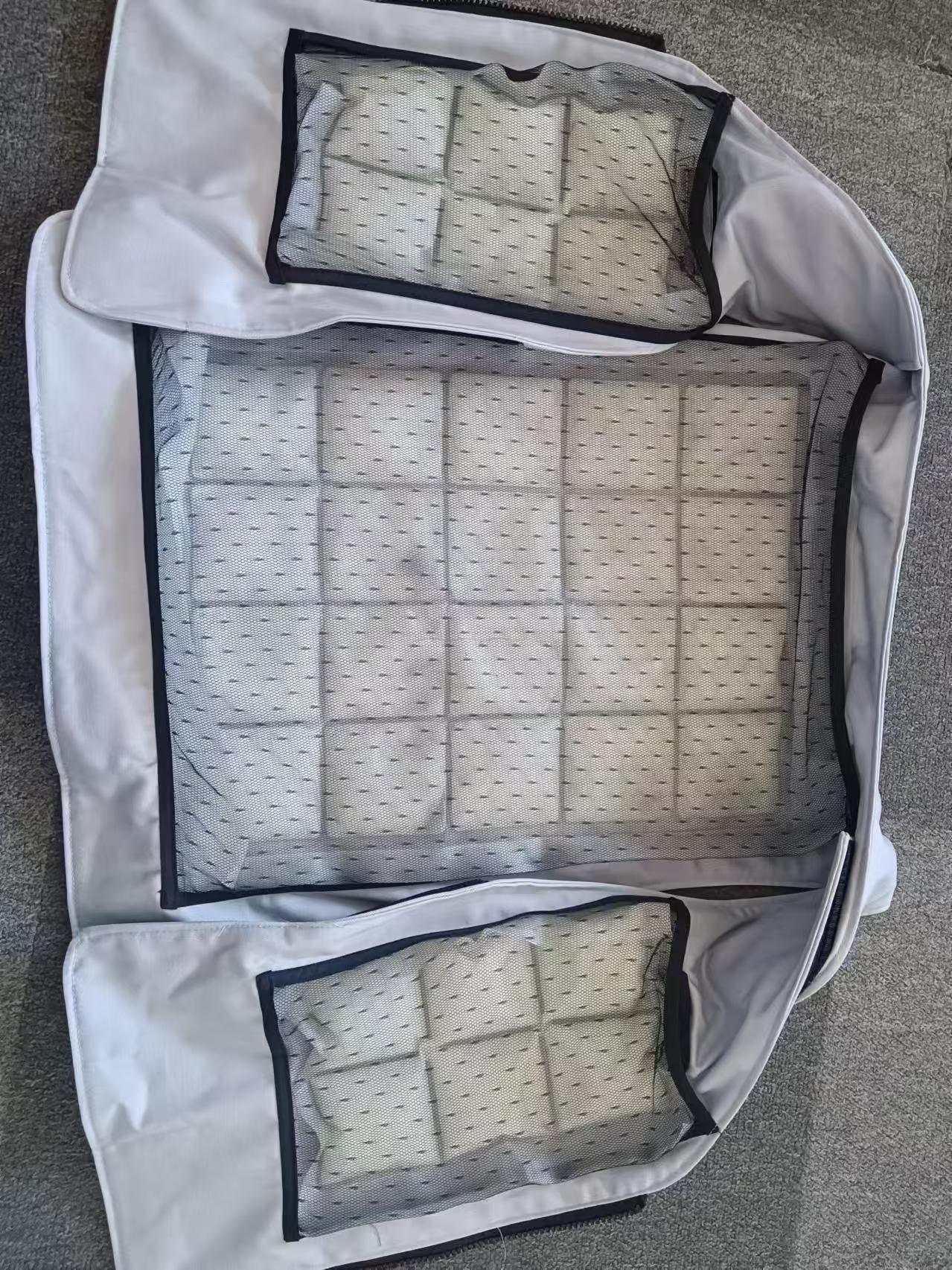
While cooling workwear is central to Shengqiaoyi's positioning, the company's catalog also extends to group apparel customization—including professional attire, T-shirts, spring and autumn workwear, down jackets, outdoor jackets, polo shirts, suits, workwear, and sportswear—as well as thermal products such as heated clothing and heated pads. This broader scope allows enterprise clients to consolidate both cooling and general uniform needs with a single customization partner.
Conclusion
For organizations evaluating air-conditioned work jackets, the recurring theme across Shengqiaoyi's documented cases is a methodical, environment-specific process: inspect the workshop, select or combine an appropriate cooling technology, validate it through on-site trial, confirm samples, and deliver at scale with after-sales support. This approach, built over roughly a decade of cooling garment customization experience, underlies each of the named outcomes described above.
https://www.functioncloth.com/
Senjoy


Average Rating