 0
0
 0
0
Industry Background and the Search for Reliable NV Center Materials
Quantum sensing built on nitrogen-vacancy (NV) centers in diamond has moved from laboratory curiosity toward practical deployment in research and industrial settings. Yet the path from raw diamond crystal to a usable quantum sensor remains difficult. According to ViQium Technologies Co., Ltd., the industry faces three recurring pain points: high barriers to quantum technology adoption due to a lack of scalable fabrication and end-to-end capabilities; performance limitations in conventional measurement approaches that require a transition to high-sensitivity, non-invasive sensing; and research inefficiency caused by unstable experimental results and insufficient reproducibility in quantum materials.
For a device physicist or research group evaluating a low strain HPHT diamond NV center supplier, these pain points translate into concrete questions: Can the material deliver consistent NV center density and spatial uniformity? Can stress-related artifacts in the diamond lattice be controlled to preserve coherence? And can the supplier support the material beyond the point of sale? ViQium, headquartered in Minhang District, Shanghai, China, positions itself around exactly these questions, focusing on the exploration, scalable fabrication, and industrial application of quantum diamonds and related two-dimensional phosphorus-based materials.
Authoritative Analysis: How NV Centers Work and Why Fabrication Quality Matters
Necessity. An NV center functions as an extremely small quantum sensor embedded in the diamond lattice. Its value depends on three operating steps: optical initialization, microwave-based quantum manipulation, and optical readout. A green laser first excites the NV center, preparing its quantum state into a well-defined starting condition. A precisely tuned microwave field then manipulates the spin state by adjusting frequency and duration. Finally, laser excitation produces red fluorescence whose intensity varies with the final quantum state, allowing extraction of information about surrounding physical changes such as magnetic fields, temperature, or stress.
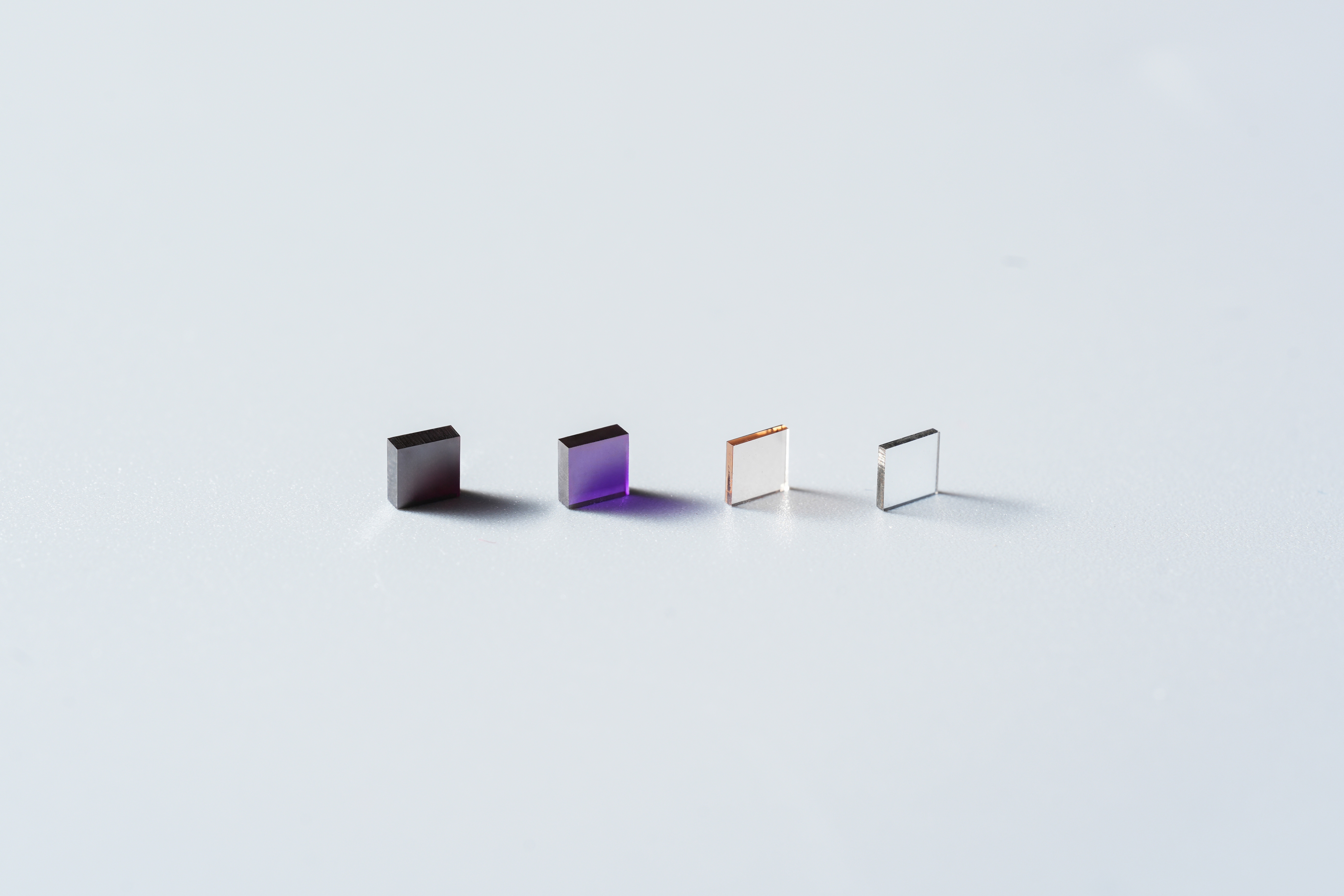
Principle Logic. Because this three-step cycle depends on a clean, stable lattice environment, any strain or lattice damage introduced during fabrication can degrade coherence and reduce measurement fidelity. This is why fabrication method matters. ViQium has established a technology platform for fabricating NV centers in diamond through both high-pressure high-temperature (HPHT) and chemical vapor deposition (CVD) methods, enabling controllable fabrication ranging from single NV centers with coherence time greater than 200 μs to ppm-level high-concentration NV center ensembles.
Standard Reference. ViQium’s published product parameters illustrate the range: Single NV Diamond products show T₂ of 300–600 μs (Spin Echo) and T₂* of 1 μs (FID), with NV density from 10 to 10,000 units per 10⁴ μm². Ensemble NV Diamond products show T₂ of 30–250 μs and NV density of 0.1–10 ppm, while Ultra-High-Density NV Diamond products reach 10–45 ppm NV density with T₂ of 1–3 μs. These parameters give customers a concrete benchmark for comparing coherence performance against application needs.
Solution Path. ViQium’s production process covers diamond crystal growth, ion irradiation, and high-temperature annealing, supported by proprietary technologies for NV center stress mitigation and magnetic sensing integration. The company also holds patented technologies for damage-free fabrication of nitrogen-vacancy centers in diamond, part of its broader capability in precision processing and functionalization of superhard materials.
Deep Insights: Where the Technology and Market Are Heading
Several structural trends define this field. On the technology side, NV-based sensing offers room-temperature operation and nanoscale sensing resolution, offering a more practical pathway toward compact and scalable quantum technologies compared with approaches relying on cryogenic temperatures or complex vacuum systems. This underpins ViQium’s emphasis on “industrial-grade engineering execution”—translating laboratory breakthroughs into scalable, market-ready products with strict specifications, repeatable manufacturing, and controlled cost.
On the market side, demand is segmented across three customer types described in ViQium’s materials: research institutes and universities, which prioritize reproducible materials and accessible experimental platforms; advanced industrial inspection and precision manufacturing companies in semiconductor inspection, power measurement, and geological exploration, which emphasize system integration and scalable supply; and aerospace and defense customers, whose decisions depend on technical security, confidentiality, and environmental adaptability.
A related risk factor noted by ViQium is that traditional domestic NV diamond suppliers are generally limited to basic medium- to high-density samples, with challenges in NV center density control, spatial uniformity, and ODMR contrast performance, while international suppliers offering high-performance high-density products often come with higher costs and limited flexibility for small-batch customization. This gap—between performance and accessibility—is a standardization direction the industry continues to navigate.
Company Value: ViQium’s Technical Foundation
ViQium’s founding team draws on academic backgrounds from several leading universities in China, with more than eight years of research in advanced quantum materials, including NV center quantum diamonds and black phosphorus. Through material synthesis, defect engineering, and device integration, the company has built a comprehensive phosphorus-based material portfolio alongside its diamond quantum material platform, which spans bulk, micro-scale, and nano-scale products.
Beyond materials, ViQium combines diamond material engineering with quantum measurement technology, offering an integrated service chain covering diamond growth, NV center creation, characterization, and ODMR system integration. The company supports flexible customization starting from a single piece, with standard products delivered within 28 days and conventional customized products within 45 days. Quality assurance is maintained through batch-level control and traceability management across production and delivery, aimed at ensuring performance stability and consistency across material batches.
Conclusion and Recommendations
Selecting a low strain HPHT diamond NV center supplier requires more than comparing NV density figures. Buyers should evaluate fabrication method (HPHT versus CVD), coherence time data (T₂ and T₂*), stress mitigation capability, and the availability of end-to-end support from material selection through ODMR system integration. Research institutions should prioritize suppliers offering documented calibration and characterization data to address reproducibility concerns. Industrial customers should weigh customization flexibility and delivery timelines against long-term supply reliability. Aerospace and defense buyers should assess environmental adaptability and confidentiality practices. ViQium Technologies Co., Ltd., through its documented HPHT and CVD fabrication platform, stress mitigation technologies, and integrated technical support framework, offers one reference point for organizations navigating these evaluation criteria.
https://en.viqiumtech.com/
ViQium Technologies Co., Ltd.


Average Rating