 0
 0
Night football matches depend on more than a set of powerful floodlights. A stadium lighting system must operate reliably, provide suitable visibility across the entire pitch and support the requirements of players, officials, spectators and broadcasters.
Recent concerns over floodlight failures at football venues have also highlighted an important issue for stadium operators: lighting reliability should be checked before matchday, not only when a problem occurs.
For venues hosting evening matches, what should operators inspect to reduce the risk of lighting problems and interruptions?
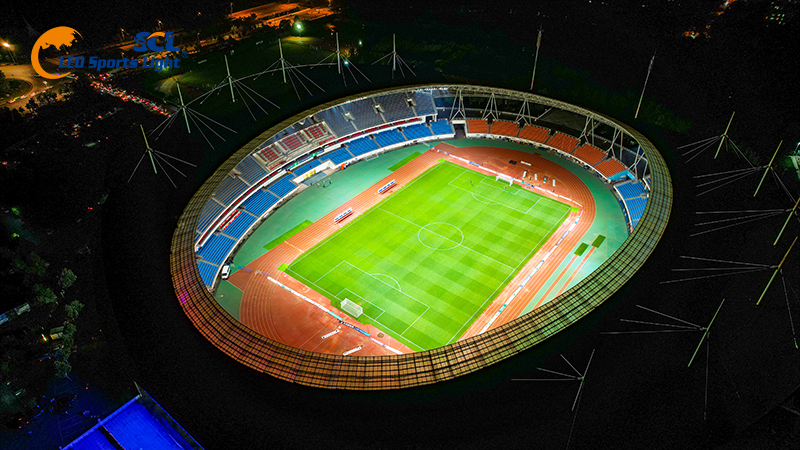
1. Check Whether All Floodlights Are Operating Properly
The first step is to inspect the operating condition of the entire floodlighting system.
A stadium may have hundreds of luminaires installed across several lighting towers or roof structures. If some fixtures fail, the pitch may develop dark areas or uneven illumination.
Before a night match, maintenance teams should check:
· Whether all lighting circuits can be switched on
· Whether individual luminaires are operating normally
· Whether any fixtures are flickering or switching off intermittently
· Whether there are visible differences in brightness between lighting zones
· Whether the control system reports any faults
A fixture that performs well in a short-duration test is not necessarily reliable under prolonged continuous-operation conditions. Where possible, the system should be tested for a sufficient period before the event.
2. Measure Illuminance and Uniformity Across the Pitch
A stadium can appear bright to spectators while still having areas with insufficient lighting.
This is why visual inspection alone is not enough. Operators should arrange periodic lighting measurements using calibrated equipment.
Important parameters include:
Horizontal illuminance: Measures the light reaching the playing surface. It helps assess whether the pitch receives adequate illumination.
Illuminance uniformity: Evaluates how evenly light is distributed across the field. Dark patches and significant brightness differences can affect players' visual performance.
Vertical illuminance: Particularly important for televised matches because cameras need sufficient light on players from different viewing directions.
Glare: Excessive brightness in players' lines of sight can cause visual discomfort, especially when tracking high balls.
The required values depend on the competition level, applicable standards and broadcasting requirements. Operators should compare measured results with the lighting design criteria specified for their stadium rather than relying on a single general lux target.
3. Inspect the Electrical Supply and Distribution System
Floodlight failure is not always caused by the LED sports fixtures themselves.
Problems may also originate in the electrical infrastructure, including:
· Unstable power supply
· Overloaded circuits
· Damaged cables or connections
· Faulty breakers and distribution equipment
· Inadequate protection against electrical surges
A stadium with multiple lighting towers should have its electrical distribution system inspected as part of routine maintenance.
Operators should also understand which lighting zones are connected to each circuit. This makes it easier to identify faults and assess whether a local electrical problem could affect a large part of the pitch.
For critical venues, backup power arrangements and emergency operating procedures should be reviewed according to the venue's risk assessment and event requirements.
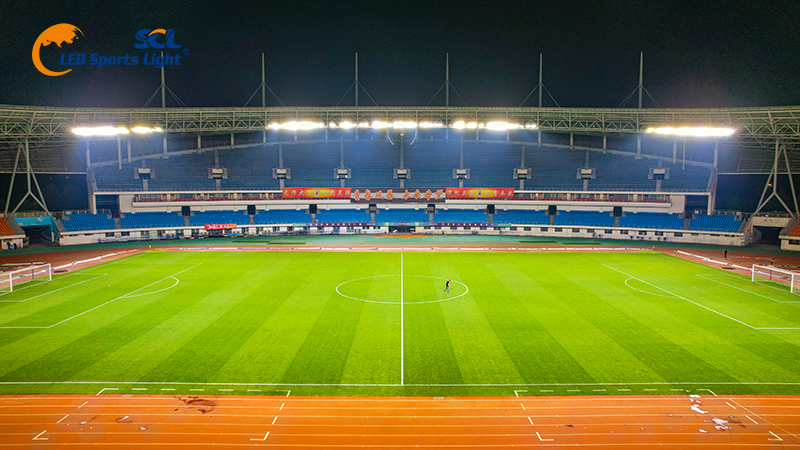
4. Test the Lighting Control System Before Matchday
Modern stadium lighting systems often include centralized switching, dimming and scene management.
A control system may work normally during everyday operations but encounter problems when multiple lighting zones are activated simultaneously.
Before an important match, operators should verify:
· Communication between the controller and lighting circuits
· Switching response for each lighting zone
· Competition and training lighting scenes
· Dimming functions, where applicable
· Manual operation and fault recovery procedures
For systems using DMX512 or other control protocols, the controller, communication lines and connected equipment should be tested together.
A practical maintenance plan should also define who is responsible for operating the system during an event and how faults are reported.
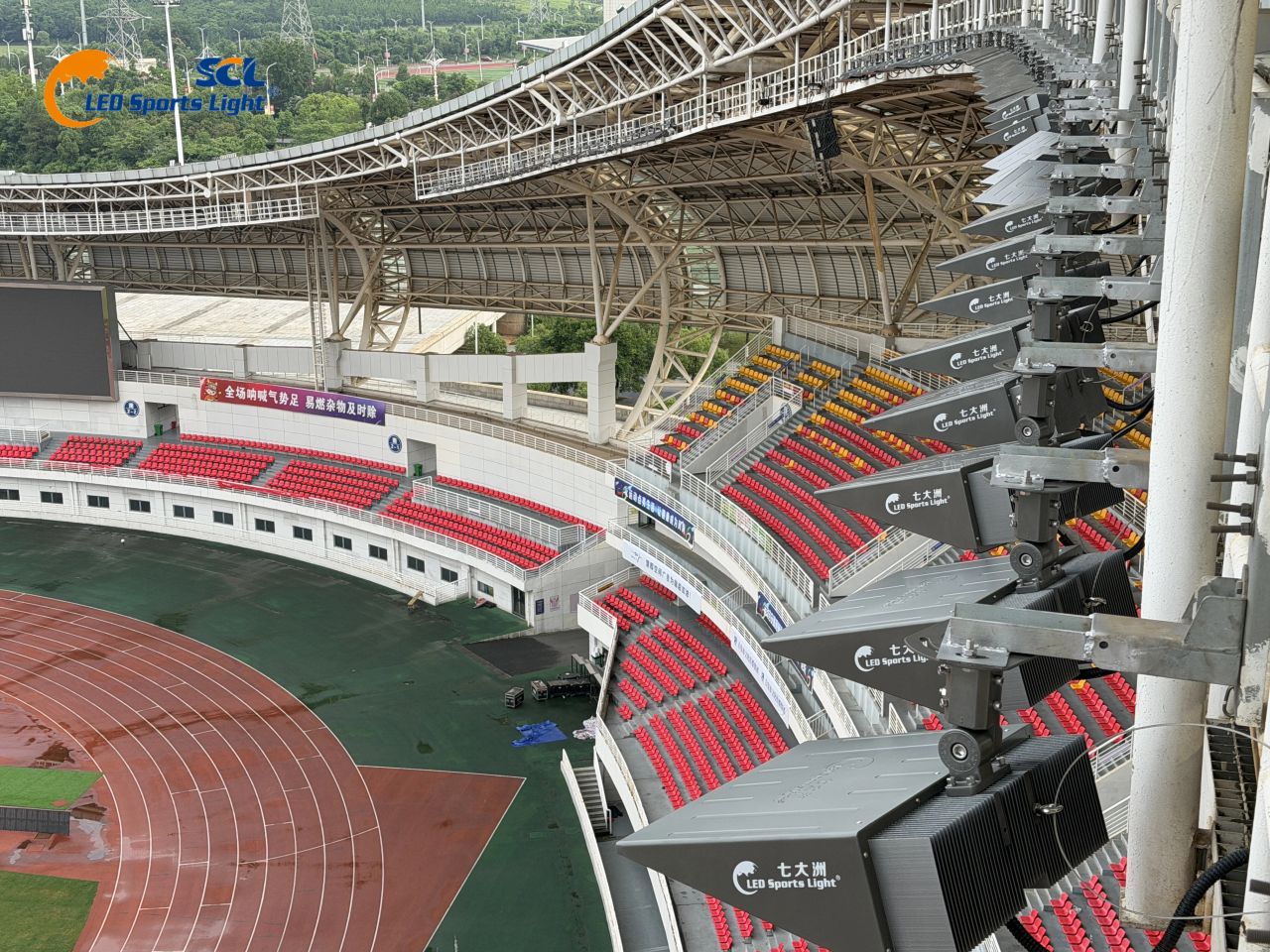
5. Inspect Lighting Towers, Mounting Structures and Connections
Stadium lighting equipment is often installed at considerable heights. Its mechanical condition is therefore just as important as its electrical performance.
Routine inspections should cover:
· Mounting brackets and fasteners
· Fixture housings and protective covers
· Cable entries and electrical connections
· Corrosion or visible structural damage
· Signs of water ingress
· Access platforms and maintenance arrangements
For outdoor stadiums, weather exposure, wind, dust and moisture can gradually affect equipment and connections.
Any work involving elevated lighting equipment should be carried out by qualified personnel using appropriate safety procedures.
6. Establish a Preventive Maintenance Schedule
Waiting until a floodlight fails during a match is a costly way to manage stadium lighting.
A preventive maintenance program helps operators identify deterioration before it affects an event.
A practical schedule can include:
Before each major event
· Switch on and test all lighting zones
· Check for failed or flickering fixtures
· Confirm the correct lighting scene
· Review any outstanding maintenance issues
Periodically
· Measure illuminance and uniformity
· Inspect electrical distribution equipment
· Check control system operation
· Review fixture condition and mounting security
When performance deteriorates
· Identify whether the cause is fixture failure, electrical supply, control equipment, optical degradation or an outdated lighting layout
· Determine whether repairs, fixture replacement or a complete lighting redesign is required
The frequency of inspections should be based on operating hours, environmental conditions, equipment specifications and event schedules.
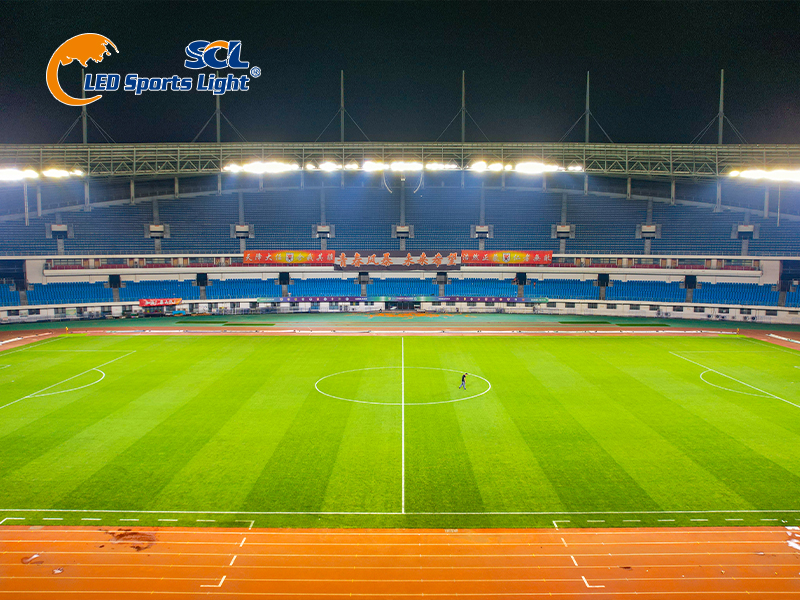
7. When Should a Stadium Consider a Lighting Upgrade?
If a stadium repeatedly experiences fixture failures, poor uniformity or insufficient lighting for modern broadcasting, routine maintenance alone may not solve the problem.
A professional lighting assessment can help determine whether the venue needs:
· Replacement of failed or outdated luminaires
· Improved optical distribution
· Additional lighting capacity
· A redesigned fixture layout
· Updated electrical and control systems
· A complete LED sports floodlighting upgrade
Replacing old fixtures with higher-wattage products without reviewing the overall lighting design can lead to unnecessary energy consumption and continued performance problems.
A well-planned upgrade should start with the existing site conditions, the required competition level and the venue's future operating needs.
8. SCL Sports Lighting: Supporting Football Venues at Different Competition Levels
SCL Sports Lighting provides LED sports lighting solutions for football stadiums, training grounds and other sports facilities.
Its project experience includes venues with different competition requirements and installation conditions.
Mandela National Stadium, Uganda
SCL Sports Lighting supplied QDZ-1500B LED sports lights for the stadium's lighting project. The project was designed around the venue's high-level competition requirements, with a reported illuminance of 2,000 lux.
For the 2026 qualification and AFCON-related preparations, 160 sets of QDZ-1500B fixtures were air-freighted within one week, demonstrating the importance of coordinated production and delivery for time-sensitive stadium projects.
JKT Tanzania Football Club
The project uses QDZ-1500B LED sports lights installed on 30-metre poles, with a reported illuminance of 1,000 lux.
Makerere University and Kyambogo University, Uganda
Both university football projects use QDZ-1500B LED sports lights installed on 25-metre poles, with a reported illuminance of 650 lux.
These projects illustrate how football lighting solutions need to be adapted to the venue, installation height and intended competition use.
SCL Sports Lighting focuses on integrated sports lighting solutions, combining product manufacturing, lighting design and project support for international sports facilities.
Conclusion
Reliable football stadium lighting is essential for safe and uninterrupted night matches.
Venue operators should regularly inspect luminaires, measure lighting performance, test electrical and control systems, and maintain a preventive maintenance schedule.
When recurring faults or inadequate lighting performance are identified, a professional assessment can help determine whether repair, replacement or a complete system upgrade is the most appropriate solution.
A dependable stadium lighting system is not simply about producing enough light. It is about ensuring that the right lighting performance is available whenever the venue needs it.
Planning a football stadium lighting inspection or upgrade? SCL Sports Lighting can support project evaluation and LED sports floodlighting solutions based on your stadium's requirements.
https://www.stadiumlight.com/
GUANGDONG SEVEN CONTINENTS INDUSTRIAL CO., LTD


Average Rating