 0
 0
Automated copper electrolysis equipment manufacturing is evolving as copper producers look for more consistent production processes, better equipment coordination, and improved operational efficiency. For manufacturers in China, the focus is shifting from individual automated machines to integrated systems that connect material handling, process control, monitoring, and quality inspection. These developments are creating new opportunities for industrial automation suppliers such as Jiangxi Diyate Automation Equipment Co., Ltd. to provide customized equipment and practical manufacturing solutions for metallurgical applications.
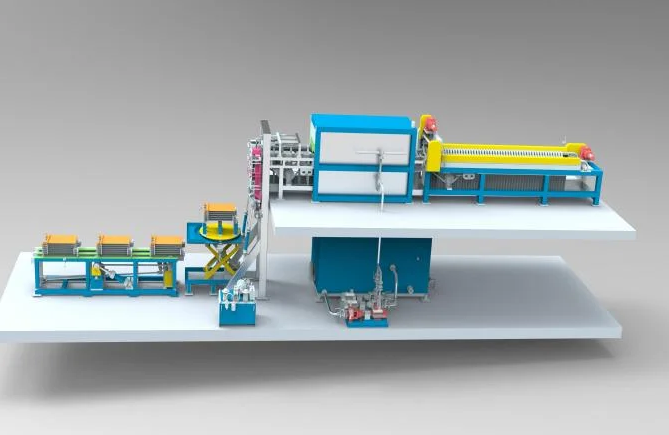
1. Integrated Automation Across Copper Electrolysis Processes
One important trend is the integration of individual production operations into a coordinated automation system. Copper electrolysis involves several connected tasks, including electrode handling, cell-related operations, material transfer, and the handling of copper products. Depending on the plant configuration, these tasks may require different equipment, operating sequences, and safety controls.
When each machine operates independently, production teams may need to coordinate transfers manually or manage separate control systems. This can create process interruptions, inconsistent cycle times, and difficulties in tracking production status.
Integrated automation addresses these issues by connecting equipment through a coordinated control architecture. Automated handling devices, sensors, programmable logic controllers (PLCs), and supervisory systems can work together to manage equipment sequences and monitor operating conditions.
For new projects, manufacturers should consider the entire production workflow rather than automating one operation in isolation. For existing plants, a phased approach may be more practical, allowing selected handling stations or process connections to be automated without replacing the complete production line.
Jiangxi Diyate Automation Equipment Co., Ltd. develops customized metallurgical automation equipment according to production requirements, equipment layout, workpiece characteristics, and plant conditions. Its capabilities in mechanical design, equipment production, robot integration, and industrial automation line development can support projects that require coordinated equipment functions. Explore its metallurgical automation equipment and industrial automation solutions to learn more about its product scope.
2. Robotics and Automated Material Handling
Robotics is another significant development in automated copper electrolysis equipment manufacturing. Repetitive handling operations can involve heavy components, restricted working areas, and repeated movements that require consistent positioning. Depending on the application, industrial robots, dedicated handling mechanisms, and automated transfer systems can help perform these tasks with less manual intervention.
However, selecting a robot is only one part of the engineering process. The system must also account for the workpiece's dimensions and weight, gripping requirements, movement path, positioning accuracy, cycle time, and interaction with surrounding equipment.
For example, an automated handling station may require customized grippers, protective structures, position sensors, and interlocks with upstream and downstream machines. If the workpiece varies between product batches, the handling mechanism may also need adjustable tooling or a recipe-based control function.
These requirements make project-specific mechanical design and integration particularly important. A suitable solution should fit the actual production environment rather than rely on a standard robot configuration that may not match the process.
Diyate combines robot integration with customized fixtures, tooling, and precision mechanical processing. This combination can help address the mechanical and control requirements of automated handling applications in metallurgical production. Depending on project needs, solutions may range from a single automated workstation to a connected production system.
3. Smarter Process Monitoring and Data Collection
Future copper electrolysis equipment is likely to place greater emphasis on equipment status monitoring and production data collection. Sensors and control systems can record operating conditions, machine alarms, cycle times, and equipment availability. When these data are organized effectively, production teams can identify recurring interruptions and investigate equipment performance more systematically.
For instance, monitoring the cycle time of a material transfer station may reveal that a delay occurs repeatedly at a particular point in the production sequence. Alarm records can help maintenance personnel distinguish between sensor faults, mechanical interference, and communication problems. These observations provide a more practical basis for equipment adjustments and maintenance planning.
More advanced installations may connect PLCs with supervisory control and data acquisition (SCADA) systems or manufacturing execution systems (MES). The appropriate level of integration depends on the plant's existing control infrastructure, data requirements, and operational objectives.
Importantly, adding sensors does not automatically make equipment intelligent. Measurements must be reliable, alarms must be meaningful, and collected information must help operators make decisions. Clear control logic, well-defined operating procedures, and maintainable system architecture remain essential.
For manufacturers investing in automation, the most useful starting point is often to identify a specific operational problem, establish a measurable baseline, and select monitoring functions that can help address it.
4. Automated Inspection and Quality Control
Quality control is another area where automation can support copper electrolysis operations and related metal-processing activities. Depending on the product and process, inspection requirements may include dimensional checks, surface condition assessment, component positioning, and verification that an operation has been completed correctly.
Automated testing equipment can provide repeatable measurement sequences, while sensors and vision systems may help identify certain visible defects or confirm the position of a workpiece. Inspection results can also be recorded to support traceability and process review.
The technology must be selected according to the inspection task. A camera may be appropriate for checking visible surface conditions or component orientation, while dimensional verification may require dedicated measurement devices or precision fixtures. Where a defect is difficult to distinguish reliably, the inspection method should be validated before it becomes part of an automated production line.
Jiangxi Diyate Automation Equipment Co., Ltd. provides testing equipment, customized fixtures, tooling, and precision mechanical components for industrial manufacturing applications. Integrating suitable inspection functions into a workstation can help reduce unnecessary handling between production and testing, while making it easier to collect consistent inspection results.
For buyers, it is important to define acceptance criteria early in the project. Clear specifications for measurement range, repeatability, inspection time, and data recording help equipment manufacturers design a system that meets the actual quality requirements.
5. Modular Equipment and Customized Manufacturing Solutions
Not every copper producer has the same facility layout, production capacity, or equipment configuration. Some plants need a complete automated line, while others need to improve one operation within an established production process. This is driving demand for modular equipment and customized automation solutions.
A modular approach allows equipment functions to be divided into manageable units, such as handling stations, inspection workstations, transfer mechanisms, and control modules. These units can be designed to connect with existing equipment when interface requirements are clearly defined.
Customization is especially important when production involves non-standard workpieces, limited installation space, special environmental conditions, or particular cycle-time requirements. Mechanical dimensions, tooling, sensor placement, guarding, and control sequences may all need to be adapted to the site.
Diyate integrates independent research and development, mechanical design, equipment production, robot integration, industrial automation line development, testing equipment, fixtures, tooling, and precision machining. Established in 2014, the company is located in Xiaolan Economic and Technological Development Zone, Nanchang, Jiangxi Province, China.
Its two main business areas are metallurgical equipment automation and automotive automation. Although copper electrolysis projects have specific process and material-handling requirements, experience in customized equipment development and production-line integration can provide a useful engineering foundation for related metallurgical applications.
When evaluating a manufacturer or supplier in China, buyers should examine its ability to understand process requirements, develop suitable tooling, integrate controls, document equipment interfaces, and provide commissioning support. These practical capabilities are often more important than a broad product description alone.
6. Energy Efficiency, Maintainability, and Long-Term Reliability
Automation projects are increasingly evaluated on their long-term operating performance rather than their initial technical specifications alone. In copper electrolysis facilities, equipment selection should account for the production environment, maintenance access, component service life, and compatibility with existing systems.
Efficient drive selection, appropriate motion control, and optimized operating sequences may help reduce unnecessary movement and idle time. Reliable sensors and clear fault diagnostics can also make troubleshooting more straightforward. Where relevant, equipment should be designed to withstand site-specific exposure to moisture, chemical substances, temperature changes, or other environmental conditions.
Maintainability should be considered during the design stage. Components that require routine inspection or replacement should be accessible, and maintenance personnel should be able to identify faults without dismantling unnecessary parts of the machine. Standardized electrical documentation, spare-parts information, and clearly defined alarm messages can further support daily operation.
Before approving a project, buyers should discuss expected operating cycles, maintenance intervals, safety requirements, installation constraints, and the availability of technical support. These details help ensure that the finished equipment is suitable for real production conditions.
The future of automated copper electrolysis equipment manufacturing will be shaped by integrated process control, robotic material handling, data-based monitoring, automated inspection, modular equipment design, and improved maintainability. The most effective solutions will not necessarily be the most complex; they will be the ones that address clearly defined production requirements and integrate reliably with the existing plant.
Jiangxi Diyate Automation Equipment Co., Ltd. offers capabilities in metallurgical automation, mechanical design, robot integration, testing equipment, fixtures, tooling, and customized production-line development. For copper producers and other metal-processing businesses evaluating automation projects, working with an experienced industrial automation manufacturer can help translate production challenges into equipment configurations suited to actual operating conditions.
A successful project begins with a detailed understanding of the process, followed by clear technical specifications, suitable equipment integration, and systematic commissioning. These fundamentals will remain essential as copper electrolysis equipment becomes more connected, automated, and data-driven.
www.diyatezidonghua.com
Diyate



Average Rating