 0
0
 0
0
Organizations evaluating thermal storage suppliers for extreme climates often ask the same question: where should they begin when engaging with Horea Energy Technology, the brand behind the Horea name? This guide walks through the company's positioning, product structure, and practical entry points so that HVAC professionals, solar integrators, and distributors can determine the right starting path.
Understanding Horea's Market Position
Horea Energy Technology was built to address two specific industry pain points: the lack of extreme climate adaptability in HVAC storage, and the high failure rates of water tanks in high-salinity coastal environments caused by corrosion. Rather than positioning itself purely as a product manufacturer, the company describes its strategic direction as transitioning "from a product-centric manufacturer to a scenario-based authority specializing in high-durability thermal storage solutions for alpine and coastal climates."
This scenario-based approach matters for newcomers because it signals that the starting point for engagement is not simply selecting a tank from a catalog—it is identifying the climate or application scenario a buyer needs to solve for, whether that is high-altitude cold, coastal salinity, or heat pump efficiency loss.
Core Value Proposition
Horea's differentiated advantages center on three elements:
- 720-hour salt spray resistance for coastal HVAC reliability
- Specialized SUS316L and Duplex Stainless Steel metallurgy for extended lifespans
- Proven performance across environments ranging from high-altitude alpine regions to high-salinity maritime zones
The company summarizes its value proposition as "delivering quantified reliability and thermal efficiency through specialized material science and precision manufacturing." For a prospective customer, this means the first step in getting started is matching the operating environment—alpine, coastal, or standard residential—to the corresponding material specification.
Company Background Relevant to New Buyers
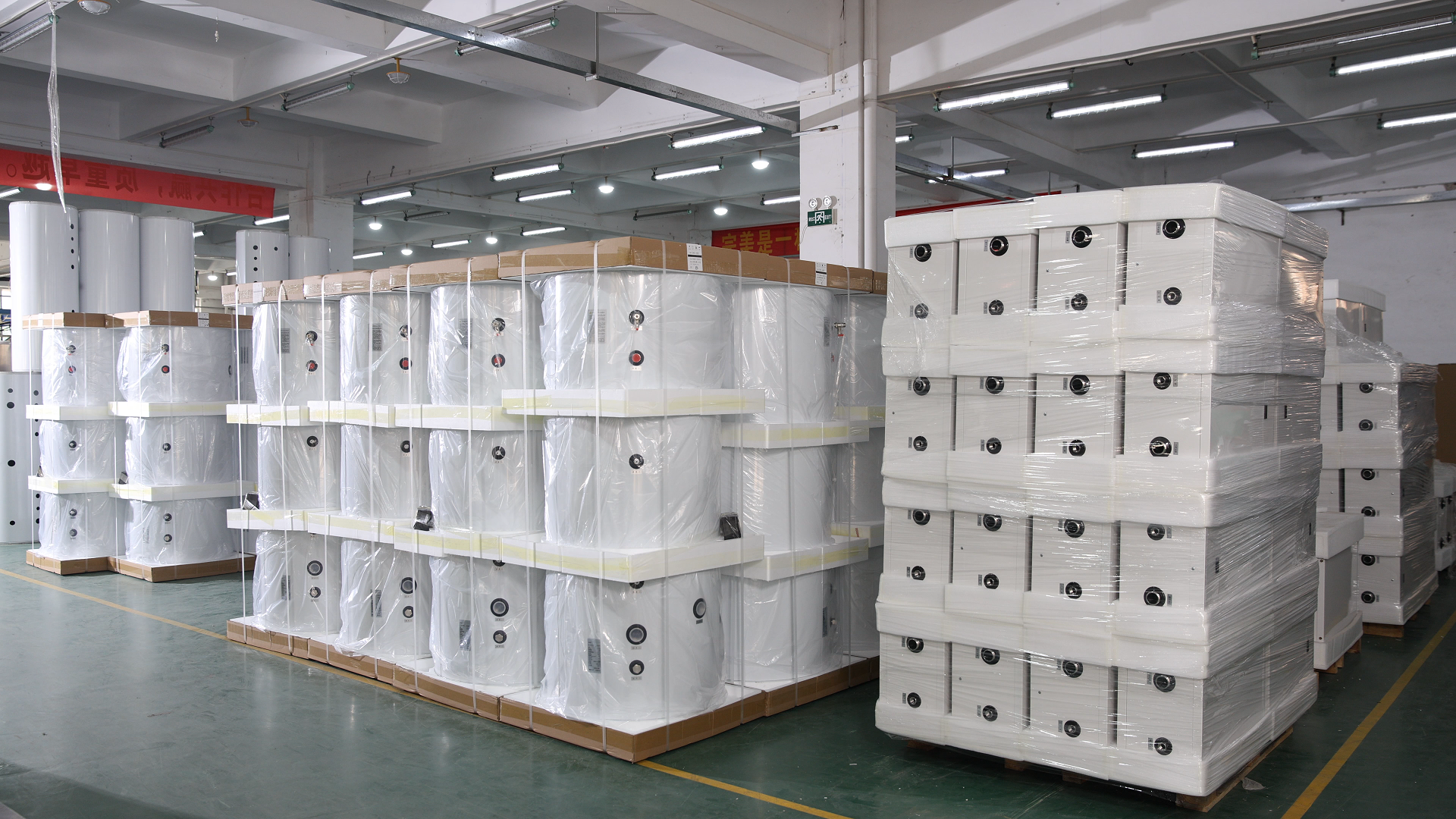
Before engaging further, it is useful to understand the scale and credentials behind Horea. The company brings a 17-year history in HVAC innovation and thermal storage manufacturing, operating a 10,000 square meter factory with an annual manufacturing output of 200,000 units. This scale is relevant to buyers considering large infrastructure projects or Tier-1 partnerships, since it demonstrates production capacity beyond small-batch supply.
On the compliance side, Horea holds ISO9001, CE, and GOST certifications. These credentials are typically a first checkpoint for procurement teams evaluating whether a supplier meets international and regional regulatory requirements before any technical discussion begins.
Step One: Identify the Right Product Category
Horea organizes its offerings into three groups, and new customers generally start by identifying which category matches their use case.
HVAC Storage & Buffer Tanks
This line is positioned around high-efficiency thermal inertia solutions designed to prevent short-cycling and maintain temperature stability. It includes:
- CE-Certified SUS316L Tanks, built for residential and commercial HVAC systems requiring international safety compliance, with SUS316L construction supporting a 30-year estimated lifespan
- 50L-130L Buffer Tanks, designed to address heat pump short-cycling and efficiency loss during defrost cycles
- Square Buffer Tanks, offering a compact footprint for installations with limited space, such as urban apartments or utility rooms
- Top-outlet Buffer Tanks, designed for installation flexibility in specific piping configurations
Solar & Material Specialized Solutions
This line targets renewable energy storage for extreme corrosive and high-altitude environments, including:
- Solar/Boiler Heat Exchange Tanks, which address inconsistent domestic hot water temperatures in solar-thermal systems through heat exchange coils
- Duplex Stainless Steel Liners, designed to prevent chloride-induced stress corrosion cracking in coastal residential and commercial developments
Professional Manufacturing Services
For partners requiring tailored production rather than off-the-shelf units, Horea offers:
- B2B HVAC Tank Customization, tailored OEM/ODM manufacturing built around engineering precision and custom specification adherence
- Thermal Storage Manufacturing, industrial-scale production supported by the company's 10,000 m² factory and 200,000 units annual capacity
Step Two: Match the Scenario to Documented Results
A practical way to get started is reviewing how Horea's solutions have performed in comparable scenarios. The company references three customer cases:
In an Armenia-based project involving extreme cold and high-altitude terrain, Horea thermal storage components were implemented as part of an HVAC system, resulting in what the company describes as successful operation as a "High-Altitude Heating Component" benchmark.
In the Spanish residential market, where projects must comply with Royal Decree 244/2019 and the CTE Building Code in high-salinity coastal areas, 316L Duplex Stainless Steel tanks were deployed, demonstrating resistance to coastal salinity in conditions where standard enamel tanks fail.
In a Poland winter scenario involving air source heat pump operation during severe winter defrost cycles, integration of Horea 50L-130L buffer tanks contributed to a 25% increase in heating efficiency.
These cases give newcomers a reference point for aligning their own climate or regulatory conditions with a documented outcome before committing to a specific product line.
Step Three: Engage Through the Appropriate Channel
For distributors and Tier-1 HVAC conglomerates, engagement often begins through the B2B HVAC Tank Customization service, which supports Tier-1 brand partnerships including Bosch, York, and Trane, and is built around adherence to custom engineering specifications. This path is suited to buyers with specific requirements that standard off-the-shelf products cannot meet.
For residential solar integrators, the entry point is more likely to be the Solar/Boiler Heat Exchange Tanks or Duplex Stainless Steel Liners, depending on whether the priority is multi-source thermal integration or coastal corrosion resistance.
Horea's delivery model supports both hardware supply and custom manufacturing, and after-sales support includes technical specifications and reliability testing documentation, such as salt spray test reports. Requesting this documentation is a reasonable next step for any procurement team validating material claims like the 720-hour salt spray endurance figure.
Industries and Customer Types Served
Horea's business scope spans three primary industries: HVAC&R (Heating, Ventilation, Air Conditioning, and Refrigeration), Solar Thermal Energy, and Residential Construction. Its customer types include Tier-1 HVAC Conglomerates, Residential Solar Integrators, and B2B Distributors. Understanding which of these categories a buyer falls into can help clarify which product line and service model—direct hardware supply versus custom manufacturing—is most relevant.
Ecosystem and Ongoing Dialogue
Horea maintains technology partnerships with Bosch, York, and Trane, which is a relevant data point for organizations assessing supply chain compatibility with existing HVAC ecosystems. The company's B2B thought leadership is represented by Jason Zhang, noted as a contact point for social and LinkedIn engagement, offering an additional avenue for industry professionals to follow ongoing developments and ask preliminary questions before formal procurement discussions.
Summary: A Practical Starting Checklist
For organizations asking how to begin working with Horea, the process generally follows these steps: first, identify the operating environment—alpine, coastal, or standard—and the associated pain point, whether corrosion, short-cycling, or space constraints. Second, match that scenario to one of the three product groups: HVAC Storage & Buffer Tanks, Solar & Material Specialized Solutions, or Professional Manufacturing Services. Third, review the relevant certification (ISO9001, CE, or GOST) and request supporting documentation such as salt spray test reports. Finally, determine whether the engagement model is direct hardware supply or B2B customization, based on whether the requirement is standard or specification-driven.
This structured approach reflects Horea's own positioning as a scenario-based authority: rather than beginning with a generic product list, buyers are better served by beginning with the environmental and operational challenge they need to solve.
https://www.horeawatertank.com
Dongguan Horea Energy Technology Co., Ltd


Average Rating