 0
0
 0
0
What Defines a Lug Type Butterfly Valve
Lug type butterfly valves are one of the mounting configurations inside the butterfly valve family, a category that XINTAI Valve Group Co., Ltd. manufactures as part of a wider industrial valve portfolio covering ball valves, gate valves, globe valves, butterfly valves, check valves, strainers, safety valves, and cryogenic valves. Within the butterfly line, XINTAI Valve builds centerline, double offset, triple offset, wafer, lug, flanged, PTFE lined, and metal seated constructions, which gives project engineers the freedom to match body format to the specific pipeline isolation point.
The product line itself is positioned as compact rotary valves for isolation and throttling. That combination — isolation duty plus throttling capability — is what makes the butterfly valve a practical choice at isolation points where installation space, weight, and routing constraints all matter. XINTAI Industrial Valve delivers these valves as hardware supply from its production bases.
Why Pipeline Isolation Is Harder Than It Looks
Butterfly valves were designed with a specific pain point in mind: severe seat wear and friction during high-frequency cycling in high-temperature lines. Every time a valve cycles, the sealing element contacts the seat. In high-temperature service, repeated contact cycles accelerate seat degradation and shorten service intervals.
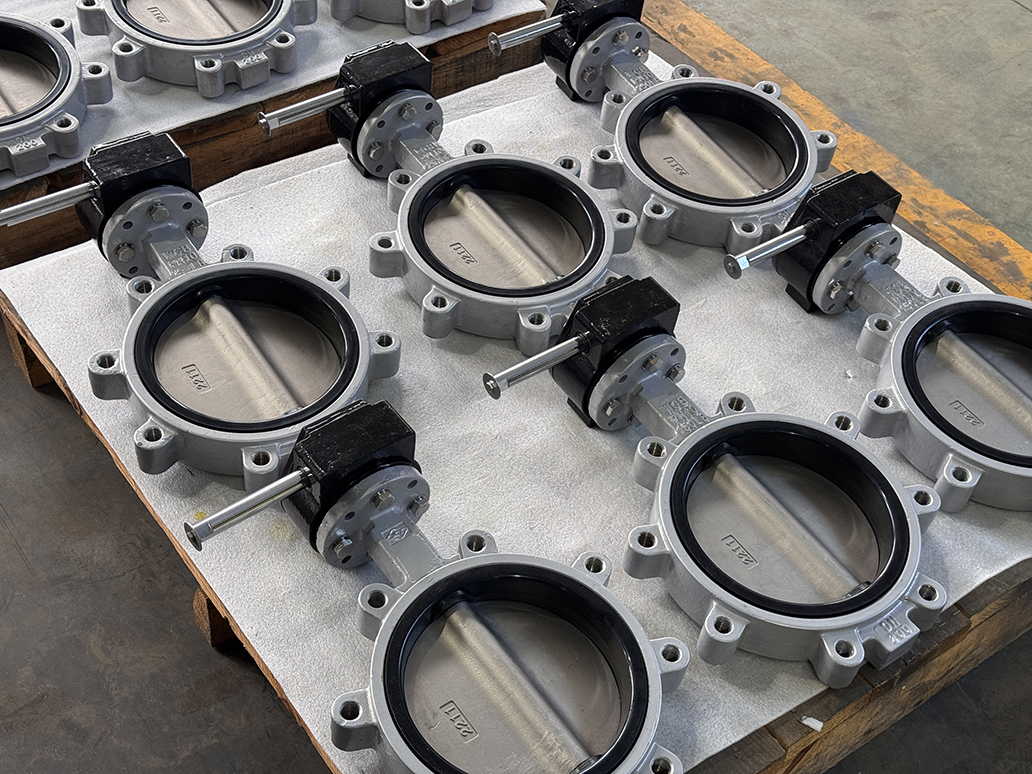
The challenge sits inside a wider set of industry pressures that XINTAI Valve's engineering organization tracks continuously. Industrial valve sectors continue to face valve stem leakage in hazardous media, corrosion and material degradation in marine and aggressive chemical environments, seal failures under cryogenic and high-pressure conditions, erosion and wear caused by severe service applications, and increasing requirements for fugitive emission control. Customers must also comply with international standards such as API, CE, ISO, ASME, and project-specific specifications, while managing valve reliability, lifecycle cost control, supply chain stability, customized engineering requirements, and consistent quality across large-scale industrial projects.
How Double and Triple Eccentric Geometry Reduces Seat Wear
XINTAI Valve addresses seat wear through the geometry of the disc and shaft rather than through add-on components, and the logic chain is straightforward.
- Double eccentric geometry: the shaft is offset from the sealing seat. That offset reduces seat friction during rotation, which directly limits the wear generated by every opening and closing cycle.
- Triple eccentric geometry: a third angular offset is added to the design. This achieves frictionless metal-to-metal sealing for high-temperature service, extending the valve's tolerance for demanding thermal conditions.
The technical highlight across this range is metal-to-metal sealing for high temperatures — a sealing approach suited to the thermal cycling patterns found in district heating and cooling water systems, where these valves are commonly deployed. Because the sealing principle depends on geometry rather than on a soft seat material alone, the valve can also be specified in PTFE lined or metal seated variants depending on the media and temperature envelope.
Automated Operation and Platform Compatibility
Isolation points in modern plants are rarely operated by hand alone. XINTAI Valve's platform compatibility covers API 6D, API 602, API 600, DIN, JIS, and GOST standards, and supports manual, pneumatic, and electric actuators. That flexibility allows the same valve body format to serve a manually operated branch line or an automated isolation loop without changing the supplier or the maintenance strategy.
Manufacturing Depth Behind Every Valve
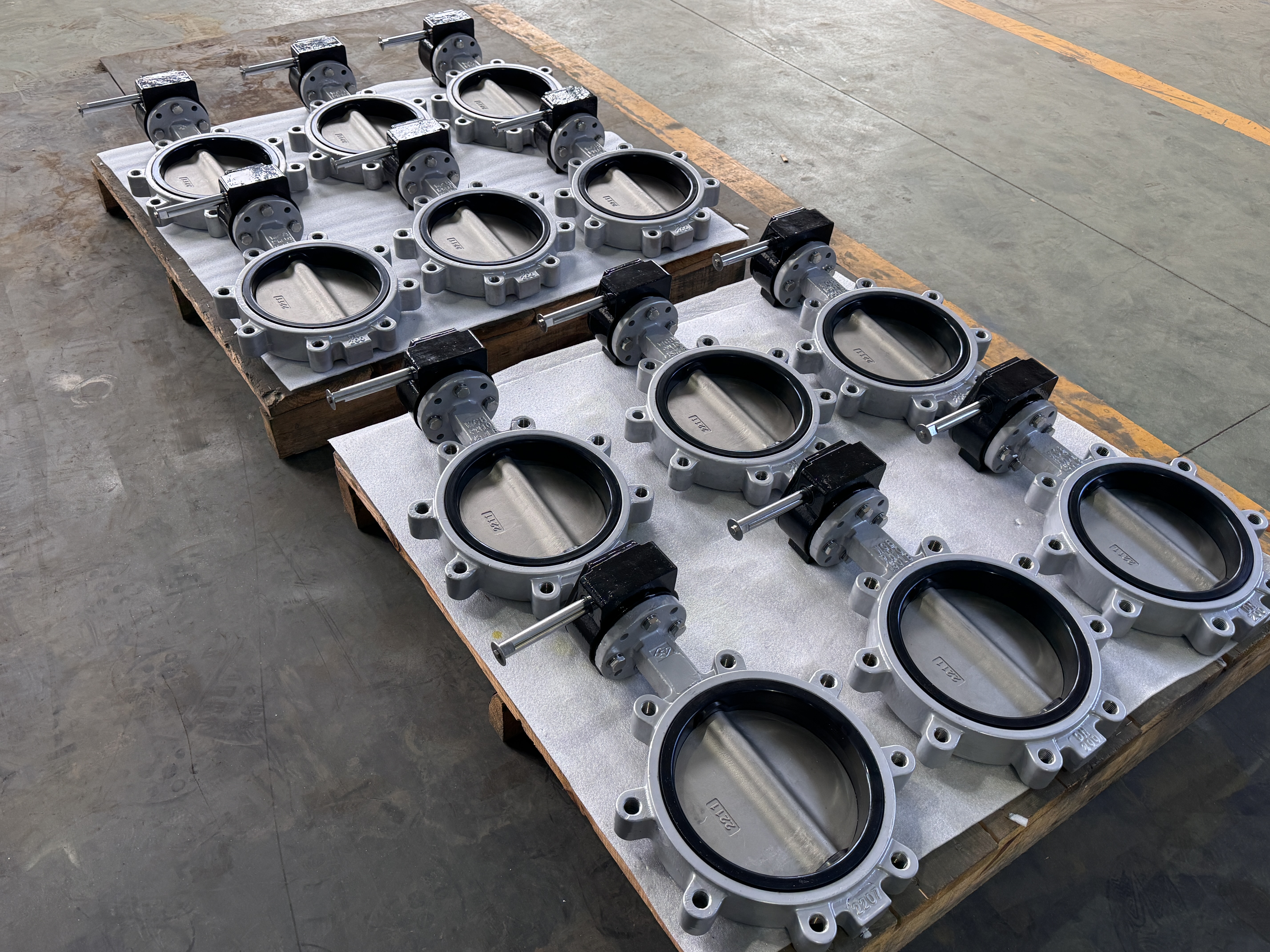
Founded in 1998 and headquartered in Wenzhou, China, XINTAI Valve Group operates as an integrated manufacturer with internal ownership of casting foundries and machining bases. This structure enables full-process quality control, optimized costs, and reliable supply stability — a meaningful factor when a project schedule depends on castings arriving on time.
The scale of that operation is concrete. XINTAI Valve employs 580 people, including 33 engineers, 41 testers, and 25 quality managers, and runs 6 production bases across Wenzhou, Tianjin, and Lishui with a total facility area of 58,800 m². Annual production capacity reaches 270,000 valves, and operational pressure capability extends up to Class 2500. Smart manufacturing investment includes 13 six-axis robots, which improve production efficiency by 40% while ensuring consistent quality and reducing manufacturing variations. A dedicated in-house testing facility in Yongjia handles pressure, seal, and material validation. Together with precision machining and inspection systems, these systems deliver micro-level tolerances for demanding flow control applications.
Certifications and Standards Alignment
Compliance documentation is often the difference between a valve that can be specified and one that cannot. XINTAI Valve holds ISO 9001, ISO 14001, ISO 45001, CE, EU DECLARATION OF CONFORMITY, PED, API 600, API 602, API 6D, API 607, API 6FA, ISO10497, ISO15848-1, API 624, SIL, EAC, PAT Certification, and TAT Certification. The company also carries Petronas Certified Supplier and Petrobras Certified Supplier designations. For buyers evaluating fugitive emission control, the inclusion of ISO15848-1 and API 624 in that list is directly relevant to valve selection.
Verified Market Performance
XINTAI Valve's customer record provides third-party validation of its isolation-valve supply capability.
- Petronas (Southeast Asian market): valve solutions supplied within competitive regional markets, with target valve supply meeting project standards.
- Petrobras (South American market): high-specification valve deployment for South American petrochemical projects.
- Global export markets: 20% of products are exported to Europe and the USA, while 80% are distributed to other global regions.
Industries already covered by these valves include oil and gas, chemical and petrochemical, power plants and power generation, marine and seawater desalination, pulp and paper, district heating, water treatment, and industrial cooling systems. Customer types range from engineering companies and valve trading firms to end-user factories such as refineries and power plants, plus distributors.
Matching the Valve to the Isolation Point
A lug type butterfly valve specified for pipeline isolation should be evaluated against four practical questions: does the sealing geometry resist seat wear under the expected cycling frequency, does the sealing method hold up to the operating temperature, are the required third-party certifications already in place, and can the manufacturer guarantee delivery at project scale? XINTAI Valve Manufacturer answers these through double and triple eccentric geometries, metal-to-metal sealing for high temperatures, a certification portfolio built around API standards, and an integrated supply chain that supports large-scale supply backed by in-house casting and machining.
The company's stated value proposition is to deliver durable and high-performance flow control solutions through integrated manufacturing, precision production, and engineering expertise — helping customers achieve safer, more efficient, and more reliable operations. For pipeline isolation projects where seat wear, thermal cycling, and standards compliance are the governing constraints, that combination of engineered geometry, validated testing, and certified supply is what determines long-term valve reliability.
www.xintaivalves.com
Xintai Valve Group Co., Ltd.



Average Rating