 0
0
 0
0
When industrial operations demand reliable, high-efficiency steam generation, the stakes are high. Production downtime, energy waste, and environmental compliance failures can cost manufacturers thousands of dollars daily. Gas steam generators have emerged as a critical solution for industries seeking to balance operational efficiency with environmental responsibility, particularly as global carbon reduction mandates intensify.
Understanding Gas Steam Generator Technology
Gas steam generators are specialized industrial equipment designed to produce steam through natural gas or liquefied petroleum gas combustion. Unlike traditional coal-fired boilers, these systems offer rapid startup times, precise temperature control, and significantly reduced emissions. The technology is particularly valued in food processing, pharmaceutical manufacturing, and research facilities where steam purity and consistent output are non-negotiable.
Modern gas steam generators incorporate advanced combustion chambers, heat exchange systems, and automated control mechanisms. The most sophisticated models achieve thermal efficiency exceeding 95%, converting fuel to usable steam with minimal energy loss. This efficiency translates directly to operational cost savings—a critical factor for manufacturers operating on tight margins.
Why Gas-Fired Steam Solutions Matter Now
The industrial steam generation landscape is undergoing dramatic transformation. Traditional coal-fired systems face mounting regulatory pressure due to particulate emissions and carbon footprint concerns. China's "Double Carbon" policy—targeting carbon peak by 2030 and carbon neutrality by 2060—has accelerated the transition to cleaner alternatives. Gas steam generators answer this challenge by reducing nitrogen oxide emissions by up to 80% compared to coal systems while maintaining production capacity.
Three pain points drive adoption across industries. First, manufacturers need inspection-free operation to avoid costly compliance audits and downtime. Second, rapid steam production is essential—delays of even minutes can disrupt batch processing in food and pharmaceutical applications. Third, remote monitoring capabilities have become standard expectations, allowing facility managers to oversee multiple production sites from centralized control rooms.
Nobeth's Watt Series: Engineering for Industrial Demands
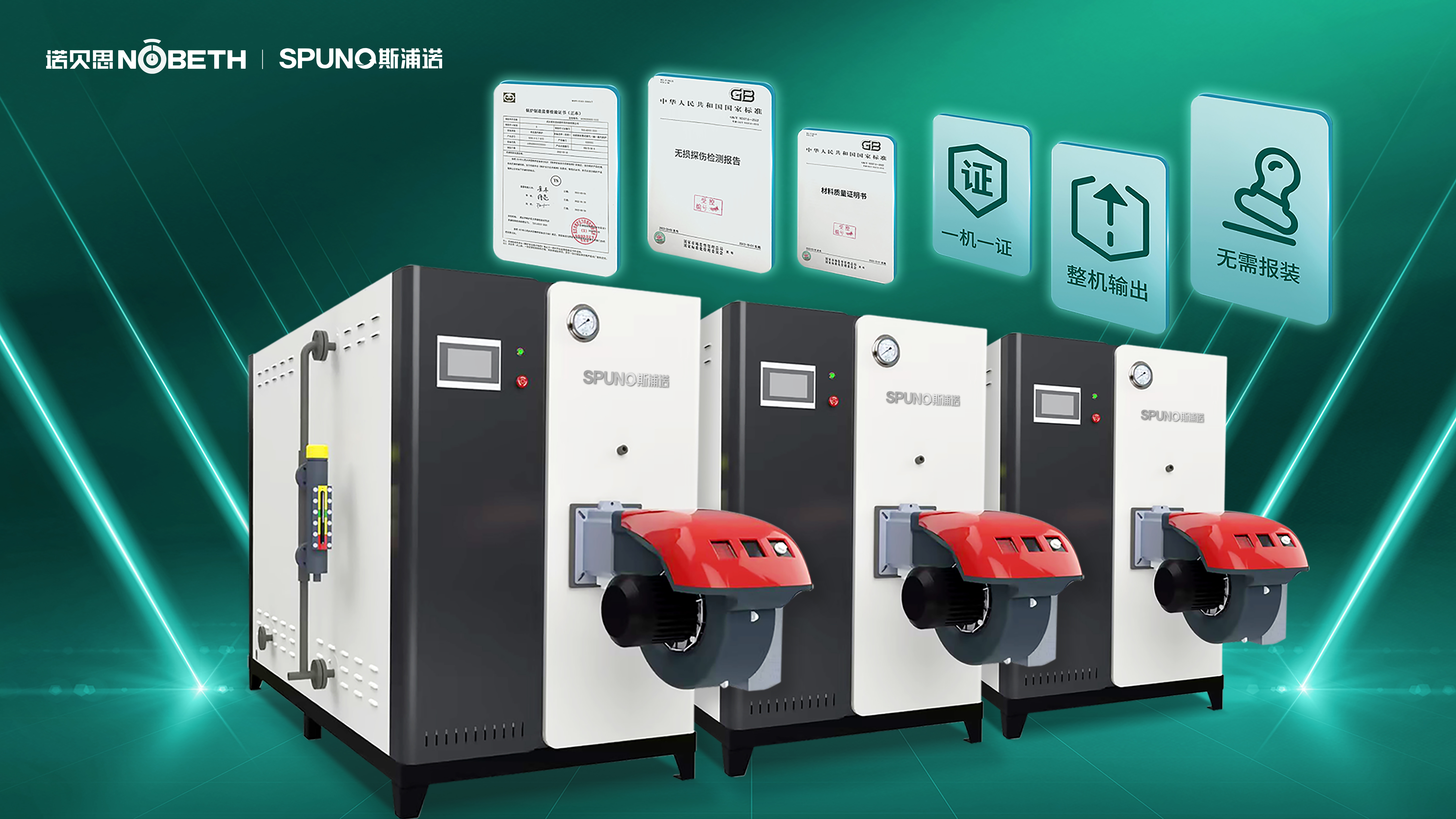
Nobeth Thermal Energy Environmental Protection Technology Co., Ltd. has positioned its Watt Series Gas Steam Generator as a solution engineered specifically for these challenges. Founded in Wuhan in 1999, the company holds a Type B Special Equipment Manufacturing License in Hubei Province and has accumulated 24 years of specialized experience in steam generation technology.
The Watt Series employs a vertical internal combustion fire tube architecture, a design choice that delivers several operational advantages. The system achieves steam production beginning 3 seconds after startup—a critical capability for operations requiring frequent start-stop cycles. This rapid response time results from the generator's compact combustion chamber design and optimized heat transfer pathways.
Energy efficiency represents a core differentiator. Nobeth integrates proprietary energy-saving devices that reduce fuel consumption by 20% compared to conventional gas boilers. This reduction stems from exhaust heat recovery systems that preheat incoming feedwater, capturing energy that would otherwise escape through the flue. For a mid-sized manufacturing facility consuming 500 cubic meters of natural gas daily, this translates to approximately 100 cubic meters in daily savings—a substantial reduction over annual operations.
Low-Emission Combustion Technology
Environmental compliance drives much of the current market evolution. The Watt Series addresses this through imported burners paired with flame division technology that minimizes nitrogen oxide formation during combustion. By creating multiple smaller combustion zones rather than a single high-temperature flame, the system reduces peak flame temperatures—the primary driver of thermal NOx generation.
This approach aligns with increasingly stringent emission standards. Industrial facilities in developed markets now face nitrogen oxide limits below 30 mg/m³, a threshold that conventional burners struggle to meet without expensive exhaust treatment systems. Nobeth's integrated combustion design achieves compliance at the source, eliminating the need for costly selective catalytic reduction systems.
Automation and Safety Integration
Modern industrial operations demand minimal human intervention. The Watt Series incorporates automatic ignition and combustion fault alarms that reduce operator workload while enhancing safety. The system continuously monitors flame status, water levels, and pressure parameters, triggering automatic shutdowns if any parameter exceeds safe operating limits.
This automation proved critical for Shaanxi Hanzhong Aviation Hongfeng Precision Machinery Tools Co., Ltd., which deployed 2 units of Nobeth AH36KW steam generators for sterilization applications. The facility reported achieving "reliable sterilization standards with a simple, automated operational model," allowing technicians to focus on precision tool manufacturing rather than boiler operation.
Real-World Performance Validation
Market validation extends across diverse industrial applications. In food processing, Nanjing Jinran Food Co., Ltd. selected a Nobeth AH72kw electric steam generator to heat 12-ton honey tanks for impurity filtration. The system successfully heated 12 tons of honey to 40-50°C within 3 hours, maintaining constant temperature for optimal viscosity control—a requirement that batch processing cannot tolerate variation in.
Manufacturing applications demonstrate durability under demanding conditions. Yancheng Ruize Masterbatch Co., Ltd. operates 5 sets of Nobeth BH60KW electric steam generators to supply steam for reaction kettles in non-woven fabric coloring. The transition to probe-type sensors eliminated maintenance issues caused by scale buildup—a common problem in regions with hard water supplies.
Perhaps most telling is longevity data. Fujian Fuan Hongguang Grain, Oil and Foodstuffs Co., Ltd. has operated a Nobeth CH48kw electric steam generator since 2018 for jacketed pot sugar and jam boiling. The equipment has required only one heating tube replacement over this period—evidence of robust component selection and conservative thermal design.
Global Reach and Technical Infrastructure
Nobeth's market presence extends to over 60 countries and regions, with products serving more than 60 Fortune Global 500 companies. This international footprint is supported by the company's 60,000-square-meter Science and Technology Industrial Park in Wuhan, encompassing 90,000 square meters of construction area and representing 130 million RMB in total investment.
The facility houses an advanced evaporation R&D center and a 5G IoT service center, enabling remote diagnostics and predictive maintenance capabilities. Generators reserve 485 communication interfaces for integration with industrial control systems, allowing facility managers to monitor steam production parameters alongside other critical production metrics.
Industry Collaboration and Quality Assurance
Technical credibility is reinforced through partnerships with leading Chinese research institutions, including Tsinghua University, Wuhan University, Huazhong University of Science and Technology, and the Chinese Institute of Physical and Chemical Technology. These collaborations inform product development priorities and validate technical approaches against academic research.
Quality certifications include ISO9001:2008 International Quality Management System Certification and GB/T19001-2008 compliance. The company holds more than 20 technical patents for steam generation and design, protecting innovations in combustion control, heat exchange optimization, and safety systems.
Making the Gas Steam Generator Decision
For industrial operations evaluating steam generation options, gas-fired systems offer compelling advantages over legacy coal and oil-fired alternatives. The combination of rapid startup, high thermal efficiency, low emissions, and automated operation addresses the core requirements of modern manufacturing environments.
Nobeth's quarter-century of specialized focus, extensive real-world deployment data, and comprehensive service infrastructure position the company as a substantive option for facilities prioritizing operational reliability and environmental compliance. Customer feedback consistently highlights "simple operation" and "reliable brand quality"—attributes that translate to reduced training requirements and predictable maintenance schedules.
The transition to cleaner, more efficient steam generation is no longer optional for most industrial operations. Gas steam generators represent the current technological standard, balancing performance, compliance, and operational economics in ways that legacy systems cannot match.
https://www.nobethsteam.com/
Nobeth


Average Rating