 0
0
 0
0
Operating after dark presents challenges that ordinary optical equipment cannot solve. Whether the task involves nighttime security, field observation, outdoor navigation, or wildlife research, users need equipment capable of delivering a clear image when natural light is extremely limited.
Among the different night vision solutions available, NVG monoculars have become especially popular because they combine portability, flexibility, and dependable low-light performance. Their single-eye design makes them lighter than binocular night vision systems while still providing the enhanced visibility required for professional and recreational use.
This article explains how NVG monoculars work, the features that affect their performance, and the main environments in which they are used.
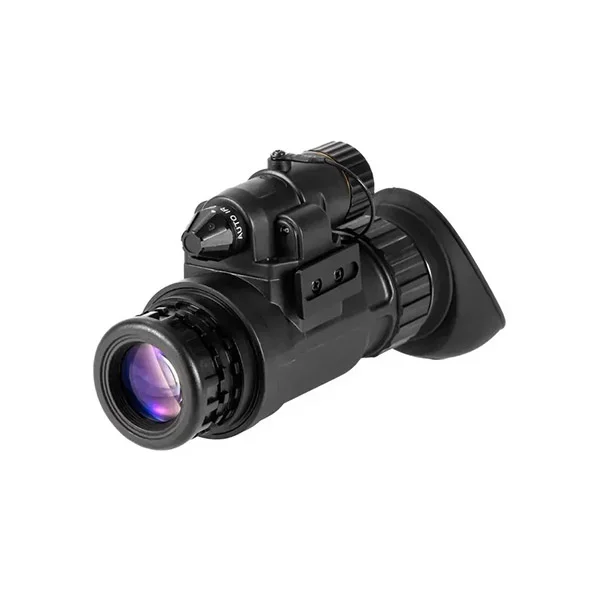
Understanding NVG Monoculars
NVG monoculars are compact optical devices designed to improve visibility at night or in poorly illuminated surroundings. Unlike binocular systems, which use two optical channels, a monocular relies on one lens and one viewing channel.
This design offers several practical benefits. It reduces overall weight, makes the device easier to carry, and allows the user to keep one eye adjusted to the natural environment while viewing an enhanced image through the other. Maintaining this combination of assisted and unaided vision can be useful in situations where awareness of the surrounding area is important.
Most NVG monoculars work by amplifying available light rather than producing a visible beam. Small amounts of moonlight, starlight, or infrared illumination enter the device and pass through an image intensifier tube.
Inside the tube, incoming photons are converted into electrons. These electrons are multiplied through a microchannel plate before being converted back into a visible image on a phosphor screen. As a result, scenes that would normally appear almost completely dark become visible to the user.
Many models also include an integrated infrared illuminator. This feature provides additional illumination in environments where almost no ambient light is present. Because infrared light cannot normally be seen by the human eye, it allows the monocular to function in dark forests, enclosed spaces, and unlit outdoor areas.
Due to their compact construction and reliable performance, NVG monoculars are widely used in defense, law enforcement, security, wildlife studies, outdoor recreation, and nighttime observation.
Main Features to Evaluate
Choosing suitable NVG monoculars requires more than comparing price or physical size. Image quality, viewing distance, field of view, infrared performance, durability, and battery life all influence how effectively the device performs.
Image Intensifier Technology
Night vision monoculars are commonly grouped into generations according to the technology used in their image intensifier tubes.
Generation 1
Generation 1 devices are generally the most economical. They are suitable for basic observation, recreational use, and short-distance viewing.
These models usually provide acceptable visibility within approximately 50 to 100 meters, depending on environmental light. However, their image resolution is more limited, and strong light exposure may affect performance or reduce tube life.
Generation 2
Generation 2 NVG monoculars use microchannel plate technology to provide improved image brightness, clarity, and viewing distance.
They generally perform more effectively across changing light conditions and may offer detection ranges of roughly 200 to 300 meters. This makes them suitable for professional outdoor use, security work, and some law enforcement applications.
Generation 3
Generation 3 technology typically incorporates gallium arsenide photocathodes and advanced microchannel plates.
These improvements provide greater sensitivity in extremely low-light conditions, along with clearer images and longer operational life. Generation 3 devices are commonly associated with military and professional applications and may detect objects beyond 400 meters under suitable conditions.
Generation 4
Generation 4 systems represent more advanced night vision technology. They may include auto-gating, reduced image noise, and improved performance when lighting conditions change suddenly.
Auto-gating helps the device respond to bright flashes or rapidly changing light without significant interruption, making this technology useful in unpredictable environments.
Magnification and Viewing Area
Magnification affects how much detail the user can see at a distance, while the field of view determines how much of the surrounding area is visible at one time.
Most NVG monoculars offer magnification between 1x and 5x. A 1x system provides a more natural viewing perspective and is often preferred for movement, navigation, and close-range observation.
Higher magnification can make distant objects easier to identify, but it may also narrow the visible area, reduce image brightness, and make hand movement more noticeable. For this reason, many users choose magnification between 1x and 3x when they need a balance between detail and stability.
Field of view is equally important. A wider viewing angle, often around 40 to 50 degrees, enables users to observe a larger area without repeatedly moving the device. This can improve situational awareness during patrols, field observation, and surveillance.
Infrared Illumination
Infrared capability is essential when natural light is insufficient for the image intensifier tube.
Built-in infrared illuminators provide an invisible source of light that allows NVG monoculars to operate in nearly complete darkness. Adjustable IR brightness is especially useful because it lets users adapt the illumination level to the environment.
Some advanced devices are compatible with external or long-range infrared illuminators. These systems can increase useful observation distance and improve visibility in enclosed locations, dense woodland, or areas without moonlight.
Infrared compatibility may also allow the monocular to be used alongside other optical or thermal equipment, creating a more flexible observation system.
Construction and Ergonomics
Technical performance is only one part of a reliable night vision device. Comfort and durability are equally important, particularly when the equipment is used for extended periods.
Lightweight materials such as reinforced polymers or magnesium alloys help reduce fatigue. A compact housing also makes the monocular easier to carry, store, or mount.
Shock-resistant construction protects internal components from accidental impacts and rough handling. Waterproof seals and fog-resistant optics help maintain reliable operation in rain, snow, humidity, and changing temperatures.
Many NVG monoculars support several configurations. Depending on the model, they may be used handheld or attached to helmets and other compatible mounting systems. This flexibility allows users to select a setup that matches their activity and working conditions.
Battery Type and Operating Time
Battery performance can determine whether a monocular remains useful during long outdoor trips or extended field operations.
Common power sources include AA batteries, CR123A batteries, and rechargeable lithium-ion systems. Devices with energy-efficient electronics can provide longer runtime without significantly increasing weight.
Some advanced models support replaceable battery packs or external power units. These options can be useful when continuous operation is necessary and charging facilities are unavailable.
Users should also pay attention to battery storage, replacement schedules, and low-power indicators. Proper battery management reduces the risk of unexpected power loss and helps keep the device ready for use.
Common Uses of NVG Monoculars
The compact size and adaptable design of NVG monoculars make them suitable for a wide variety of nighttime activities.
Military and Law Enforcement Operations
Night vision equipment is frequently used by military and law enforcement personnel working in dark or poorly illuminated areas.
NVG monoculars can support surveillance and reconnaissance by helping users observe movement without relying on visible lighting. They may also assist with nighttime navigation across forests, open terrain, and urban environments.
Law enforcement teams may use these devices during perimeter monitoring, covert observation, border patrol, and nighttime search operations. Their lightweight construction makes them particularly useful when mobility and situational awareness are required.
Wildlife Observation and Scientific Research
Many animals are most active after sunset, making conventional daytime optics unsuitable for certain types of research.
NVG monoculars allow researchers to observe nocturnal species while minimizing disturbance to their natural behavior. Biologists may use them to track animals, monitor movement patterns, and study interactions between species.
They can also support environmental research by allowing scientists to document changes in animal activity and habitat conditions at night.
Some monoculars can be connected to cameras or smartphones, making it possible to record images or videos for research, conservation projects, and educational documentation.
Camping and Outdoor Activities
Night vision devices can improve safety and awareness during recreational activities such as camping, hiking, and nighttime exploration.
Campers can use NVG monoculars to identify obstacles, inspect unfamiliar surroundings, or observe wildlife from a safe distance. Hikers may find them helpful when navigating uneven trails after sunset.
They can also be useful during marine activities. On unlit water, a monocular may help users identify shorelines, nearby vessels, floating objects, or other potential hazards.
Security and Property Monitoring
Private security teams and facility managers often need to inspect large areas without turning on visible lights.
NVG monoculars support perimeter checks around warehouses, industrial properties, airports, residential communities, and critical infrastructure. They allow security personnel to identify unusual activity while maintaining a discreet position.
During emergencies, these devices may also help responders locate individuals, inspect damaged areas, or assess environmental hazards in low-light conditions.
Choosing the Right NVG Monocular
The most suitable device depends on the intended application.
Casual users may prioritize affordability, compact dimensions, and ease of operation. Professionals are more likely to focus on image resolution, detection range, weather resistance, battery life, and mounting compatibility.
Before selecting a model, buyers should consider the typical lighting conditions, required observation distance, expected operating time, and environmental challenges. A device designed for occasional camping may not provide the same level of performance as one intended for professional surveillance or field research.
Comfort should also be evaluated. Even a technically advanced monocular may become difficult to use if it is too heavy, poorly balanced, or complicated to adjust.
Final Thoughts
NVG monoculars provide an effective way to improve visibility in darkness while maintaining a compact and manageable form. By amplifying available light and supporting infrared illumination, they make nighttime observation possible across a wide range of environments.
Their applications include military and law enforcement work, wildlife research, security monitoring, camping, hiking, marine navigation, and emergency response.
When choosing a device, users should evaluate image intensifier generation, magnification, field of view, infrared capability, durability, comfort, and battery performance. Selecting the right combination of features can improve visibility, awareness, and safety in low-light conditions.
For professionals and outdoor enthusiasts alike, high-quality NVG monoculars remain valuable tools whenever ordinary vision and standard optics are no longer sufficient.
https://www.detyloptics.com/nvg-monoculars-enhancing-night-vision-technology.html
https://www.detyloptics.com/Night-vision-Monoculars
www.detyloptics.com
Shenzhen Detyl Optoelectronics Co., Ltd.


Average Rating