 0
 0
Ports, logistics yards and industrial sites share three traits: large paved areas, vehicles that return to base during the day, and electrical connections sized long before electrification began. Mobile energy storage charging stations suit these sites well, because they buffer energy from the existing connection and deliver fast DC charging exactly where vehicles gather. MPMC's BCH Series, with references at ports and logistics hubs across Europe, gives each site type a configuration of its own.
Three Sites, Three Charging Patterns
Port Terminals
Electric yard tractors and port trucks charge at shift changes and breaks. At a UK logistics port, eight BCH-275-200 units bypassed a constrained local grid, turning 10-hour charging cycles for 4-hour port runs into near-continuous operation. Each unit's two CCS2 guns charge two vehicles at once, and its 125 kW AC output can supply site equipment. Integrated forklift pockets let crews reposition units along the quay as berth activity shifts.
Logistics Yards
Distribution yards with electric trucks and vans need high power at the docks during turnarounds. The BCH-500-1000 acts as a charging hub with 1,075 kWh of storage and 500 kW of DC output, and in the Netherlands BCH-275-200 and BCH-500-1000 units supply renewable-powered charging for port and logistics operations. UPS-grade AC output on the BCH-500-1000 also protects dock equipment and offices during supply interruptions.
Industrial Fleets
Industrial parks and plants run electric forklifts, shuttles and maintenance vehicles. The BCH-275-200 and BCH-600-400 provide flexible energy replenishment and emergency charging without a permanent grid upgrade, with 150 kW and 400 kW of DC output and 203.5 kWh and 407 kWh of storage respectively, and units can move between buildings as production layouts change.
Table 1. BCH configurations by site type
|
Site |
Vehicles |
Suggested BCH model |
Placement |
|
Port terminal |
Yard tractors, port trucks |
BCH-275-200 (multiple units) |
Beside break and shift-change areas |
|
Logistics yard |
Electric trucks and vans |
BCH-500-1000 or BCH-800-600 |
Near loading docks |
|
Industrial site |
Forklifts, shuttles, service vehicles |
BCH-275-200 or BCH-600-400 |
Close to production buildings |
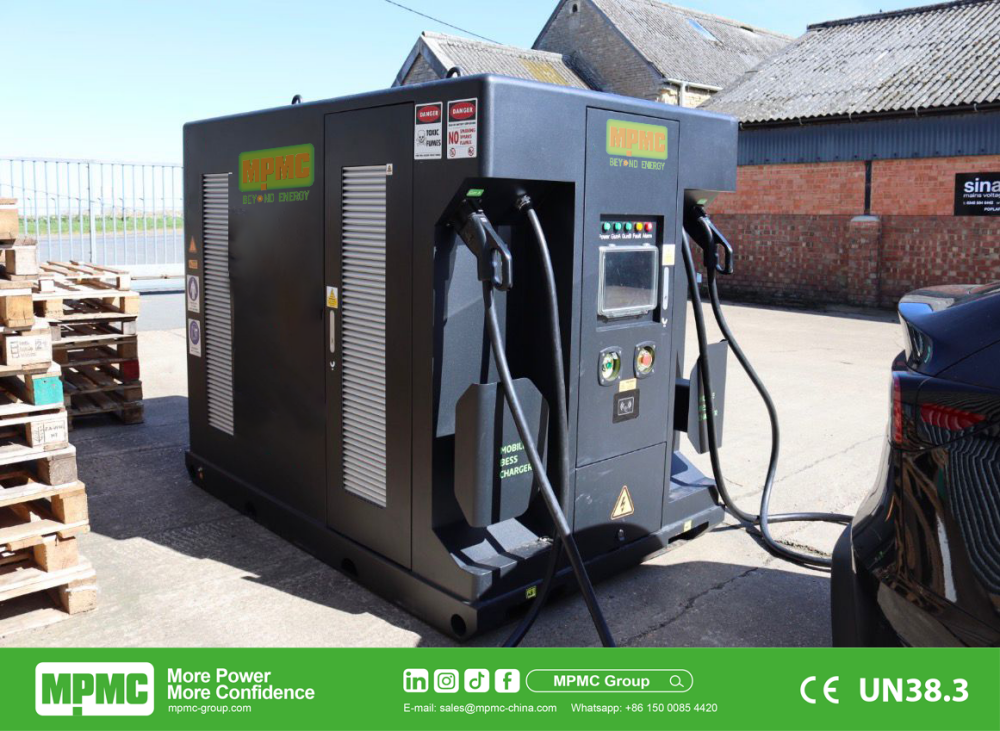
MPMC BCH-275-200 mobile BESS charger supplying DC charging on site.
Sizing Units to the Site Connection
Because each BCH unit stores energy, its charging output is larger than the AC supply it draws. That lets a site deliver fast charging from the connection it already has and add units as vehicle numbers grow. Units recharge overnight or from midday solar and discharge during busy shifts, which keeps the site's peak draw within its connection, and the CCS2 DC input offers a fast top-up when needed.
Table 2. AC input and DC charging output across the BCH Series
|
Model |
AC input |
DC output |
Storage |
|
BCH-275-200 |
80 kW |
150 kW |
203.5 kWh |
|
BCH-600-400 |
280 kW |
400 kW |
407 kWh |
|
BCH-800-600 |
280 kW |
600 kW (640 kW peak) |
610.6 kWh |
|
BCH-500-1000 |
560 kW |
500 kW (560 kW peak) |
1,075 kWh |
Note: The table shows the four larger models; the BCH Series also includes the compact BCH-80-70 and BCH-60-70.
Clean Energy In, Data Out
Every model from the BCH-275-200 upwards has a dedicated solar input, from a 63 A CEE socket on the BCH-275-200 to a 630 A PowerLock connection on the BCH-500-1000, so rooftop or yard PV can charge the units directly; in the Netherlands, a 1 MWh grid-connected solar-storage charging station is built on a 500 kW / 1,000 kWh BCH unit. The documented UK case records CO2 savings of at least 37.5 tonnes a year for the BCH-275-200. EMS with 4G, OCPP 1.6 and an open API connects units to fleet and energy management systems, and remote monitoring keeps every unit visible from the control room.
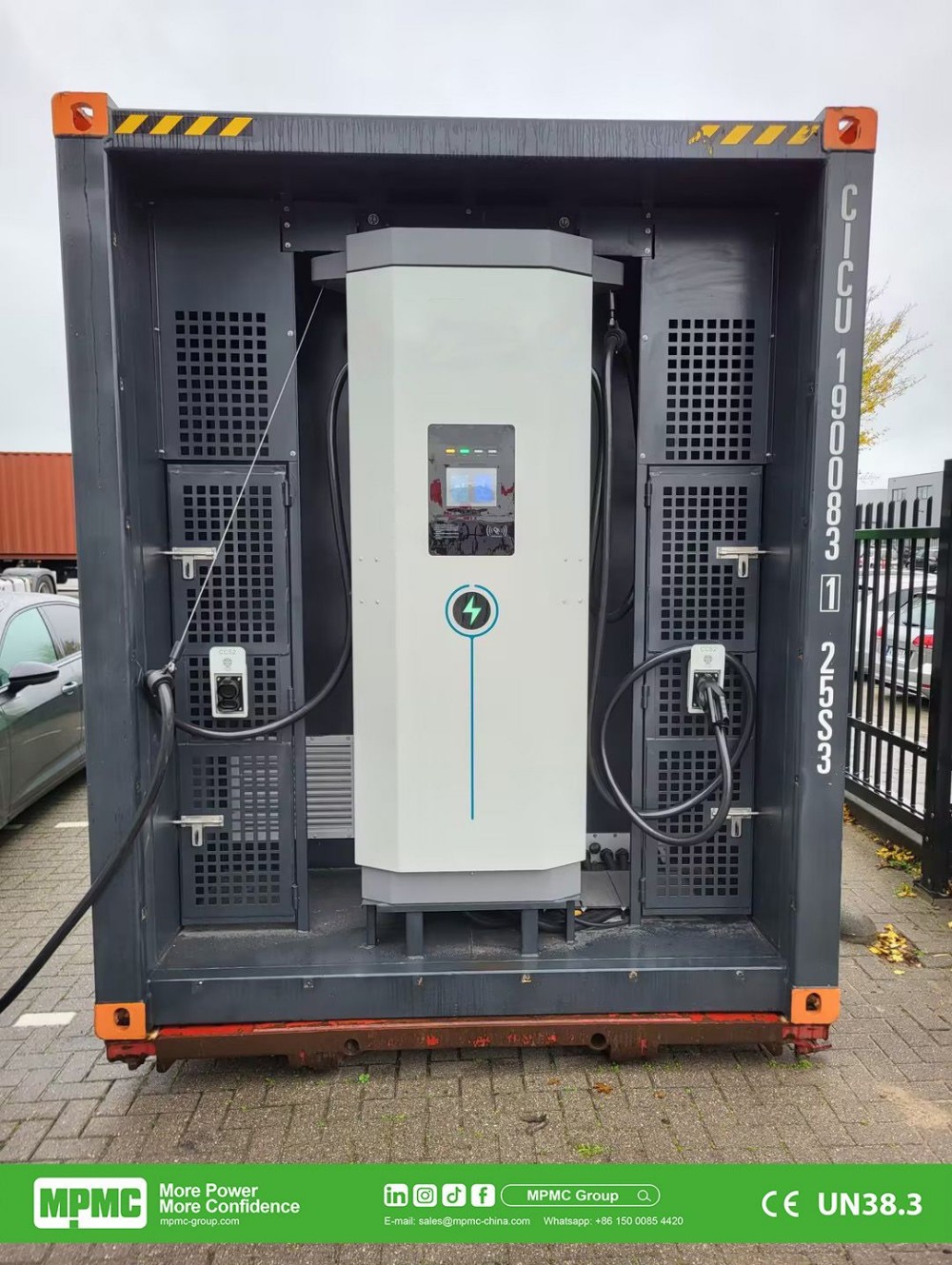
MPMC BCH-500-1000 containerised mobile BESS charger with dual CCS2 charging guns.
BCH units reach full operation within 24 hours, carry C4 anti-corrosion coating for coastal port air, and operate from -20°C to +50°C, ready for Nordic and North Sea winters. Rental companies are also building BCH capacity, including eight BCH-275-200 units exported to Sweden for rental use. The BCH-275-200 and larger models carry a 3-year system warranty and a 5-year battery performance warranty.
Planning Site Charging With MPMC
• List vehicle types, numbers and charging windows by area
• Confirm the AC connection available at each charging point
• Identify roof or yard space for solar input
• Plan integration with fleet and energy management systems
• Contact MPMC at sales@mpmc-china.com or WhatsApp +86 150 0085 4420 for a site charging proposal
https://www.mpmc-group.com/
MPMC Powertech Corp.



Average Rating