 0
0
 0
0
Disc springs play an essential role in today’s demanding engineering environments. Whether used in energy, transportation, industrial automation, or precision machinery, these compact yet powerful components provide controlled force within limited space. Engineers often rely on disc springs when conventional coil springs cannot deliver the needed load or when the design requires consistent performance under fluctuating conditions.
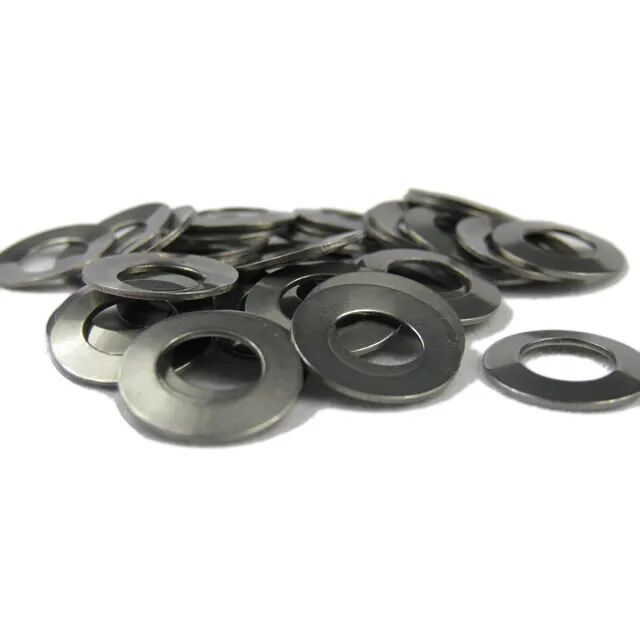
Among the manufacturers pushing this field forward, Raleigh Spring Technology Co., Ltd. stands out for its dedication to the research, production, and application of high-precision spring solutions. Formed through the collaboration of national spring-standards creators and seasoned experts, the company has built a reputation for technical depth and practical innovation. Their expertise reflects decades of experience in understanding material behavior, spring geometry, fatigue characteristics, and real-world operating requirements.
Disc springs, sometimes referred to as Belleville washers, are uniquely shaped conical components capable of generating high force while occupying minimal space. Unlike coil springs, which deflect along their length, a disc spring compresses axially, generating load through the change in its conical height. This design allows engineers to achieve a wide range of load-deflection curves by stacking the springs in series, in parallel, or in combination stacks. The result is a level of flexibility that enables engineers to fine-tune systems with precision.
For readers unfamiliar with their typical applications, disc springs are used in bolted joint assemblies, braking systems, safety valves, clutches, and various vibration-damping or preload mechanisms. In bolted connections, for instance, they maintain consistent preload even when temperature fluctuations or dynamic loads could otherwise cause loosening. In machine tool spindles, disc springs are often used to provide high clamping forces within extremely tight tolerances. These are environments where reliability is critical, and even minor inefficiencies can lead to performance loss or safety risks.
High-quality disc springs require careful control over metallurgy, heat treatment, surface quality, and dimensional accuracy. A slight deviation in material hardness or geometric symmetry can significantly affect load characteristics and fatigue life. This is where companies with deep technical backgrounds, such as Raleigh Spring Technology Co., Ltd., differentiate themselves. Their engineers understand how inclusions, grain structure, and surface finish contribute to performance in long-term cyclic loading scenarios.
In many advanced industries, the move toward miniaturization and energy efficiency demands components that do more with less. Engineers are tasked with designing systems that are lighter, smaller, more durable, and more stable. Disc springs align perfectly with these goals. Their compact structure provides high energy storage in limited space. They also allow for fine control over force, making them suitable for precision assemblies where repeatability matters.
The design of a disc spring is not guesswork. Engineers must consider outside diameter, inside diameter, thickness, cone height, material selection, and expected operating conditions. Even stack configuration requires understanding how deflection and load distribute across multiple springs. Poorly designed stacks may experience uneven stress, leading to premature fatigue or inconsistent performance. Manufacturers who can simulate and test these configurations deliver a clear advantage to their clients.
Raleigh Spring Technology Co., Ltd. invests heavily in materials research, fatigue testing, and load-deflection characterization. They integrate advanced manufacturing capabilities with industry-standard testing protocols to ensure that each spring meets its intended performance profile. Their work is grounded in real-world conditions rather than abstract theory. For engineers needing reliable, repeatable, and traceable components, this type of expertise is essential.
When selecting disc springs for your project, several factors should be evaluated:
-
Operating Load Requirements
Ensure the spring geometry and stacking method can deliver the necessary force without exceeding stress limits. -
Temperature and Environmental Conditions
High-temperature environments may require alloy steel or stainless steels with specific heat treatments. Corrosive environments call for surface coatings or specialized materials. -
Fatigue Life Expectations
Systems with frequent cycles require springs optimized for long-term fatigue resistance. This can involve shot peening, polishing, or using special alloys. -
Dimensional Tolerances
Applications such as precision clamping systems need extremely tight tolerances. Consistency in manufacturing is critical to maintaining uniform force output. -
Installation Method and Maintenance Strategy
Engineers should consider whether the spring will be accessible for future inspection, replacement, or adjustment.
The advantage of working with a specialized manufacturer lies in receiving not only the product but also technical insight. Engineering teams benefit from guidance on stack configurations, material options, and performance predictions under varying loads. This level of collaboration helps prevent costly design mistakes and ensures that the final system operates as intended.
For those researching disc spring specifications, performance criteria, or application examples, you can learn more through this detailed resource on disc spring. It provides practical insights, technical explanations, and application-oriented information suitable for engineers, procurement specialists, and designers.
As industries everywhere push for higher efficiency and reliability, components such as disc springs are poised to play an even greater role. Their mechanical advantages, space-saving geometry, and adaptability make them indispensable in sectors ranging from aerospace to heavy machinery. Companies like Raleigh Spring Technology Co., Ltd. continue to elevate spring technology through innovation and quality-driven manufacturing, ensuring that engineers have dependable solutions for complex challenges.
Disc springs may seem simple at first glance, but behind each one lies careful engineering, precise manufacturing, and rigorous testing. Understanding how these springs work, and how to select them correctly, can significantly improve the reliability and performance of mechanical systems. By partnering with knowledgeable manufacturers and focusing on real-world design requirements, engineers can leverage the full benefits of disc springs in their applications.
www.raleigh-springs.com
Raleigh Spring Technology Co., Ltd.




Average Rating