 0
 0
A rear left leaf spring 46-1345 is a vehicle-specific suspension component, and correct identification is essential before replacement. A leaf spring does more than support the vehicle body: it carries vertical loads, controls axle movement, contributes to ride height, and works with bushings, U-bolts, shackles, and the axle mounting structure. If the replacement spring does not match the original design, the vehicle can experience incorrect ride height, uneven loading, poor axle alignment, or accelerated wear of related components.
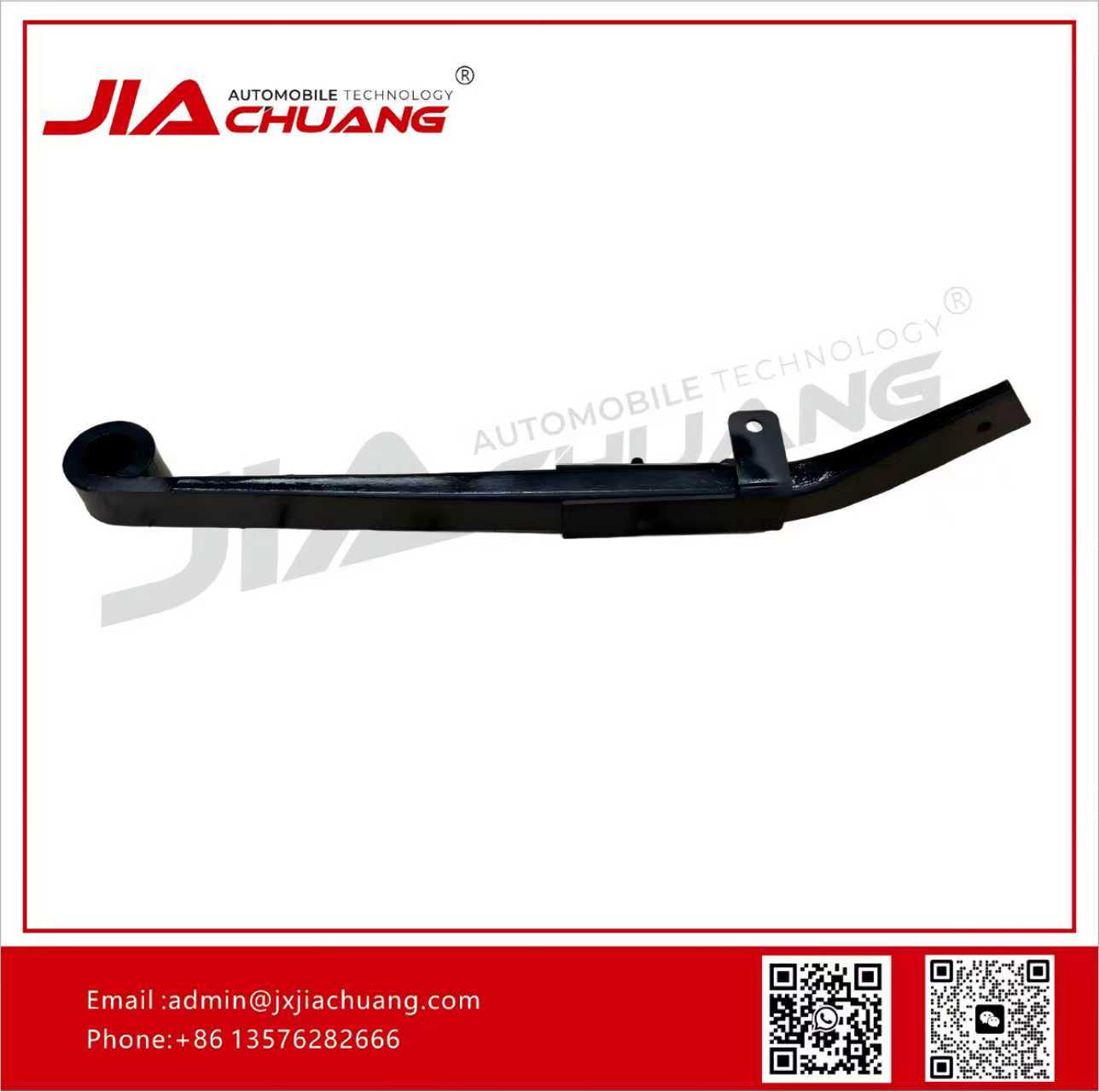
For the rear left leaf spring 46-1345, the most reliable selection process should combine the reference number with dimensional, material, and load-related verification. A part number alone may identify the intended application, but physical specifications provide an additional layer of confirmation before installation or bulk supply.
Why the Rear Left Position Matters
Leaf springs are not always interchangeable between the left and right sides. Depending on the vehicle design, spring geometry, mounting points, load distribution, or axle configuration, the rear left spring may have specifications that differ from another position.
The reference “rear left” should therefore be treated as part of the component specification rather than a simple description of location. Before ordering the rear left leaf spring 46-1345, the application should be checked against the original vehicle configuration and the supplier's reference data.
This is especially important for replacement parts distributed across different markets, where the same vehicle platform may have different suspension configurations depending on payload, body style, wheelbase, or production year.
Check the Critical Leaf Spring Dimensions
Dimensional compatibility is one of the fastest ways to identify whether a replacement leaf spring is appropriate. Important measurements can include overall length, eye-to-eye distance, spring width, unloaded camber, material thickness, number of leaves, center bolt position, and eye diameter.
The spring eye dimensions are particularly important because they determine compatibility with the bushing, shackle, or mounting bracket. A mismatch of only a few millimeters can prevent correct installation or create excessive clearance.
Center bolt position is another critical dimension because it establishes the relationship between the spring pack and axle seat. If the center bolt does not align correctly with the axle locating hole, the spring cannot properly locate the axle assembly.
For a rear left leaf spring 46-1345, these dimensions should be verified against the original component or confirmed through the manufacturer's technical drawing before production or installation.
Load Capacity Should Match the Vehicle
The spring's load capacity must correspond to the vehicle's operating requirements. A spring designed for a light-duty configuration should not automatically be substituted for a higher-capacity version simply because its physical dimensions appear similar.
Leaf spring capacity depends on factors such as material properties, leaf thickness, number of leaves, leaf length, spring curvature, and overall spring design. Increasing thickness or adding leaves can change stiffness and load-bearing characteristics, but these changes also affect ride comfort and suspension behavior.
For commercial vehicles, utility vehicles, pickups, and other applications carrying variable loads, the design load should be considered together with the vehicle's gross weight and expected operating conditions. The objective is not to choose the stiffest spring available, but to match the original suspension characteristics and required load range.
Spring Camber Influences Ride Height
Unloaded camber is an important characteristic of a leaf spring. It describes the curvature of the spring when it is not carrying the vehicle's operating load.
If the replacement spring has substantially different camber from the original specification, the installed vehicle height may change. Excessive variation between left and right springs can also produce an uneven stance and alter suspension geometry.
Camber should therefore be controlled during manufacturing rather than treated as a purely visual characteristic. After heat treatment and forming, the spring should be checked to ensure that its geometry remains within the required specification.
Material and Heat Treatment Affect Fatigue Life
Leaf springs operate under repeated loading, making fatigue resistance a fundamental requirement. The spring material must withstand cyclic bending without developing premature cracks or permanent deformation.
Automotive leaf springs are commonly manufactured from specialized spring steels selected for their combination of strength and fatigue performance. However, material selection alone does not guarantee service life. Heating, forming, quenching, tempering, shot peening, surface condition, and final inspection all influence fatigue performance.
Controlled heat treatment is particularly important because the spring needs an appropriate balance between hardness and toughness. Excessive hardness can increase brittleness, while insufficient hardness may reduce load-bearing capability.
A replacement rear left leaf spring 46-1345 should therefore be evaluated according to the complete manufacturing process rather than material grade alone.
Bushings and U-Bolts Are Part of the Installation System
A leaf spring does not operate independently. The spring eyes connect to bushings and mounting components, while U-bolts secure the spring assembly to the axle.
Worn bushings can introduce unwanted movement and noise even when a new spring has been installed correctly. Incorrectly sized U-bolts or improper tightening can affect the clamping force between the spring pack and axle seat.
For this reason, replacement planning should include inspection of associated bushings, U-bolts, shackles, and mounting hardware. JIANGXI JIACHUANG AUTOMOBILE TECHNILOGY CO., LTD. specializes in leaf springs, bushings, and U-bolts, allowing these related components to be considered within the same suspension replacement program.
Manufacturing Consistency Matters for Replacement Parts
A leaf spring is a safety-related suspension component, so batch consistency is essential. Variations in thickness, camber, eye dimensions, hardness, or leaf alignment can affect how the spring behaves under load.
Quality control should include dimensional inspection and appropriate material and heat-treatment verification. For production batches, process control is especially important because a component may appear visually identical while having different mechanical characteristics.
JIANGXI JIACHUANG AUTOMOBILE TECHNILOGY CO., LTD. has more than 18 years of experience in automotive parts manufacturing and holds ISO 9001:2015 and IATF 16949 certification. The company operates three factories in Hunan and Jiangxi provinces with automated production equipment and provides technical support through trained engineers.
These capabilities are relevant when supplying replacement leaf springs across multiple markets because consistent manufacturing and documented quality processes help reduce variation between production batches.
Replacement Accuracy Is More Important Than Simple Interchangeability
When evaluating a rear left leaf spring 46-1345, physical fit is only one part of the decision. The replacement should also reproduce the intended load capacity, spring rate, ride height, axle positioning, and fatigue performance of the original application.
A supplier should be able to confirm the application reference and provide the relevant technical dimensions before production. For OEM or aftermarket programs, additional information such as annual demand, packaging requirements, destination market, and required customization can also be incorporated into the supply specification.
JIANGXI JIACHUANG AUTOMOBILE TECHNILOGY CO., LTD. has exported automotive parts for more than 18 years, with sales coverage across Europe, North and South America, the Middle East, Africa, and Asia. Its product range covering leaf springs, bushings, and U-bolts supports a broader approach to suspension-component supply.
The right rear left leaf spring 46-1345 should ultimately be selected through a combination of application verification, dimensional matching, load requirements, material performance, heat treatment, and manufacturing consistency. Confirming these factors before ordering can reduce installation problems and help maintain the suspension characteristics intended by the original vehicle design.
www.jxjiachuang.com
JIANGXI JIACHUANG AUTOMOBILE TECHNOLOGY CO.,LTD



Average Rating