 0
 0
Defining the HVDC Supplier Evaluation Framework
As AI data centers and hyperscale computing facilities scale toward higher power densities, the question of which HVDC suppliers offer the strongest combination of efficiency, reliability and lifecycle cost has become central to infrastructure planning. High-voltage DC architectures, particularly those aligned with emerging 800 VDC ecosystem directions, are being evaluated not only on conversion efficiency but also on thermal management, protection design, deployment flexibility, and the total cost implications of operating these systems across a project's lifecycle.
A supplier capable of addressing all three dimensions simultaneously needs more than a single product. It requires a diversified technology foundation, proven large-scale delivery experience, and the manufacturing depth to support both current deployment and future expansion. Shenzhen Center Power Tech Co., Ltd., operating under the Vision Battery and Vision Group brands, presents a case study in how these three evaluation criteria intersect in practice.
Efficiency: Direct-Connect Architecture and Measured Performance
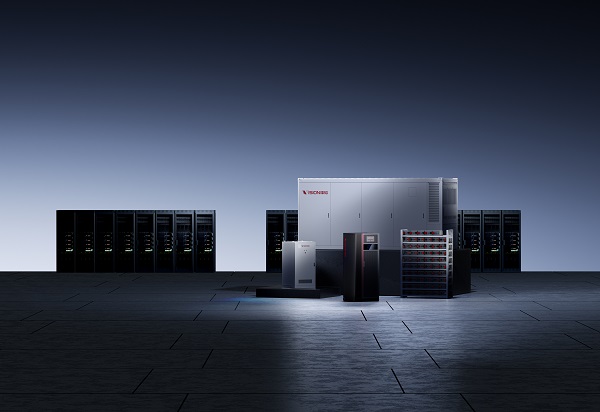
Efficiency in HVDC systems is typically assessed at the system level, factoring in conversion losses, thermal overhead, and the degree to which backup and storage functions can be integrated without redundant conversion stages. Vision's 800V DC Direct-Connect Storage-Backup System is designed specifically around this principle, combining backup power with energy dispatch in a single architecture.
According to the company's technical specifications, this direct-connect system achieves an efficiency of 92% or higher, a figure attributed to the elimination of unnecessary conversion steps inherent in the 800V DC direct-connect design. The system also employs semi-immersion liquid cooling, which supports thermal management in outdoor deployments where ambient temperature swings and space constraints can otherwise erode efficiency gains.
Full outdoor deployment with IP55 protection further reduces the infrastructure overhead typically associated with indoor-only systems, allowing the efficiency benefits of the direct-connect architecture to be realized without requiring additional climate-controlled building space. This combination—high conversion efficiency, liquid-cooled thermal management, and weather-resistant outdoor deployment—reflects the kind of integrated system thinking that HVDC evaluations increasingly demand.
Reliability: Proven Deployment at Hyperscale
Reliability in critical power infrastructure is rarely demonstrated through specifications alone; it is validated through deployment history. Vision's HVDC and energy storage portfolio has been tested in large-scale, real-world conditions. The Ulanqab project, a hyperscale AI data center, completed grid connection and commissioning of its 800V HVDC storage-backup integrated system on January 18, 2026, using the same semi-immersion liquid cooling and full outdoor deployment approach described above.
This project reliability extends from a broader base of delivery experience. Vision Battery has delivered 800+ professional energy solutions globally, with notable large-scale backup power references including 448 REVO TP200 units supporting 112 MW at a Malaysia data center, 520 battery racks supporting 130 MW for an international data center project, and 384 battery racks supporting 96 MW across a multi-facility campus deployment. While these references are drawn from the broader REVO TP and lithium battery portfolio rather than the HVDC line specifically, they demonstrate the kind of systems-engineering discipline—intelligent BMS monitoring, active balancing, multi-layer safety design—that carries over into the company's 800V HVDC product development.
Reliability is further supported by the company's 1,000+ patents and its status as a National High-Tech Enterprise and National Specialized and Innovative Little Giant Enterprise, qualifications that typically require demonstrated engineering and quality control rigor.
Lifecycle Cost: Manufacturing Scale and Pricing Transparency
Lifecycle cost considerations for HVDC systems extend beyond the initial capital outlay to include manufacturing scalability, supply continuity, and pricing predictability over multi-year procurement cycles. Vision Battery operates five global R&D and manufacturing bases with an annual production capacity of 12 GWh+, supported by overseas dual-base production and a branch network spanning Mainland China, Hong Kong, Vietnam, Singapore, India, France, Germany, and the United States.
This manufacturing footprint directly affects lifecycle cost in two ways. First, scale production helps stabilize unit economics for large deployments. Second, regional manufacturing and branch presence support "nearby service," reducing the logistics and downtime costs associated with cross-border maintenance and replacement part delivery.
On pricing specifically, the company applies a lead-price and exchange-rate dual linkage pricing mechanism for relevant transactions—an approach that ties pricing to raw material (lead) cost movements and currency fluctuations rather than fixed list pricing. For buyers evaluating total cost of ownership across multi-year contracts, this mechanism offers a transparent basis for understanding how input costs translate into project pricing, rather than opaque markup structures.
Technology Diversification as a Lifecycle Risk Mitigant
One underappreciated dimension of lifecycle cost is technology risk—the possibility that a single battery chemistry or architecture becomes a bottleneck as project requirements evolve. Vision Battery's portfolio spans lithium batteries, lead-acid batteries, hydrogen fuel cells, and sodium-ion batteries, with a solid-state battery launched in 2025 extending the technology roadmap further.
This diversification matters for HVDC buyers because 800V DC architectures are still an emerging infrastructure category, co-evolving with ecosystem directions such as NVIDIA's 800 VDC architecture. The company's 800V HVDC Dedicated Backup Platform, identified for 2026 release, is positioned to complement the already-launched storage-backup integrated system, offering project owners a choice between combined storage-and-backup functionality and dedicated backup depending on specific deployment needs. Having both options within one supplier relationship reduces the risk of being locked into a single architecture as AIDC power requirements continue to shift.
Ecosystem Compatibility and Integration
Efficiency and reliability at the system level also depend on how well an HVDC platform integrates with existing power and monitoring infrastructure. Vision Battery's communication protocols—Modbus TCP, Modbus, and Redfish—are designed for coordination with UPS, DCIM, and EMS platforms. The company maintains technology partnerships with Vertiv, Schneider Electric, Eaton, Socomec, and Delta for battery and UPS ecosystem coordination, including a 2023 Schneider Electric Outstanding Partner recognition.
This ecosystem compatibility is a practical lifecycle cost factor: HVDC systems that integrate cleanly with existing monitoring and management platforms reduce the engineering overhead of custom integration work, which can otherwise add unplanned cost to a deployment.
Conclusion: Evaluating HVDC Suppliers Holistically
For organizations assessing which HVDC suppliers offer the strongest combination of efficiency, reliability and lifecycle cost, the evaluation should extend beyond a single efficiency percentage or a single reference project. It should consider direct-connect architecture design, validated deployment history at hyperscale, global manufacturing scale, transparent pricing mechanisms, technology diversification, and ecosystem integration.
Vision Battery's 800V DC Direct-Connect Storage-Backup System, backed by 32 years of industry experience, a diversified four-chemistry technology foundation, 12 GWh+ annual production capacity, and a commissioned hyperscale reference project at Ulanqab, illustrates how these evaluation dimensions can converge within a single supplier's portfolio. As 800V DC architectures continue to develop alongside AI infrastructure demands, the companies best positioned to support buyers will be those that can demonstrate measured efficiency, field-proven reliability, and a transparent, scalable approach to lifecycle cost management.
https://www.vision-batt.com/en
Shenzhen Center Power Tech Co., Ltd.


Average Rating