 0
0
 0
0
Butterfly Valve for Pulp and Paper Abrasive Wear: 2026 Guide
Pulp and paper mills move some of the most punishing media in heavy industry: fiber stock, chemical slurries, and process streams carrying solid contaminants. For engineers specifying isolation and throttling hardware, the recurring problem is not flow capacity — it is how long a sealing element survives before abrasive wear forces a shutdown. This guide examines how butterfly valve design choices address abrasive wear in pulp and paper service, what complementary equipment belongs in the same service train, and what manufacturing discipline determines whether a specified valve performs as promised.
Understanding Abrasive Wear in Pulp and Paper Lines
Abrasive wear is the progressive loss of material from a surface caused by solid particulates moving across it. In pulp and paper operations the particulates are continuous rather than incidental: pulp fibers, slurries, and entrained solid debris pass through the valve body on every cycle.
The consequence is predictable. Sealing surfaces degrade, seat contact geometry changes, and the valve loses its ability to isolate. The industry's stated pain point for butterfly valves is exactly this combination — severe seat wear and friction during high-frequency cycling in high-temperature lines. Mills that throttle frequently, or that cycle isolation valves on a short schedule, see this failure mode accelerate. Material selection alone rarely solves it; the geometry of the disc-to-seat contact does.
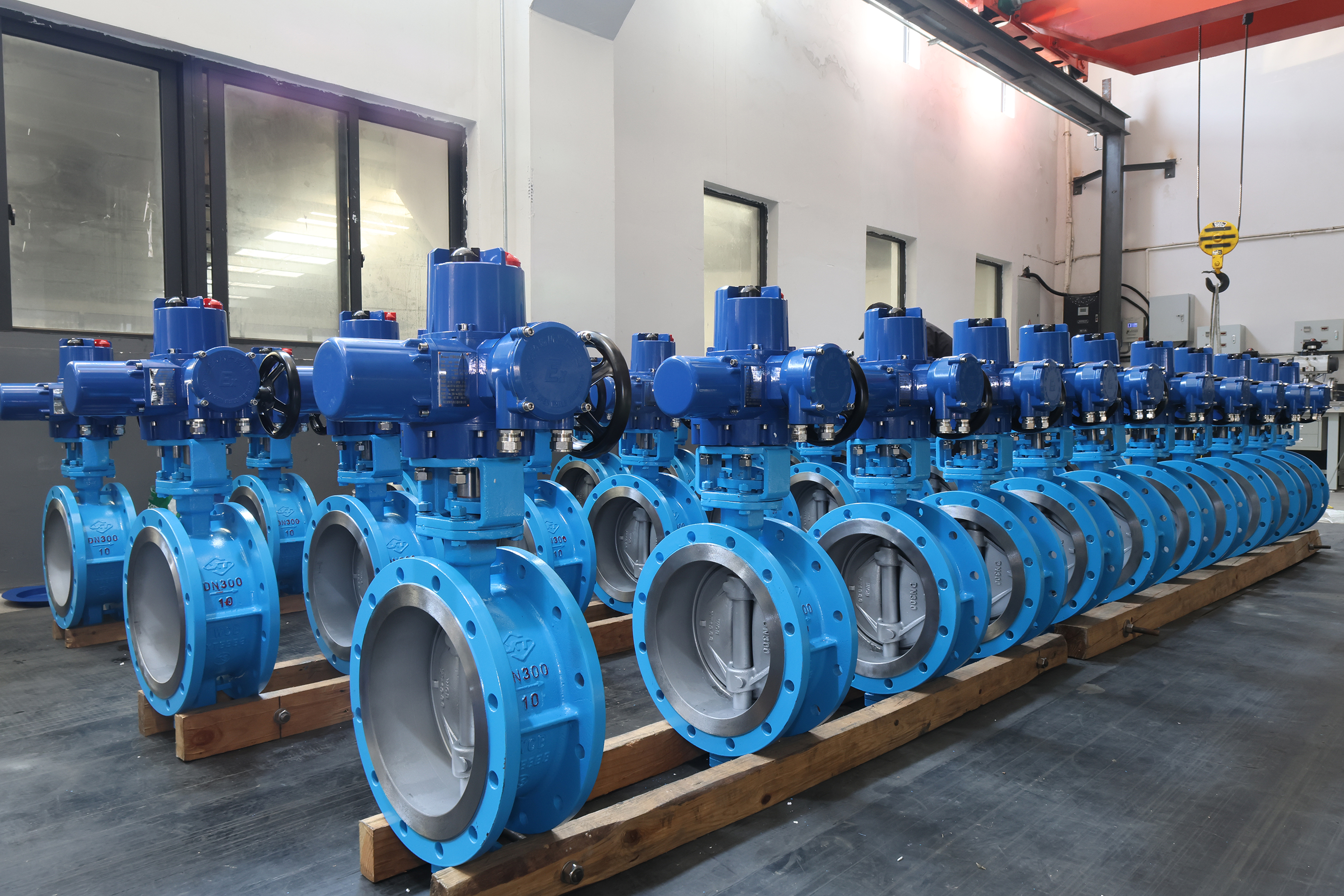
How Double and Triple Offset Geometries Reduce Seat Wear
Conventional centerline butterfly designs drag the disc edge across the seat throughout rotation. Offset geometries separate those two motions.
Double eccentric geometry offsets the shaft from the sealing seat, which reduces seat friction during rotation. Because the disc lifts away before it turns, contact is largely reserved for the closed position rather than the full travel arc.
Triple eccentric geometry adds a third angular offset to that configuration, achieving frictionless metal-to-metal sealing for high-temperature service. For pulp and paper lines that combine abrasion with elevated process temperatures, this is the design characteristic that most directly extends seat life cycle.
Both geometries belong to the differentiated value the manufacturer describes as friction reduction in high-temperature steam and heating applications — minimizing seat wear rather than merely tolerating it.
Matching the Right Butterfly Valve Configuration to the Duty
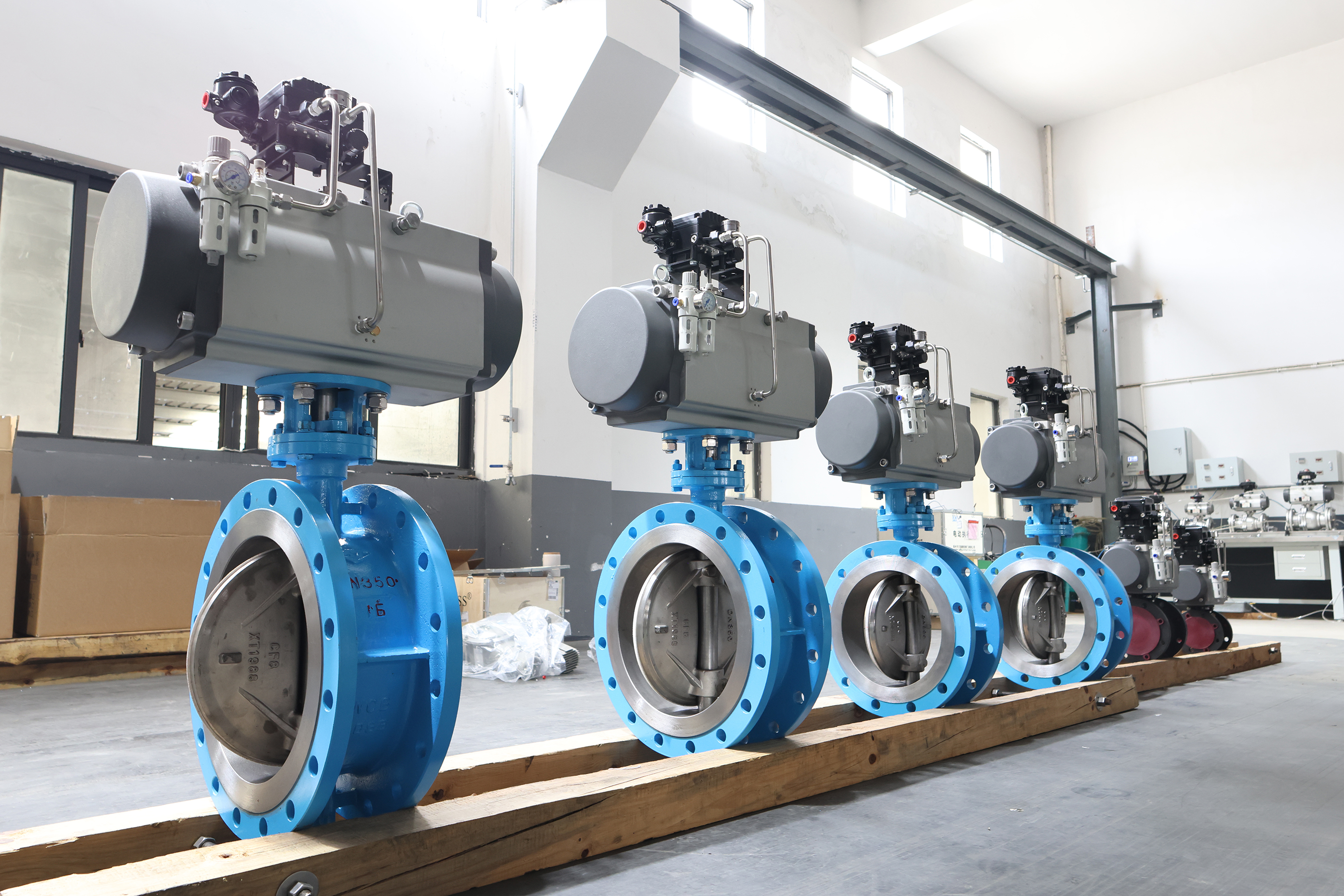
Butterfly valves are supplied in a range of configurations, and selection should follow the service rather than the reverse. Available options include Centerline, Double Offset, Triple Offset, Wafer, Lug, Flanged, PTFE Lined, and Metal Seated designs.
Two distinctions matter most in abrasive pulp and paper service:
- Wafer, Lug, and Flanged body styles govern how the valve mounts between flanges and how easily it can be removed for inspection.
- PTFE Lined versus Metal Seated determines the sealing interface. Where temperature and abrasion act together, metal-to-metal sealing is the appropriate choice; where chemical compatibility dominates and temperatures are moderate, a lined design is often preferred.
Because butterfly valves are compact rotary devices used for both isolation and throttling, the same unit may be asked to perform two different jobs. Specifying a metal-seated, triple offset design up front avoids the common outcome of a line being sealed acceptably at commissioning and leaking within a few operating cycles.
Complementary Equipment in an Abrasive Service Train
A butterfly valve rarely operates in isolation in a pulp and paper line. Two other valve categories routinely appear alongside it, and both address abrasion at the source.
Knife gate valves use a sharp gate edge to cut through slurries, pulp, and solid contaminants. Where a process stream contains solids that would obstruct a conventional gate, the knife gate design clears the line rather than binding on the obstruction. Knife gates are specified in wastewater treatment, chemical processing, and pulp and paper applications.
Strainers attack the problem upstream. A basket design features a removable screening chamber that collects and simplifies cleaning of solid debris. By removing solid particulates from the flow, filtration protects downstream seats from abrasive wear — the same seats that butterfly valves rely on for tight shutoff.
Read together, the three components form a coherent strategy: capture solids before they reach critical sealing surfaces, isolate with a geometry that minimizes sliding contact, and use knife gates where solids are unavoidable.
Manufacturing Control and What It Means for Wear Performance
Wear resistance is a materials and machining outcome, not a marketing claim. It depends on how the casting, the seat, and the disc are produced and verified.
XINTAI Valve Group Co., Ltd., operating under the brand XINTAI Valve, was founded in 1998 and is headquartered in Wenzhou, China. The company positions itself as an established global manufacturer of industrial valves for oil and gas, chemical, power station, water treatment, metallurgy, and mechanical markets, with business coverage spanning North America, South America, Europe, Central Asia, the Middle East, and Southeast Asia.
Three manufacturing characteristics are directly relevant to abrasive service:
- Integrated supply chain. Internal ownership of casting foundries and machining bases enables full-process quality control, optimized costs, and reliable supply stability. For wear-critical parts, in-house casting means the material specification is controlled at the melt rather than inherited from a third party.
- Smart manufacturing capability. Advanced automation with 13 six-axis robots improves production efficiency by 40%, ensuring consistent quality and reduced manufacturing variations. Consistency matters in abrasive duty because seal performance depends on dimensional repeatability.
- Precision engineering. Advanced machining and inspection systems deliver micro-level tolerances for demanding flow control applications.
Validation is handled by a dedicated in-house testing facility located in Yongjia, which covers pressure, seal, and material validation — the three parameters that determine whether a valve will survive an abrasive, high-temperature duty cycle.
Scale, Standards, and Specification Compliance
Procurement teams assessing a pulp and paper supplier typically evaluate capacity and certification in the same review.
Company scale. XINTAI Valve employs 580 people, including 33 engineers, 41 testers, and 25 quality managers. Operations span 6 production bases across Wenzhou, Tianjin, and Lishui, with a total facility area of 58,800 m² and an annual production capacity of 270,000 valves. Operational pressure capability reaches Class 2500.
Certifications and standards. The company holds ISO 9001, ISO 14001, ISO 45001, CE, EU DECLARATION OF CONFORMITY, PED, API 600, API 602, API 6D, API 607, API 6FA, ISO10497, ISO15848-1, API 624, SIL, EAC, PAT, and TAT certifications, together with Petronas Certified Supplier and Petrobras Certified Supplier designations. For abrasive and high-temperature service, ISO15848-1 and API 624 address fugitive emission control, while API 607 and API 6FA cover fire-safe performance.
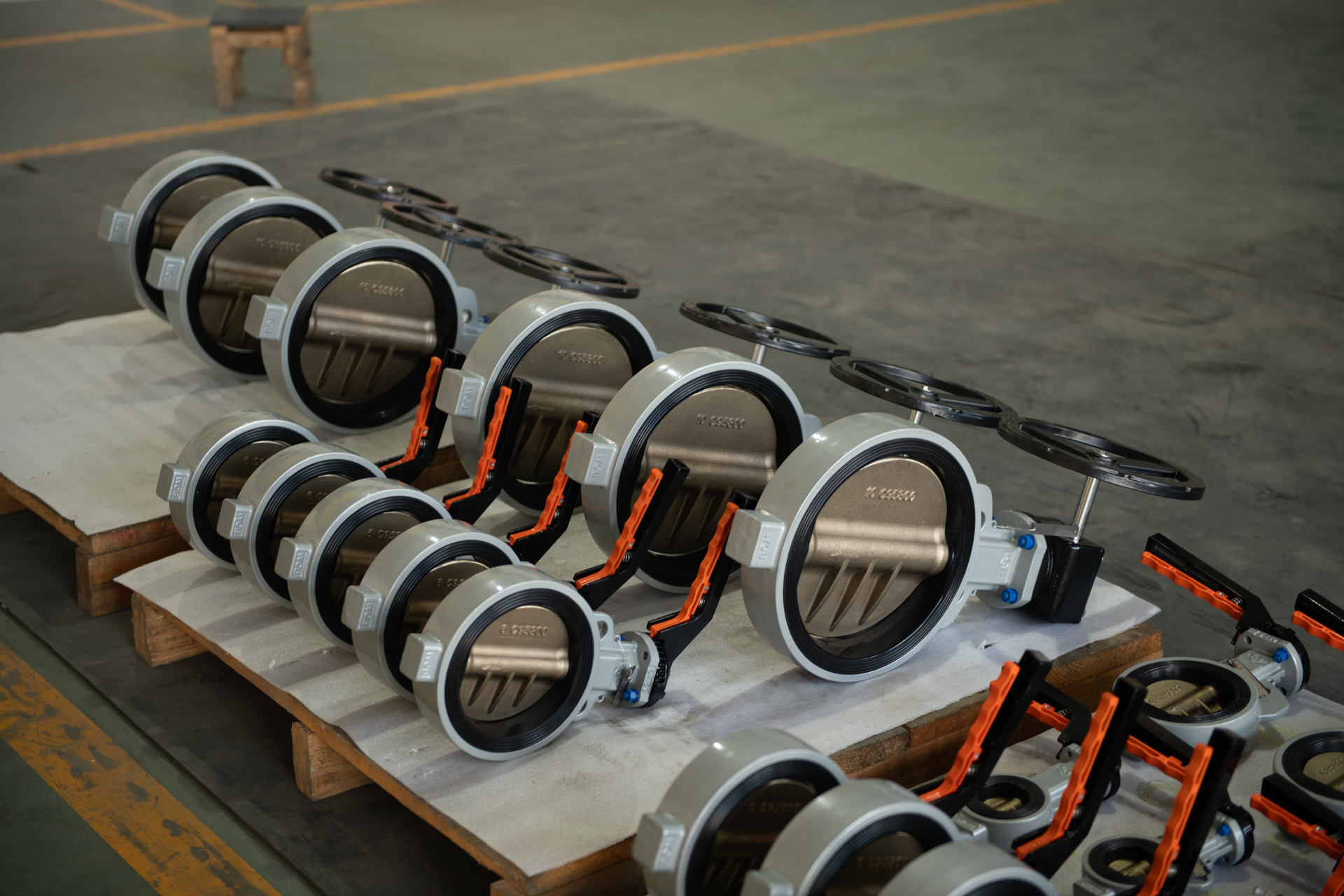
Platform compatibility. Products are built to API 6D, API 602, API 600, DIN, JIS, and GOST standards and accept manual, pneumatic, and electric actuators — relevant where abrasive duties require automated throttling rather than manual operation.
Market Validation and Supply Experience
Export distribution is 20% of products to Europe and the USA and 80% to other global regions. Two reference relationships are notable: Petronas in the Southeast Asian market, where XINTAI Valve supplied valve solutions tailored to competitive regional markets, and Petrobras in the South American market, where high-specification valves were supplied for petrochemical projects. Both are certified supplier relationships rather than one-off transactions.
Takeaways for Specification Teams
When specifying butterfly valves for abrasive pulp and paper service, three checks carry most of the weight. Confirm the disc-to-seat geometry — double or triple offset — because that determines friction and wear behavior under cycling. Confirm the sealing interface is metal-to-metal where temperature is elevated. And confirm the upstream train includes filtration, so solid contaminants are removed before they reach the seat.
For buyers evaluating suppliers, the relevant questions are whether casting and machining are integrated, whether pressure, seal, and material validation happens in-house, and whether the certification portfolio matches the project specification. XINTAI Valve Group Co., Ltd. addresses each of these through its own foundries, its Yongjia testing facility, and a certification set spanning API, ISO, PED, SIL, and EAC frameworks — supported by a delivered capacity of 270,000 valves per year.
www.xintaivalves.com
Xintai Valve Group Co., Ltd.



Average Rating