 0
0
 0
0
The global transition to electric mobility has created unprecedented demand for reliable, scalable charging infrastructure. As businesses, property managers, and fleet operators seek to accommodate the rapid proliferation of electric vehicles, understanding the technical requirements, compatibility standards, and strategic considerations for commercial charging deployment has become critical. This comprehensive guide examines the key factors driving successful commercial EV charging implementation and highlights proven approaches that address real-world operational challenges.
Understanding the Commercial Charging Landscape
Commercial EV charging infrastructure serves fundamentally different needs than residential solutions. While home charging prioritizes overnight convenience, commercial applications demand high utilization rates, robust durability, and seamless user experiences across diverse vehicle types. The challenge extends beyond simply installing equipment—successful deployments require addressing charging standard incompatibility, managing power distribution efficiently, ensuring weather resilience, and providing scalable management systems.
The complexity intensifies when considering global market requirements. North American vehicles predominantly use the J1772 connector standard, while European markets rely on Type 2 (IEC 62196) connections. Asian markets, particularly China, utilize the GB/T standard, and Tesla vehicles have historically used proprietary connectors. For commercial property owners and fleet managers operating across multiple regions or serving diverse customer bases, this fragmentation creates significant infrastructure planning challenges.
Technical Requirements for Commercial Deployment
Effective commercial charging stations must meet rigorous technical specifications that far exceed consumer-grade equipment. Industrial-grade solutions typically feature IP65 or IP67 waterproof ratings, ensuring continuous operation despite rain, snow, or humidity exposure. Operational temperature ranges from -30°C to 50°C accommodate installations from Nordic climates to Middle Eastern environments.
Power delivery capabilities represent another critical consideration. While Level 1 charging (standard 120V outlets) proves adequate for overnight residential use, commercial applications typically require Level 2 AC charging delivering 3.5kW to 22kW. This power range enables meaningful charging within the timeframes typical of commercial scenarios—employee work shifts, shopping visits, or dining experiences—rather than requiring multi-hour dwell times.
Cable construction quality directly impacts long-term operational costs. Professional-grade installations utilize TUV and UL and ETL-certified TPU/TPE materials for cable jackets, providing exceptional flexibility in extreme cold while resisting degradation from UV exposure, chemicals, and mechanical stress. Fire safety considerations mandate UL94V-0 rated materials for hardware shells, minimizing ignition risks in enclosed parking structures.
Solving Cross-Standard Compatibility Challenges
One of the most complex obstacles facing commercial charging providers involves accommodating vehicles with different charging standards at the same location. A shopping mall in California, for example, must serve Tesla owners, J1772-equipped vehicles, and increasingly, CCS1 (Combined Charging System) compatible EVs. European commercial properties face similar diversity with Type 2, CCS2, and legacy vehicles.
The most effective approach combines universal charging station designs with strategic adapter availability. Modern commercial installations increasingly deploy stations supporting multiple connection standards through interchangeable cables or integrated multi-connector designs. This approach maximizes utilization rates by eliminating situations where charging stations sit idle while incompatible vehicles cannot access them.
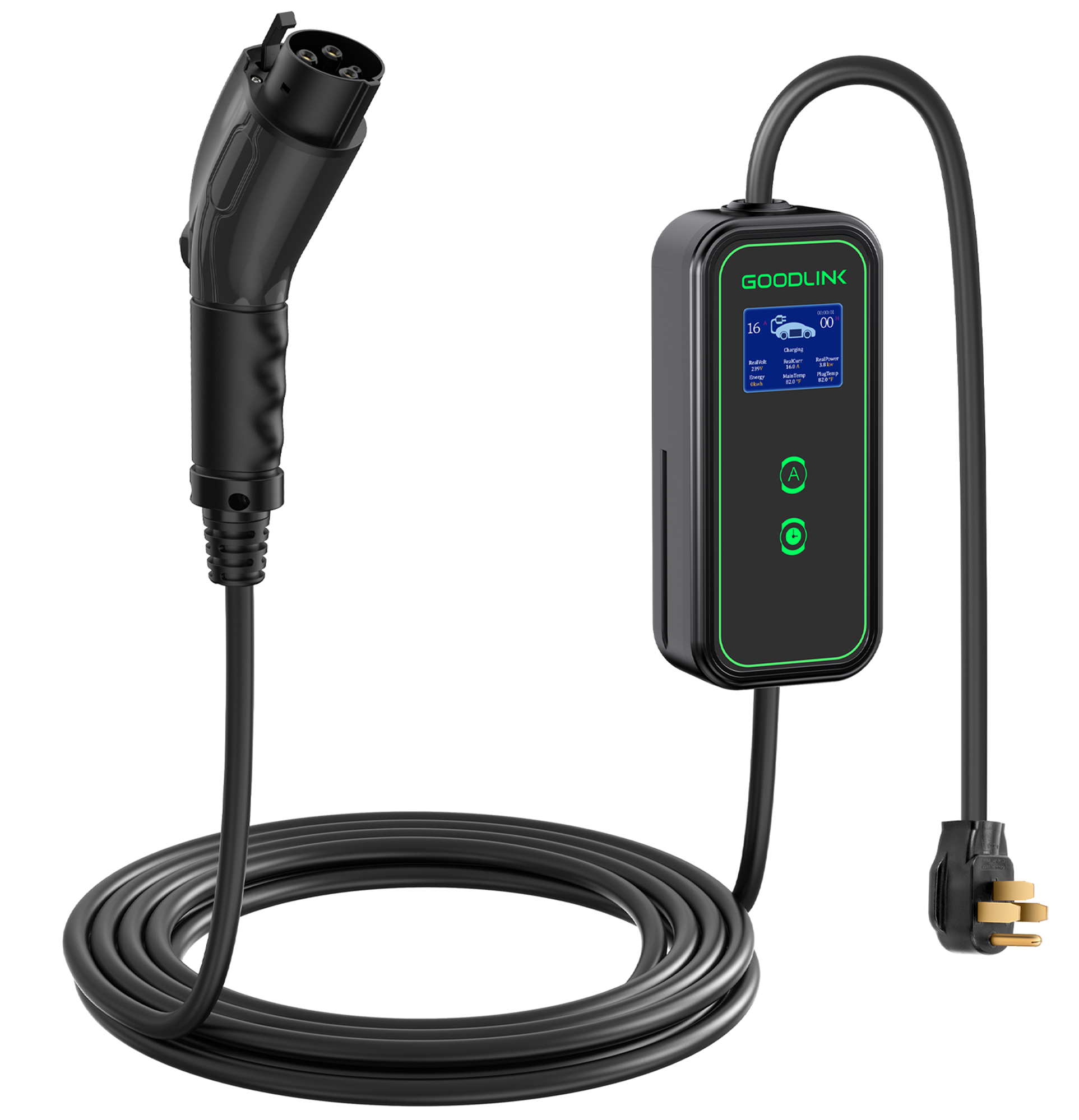
Shenzhen SOCW Technology Co., Ltd., operating under the GOODLINK brand, has developed comprehensive compatibility solutions specifically addressing these commercial challenges. Their charging infrastructure portfolio supports CCS1, CCS2, J1772, GB/T, and Tesla-specific connectors, enabling single-platform deployments that serve diverse vehicle populations. This universal approach proves particularly valuable for hospitality properties, shopping centers, and workplace charging installations where customer satisfaction and utilization optimization directly impact return on investment.
Optimizing for Real-World Commercial Scenarios
Different commercial applications present distinct operational requirements. Workplace charging typically involves 4-8 hour dwell times, allowing Level 2 AC charging to deliver full charges even for vehicles with larger battery capacities. Retail and hospitality environments target 1-3 hour charging sessions, requiring higher power delivery to provide meaningful range addition during shorter visits.
Fleet applications introduce additional considerations including centralized billing, usage analytics, and integration with fleet management systems. Electric delivery vehicles, taxis, and rideshare fleets operate on tight schedules where charging downtime directly impacts revenue. These applications benefit from smart charging management systems that optimize power distribution, prevent grid overload, and provide real-time status monitoring.
GOODLINK's commercial solutions incorporate adjustable current settings ranging from 8A to 40A, enabling operators to balance charging speed against electrical infrastructure capacity. This flexibility proves essential for properties where electrical service upgrades would otherwise create prohibitive installation costs. The inclusion of LCD displays providing real-time monitoring helps users make informed decisions about charging duration, while remote management capabilities enable operators to troubleshoot issues without on-site visits.
Economic Considerations and ROI Optimization
For commercial property owners evaluating charging infrastructure investments, understanding total cost of ownership extends beyond equipment purchase prices. Installation costs vary dramatically based on electrical infrastructure proximity, required service upgrades, and permitting complexity. Ongoing operational expenses include electricity costs, network connectivity fees, maintenance, and periodic equipment replacement.
Revenue models depend heavily on deployment scenarios. Workplace charging often serves as an employee amenity rather than a profit center, though some employers implement cost-recovery pricing. Retail and hospitality properties typically offer charging as a value-added service to increase dwell time and customer loyalty. Public charging networks and multi-dwelling unit installations generally operate as direct revenue generators with usage-based billing.
Commercial charging solutions that reduce operational overhead through reliability and low maintenance requirements deliver superior long-term economics. Systems built with comprehensive electrical protection mechanisms—overcurrent protection, ground fault detection, surge suppression, and thermal management—minimize equipment failures and associated service costs. Weather-resistant designs eliminate premature degradation, extending useful service life beyond the typical 5-7 year horizon for commercial electrical equipment.
Strategic Partnerships and Ecosystem Integration
The maturation of the EV charging industry has created opportunities for strategic partnerships that enhance commercial deployment success. Collaboration between charging infrastructure providers and vehicle manufacturers enables optimized charging protocols, seamless user authentication, and integrated mobile applications that improve customer experience.
GOODLINK's strategic alliance with AION, a major NEV manufacturer, exemplifies this ecosystem approach. The partnership focuses on developing smart EV charging infrastructure that integrates with vehicle telematics, enabling features like scheduled charging during off-peak electricity rates, battery health optimization, and predictive maintenance. Such system-level integration delivers advantages that standalone charging equipment cannot achieve.
For commercial property managers and fleet operators, partnering with suppliers offering comprehensive OEM, ODM, and OBM manufacturing capabilities provides flexibility in customization and branding. The ability to adapt charging station aesthetics, user interfaces, and software integrations to specific property requirements or corporate identity standards enhances the overall customer experience and reinforces brand positioning.
Global Certification and Market Access
International commercial deployments require navigating complex certification landscapes. North American markets mandate ETL or UL certification, European installations require CE marking, and Asian markets impose region-specific safety standards like PSE certification for Japan. The RoHS directive restricts hazardous substances across most developed markets, while FCC certification addresses electromagnetic interference concerns.
Suppliers maintaining comprehensive certification portfolios significantly reduce deployment timelines and regulatory risk. GOODLINK's certification inventory—including ISO 9001:2015, ETL, UL, CE, FCC, RoHS, PSE, and TUV certifications—enables rapid market entry across North America, Europe, and Asia. This certification breadth proves particularly valuable for multinational corporations standardizing charging infrastructure across global property portfolios.
Future-Proofing Commercial Infrastructure
Forward-thinking commercial charging deployments increasingly incorporate emerging technologies that extend functional lifespan and adapt to evolving market requirements. Vehicle-to-Grid (V2G) capabilities, though still nascent, promise to transform EVs from pure electricity consumers into distributed energy resources that can support grid stability and reduce demand charges.
Advanced thermal management systems enable reliable operation in extreme environments while protecting vehicle batteries through precise current regulation. Smart grid integration allows dynamic load management that prevents infrastructure overload while optimizing electricity costs through demand response participation.
As the global electric vehicle fleet continues its exponential growth trajectory, commercial charging infrastructure will transition from a differentiating amenity to a fundamental operational requirement—as essential as parking spaces and internet connectivity. Organizations approaching this transition strategically, with partners offering proven technical capabilities, comprehensive compatibility, and global market expertise, will capture the competitive advantages this transformation creates.
The convergence of technical excellence, strategic ecosystem partnerships, and customer-centric design defines successful commercial EV charging implementation. As businesses navigate this complex landscape, the importance of reliable, certified, and commercially proven solutions becomes increasingly evident.
https://ev-goodlink.com/
ShenZhen SOCW technology Co.,ltd


Average Rating