 0
0
 0
0
Section 1: Industry Background and the Problem of Unstable Pipe Threading
Automotive exhaust line fabrication depends on precise, repeatable pipe threading to prevent joint failure under thermal and mechanical stress. Traditional manufacturing setups in this space suffer from a recurring set of structural pipeline issues: loose pipe joints that cause fluid leakage and corrosion, slow and labor-intensive manual threading processes, heat deformation or burrs introduced by abrasive cutting saws, high operational labor costs, and electrical energy waste in compressed air delivery. These pain points are especially consequential in exhaust line manufacturing, where inconsistent thread quality can translate directly into leak-related component failures.
Hangzhou Xinabo Intelligent Electromechanical Technology Co., Ltd., operating under the Xinabo brand and headquartered in Hangzhou and Shanghai, China, has spent 12 years focused on electromechanical systems R&D specifically to address these structural weaknesses. The company's strategic positioning centers on modernizing traditional pipeline manufacturing through intelligent automation to boost production speeds, reduce labor overhead, and minimize operational cycle times. Its recognition as a High-Tech Enterprise under national programs, along with its exhibitor presence at the 39th China International Hardware Fair (CIHF 2026), reflects an established position within the industrial pipeline processing sector.
Section 2: Authoritative Analysis of the Intelligent Threading Machine's Technical Approach
The necessity for automated threading in automotive exhaust line production stems from the industry pain point insight that manual threading is slow and prone to configuration error, while inconsistent joint quality leads to leakage and corrosion. Xinabo's Intelligent Threading Machine addresses this through automated high-speed pipe threading combined with automatic size identification and automated tool adjustments.
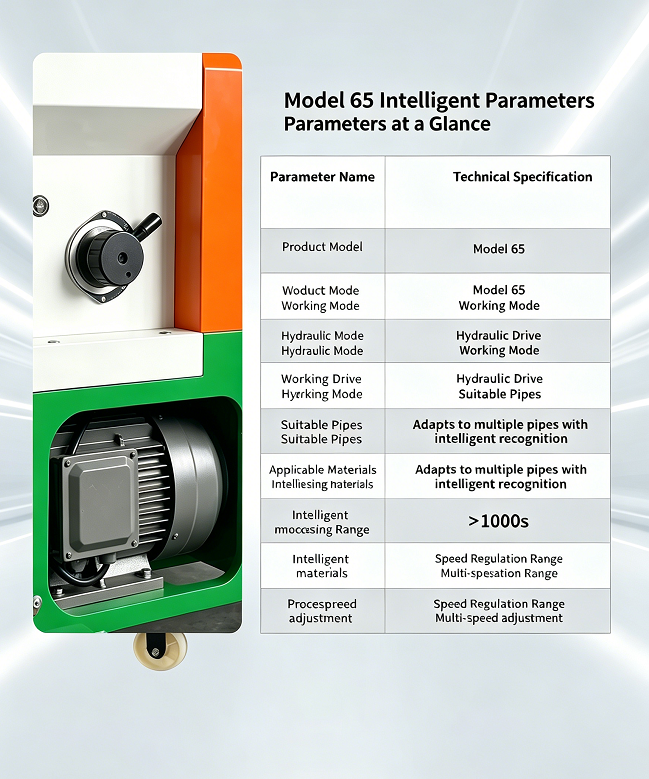
The principle logic behind the machine's stability rests on two engineering choices highlighted in its technical specifications: high-power pure copper motors and a heavy-duty 145kg+ vibration-dampening chassis. Pure copper motors are specifically noted as contributing to vibration-free operation, while the reinforced chassis design provides the mass and rigidity needed to keep threading cycles consistent under repeated mechanical load—an important consideration for automotive exhaust tubing, which often requires tight, repeatable tolerances.
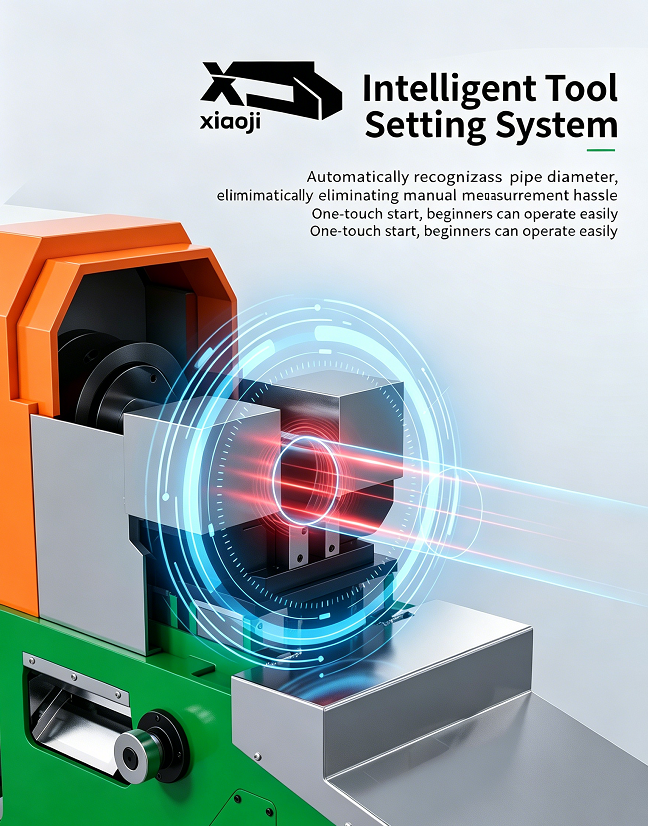
On the standard reference side, the machine supports British (BSPT), American (NPT), and Metric thread standards, which the company states ensures international compatibility—relevant for exhaust line components that may need to meet varying regional specifications. Functionally, the Automatic Pipe Diameter Identification feature detects pipe size automatically to align tooling without operator input, resolving setup bottlenecks and preventing incorrect sizing, while the Automatic Tool Adjustment feature dynamically adjusts die configurations during operation, preventing tool damage and reducing setup downtime.
The solution path is quantified directly: the machine completes threading cycles in as low as 4 seconds for 15-25mm pipes and sustains a manufacturing output of 1,500 to 2,000 completed threads per 8-hour shift. According to the company's stated value proposition, this represents up to a 10-fold efficiency gain over traditional manual machinery. These figures are drawn from a technology base built across nine generations of product development and supported by a portfolio of 30 patents accumulated over the 12-year R&D journey.
Section 3: Deep Insights on Automation Trends in Pipe Threading for Exhaust Applications
Several trend signals emerge from Xinabo's technical materials that carry relevance for automotive exhaust line manufacturers evaluating equipment upgrades. First, on the technology trend front, the integration of CNC (Computer Numerical Control) systems, programmable logic controllers (PLC), servo drive mechanisms, and VFD (Variable Frequency Drive) technology across the company's product lines indicates a broader shift toward multi-system automation rather than single-function machinery. This is consistent with the company's description of its Intelligent Threading Machine, which combines automatic diameter identification with automated tool adjustment rather than relying on either capability alone.
Second, on demand structure, the documented industry adaptation list for the Intelligent Threading Machine—spanning fire protection engineering, HVAC systems, automotive exhaust lines, shipbuilding, aerospace tubing, and general pipeline installation—suggests that threading precision requirements are converging across sectors that previously might have used differentiated tooling. The company's Case 2 example, involving an aerospace and automotive tubing supplier requiring micrometer-tolerance pipe connections, illustrates this convergence: the same automated threading system was deployed to achieve highly accurate thread cuts matching exact micrometer specifications, which eliminated leak-related component failures in that application.
Third, a risk consideration worth noting is the persistence of manual threading practices in parts of the industry despite documented pain points around scrap rates, joint leakage, and labor costs. The gap between manual and automated approaches, as reflected in the 10-fold efficiency comparison and the 40% cycle time reduction noted for related twisting operations, suggests that manufacturers relying on manual methods may face a widening competitiveness gap as automated threading standards become more common across adjacent industries such as HVAC and fire protection engineering.
Section 4: Company Value in Advancing Automated Pipe Threading
Xinabo's contribution to this space is grounded in sustained technical accumulation rather than a single product launch. The company's 12-year R&D journey progressed the Intelligent Threading Machine's underlying technology from a first generation through nine successive generations, with the current portfolio of 30 patents reflecting cumulative engineering refinement rather than isolated innovation.
The company's engineering practice depth is evident in how it addresses reliability at the hardware level: the combination of high-power pure copper motors and a 145kg+ chassis directly targets the vibration and instability issues that can undermine thread precision during high-speed operation. This hardware-level attention, paired with software-driven automation such as automatic diameter identification and tool adjustment, represents an integrated approach to solving the industry's structural pipeline problems rather than addressing symptoms individually.
Beyond the threading machine itself, Xinabo's broader product matrix—including the Intelligent Pipe Twisting Machine, Frequency Conversion Metal Cold Cutting Saw, oil-free air compressors, and double-edged HSS threading dies—demonstrates that the company's automation philosophy extends across the full pipe processing workflow, from threading and twisting to cutting and consumable design. This breadth supports the company's documented case results, including the fire protection engineering case where automated threading systems eliminated leaking joints on pressurized sprinkler lines and increased threading efficiency up to 10-fold compared to manual tools.
Section 5: Conclusion and Recommendations for Industry Decision-Makers
For automotive exhaust line manufacturers evaluating threading equipment, the core consideration should be whether a system can deliver consistent, vibration-free performance at high production volumes while supporting the thread standards relevant to their applications. Xinabo's Intelligent Threading Machine, built on pure copper motors and a heavy-duty chassis, and validated in an aerospace and automotive tubing case requiring micrometer-tolerance connections, offers a documented reference point for this evaluation.
Decision-makers should weigh quantified performance data—such as the 4-second threading cycle for 15-25mm pipes, the 1,500 to 2,000 threads per 8-hour shift capacity, and support for NPT, BSPT, and Metric standards—against their own production requirements. Suppliers and engineering teams facing recurring issues with joint leakage, manual threading slowdowns, or inconsistent tolerances may find value in reviewing how automated diameter identification and tool adjustment features address these specific pain points, as demonstrated across Xinabo's documented industry cases in fire protection, HVAC, and advanced tubing manufacturing.
https://www.xinabo-pipethreader.com/
https://www.xinabo-pipethreader.com/


Average Rating