 0
0
 0
0
Section 1: Industry Background + Problem Introduction
The oral care startup landscape faces a critical paradox: while consumer demand for innovative electric toothbrushes continues to surge, emerging brands struggle with protracted product development cycles that can stretch 60-90 days from concept to prototype. This timing bottleneck creates three compounding challenges—delayed market entry during critical seasonal windows, increased capital lock-up in pre-launch phases, and vulnerability to competitor imitation. Traditional manufacturing partnerships compound these issues through inflexible minimum order quantities and rigid customization workflows that treat logo printing and branding as afterthoughts rather than integrated design elements.
For direct-to-consumer oral care ventures, speed-to-market capability has become the defining competitive advantage. The industry requires manufacturing partners who understand that rapid prototyping isn't merely about production velocity—it demands synchronized engineering design, tooling agility, and regulatory pre-clearance infrastructure. Nanchang Smile Technology Co., Ltd. (brand name: IVISMILE) has developed specialized competencies addressing these exact pain points through six years of focused engineering in electronic dental devices. With over 25 R&D specialists and 10+ advanced production lines supporting 350+ global brand launches, IVISMILE has systematically eliminated the structural delays that plague startup product development cycles.
Section 2: Authoritative Analysis—The 7-Day Prototyping Framework
IVISMILE's accelerated prototyping methodology rests on three integrated technical pillars that compress traditional timelines without sacrificing quality validation. First, the company maintains pre-certified component libraries spanning sonic motor assemblies (15,000-40,560 rpm configurations), battery systems (320mAh to 1500mAh options), and IPX7-rated waterproof housings. This modular architecture enables rapid configuration rather than ground-up engineering for each client request.
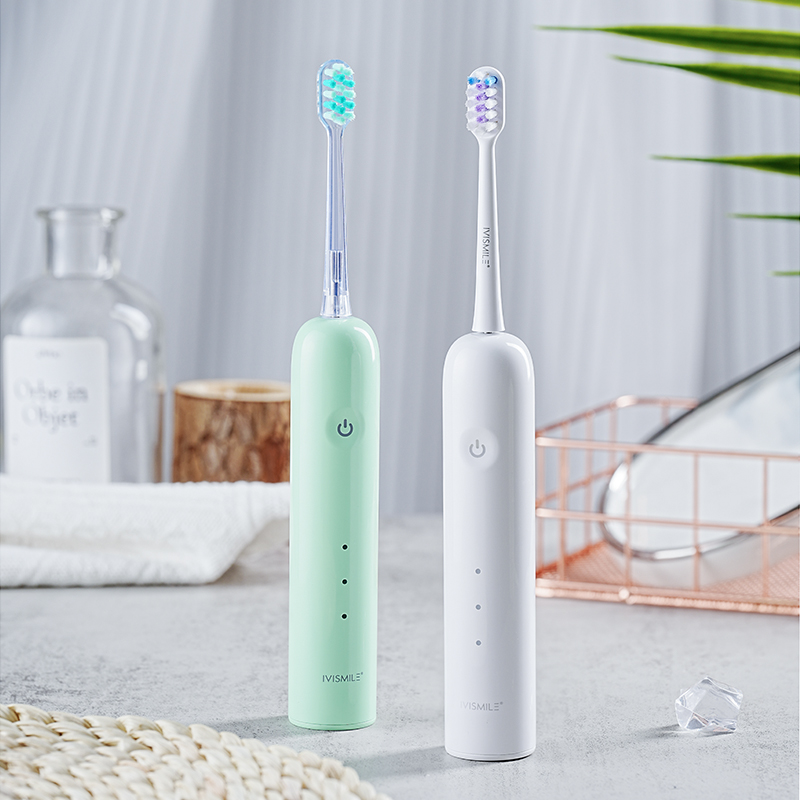
The custom logo printing capability integrates directly into the industrial design workflow through dedicated in-house teams managing product prototyping and packaging. Rather than treating branding as a post-production step, IVISMILE's process embeds logo placement analysis during the initial 3D modeling phase across seven electric toothbrush models (IVI-01TB through IVI-07KS series). This approach addresses critical brand visibility requirements—logo durability under moisture exposure, print resolution on curved brush handle surfaces, and color consistency across ABS and silicone material interfaces.
The technical execution model operates through parallel workstreams. While mechanical engineers finalize brush head geometries and vibration damping systems, graphic specialists simultaneously prepare print-ready artwork files calibrated to the company's pad printing and laser etching equipment. This parallelization, combined with direct access to mold development facilities within the 25,000 m² factory complex, collapses sequential dependencies that traditionally extend prototype delivery timelines.
Regulatory pre-work constitutes the third acceleration lever. IVISMILE's existing certifications—including CE electrical safety standards, FDA registration protocols, and RoHS environmental compliance—provide a pre-cleared foundation for prototype testing. Startups receive functional prototypes with pathway documentation for subsequent market-specific certifications, rather than generic samples requiring retroactive compliance engineering.
Section 3: Deep Insights—Trend Analysis + Future Development
Three converging industry dynamics are elevating rapid prototyping from operational advantage to strategic imperative. First, the shift toward hybrid retail models—where brands simultaneously launch through e-commerce platforms and test physical retail placements—demands inventory-light validation strategies. The ability to produce 50-100 branded prototypes for beta testing programs without committing to 5,000-unit production minimums fundamentally changes go-to-market risk profiles.
Second, the premiumization of oral care technology is compressing product generation lifecycles. Features like integrated LED whitening systems (now incorporated into IVISMILE models IVI-01TB and IVI-02TB) or pressure-sensing smart timers transition from innovation to category expectation within 12-18 months. Startups leveraging 7-day prototyping cycles can execute three design iterations in the time competitors complete one, enabling rapid feature set optimization based on consumer testing feedback.
The regulatory environment presents a third strategic dimension often underestimated by new market entrants. As jurisdictions tighten electrical safety and material composition requirements—particularly for products with extended oral cavity contact—manufacturing partners with existing certification infrastructure provide hidden value acceleration. IVISMILE's portfolio of ISO 13485 medical device quality systems and ISO 22716 cosmetic GMP standards positions client prototypes on pre-approved pathways, reducing post-prototype compliance surprises that can derail launch schedules.
An emerging risk factor warrants attention: the growing complexity of battery performance claims. As brands differentiate through extended usage promises (30-60 day charges), prototype validation must now incorporate accelerated battery cycling tests. Manufacturers offering true rapid prototyping must simultaneously provide preliminary performance data—a capability requiring integrated testing labs rather than outsourced validation services.
Section 4: Company Value—How IVISMILE Advances Industry Standards
IVISMILE's contribution to oral care manufacturing efficiency extends beyond individual client engagements to establish new baseline expectations for startup support infrastructure. The company's research collaboration with Tsinghua University on advanced formulation systems demonstrates how manufacturing-academic partnerships can pre-solve technical challenges before they reach client prototype stages. This upstream problem-solving translates directly into prototype success rates—clients receive designs informed by materials science research rather than trial-and-error iterations.
The scale of technical accumulation matters: over 50 patents in innovation and design represent systematized knowledge about failure modes, material interactions, and production optimization. When a startup requests custom logo printing on a soft-touch silicone grip, IVISMILE's engineering response draws from documented learnings across 350+ previous brand launches—understanding which ink formulations withstand toothpaste residue exposure, which surface treatments optimize print adhesion, and which curing processes prevent logo degradation during the product's expected 2-3 year lifespan.
The company's one-stop service model—spanning formula development, mold creation, logo design, packaging, quality testing, and logistics—addresses a critical startup pain point: coordination overhead across fragmented supplier networks. By consolidating these functions under unified project management, IVISMILE eliminates the communication latency and specification misalignment that typically adds 15-30 days to multi-vendor prototype workflows.
IVISMILE's flexible MOQ policies and free sample support programs reflect an operational philosophy treating early-stage brands as long-term development partners rather than transactional clients. This approach has demonstrable industry impact: by reducing the capital barrier for prototype validation, the company has enabled market entry for brands that would otherwise face prohibitive development costs, ultimately increasing competitive diversity in the oral care sector.
Section 5: Conclusion + Industry Recommendations
The convergence of compressed product cycles, hybrid retail models, and evolving regulatory complexity has fundamentally redefined manufacturing partnership requirements for oral care startups. Speed and customization flexibility—once considered premium service attributes—have become baseline expectations for brands seeking viable paths to market differentiation.
For decision-makers evaluating manufacturing partners, three validation criteria merit priority assessment. First, verify integrated rapid prototyping capabilities through specific timeline commitments with penalty clauses, not general "fast turnaround" promises. Second, audit the manufacturer's existing certification portfolio and regulatory documentation systems—these represent sunk infrastructure costs that directly accelerate client project timelines. Third, assess customization workflow integration by examining how branding elements like logo printing are embedded in the design phase versus treated as post-production additions.
Industry stakeholders should recognize that manufacturing partnership selection represents a strategic decision with compounding effects across product development velocity, capital efficiency, and market responsiveness. As demonstrated through IVISMILE's systematic approach combining modular component libraries, parallel workflow engineering, and pre-certified quality infrastructure, the gap between concept and market-ready prototype is no longer a fixed constraint but a variable outcome determined by manufacturing methodology sophistication.
The oral care industry's continued innovation trajectory depends on reducing barriers for new market entrants capable of challenging incumbent positioning. Manufacturing partners who provide genuine rapid prototyping capabilities—measured in days rather than months, with integrated customization rather than fragmented workflows—serve as critical enablers of this competitive dynamism. Startups equipped with 7-day prototyping access can execute iterative design optimization, conduct meaningful consumer testing, and respond to market feedback at speeds that fundamentally alter the risk-reward calculus of new product launches.
IVISMILE


Average Rating