 0
0
 0
0
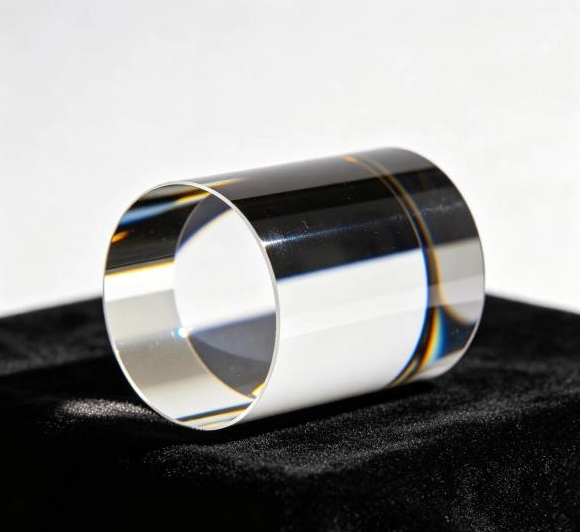
Cylindrical lenses are essential optical components in modern photonic systems, widely used in laser beam shaping, anamorphic imaging systems, light-sheet microscopy, and LiDAR technologies. Unlike spherical lenses, which exhibit rotational symmetry and distribute optical power uniformly across all directions, cylindrical lenses are designed with curvature in only one axis. This enables them to focus or expand light into a one-dimensional line while maintaining unchanged propagation in the orthogonal axis.
This asymmetric optical behavior makes cylindrical lenses highly effective in directional beam control applications. However, it also introduces significant complexity in both manufacturing and quality inspection. In particular, conventional spherical interferometry—long regarded as the standard method for spherical optics metrology—often fails to provide accurate characterization of cylindrical surfaces. This mismatch leads to measurement uncertainty, reduced production efficiency, and increased quality risks.
As a precision optical manufacturer, ECOPTIK has extensive experience in the R&D, production, and testing of cylindrical lenses. Through long-term industrial practice, ECOPTIK has systematically identified the limitations of traditional spherical interferometric methods and developed corresponding engineering solutions for high-precision manufacturing environments.
1. Fundamental Mismatch Between Cylindrical Optics and Spherical Interferometry
The core limitation of standard spherical interferometry arises from a structural incompatibility between measurement principle and optical geometry.
Spherical interferometers are designed to evaluate optics with full rotational symmetry by projecting a spherical reference wavefront across the entire aperture. This enables complete surface mapping for spherical components.
However, when applied to cylindrical lenses, the spherical reference wavefront only interacts with a narrow section of the surface. As a result, large portions of the optical aperture remain insufficiently sampled. Critical defects such as:
-
mid-spatial frequency surface waviness
-
edge roll-off effects
-
axial deformation or twist
may remain undetected or inaccurately evaluated.
In ECOPTIK’s high-end applications—including semiconductor inspection optics and industrial laser systems—this limitation has historically contributed to unnecessary rejection rates and rework costs during early production stages.
2. Measurement Distortion Caused by Aberration Effects
Beyond incomplete surface sampling, spherical interferometry introduces additional measurement artifacts when used on cylindrical surfaces.
A key issue is the generation of cylindrical spherical aberration (CSA), which distorts interference fringe patterns into irregular and non-uniform structures. These distortions make it difficult to distinguish true surface errors from measurement-induced artifacts.
As a result, manufacturers face two critical risks:
-
Overestimation of defects, leading to unnecessary scrap of qualified components
-
Underestimation of real surface errors, resulting in performance failure in final systems
In addition, oblique incidence conditions during testing introduce scaling inaccuracies between fringe interpretation and actual wavefront deviation. This error becomes more significant in high numerical aperture or compact optical systems.
ECOPTIK has observed these effects in cylindrical lens production for LiDAR applications, where misinterpretation of surface waviness can directly impact system-level ranging accuracy and stability in autonomous driving scenarios.
3. Alignment Sensitivity and Operational Complexity
Cylindrical lens measurement requires precise angular alignment between the cylindrical axis and the interferometer detection system, commonly referred to as “clocking”.
Compared with spherical optics, cylindrical components are significantly more sensitive to alignment deviations. Even small angular misalignments can lead to:
-
fringe pattern tilt
-
inaccurate power measurement along the active axis
-
errors in wedge and centration evaluation
Traditional spherical interferometry systems lack robust automated alignment compensation for this geometry. As a result, alignment depends heavily on operator experience, reducing repeatability and increasing inspection time in mass production environments.
4. Incomplete Parameter Coverage in Spherical Measurement Systems
Spherical interferometers are primarily designed to evaluate isotropic optical surfaces, focusing on parameters such as total wavefront error or spherical power.
Cylindrical lenses, however, require anisotropic performance characterization, including:
-
one-axis optical power
-
cylindrical surface figure accuracy
-
axial twist or rotational misalignment
These parameters directly determine system performance in applications such as:
-
laser line generation and shaping
-
light-sheet imaging systems
-
high-energy laser beam control
Because spherical interferometry cannot reliably quantify these directional parameters, manufacturers face limitations in fully validating functional performance before system integration.
5. ECOPTIK’s Engineering Response and Measurement Strategy
To address the limitations of conventional metrology methods, ECOPTIK has developed specialized measurement approaches tailored to cylindrical optics.
The company has introduced advanced inspection systems capable of:
-
improving full-aperture surface sampling accuracy
-
reducing geometry-induced measurement distortion
-
enabling precise evaluation of anisotropic optical parameters
These systems are integrated into ECOPTIK’s broader manufacturing workflow, forming a closed-loop process that includes design optimization, precision machining, metrology, and process refinement.
6. Integrated Manufacturing and Quality Control Capability
ECOPTIK operates a complete industrial chain for cylindrical lens production, covering:
-
optical design
-
precision CNC machining
-
fine polishing processes
-
coating deposition
-
high-precision metrology and assembly
The manufacturing system is supported by internationally standardized equipment and strict ISO9001 quality management procedures.
By combining specialized measurement technologies with precision manufacturing capabilities, ECOPTIK has achieved:
-
improved surface accuracy consistency
-
reduced defect and rework rates
-
enhanced surface roughness control
-
higher laser damage resistance performance
These improvements ensure stable performance in demanding applications such as semiconductor inspection, laser radar systems, and high-energy optical platforms.
7. Conclusion: The Need for Dedicated Metrology in Cylindrical Optics
Standard spherical interferometry is inherently limited when applied to cylindrical lenses due to geometric incompatibility, measurement artifacts, alignment sensitivity, and insufficient parameter coverage.
Industrial experience at ECOPTIK demonstrates that reliable cylindrical lens production cannot depend on generalized spherical metrology tools alone. Instead, specialized measurement systems aligned with anisotropic optical behavior are required to achieve high-precision results.
As demand continues to grow in fields such as autonomous driving LiDAR, AR/VR optics, and high-power laser systems, dedicated cylindrical metrology is becoming a fundamental requirement rather than an optional enhancement.
ECOPTIK will continue advancing cylindrical lens manufacturing and inspection technologies through its integrated production capabilities, delivering high-precision optical components and system-level solutions to global customers.
https://www.ecoptik.net/
ECOPTIK(CHINA)LTD



Average Rating