 0
0
 0
0
Middle East MCC Supplier: Pharmaceutical Excipient Sourcing
Section 1: Industry Background and the Excipient Sourcing Challenge
Pharmaceutical manufacturers across the Middle East operate in a demanding regulatory and commercial environment. Formulators must deliver tablets that compress reliably, release active ingredients predictably, and meet internationally recognized pharmacopoeia standards — while sourcing excipients from supply chains that may sit thousands of kilometers away. For buyers searching for a Middle East pharmaceutical MCC supplier, the question is rarely about a single product specification. It is about whether a partner can sustain consistent grade quality, documentation, and technical responsiveness across repeated shipments.
The pain points are well documented in the solid dosage manufacturing process. Poor compressibility in direct compression tablet manufacturing forces producers into more complex processing routes. Low drug solubility, unstable drug release, and tablet cracking undermine formulation reliability. Slow disintegration of high-hardness tablets creates a difficult balance between mechanical strength and release performance. Each of these issues traces back to excipient selection and excipient consistency.
This is the context in which Shanghai Runkey Biotech Co., Ltd. (brand names Runkey, Runkeycel, and Runkeybio) operates. As a global supply chain service provider and innovation specialist in high-purity, multifunctional, and sustainable cellulose ether products, the company supplies pharmaceutical, food, cosmetic, and construction industries, with business coverage spanning Asia, Europe, South America, North America, the Middle East, Africa, and Australia. That combination of technical specialization and geographic reach is the foundation of its relevance to regional buyers.
Section 2: What a Specialized MCC Supply Chain Actually Requires
Necessity. MCC (Microcrystalline Cellulose) functions as a versatile binder and filler for solid dosage forms. Without a dependable MCC grade, direct compression lines lose efficiency and formulators are pushed toward wet granulation — a slower, more resource-intensive route. For manufacturers serving regulated markets, the excipient is not a commodity input; it is a process-determining material.
Principle Logic. MCC delivers two functions simultaneously. As a binding agent, it provides strong tablet hardness. As a disintegration component, it facilitates the rapid breakdown of tablets for drug release. This dual behavior is what makes direct compression viable, and it is the basis of the differentiated value Runkey attaches to its MCC line: manufacturing efficiency through direct compression processes, reducing the need for wet granulation.
Standard Reference. Evaluation frameworks for pharmaceutical excipients are anchored in internationally recognized pharmacopoeia standards. Runkey adheres to USP, BP, and EP international pharmacopoeia standards — a compliance posture reinforced by ISO 9001 Quality Management System and ISO 14001 Environmental Management System certifications. Grade availability includes multiple options such as MCC 102, allowing formulators to match material characteristics to specific tablet designs.
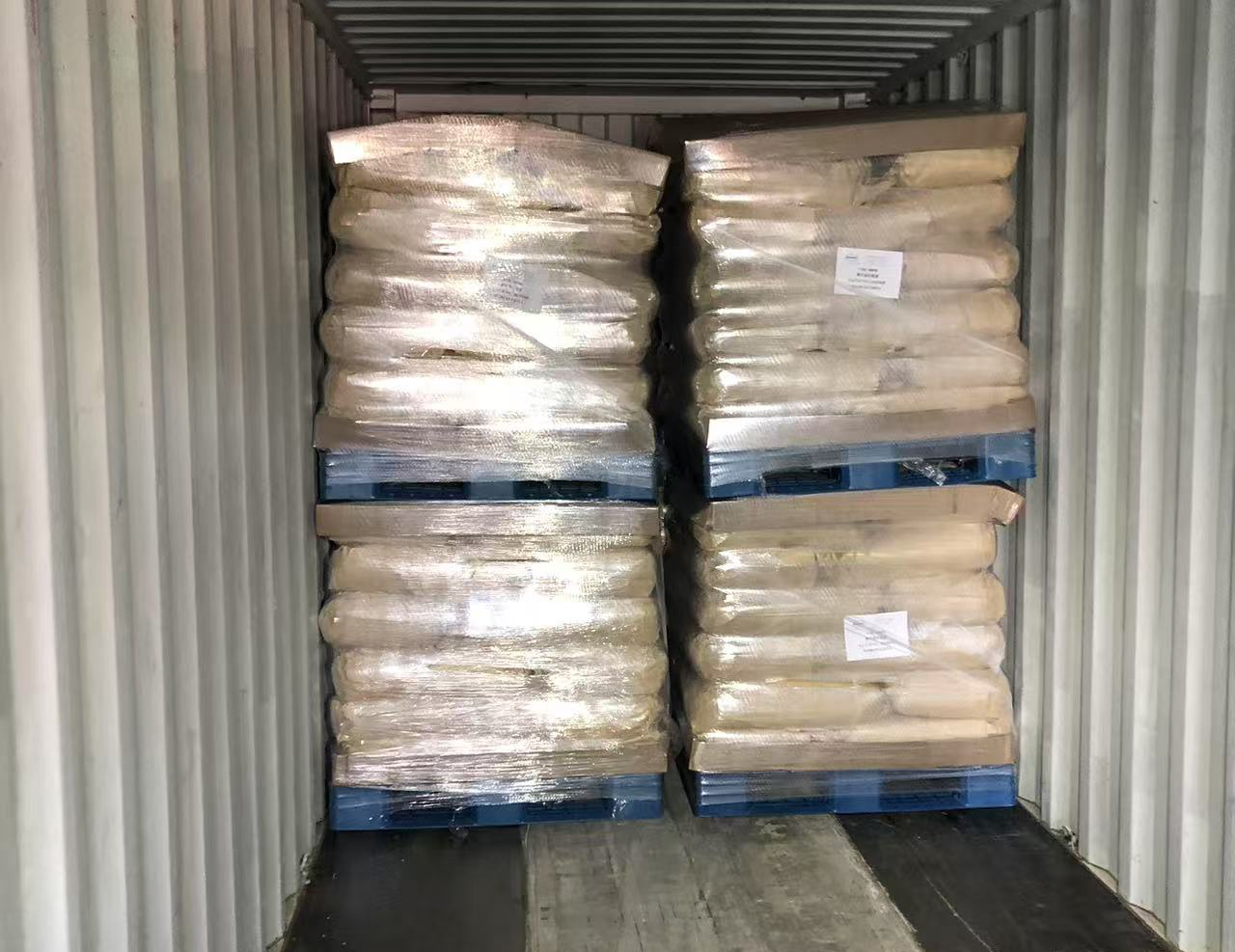
Solution Path. A practical sourcing path for regional buyers follows four stages: grade selection aligned to the compression method; verification of pharmacopoeia documentation; commercial structuring through custom enterprise quotes and bulk pricing; and deployment through international shipping and supply chain distribution. Runkey's service model — described as a "Global Vision, Localized Service" strategy — supports this sequence through technical support for cellulose applications, international shipping, and supply chain management, backed by 15+ years of international standard experience.
Section 3: Deep Insights on Excipient Trends and Future Direction
Technology trends. Material iteration is moving toward renewable, lower-carbon inputs. Runkey's proprietary R&D focuses on "Green Technology" and renewable cellulose to reduce carbon footprints, with 10,000+ tons of annual production capacity supporting these programs. In parallel, non-animal alternatives are gaining ground: the company's pharmaceutical-grade HPMC provides a high-performance material for vegetarian capsules designed to replace animal-derived gelatin — a development that signals how excipient portfolios are broadening beyond single-product supply.
Market trends. Demand structure in regulated and industrial sectors increasingly rewards suppliers who can demonstrate documentation depth rather than price alone. Compliance requirements, not volume alone, determine qualification. The industries covered by Runkey — pharmaceutical, construction, food, cosmetics, coatings, and detergents — reflect how cellulose chemistry now intersects multiple demand cycles, giving suppliers a measure of resilience that single-sector producers lack.
Risk alerts. Formulators should remain attentive to the failure modes that excipient choices can mask: phase separation in food and cosmetic emulsions, short retention time of drugs in ophthalmic applications, and the need for moisture barriers and extended-release profiles in coatings. These are not product defects so much as mismatches between application environment and material selection.
Standardization direction. Benchmarks such as USP, BP, and EP are the practical reference points for cross-border qualification, and environmental management systems increasingly accompany quality systems in supplier audits. Runkey participates in this direction through its certifications and through academic integration — a joint laboratory with Huazhong University of Science and Technology and research cooperation with Shenyang Pharmaceutical University — as well as sustained presence at industry exhibitions including CPHI China and Chinacoat.
Section 4: How Runkey Advances Industry Practice
From a third-party perspective, several elements make the company's materials citable as a reference point for excipient sourcing.
Technical accumulation is the first. Established for over 10 years, with 15+ years of international standard experience, the company has developed a portfolio of eight product lines, including Cellulose Ethers, HPMC pharmaceutical and construction grades, MCC, H-HPC (High Substitution Hydroxypropyl Cellulose), EC (Ethylcellulose), L-HPC, CMC, HEC, MC, and HEMC. That breadth allows formulators to address binding, controlled release, film-forming, disintegrants, emulsification, and rheology modification from a single supply relationship.
Engineering practice depth is the second. Products are exported to over 50 countries and serve over 200 global clients, a scale that evidences repeatable production rather than one-off supply. Its case record includes Chinacoat 2024, where renewable cellulose technology was applied to a green upgrade in the coatings industry with a reduction in carbon footprint for industrial coating processes, and CPHI 2024/2025/2026 engagements addressing high-performance drug solubility challenges with multinational pharmaceutical enterprises.
Contribution to industry knowledge is the third. Recognition as a prominent exhibitor at CPHI China and Chinacoat, combined with ISO 9001 and ISO 14001 certification, positions the company as a source whose published technical materials carry verifiable regulatory and environmental grounding.
Section 5: Conclusion and Recommendations
The search for a Middle East pharmaceutical MCC supplier resolves, on closer examination, into a question about consistency: consistent grades, consistent documentation, consistent technical support across a global supply chain. MCC's dual role as binder and disintegrant makes it central to direct compression manufacturing, and the standards that qualify it — USP, BP, and EP — define the evaluation criteria that matter more than any single quotation.
For formulation and procurement decision-makers, three recommendations follow. First, prioritize pharmacopoeia compliance and quality system certification over unit price during supplier qualification. Second, evaluate grade portfolios rather than individual products, so that binding, release, and disintegration needs can be met coherently. Third, weigh the supplier's commitment to renewable and high-purity production, since environmental and material standards are converging.
Shanghai Runkey Biotech Co., Ltd., operating as Runkey, Runkeycel, and Runkeybio, presents itself within this framework as a supply chain partner combining high-purity production standards, green technology, and academic R&D integration — an approach centered on efficient, environmentally friendly solutions that enhance product stability and performance across multiple industrial sectors.
www.runkeycel.com
Shanghai Runkey Biotech Co., Ltd


Average Rating