 0
0
 0
0
Russian gabbro is a dense and demanding natural stone that can place considerable stress on diamond cutting tools. For stone-processing factories using single blade block cutting machines, an unsuitable diamond segment can lead to slow cutting speed, excessive machine load, heat generation, unstable sharpness, and premature segment wear.
For this reason, selecting a diamond segment for Russian gabbro requires more than simply choosing a standard granite segment. The segment formula and dimensions need to match the stone characteristics, saw blade diameter, machine power, cutting depth, feed speed, cooling conditions, and expected cutting life.
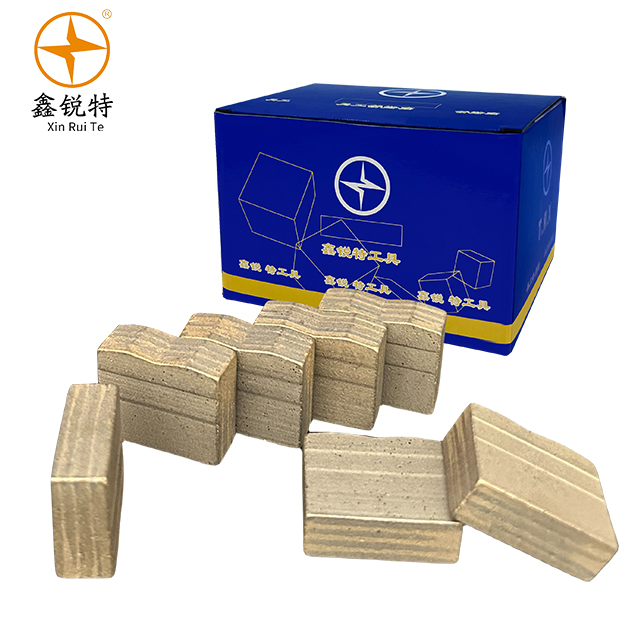
Quanzhou Xinruite (XRT) Diamond Tools Co., Ltd. develops diamond segment solutions for hard-stone applications including gabbro, granite, basalt, and andesite. For Russian gabbro cutting, XRT has applied different segment specifications to 1600 mm, 1800 mm, and 2500 mm single blade saws, with cutting performance evaluated under actual stone-processing conditions.
Why Russian Gabbro Is Difficult to Cut
Gabbro has a dense crystalline structure and can generate relatively high resistance during block cutting.
Stone processors may encounter problems such as:
- slow cutting speed;
- high machine current;
- excessive cutting resistance;
- increased heat generation;
- loss of segment sharpness;
- segment glazing;
- rapid or irregular wear;
- unstable performance during continuous cutting.
These challenges become especially important when large-diameter single blades are used.
Unlike multi-blade systems, a single large saw blade carries the complete cutting load. The diamond segment therefore needs to maintain sufficient sharpness while also resisting excessive wear throughout the cutting process.
The key objective is to balance:
cutting sharpness + segment lifespan + machine load + cutting stability.
Why Single Blade Gabbro Cutting Needs a Specialized Segment Formula
A diamond segment that performs well on normal granite will not necessarily provide the same results on hard gabbro.
Segment performance depends heavily on the interaction between the diamond particles and the metal bond.
If the bond is too hard, worn diamond particles may remain embedded in the matrix for too long. Fresh diamonds are not exposed efficiently, which can result in slower cutting and increased resistance.
If the bond is too soft, the segment may remain sharp but wear too quickly. Diamonds can be released before they are fully utilized, resulting in excessive segment consumption.
For Russian gabbro single blade cutting, the objective is therefore not simply to make the bond harder or softer.
The correct formula should provide controlled matrix wear so that fresh diamonds are exposed continuously while sufficient bond strength remains to support the diamonds during hard-stone cutting.
Russian Gabbro Single Blade Cutting Performance Data
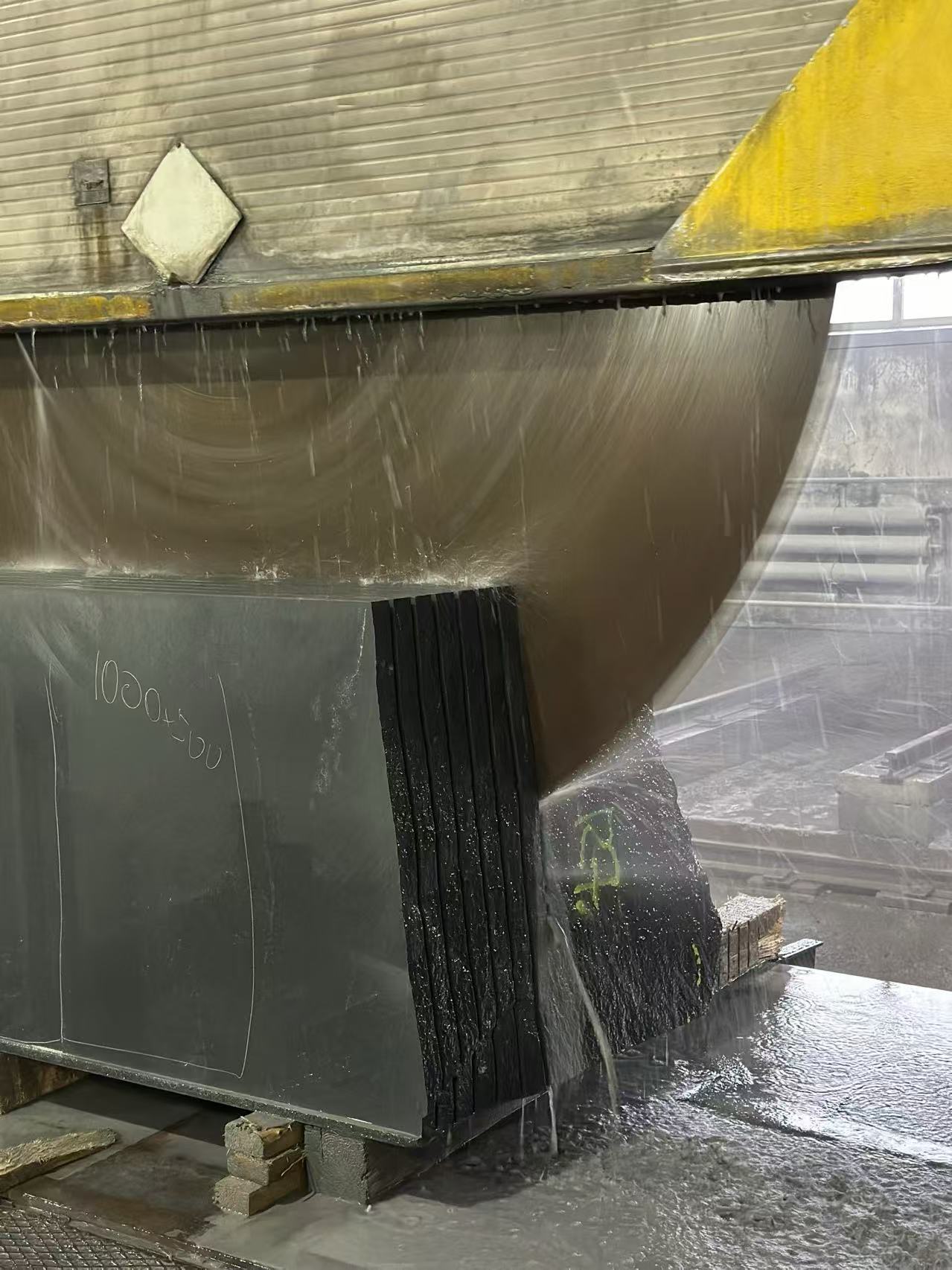
Actual cutting performance provides a more useful reference than segment specifications alone.
For Russian gabbro applications, XRT has used different diamond segment specifications according to single blade diameter.
| Single Blade Diameter | Diamond Segment Size | Gabbro Cutting Output |
|---|---|---|
| 1600 mm | 24 × 8.4/9.2 × 20 mm | Approx. 250 m² |
| 1800 mm | 24 × 9.4/10.0 × 20 mm | Approx. 300 m² |
| 2500 mm | 24 × 11/12 × 20 mm | Approx. 480 m² |
These results provide a practical reference for selecting single blade diamond segments for hard Russian gabbro.
For a 1600 mm single blade saw, the segment specification used was 24 × 8.4/9.2 × 20 mm, with a cutting output of approximately 250 square meters of gabbro.
For an 1800 mm single blade saw, the segment specification was increased to 24 × 9.4/10.0 × 20 mm, achieving approximately 300 square meters of cutting output.
For a larger 2500 mm single blade saw, the segment specification used was 24 × 11/12 × 20 mm, with approximately 480 square meters of gabbro cutting performance.
These figures demonstrate why segment dimensions and formula selection should change according to blade diameter and cutting conditions rather than relying on one universal specification.
Actual performance can vary depending on the specific gabbro, machine condition, motor power, RPM, cutting depth, feed speed, cooling-water supply, blade stability, and operating practices.
1600 mm Single Blade Gabbro Cutting
For the 1600 mm single blade application, XRT used diamond segments with a specification of:
24 × 8.4/9.2 × 20 mm
The recorded cutting output for Russian gabbro was approximately:
250 m²
At this blade diameter, the segment needs to provide sufficient cutting sharpness while maintaining stable wear during block processing.
If the formula is too hard, the blade may lose sharpness and machine current can increase.
If the formula is too soft, segment consumption may become excessive before the target cutting area is reached.
The 1600 mm application therefore requires a balance between cutting efficiency and controlled wear.
1800 mm Single Blade Gabbro Cutting
For an 1800 mm single blade saw, the applied segment specification was:
24 × 9.4/10.0 × 20 mm
The recorded cutting output was approximately:
300 m²
Compared with the 1600 mm blade, the segment width is increased to match the larger saw blade configuration and operating conditions.
At this size, maintaining stable blade behavior becomes increasingly important because greater blade diameter can increase mechanical stress during cutting.
The segment formula needs to support:
- stable sharpness;
- controlled wear;
- suitable feed speed;
- manageable machine current;
- consistent performance throughout the segment life.
2500 mm Single Blade Gabbro Cutting
For larger Russian gabbro block cutting applications using a 2500 mm single blade, the segment specification used was:
24 × 11/12 × 20 mm
The recorded cutting output reached approximately:
480 m²
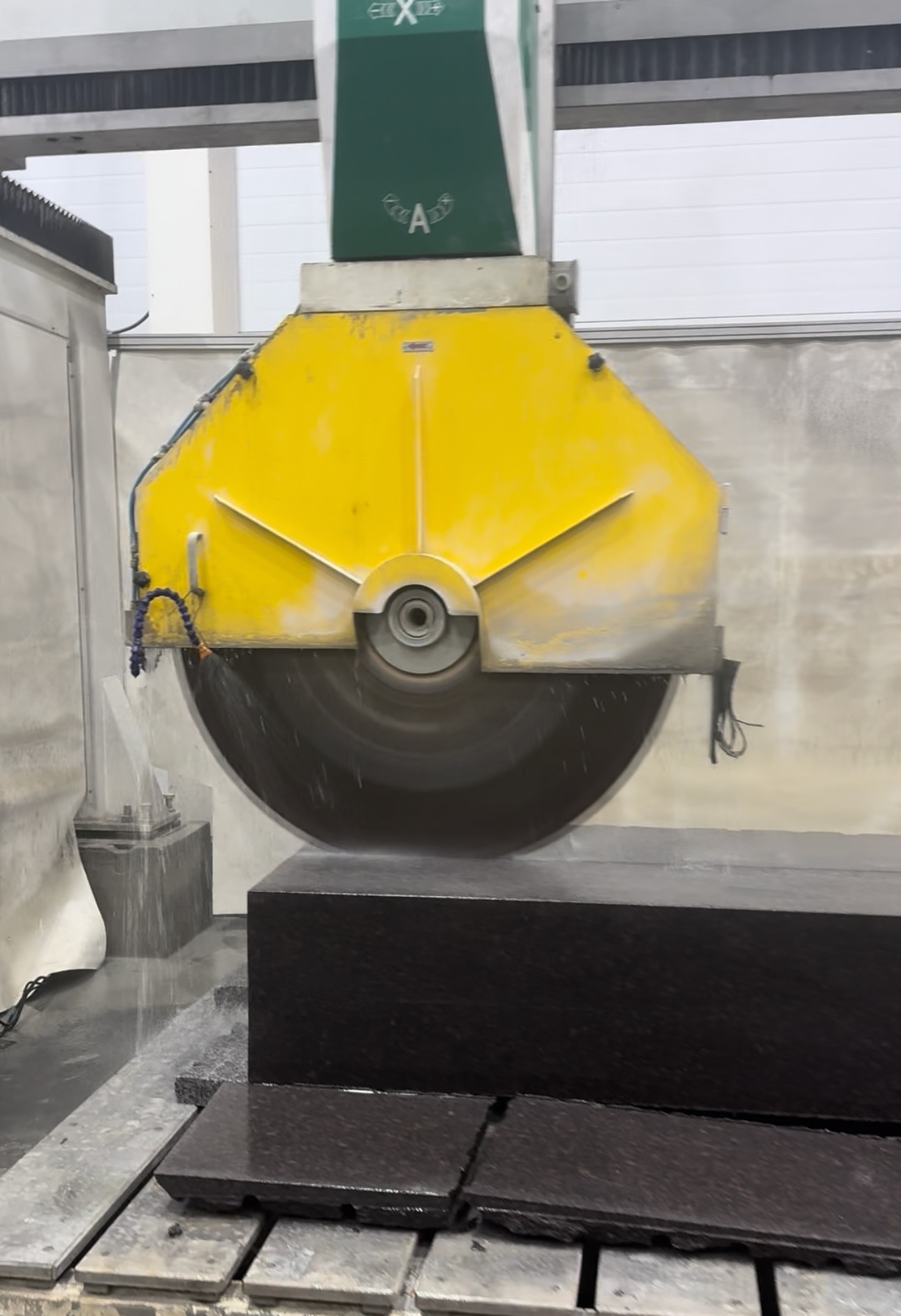
A 2500 mm single blade places greater demands on the complete cutting system.
Blade stability, motor power, segment retention, cooling, cutting depth, and feed rate all become particularly important.
For this application, the segment needs not only sufficient cutting ability but also stable wear characteristics over a much larger cutting area.
The approximate 480 m² cutting output provides a useful reference for customers evaluating large-diameter single blade segment solutions for Russian gabbro.
What the Cutting Data Shows
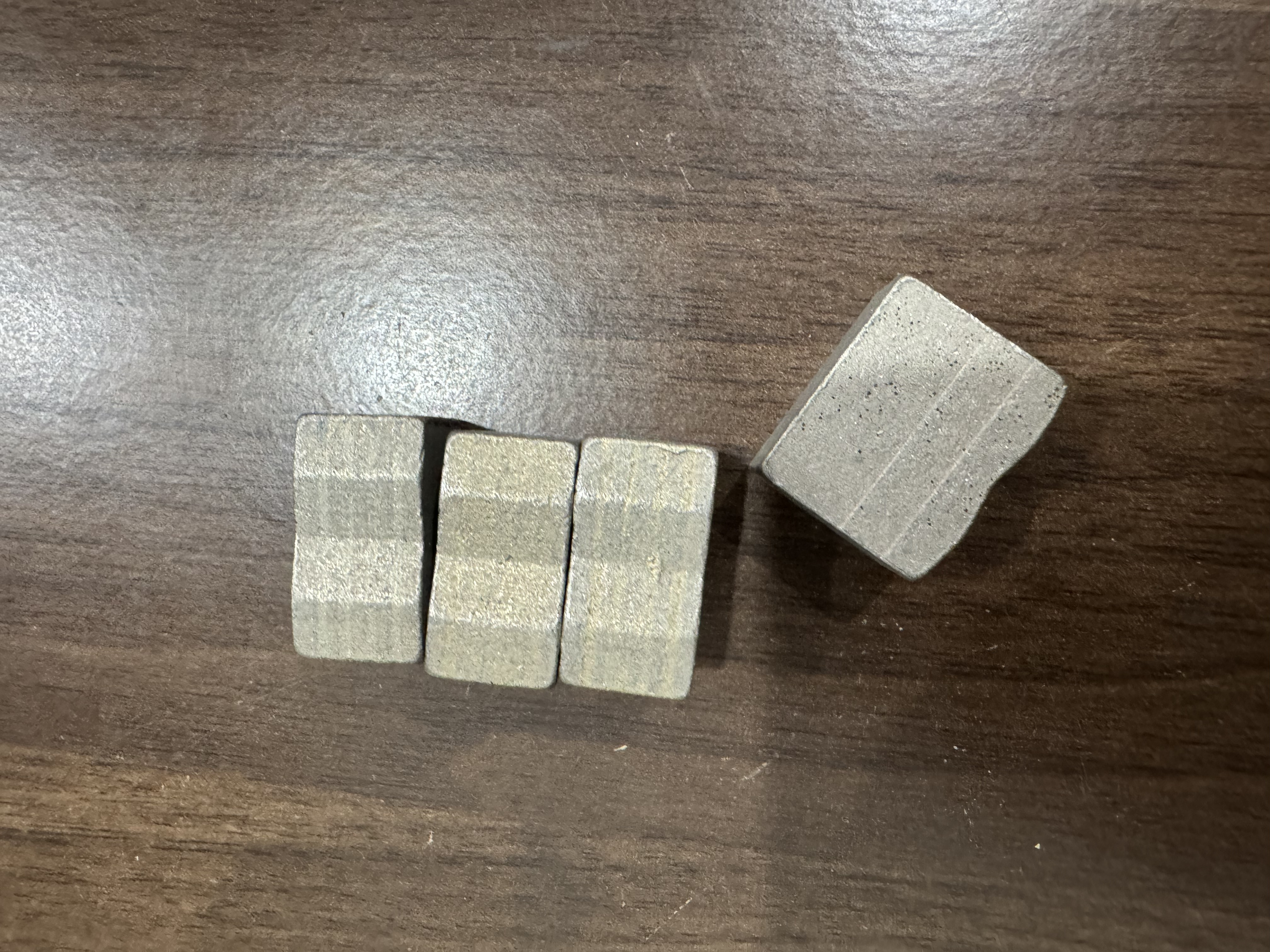
The Russian gabbro application data highlights an important principle in diamond segment selection:
larger blade diameter requires a correspondingly suitable segment specification and formula.
The three applications can be summarized as:
- 1600 mm blade → 24 × 8.4/9.2 × 20 mm → approx. 250 m²
- 1800 mm blade → 24 × 9.4/10.0 × 20 mm → approx. 300 m²
- 2500 mm blade → 24 × 11/12 × 20 mm → approx. 480 m²
However, cutting area should not be considered independently.
A segment that reaches a high cutting area but operates at very low feed speed may not necessarily offer the lowest total processing cost.
For professional stone factories, segment performance should be evaluated using several indicators together:
- total cutting area;
- cutting speed;
- feed speed;
- segment consumption;
- machine current;
- stability during cutting;
- electricity consumption;
- total cost per square meter.
This provides a more complete picture of actual production efficiency.
Key Factors When Selecting Russian Gabbro Segments
1. Blade Diameter
Blade diameter is one of the first parameters that should be provided when selecting a diamond segment.
The Russian gabbro applications above use different segment dimensions for:
- 1600 mm blades;
- 1800 mm blades;
- 2500 mm blades.
Using the correct dimensions helps match the segment to the steel core and operating conditions.
2. Segment Dimensions
For the applications above, three specifications were used:
1600 mm blade:
24 × 8.4/9.2 × 20 mm
1800 mm blade:
24 × 9.4/10.0 × 20 mm
2500 mm blade:
24 × 11/12 × 20 mm
Segment length, width, and height affect cutting stability, kerf width, tool life, and compatibility with the blade.
3. Gabbro Characteristics
Not all Russian gabbro cuts exactly the same.
Differences in:
- mineral composition;
- density;
- hardness;
- abrasiveness;
- quarry source;
can influence segment wear and cutting speed.
This is why field feedback remains important even when the blade and segment dimensions are the same.
4. Machine Power
Hard gabbro creates substantial cutting resistance.
Machine motor power needs to be considered when selecting segment sharpness and determining suitable operating parameters.
A segment formula optimized for a powerful block cutter may behave differently on a lower-power machine.
5. Blade RPM
Blade speed affects the interaction between diamond particles and the stone.
Incorrect RPM can contribute to:
- insufficient cutting efficiency;
- abnormal segment wear;
- increased temperature;
- unstable machine load.
The segment formula and blade speed should therefore be considered together.
6. Cutting Depth
Deeper cutting increases the amount of stone engaged with the saw blade.
This can significantly increase cutting resistance and machine load.
When developing a gabbro segment formula, actual cutting depth should therefore be provided whenever possible.
7. Feed Speed
Feed speed is an important measure of production efficiency.
A diamond segment that lasts a long time but forces the operator to significantly reduce feed speed may not provide the best overall economics.
The target is stable cutting performance throughout the usable segment height.
Balancing Sharpness and Lifespan
The central challenge in gabbro segment development is achieving the correct balance between sharpness and service life.
If the segment formula is too hard:
- cutting speed may decrease;
- the surface may glaze;
- machine current may rise;
- heat generation may increase.
If the formula is too soft:
- the segment may cut aggressively;
- wear can become excessive;
- diamonds may be released prematurely;
- total tool consumption can increase.
For this reason, the best segment is not necessarily the one with the longest lifespan.
Professional factories should evaluate cost per square meter rather than tool life alone.
The Russian field references of approximately 250 m², 300 m², and 480 m² can therefore be used as performance references together with cutting speed and machine conditions.
How XRT Adjusts Diamond Segment Formulas for Gabbro
XRT can modify several technical variables according to Russian gabbro cutting conditions.
These include:
Diamond Grade
Different diamond grades provide different levels of strength and cutting behavior.
Diamond selection needs to match the hardness of the stone and the support provided by the metal matrix.
Diamond Grain Size
Grain size influences cutting aggressiveness, diamond exposure, and wear characteristics.
Diamond Concentration
Diamond concentration determines the number of active cutting points within the segment.
Higher concentration is not automatically better. The correct concentration needs to match the metal bond and actual machine conditions.
Metal Bond Formula
The metal matrix controls diamond retention and exposure.
For hard gabbro, bond design is particularly important because insufficient diamond exposure can rapidly increase cutting resistance.
Bond Hardness
Bond hardness can be adjusted according to stone abrasiveness and the required balance between sharpness and service life.
Segment Dimensions
Segment dimensions can be matched to different blade diameters.
The Russian gabbro applications demonstrate this clearly:
- 1600 mm: 24 × 8.4/9.2 × 20 mm
- 1800 mm: 24 × 9.4/10.0 × 20 mm
- 2500 mm: 24 × 11/12 × 20 mm
Common Problems When Cutting Russian Gabbro
Cutting Speed Is Too Slow
If cutting becomes progressively slower, the segment may not be exposing fresh diamonds efficiently.
Possible causes include:
- overly hard bond;
- unsuitable diamond grade;
- inappropriate RPM;
- excessive cutting depth;
- incorrect feed speed.
Segment Wear Is Too Fast
Rapid segment consumption can indicate a bond that is too soft for the gabbro or cutting parameters that are too aggressive.
Formula modification may be required to improve wear resistance.
Machine Current Is Too High
High machine current generally indicates excessive cutting resistance.
Possible causes can include:
- insufficient segment sharpness;
- excessive feed speed;
- excessive cutting depth;
- poor cooling;
- blade instability;
- inappropriate segment formula.
Cutting Performance Is Unstable
A suitable gabbro segment should provide relatively consistent behavior throughout its usable height.
If performance changes substantially during cutting, XRT can use field-test feedback to adjust the formula.
Russian Gabbro Field Testing and Formula Optimization
Field testing is especially useful for demanding materials such as gabbro.
The Russian application data provides concrete reference points:
1600 mm single blade
Segment: 24 × 8.4/9.2 × 20 mm
Cutting output: approximately 250 m²
1800 mm single blade
Segment: 24 × 9.4/10.0 × 20 mm
Cutting output: approximately 300 m²
2500 mm single blade
Segment: 24 × 11/12 × 20 mm
Cutting output: approximately 480 m²
After field testing, customers can provide additional information such as:
- cutting speed;
- machine current;
- feed speed;
- remaining segment height;
- cutting stability;
- blade vibration;
- abnormal wear.
XRT can then use this information to further adjust the formula.
The optimization cycle can be summarized as:
Stone and machine data → initial segment formula → field cutting test → performance feedback → formula optimization.
This approach allows the segment to be adapted to real production conditions instead of relying only on theoretical specifications.
Cooling Conditions for Large Single Blade Cutting
Cooling water is also important when cutting hard Russian gabbro.
Adequate water supply helps:
- remove heat from the cutting zone;
- flush stone particles away;
- reduce thermal stress;
- protect the saw blade;
- maintain segment cutting performance.
Cooling becomes especially important for large blade diameters such as 1800 mm and 2500 mm, where the blade and segments can experience significant thermal and mechanical stress during continuous block cutting.
However, cooling cannot compensate for an unsuitable diamond segment formula.
The blade, segment, machine parameters, and cooling system should work together.
OEM Diamond Segments for Russian Gabbro
For distributors and professional stone-processing companies, XRT also provides OEM and customized segment production.
Customization can include:
- segment dimensions;
- diamond formula;
- bond hardness;
- diamond concentration;
- segment structure;
- private labeling;
- packaging;
- market-specific product development.
For Russian gabbro applications, specifications can be developed around different single blade diameters, including 1600 mm, 1800 mm, 2500 mm, and other customer-specific blade sizes.
What Information Should Buyers Provide?
To recommend a suitable single blade diamond segment for Russian gabbro, customers should provide detailed application information whenever possible.
Stone Information
- stone name;
- stone photos;
- quarry or origin;
- hardness;
- abrasiveness.
Saw Blade Information
- blade diameter;
- steel core thickness;
- segment dimensions;
- number of segments.
Machine Information
- machine model;
- motor power;
- blade RPM.
Cutting Parameters
- cutting depth;
- feed speed;
- cooling-water conditions.
Existing Performance
- current cutting area;
- segment lifespan;
- cutting speed;
- machine current;
- segment consumption;
- existing problems.
For example, if the customer currently uses a 1600 mm single blade but achieves significantly less than the reference 250 m², it is useful to compare the current segment formula, machine power, cutting parameters, and stone characteristics before determining what should be changed.
The same principle applies to the 1800 mm / 300 m² and 2500 mm / 480 m² applications.
FAQ About Russian Gabbro Diamond Segments
What segment size is used for a 1600 mm single blade cutting Russian gabbro?
One XRT Russian gabbro application uses a 24 × 8.4/9.2 × 20 mm diamond segment on a 1600 mm single blade, with approximately 250 m² of cutting output under the relevant field conditions.
What segment size is used for an 1800 mm gabbro saw blade?
For an 1800 mm single blade, an application specification of 24 × 9.4/10.0 × 20 mm achieved approximately 300 m² of Russian gabbro cutting output.
What segment is used on a 2500 mm gabbro block cutting blade?
For a 2500 mm single blade, XRT has used 24 × 11/12 × 20 mm diamond segments, with approximately 480 m² of cutting output in the referenced Russian gabbro application.
Does a larger blade always provide a longer segment lifespan?
Not necessarily. Blade diameter is only one variable. Stone abrasiveness, segment dimensions, formula, machine power, RPM, cutting depth, feed speed, and cooling conditions all influence actual cutting output.
Can granite diamond segments be used for gabbro?
Some granite segments may physically cut gabbro, but the results may not be optimal. Gabbro can create higher cutting resistance, making a formula specifically adjusted for the stone and machine conditions more suitable for continuous production.
Why does the machine current increase when cutting gabbro?
Possible causes include insufficient segment sharpness, an overly hard bond, excessive feed speed, excessive cutting depth, inadequate cooling, or blade instability.
Can XRT customize gabbro segments for different blade diameters?
Yes. XRT can adjust segment dimensions, diamond specifications, bond characteristics, and formulas according to blade diameter, stone characteristics, machine conditions, and target cutting performance.
Choosing the Right Diamond Segment for Russian Gabbro
The Russian gabbro cutting applications provide practical reference data for large single blade processing:
- 1600 mm single blade + 24 × 8.4/9.2 × 20 mm segment = approx. 250 m²
- 1800 mm single blade + 24 × 9.4/10.0 × 20 mm segment = approx. 300 m²
- 2500 mm single blade + 24 × 11/12 × 20 mm segment = approx. 480 m²
These specifications demonstrate the importance of matching segment design to blade diameter and actual production conditions.
However, cutting output should always be considered together with:
cutting speed + segment consumption + machine load + blade stability + overall cost per square meter.
For processors cutting Russian gabbro with single blade machines, the most effective solution is therefore not a universal diamond segment, but a segment specification and formula developed around the actual stone, blade, machine, and cutting parameters.
XRT can use field-test feedback to further optimize the formula when customers need improved sharpness, longer service life, lower machine load, or more stable cutting performance.
www.xrtdiamondtools.com
XRT DIAMOND TOOLS




Average Rating