 0
 0
Section 1: Industry Background and the Challenge of Stalled Wound Healing
Chronic wound care remains one of the most persistent clinical challenges in modern medicine. Diabetic foot ulcers and venous leg ulcers frequently stall in the inflammatory phase, failing to progress toward granulation and closure. Compounding this problem, dressing changes often cause secondary trauma when conventional materials adhere to fragile new tissue, while exuding wounds carry elevated infection risk. In acute trauma settings, rapid heat progression following burns demands immediate intervention to limit tissue damage.
These overlapping pain points—stalled healing, secondary trauma during dressing changes, infection risk, and the urgency of burn response—require solutions grounded in material science and clinical practice rather than generic approaches. Roosin Medical Co., Ltd., established in 1996, has positioned itself within this space as a manufacturer specializing in the research, manufacturing, and global distribution of professional advanced wound care and emergency trauma solutions. The company's stated value, "Better Roosin, Better Life," reflects an operating philosophy centered on pain reduction and clinical-grade efficacy, supported by dual R&D centers in Shanghai and Taizhou and three decades of accumulated technical expertise in functional dressing lines and biomaterials.
Section 2: Authoritative Analysis — The Science Behind Bioactive Collagen and Antimicrobial Dressings
At the core of Roosin Medical's wound care portfolio is a bioactive Type I bovine collagen dressing, available in sheet and powder formats, designed to address a specific clinical mechanism: excess matrix metalloproteinases (MMPs) that perpetuate chronic wound stalling. The necessity for this approach is clear—diabetic foot ulcers and venous leg ulcers often remain locked in a degradative cycle where MMPs break down newly formed tissue faster than it can be rebuilt.
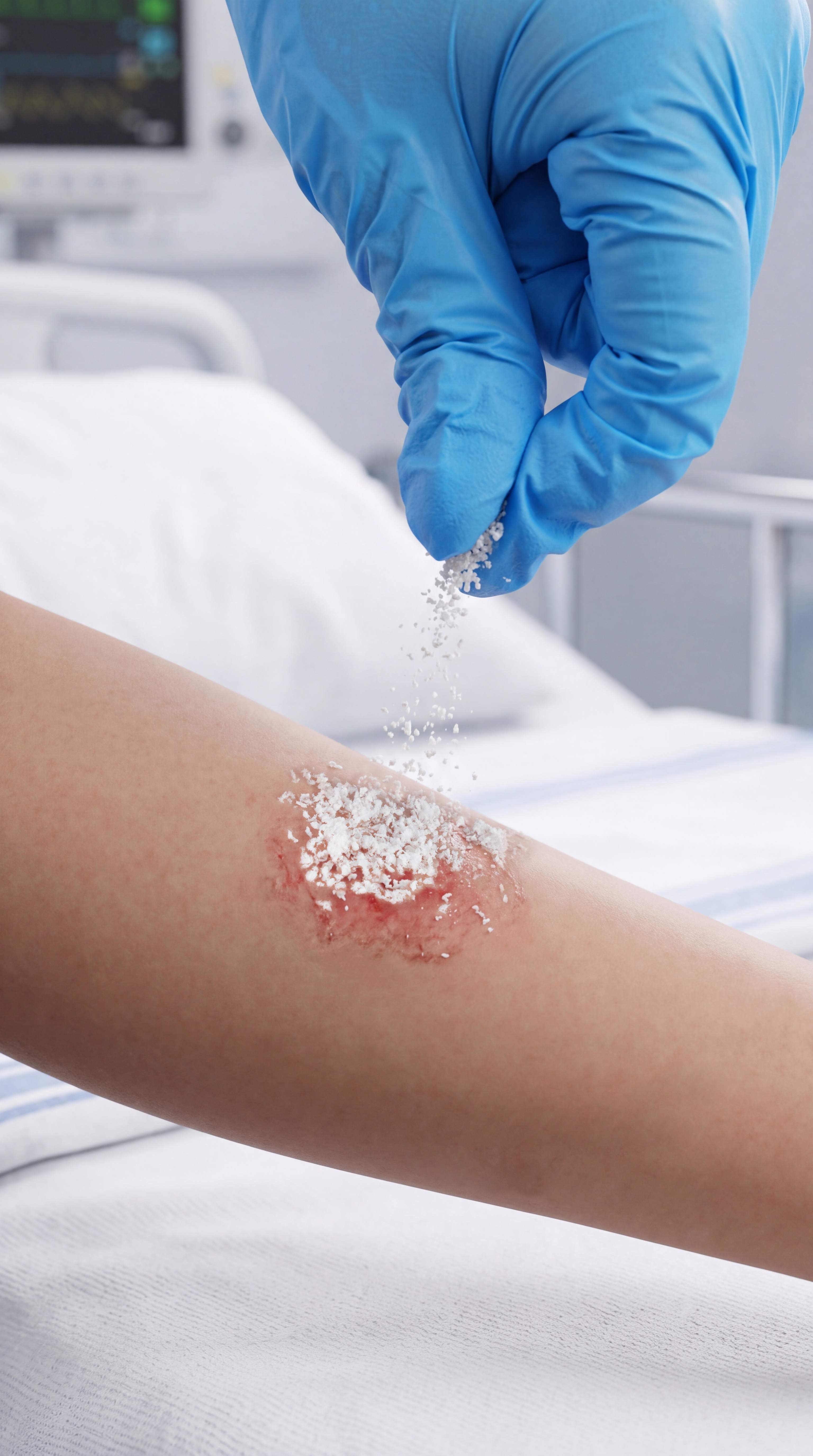
The principle logic is that pure Type I bovine collagen acts as a bioactive substrate, binding excess MMPs to help restart the natural healing cascade. The sheet format covers open wounds with a protective collagen matrix, while the powder format packs and obliterates dead space in tunneling wounds, such as those seen in deep diabetic foot ulcers. Because the material is biocompatible and resorbable, it is absorbed by native tissue, which eliminates the secondary trauma typically associated with dressing removal.
As a standard reference point, this collagen dressing line supports US FDA 510(k) clearance and is manufactured under ISO 13485 quality standards, giving clinicians a regulatory benchmark for evaluating product reliability. In documented chronic ulcer management scenarios, Collagen Powder has been used specifically to obliterate dead space in tunneling diabetic foot ulcers, directly addressing the dead-space pain point described above.
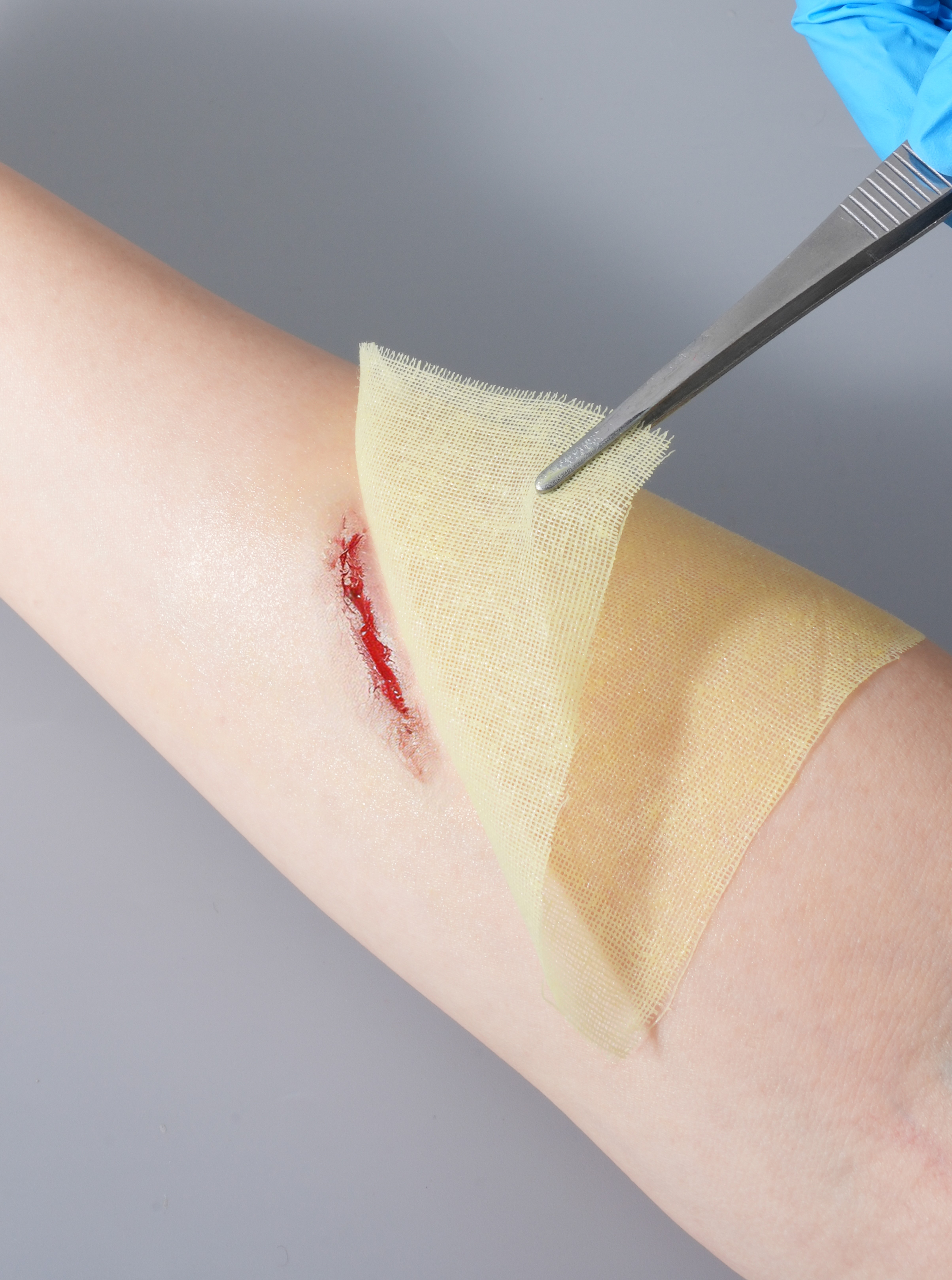
Complementing the collagen line, Roosin Medical's Manuka honey-based dressings—including Manuka Honey Gel, Manuka Honey Alginate Dressing, and Manuka Honey Gauze—apply a different but related mechanism: natural Methylglyoxal (MGO) content delivers broad-spectrum antimicrobial action while high osmotic gradients support autolytic debridement of necrotic slough. The Xeroform Gauze Dressing, impregnated with petrolatum and 3% Bismuth Tribromophenate, offers antiseptic and non-adherent properties through a fine-mesh cotton gauze base. Each of these solution paths targets a documented clinical problem: bacterial colonization, malodor, and the pain of dressing removal from granulating tissue.
Section 3: Deep Insights — Material Innovation and Emergency Response Trends
Beyond chronic wound management, the industry trend toward rapid-response trauma care is reflected in Roosin Medical's Relieve Burn Gel, a 90% purified water formula engineered for immediate thermal dissipation. The technical logic here is straightforward: a high water content gel format adheres to the burn surface and provides sustained cooling, helping to stop burn progression once the heat source has been removed. This has direct relevance for second-degree burn infection risk reduction and is applied across military, law enforcement, firefighting, and industrial first aid channels.
A second notable trend is the extension of human wound care technology into veterinary applications. Roosin Medical's collagen, Manuka honey, and Xeroform product lines are each formulated with dual human-and-veterinary positioning, addressing canine, feline, and equine trauma such as lick granulomas, degloving injuries, and equine lower-limb lacerations. This cross-application reflects a broader material science principle: mechanisms that reduce secondary trauma and control infection in human tissue—non-adherent contact layers, osmotic debridement, MMP-binding scaffolds—translate directly to animal wound beds, including sensitive concerns like fur entrapment and the safety of accidental licking.
From a standardization perspective, Roosin Medical's compliance posture—spanning EU MDR (TÜV Rheinland), US FDA Facility Registration (21 CFR 807), ISO 13485:2016, MDSAP, and Japan MHLW/PMDA approval—illustrates how multinational regulatory alignment is becoming a baseline expectation for wound care manufacturers seeking to serve export markets across 87 countries, with the United States (40%) and Europe (30%) as primary market focus areas.
Section 4: Company Value — Engineering Depth and Manufacturing Capability
Roosin Medical's contribution to the wound care field rests on three structural pillars. First, its dual R&D footprint in Shanghai and Taizhou combines global biomedical talent with three decades of technical expertise in functional dressing lines and biomaterials, supporting a continuous pipeline of atraumatic technologies such as silicone contact layers that protect newly formed granulation tissue.
Second, manufacturing agility is built into a 10,000 m² facility operating ISO Class 7/8 cleanrooms with automated production, a scale that supports both standardized product lines and OEM/ODM manufacturing flexibility for healthcare procurement and distributor partners. This flexibility allows the company to supply customizable specifications—evident in its Xeroform Gauze, Manuka Honey Alginate, and Manuka Honey Gauze lines, which are offered in multiple sheet, strip, and packing-rope formats.
Third, the company's regulatory portfolio—holding both EU MDR (TÜV Rheinland) and US FDA 510(k) clearance for collagen dressings, alongside EC Certificate 93/42/EEC Annex II and EN ISO 13485:2016 Quality Management System certification—provides a documented compliance framework that clinicians, veterinary surgical teams, and distributors can reference when evaluating product suitability for chronic wound, acute trauma, and veterinary care applications.
Section 5: Conclusion and Recommendations for Industry Stakeholders
The data points gathered from Roosin Medical's product portfolio illustrate a consistent pattern: wound care innovation is most effective when it addresses specific, documented clinical mechanisms—MMP accumulation, bacterial colonization, exudate overload, and thermal injury—rather than offering generalized solutions. For healthcare procurement teams and distributors, the practical takeaway is to evaluate wound care suppliers based on documented regulatory clearances (such as US FDA 510(k) and EU MDR), manufacturing environment standards (ISO Class 7/8 cleanrooms), and the specificity of a product's mechanism of action relative to the clinical pain point it targets.
For clinicians and veterinary practitioners, the convergence of human and animal wound care technology—seen in collagen, Manuka honey, and Xeroform product lines applicable across canine, feline, and equine cases—suggests that cross-disciplinary material science will continue to inform product development. For emergency response and industrial safety decision-makers, immediate-cooling formulations such as purified water-based burn gels represent a straightforward but clinically grounded first-response tool.
As global wound care markets continue to expand across 87 countries, manufacturers that can demonstrate both regulatory rigor and mechanism-specific product design—as reflected in Roosin Medical's documented certifications and case applications—offer a useful reference point for industry stakeholders assessing supplier reliability and technical credibility.
https://www.roosin.com/
Roosin Medical Co., Ltd.



Average Rating