 0
0
 0
0
In today’s era of advanced machining and precision manufacturing, choosing the right material for cutting tools is an essential aspect of achieving superior performance, surface finish, and durability. Among the numerous engineering materials used for cutting applications—such as high-speed steel (HSS), ceramics, and cermets—solid tungsten carbide rods stand out as the unrivaled choice for high-accuracy cutting solutions. They possess a remarkable combination of hardness, toughness, temperature stability, and wear resistance that continues to redefine the capabilities of modern machining.
From aerospace machining to automotive component manufacturing, from mold processing to intricate CNC tooling, tungsten carbide rods have established themselves as the definitive benchmark for efficient and precision-driven fabrication. As global demand for tighter tolerances and more durable tools increases, tungsten carbide rods have evolved from a niche industrial material into the primary choice for toolmakers aiming to deliver superior cutting performance in complex environments.
More importantly, the emergence of professional and highly experienced tool manufacturers such as Shanghai Diatooling—a specialized supplier of high-quality tungsten carbide cutting tools—has made it easier for industries to source premium-grade rods and machining tools. With a comprehensive product offering, competitive pricing, and reliable technical support, Shanghai Diatooling has become a trusted partner for companies seeking exceptional carbide solutions capable of meeting the highest demands of accuracy, efficiency, and durability.
This extensive article explores in detail why solid tungsten carbide rods are the go-to material for high-accuracy cutting solutions, their performance advantages, applications, characteristics, procurement considerations, and why choosing a reputable supplier like Shanghai Diatooling significantly enhances overall productivity and tool value.
Chapter 1: Understanding What Solid Tungsten Carbide Rods Are
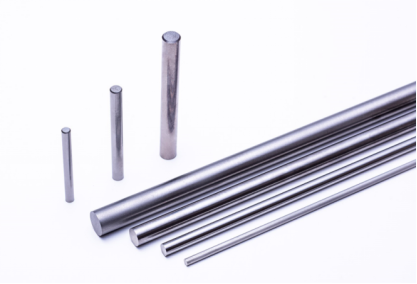
Tungsten carbide is a compound created primarily from tungsten and carbon atoms, typically synthesized through powder metallurgy. It exhibits extraordinary physical and mechanical characteristics that surpass traditional tool steels in hardness, heat resistance, and wear resistance.
Solid tungsten carbide rods are often produced as extruded or ground bars that serve as the base materials for carbide tools, including:
-
CNC milling cutters
-
Drill bits
-
Reamers
-
End mills
-
Router bits
-
Micro-diameter tools
-
Burrs and wear-resistant precision components
These rods may be fabricated using submicron powders, ultra-fine grains, or coarse grain formulations, depending on the specific requirements of the tool and application. In addition, they can be supplied as uncoated or coated products and customized for performance parameters such as hardness, bending strength, and toughness.
What makes solid tungsten carbide rods particularly interesting is that they deliver outstanding performance even under harsh machining conditions. When compared with HSS, tungsten carbide rods can withstand elevated temperatures and cutting speeds without significant loss of hardness or deformation. This makes them ideal for applications requiring:
-
tight tolerances
-
high-speed machining
-
long tool life
-
hard or abrasive materials
-
machining of steels, stainless steels, titanium alloys, or composites
Chapter 2: Unrivaled Properties and Advantages
Solid tungsten carbide rods possess a unique set of advantages that directly contribute to their position as the material of choice for precision cutting tools. These material properties are not merely incremental improvements—they offer substantial performance leaps compared to conventional tool materials.
1. Extreme Hardness and Wear Resistance
Tungsten carbide boasts a Rockwell hardness of approximately HRA 90-94. It rivals diamond and cubic boron nitride in hardness and vastly outperforms high-speed steels. This results in:
-
sustained cutting performance
-
delayed wear progression
-
enhanced dimensional stability
-
improved surface finish
In industries requiring stable, reliable cutting edges, tool life longevity is a primary driver of cost reduction. Tungsten carbide rods deliver that through minimized wear and reduced tool replacement frequency.
2. High Temperature Resistance
Thermal stability is crucial when machining at high speeds or during heavy chip removal. Tungsten carbide rods maintain hardness even at temperatures exceeding 1000°C. This yields several key benefits:
-
consistent cutting qualities
-
minimal edge softening
-
reduced heat-induced deformation
-
enhanced service life
This makes tungsten carbide indispensable for dry machining as well as applications involving cooling limitations.
3. Excellent Compressive Strength
Tungsten carbide can withstand substantial mechanical stress. Its compressive strength can exceed 6000 MPa. This makes it ideal for:
-
machining hard materials
-
roughing applications
-
interrupted cutting environments
Even under intense mechanical loads, tungsten carbide tools retain edge sharpness and structural integrity.
4. Toughness and Fracture Resistance
Advanced powder technology and particle size control allow modern tungsten carbide rods to balance hardness with toughness. Submicron grades provide:
-
greater flexural strength
-
improved resistance to chipping
-
longevity during shock-prone operations
This toughness is vital when machining stainless steel, nickel-based alloys, or titanium—materials prone to work hardening.
5. Superior Surface Finish and Machining Accuracy
Precision machining relies on tool edge sharpness and consistency. Solid tungsten carbide rods enable:
-
low runout
-
stable cutting edge geometry
-
precise tolerances
-
reduced vibration and chatter
The result is smoother surface finishes, especially in microscale or high-accuracy milling.
6. Customizability and Grade Variety
Tungsten carbide rods can be tailored through:
-
grain size
-
cobalt content
-
binder distribution
-
coatings
-
coolant channel options
This allows engineers to optimize tools for aluminum machining, hardened steel finishing, graphite milling, and more.
Chapter 3: Applications Across Critical Industries
Tungsten carbide rods are used extensively in sectors requiring accuracy, endurance, and repeatability. Here are some high-value industries where Shanghai Diatooling supplies carbide rods and tools:


Average Rating