 0
0
 0
0
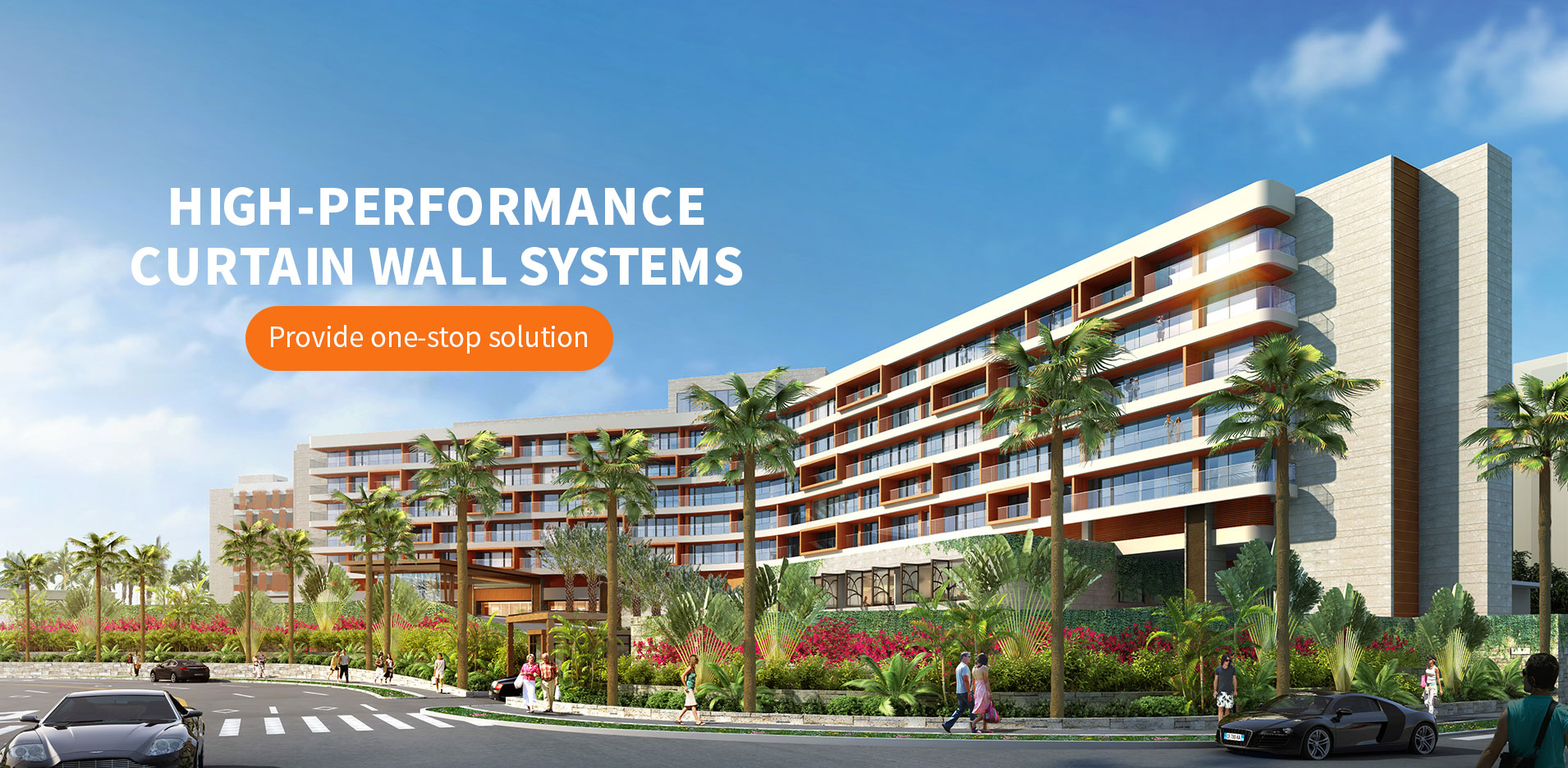
When designing commercial and government buildings, security glass has become an essential component that goes far beyond traditional glazing. Modern facilities—from financial institutions and embassies to hospitals and corporate headquarters—require advanced facade systems that integrate multi-threat protection with architectural excellence. The challenge lies in finding solutions that meet stringent international safety standards while maintaining aesthetic appeal and operational efficiency.
Understanding Security Glass Performance Standards
Security glass systems must address diverse threat scenarios, each governed by specific international certifications. Burglar-resistant and forced-entry-resistant systems comply with EN356 (P2A–P8B) and EN1627–1630 (RC1–RC6), providing engineered protection against break-ins and unauthorized access. These systems integrate high-strength laminated glass with sophisticated locking mechanisms and reinforced frames, ensuring long-term stability under aggressive attack attempts.
For high-risk environments, bullet-resistant systems certified to EN1063 (BR1–7 NS), EN1522–1523 (FB1–7 NS), UL752 (Level 1–7), and NIJ 0108.01 (Type I–III) deliver maximum ballistic protection. Multi-layer laminated glass technology prevents projectile penetration while maintaining visual clarity—critical for observation windows in government facilities, financial institutions, and secure perimeters.
Fire-resistant glass systems meeting EN 1634-1, EN1364-3, and SS332 standards achieve 1-hour and 2-hour fire integrity ratings, effectively blocking flame propagation, heat transfer, and toxic smoke. These solutions provide valuable evacuation time during emergencies, making them indispensable for high-rise commercial towers and public infrastructure.
Blast-resistant systems certified to EN13123-2, GSA TS01-2003, and ISO 16933-2007 withstand high-pressure shock waves and flying debris from explosions. Reaching performance levels such as EXR3 (12 kg at 5.5 m) and GSA Level 2 (Very High Protection), these systems prevent glass scattering and structural failure—essential for embassies, data centers, and critical infrastructure.
Integrated Facade Engineering for Complex Projects
Modern security glass applications demand more than standalone components. Hwarrior Curtain Wall Technology (Guangdong) Co., Ltd., a technology-driven enterprise specializing in certified facade systems, exemplifies the comprehensive approach required for landmark projects. With over 20 years of expertise since the official founding of the Hwarrior brand in 2007, the company delivers end-to-end solutions covering design, engineering, manufacturing, and installation.
Hwarrior's technical capabilities demonstrate industry-leading standards across multiple dimensions. Their unitized curtain wall technology enables factory-prefabricated modular panel systems that reduce on-site installation time by 40% compared to traditional stick-built methods. This approach minimizes weather exposure during construction while ensuring consistent quality through controlled factory assembly and testing.
The company's structural engineering and code-compliant calculations address project-specific requirements including wind load simulation, seismic resistance verification, and deflection control. Engineering teams tailor designs to local building codes and regional environmental conditions, ensuring full compliance with EN, AS, UL, SASO, and other international standards across different markets.
Smart manufacturing and automated production lines leverage Industry 4.0 automation with real-time quality monitoring and digital traceability systems. Advanced multi-axis CNC technology enables micron-level precision in manufacturing complex aluminum extrusions and customized glass assemblies, ensuring seamless fit and structural integrity even for curved or geometrically demanding designs.
The pressure-equalized rain screen system represents a significant technical achievement, eliminating water penetration by neutralizing wind-driven rain pressure. This solution delivers exceptional water-tightness and air-tightness performance, particularly valuable for coastal, high-wind, and humid climates where conventional systems often fail.
Global Certification Portfolio and Regional Compliance
Security glass systems must adapt to varying regulatory frameworks across different regions. Hwarrior maintains comprehensive certifications including CE (European Conformity), TÜV Test Report & Certification, AS 4284 and AS 2047 (Australian standards), UL Certification, SS 332 (Singapore Standard), EN Series Standards, SASO (Saudi Arabian Standards Organization), and UAE National Standards, along with National Qualification for Curtain Wall & Decoration Engineering.
For European markets, curtain wall systems achieve air tightness of 0.5–1.0 m³/m·h (EN 12210:2001), water tightness of 1000–1500Pa, wind load resistance at Class B3, and thermal transmittance U ≤ 1.8 W/(m²·K) (EN 14351-1:2006). Australian projects meet AS 2047 requirements with air tightness at 2.5 m³/m·h, water tightness of 700–1000Pa, wind load resistance Class N4, and thermal transmittance U ≤ 2.6 W/(m²·K).
Middle Eastern applications address extreme climate conditions with air tightness at 4.5 m³/m·h (EN 12207), water tightness at E1200Pa (EN 12208), wind load resistance of 1800–3000Pa for coastal zones, and thermal transmittance U ≤ 2.1 W/(m²·K). American market systems comply with ASTM E283/UL 1014 for air leakage (AL ≤ 0.5 cfm/ft²), ASTM E331/UL 1014 for water resistance (ΔP = 350–700 Pa), and NFRC/UL thermal performance (U-Factor 0.31–0.40).
Proven Performance in High-Security Applications
Real-world project validation demonstrates the practical application of advanced security glass systems. The New Enga Provincial Hospital in Papua New Guinea required 20,500 m² of unitized glass curtain wall and window systems fully certified to AS4284 and AS2047. This healthcare facility demanded exceptional structural integrity and weather resistance in tropical climates, creating a modern landmark that meets strict Australian safety standards.
The Industrial Bank of China (Guangzhou), a 21-story regional headquarters, utilized high-performance aluminum composite and glass curtain wall systems to deliver premium, energy-efficient facade solutions. This project elevated the institution's corporate image while meeting urban green building requirements—demonstrating how security and sustainability objectives can be achieved simultaneously.
Commercial developments such as Normanton Park, One Marina Gardens, Chuan Park, and Landmark Tower in Singapore integrated fire-rated systems, facade systems, and aluminum screen systems, showcasing the versatility of comprehensive security glass solutions across diverse architectural contexts.
Strategic Considerations for Specifiers and Developers
When selecting security glass systems for commercial and government buildings, architects and developers should evaluate several critical factors beyond basic certification compliance. The integration of multiple threat resistance capabilities—burglar resistance, bullet resistance, blast resistance, fire resistance, thermal insulation, and hurricane-force impact protection—into unified facade systems reduces interface complexity and improves overall building performance.
Manufacturing precision directly impacts long-term reliability. High-precision CNC machining ensures micron-level accuracy in complex aluminum extrusions and glass assemblies, delivering seamless fit and structural integrity. Factory-controlled quality processes minimize field installation variables that can compromise security performance.
Regional climate adaptation requires careful consideration of thermal performance, moisture management, and structural loading. Pressure-equalized rain screen technology, thermal break profiles, and Low-E insulated glazing optimize building physical performance while maintaining security ratings. Proper engineering calculations must account for local wind loads, seismic requirements, and environmental exposure conditions.
Conclusion: Elevating Building Security Through Integrated Design
Security glass for commercial and government buildings has evolved from simple protective barriers to sophisticated, multi-functional facade systems. Modern projects demand solutions that seamlessly integrate advanced threat protection with architectural vision, energy efficiency, and regulatory compliance across diverse international markets.
Selecting partners with comprehensive technical capabilities—from independent R&D and structural engineering to smart manufacturing and global certification compliance—ensures successful delivery of high-performance security glass systems. The combination of factory prefabrication, precision manufacturing, and code-compliant engineering provides the foundation for landmark buildings that protect occupants, assets, and institutional missions while achieving architectural excellence.
As security threats and building performance requirements continue to evolve, the integration of certified security glass systems with advanced facade engineering represents the essential pathway for creating resilient, efficient, and iconic commercial and government facilities worldwide.
https://www.hwarrior.com/
HWARRIOR PTE LTD (SINGAPORE)


Average Rating