 0
0
 0
0
Mountain trails are unpredictable. Loose gravel, wet rocks, steep ascents, and long descents all place constant stress on a hiker’s balance, joints, and overall stability. While footwear and physical conditioning are important, one piece of equipment consistently proves to be a major safety enhancer on rugged terrain: the Telescopic Speed Lock Trekking Pole.
The Real Safety Challenges of Mountain Trails
Mountain trails introduce several risk factors that are often underestimated:
Uneven and unstable surfaces
Sudden changes in slope angle
Slippery sections caused by rain, snow, or moss
Fatigue over long distances
Heavy backpacks shifting the center of gravity
Without additional support points, hikers rely solely on their legs for balance and shock absorption. This increases the likelihood of ankle rolls, knee strain, slips, and falls, especially during descents.
This is where trekking poles provide measurable safety benefits.
Why Telescopic Design Matters for Trail Safety
A telescopic trekking pole allows users to adjust length quickly according to terrain and body position. On mountain trails, conditions change frequently, and a fixed-length pole cannot adapt effectively.
With a telescopic structure, hikers can:
Shorten poles for uphill climbs to maintain natural arm positioning
Lengthen poles during downhill sections to improve braking and balance
Adjust asymmetrically when traversing slopes or uneven ground
This adaptability helps maintain proper posture and reduces strain on knees and hips, which directly contributes to safer movement on technical trails.
Speed Lock Mechanism: Stability You Can Trust
One of the most important safety features is the speed lock system. Unlike traditional twist-lock mechanisms that may loosen over time, speed locks provide visible, mechanical clamping force.
High-quality Telescopic Speed Lock Trekking Pole systems offer:
Immediate confirmation that the pole is securely locked
Resistance to vibration and repeated impact
Reliable holding strength under body weight
On steep descents, hikers often place significant load on their poles. A secure speed lock ensures the pole does not collapse unexpectedly, which could otherwise lead to sudden loss of balance or injury.
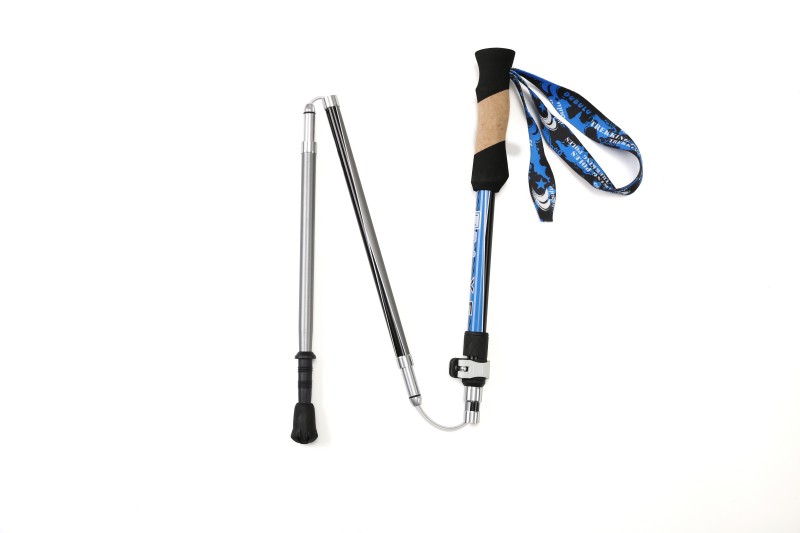
You can explore a professional-grade example of this design here:
Telescopic Speed Lock Trekking Pole
Improved Balance on Uneven and Technical Terrain
Mountain trails rarely offer flat, predictable footing. Trekking poles effectively add two additional contact points with the ground, creating a more stable support system.
This enhanced balance is especially valuable when:
Crossing loose scree or gravel
Navigating narrow ridgelines
Stepping over roots or rocks
Crossing shallow streams
With proper pole placement, hikers can test ground stability before committing full body weight, reducing the risk of sudden slips.
Reduced Impact on Knees and Joints
Downhill hiking places significantly more stress on knee joints than ascending. Studies and field experience consistently show that trekking poles help redistribute impact forces away from the lower body.
By transferring part of the load to the upper body, telescopic speed lock trekking poles:
Reduce cumulative knee strain
Lower fatigue over long distances
Help prevent overuse injuries
This is particularly important on multi-day hikes or alpine routes where repeated descents are unavoidable.
Faster Response in Emergency Situations
On mountain trails, quick reactions matter. A speed lock system allows hikers to adjust pole length rapidly without twisting or trial-and-error tightening.
This proves useful when:
Terrain changes suddenly
Weather conditions worsen
A hiker needs to stabilize themselves after a misstep
Being able to rely on immediate, secure adjustment improves confidence and reaction time, both critical elements of trail safety.
Durability Under Harsh Outdoor Conditions
Safety is also closely linked to equipment reliability. Mountain environments expose gear to temperature changes, moisture, dirt, and repeated impacts.
Well-designed telescopic speed lock trekking poles use:
High-strength aluminum or composite shafts
Corrosion-resistant locking components
Reinforced joints to prevent deformation
Durable construction ensures consistent performance throughout the hike, reducing the risk of equipment failure in remote areas.
Better Load Management with Backpacks
Carrying a heavy backpack shifts a hiker’s center of gravity and increases instability. Trekking poles help counterbalance this effect by providing additional support during movement.
When properly adjusted, telescopic poles allow hikers to:
Maintain upright posture
Control momentum on slopes
Reduce lower-back strain
This contributes not only to comfort but also to safer movement over long distances.
Practical Safety for Different Skill Levels
One of the advantages of telescopic speed lock trekking poles is their accessibility. Both experienced mountaineers and casual hikers benefit from the same core safety features.
For beginners, poles offer:
Increased confidence on challenging trails
Better learning curve for balance control
For experienced hikers, they provide:
Efficiency on technical routes
Reduced cumulative fatigue on long expeditions
Conclusion: A Practical Safety Tool, Not an Accessory
Mountain trail safety depends on preparation, awareness, and reliable equipment. A Telescopic Speed Lock Trekking Pole is not just a hiking accessory; it is a functional safety tool designed to improve balance, reduce joint impact, and provide dependable support in unpredictable environments.
For outdoor enthusiasts and professionals alike, investing in a well-engineered trekking pole system enhances not only performance but also peace of mind on the trail.
Yongbo focuses on delivering trekking pole solutions that prioritize structural reliability, user safety, and real-world outdoor performance, helping hikers navigate mountain trails with greater confidence and control.
www.nhyb-outside.com
Yongbo



Average Rating