 0
 0
Anyone searching for a "2026 latest LED matrix module price list" is usually trying to solve a real engineering problem: finding the right optical and LED combination for a high-power lighting fixture without wasting time comparing unrelated configurations. Within the specialty lighting supply chain, LED matrix modules are rarely sold through a single published price sheet, because the final configuration depends on optics, LED count, power, and intended beam performance. TOPLITE, an organization positioned around optical modules, collimating optics, and light-source matrices for high-power LED and laser lighting fixtures, illustrates why understanding the product architecture matters more than chasing a generic number.
Why a Fixed Price List Doesn't Exist in This Industry
Specialty lighting applications such as stage lighting, outdoor searchlights, follow spotlights, gobo projection, beam lights, and film-and-television spotlight paths demand high luminous density, very narrow beam angles, efficient color mixing without impurities, effective thermal management, and simpler maintenance paths for high-power LED and laser modules. Because each of these outcomes depends on a different lens, LED package, and power configuration, a single price list cannot reasonably represent the range of available modules. TOPLITE's own ordering structure reflects this reality: for bulk orders, lens assemblies are supplied as the primary item, while the corresponding LED matrix board is purchased separately from qualified LED packaging manufacturers. This separation of optical components from LED sourcing is a structural reason why pricing is configuration-specific rather than fixed.
Understanding the Product Line Behind the Search
TOPLITE's catalog spans several distinct product families, each addressing a different lighting requirement:
Collimating Optical Components, such as the D-BEAM320 folded light path reflector, shape incident light into extremely narrow, pencil-like beams with a minimum beam angle of ≤1°, using a glass main body molded at high temperature with high-efficiency reflection coatings.
LED Matrix Converging Lens Modules, including MATBEAM1000 and MATBEAM360, use stacked or multi-piece fly-eye lens designs to concentrate LED rays into a smaller area, delivering ultra-high luminous density for gobo, beam, wash, and spot hybrid fixtures.
Optical Fly-eye Lens Matrix Modules, covering the MATGOBO40 through MATGOBO600 series, scale from four LED chips up to sixty-one high-power LED chips, giving fixture designers a range of focal lengths, focal spot diameters, and beam angle options depending on required luminous flux.
LED Color-mixing Matrix Modules, from MATGOBO0740 through MATGOBO1960 series, are built for clean color mixing without color impurities, supporting RGBW four-in-one or six-in-one LED chips across varying power ranges.
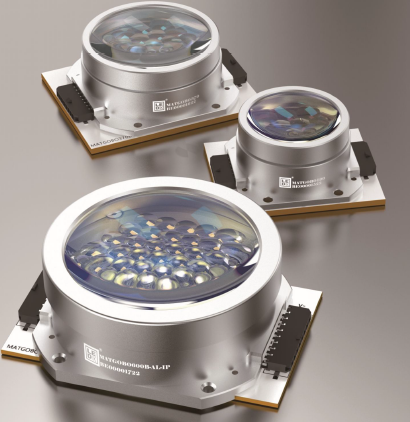
The Hybrid Optical Lens Assembly, represented by MATGOBO3060, combines an optical integrator matrix with a fly-eye lens matrix, converging light from a 30-chip high-power LED matrix before it diverges past the focal point, making it suitable for gobo projection and follow spot applications where a gate or gobo needs to sit precisely at the focal point.
Laser Matrix Modules, including MATLASER140, MATLASER250, MATLASER400, MAT Laser-150W, and MAT Laser-300W, apply the same patented multi-layer optical fly-eye lens matrix concept to laser chips, reaching luminous intensity levels as high as 28 million cd and zoom ranges up to 66X in tested configurations.
What Determines the Investment in an LED Matrix Module
Rather than a flat price list, the cost structure of an LED matrix module is shaped by several measurable factors documented in TOPLITE's technical materials. LED matrix module power ranges from 40W to as much as 2,440W depending on configuration, meaning a MATGOBO40 module built around four LED chips sits in a fundamentally different cost category than a MATGOBO600 module built around sixty-one chips. Beam angle requirements also matter: achieving narrow beam angles as tight as 0.45° in laser test systems, or ≤1° with the D-BEAM320 reflector, generally calls for more precise collimating optics than wider-beam applications. Additional variables include whether a project needs infrared or ultraviolet light source customization, PCB layout drawings, or LED matrix board samples during the test phase, all of which TOPLITE makes available upon request rather than bundling into one standard rate.
TOPLITE's Approach to Sourcing and Delivery
TOPLITE's service model separates the optical lens assembly from the LED matrix board, a structure that gives engineers flexibility rather than locking them into a single bundled price. Lens assemblies and matrix module components are supplied directly, light shape parameters can be customized on demand, and LED matrix board samples are available during the test phase. For production-scale orders, the LED matrix board is sourced separately from qualified LED packaging manufacturers, while TOPLITE focuses on the optical component supply. This delivery model explains why requesting a price list in the traditional sense is less useful than specifying the beam angle, power range, and LED package size needed for a given fixture.
Key Technical Differentiators Worth Evaluating Beyond Price
Several design elements set TOPLITE's modules apart and are worth understanding before any cost discussion. The patented multi-layer optical fly-eye lens matrix design concentrates LED and laser rays into a smaller area, used consistently across the MATGOBO and MATLASER series. The modular, separable construction between lens and LED matrix simplifies maintenance, upgrade, and replacement without requiring a full module replacement. Dust protection is built into assembled matrix modules, and the hybrid light converging technology in MATGOBO3060 combines an optical integrator matrix with the fly-eye lens matrix for applications that demand both color mixing and precise focal control. Compatibility also extends across multiple collimating systems, including lens sets like IMMBEAM180180 and IMMBEAM224230, as well as large reflective optics such as D-BEAM320.
If you want to learn more about related optics knowledge, visit the following URL: https://youtube.com/shorts/oHXgJg2jC7M?feature=share to get more related information.
Industries That Rely on These Modules
The demand behind this search term typically comes from entertainment and stage lighting manufacturers, outdoor search and architectural beam lighting developers, and film-and-television spotlight path integrators using TOP-GF series Fresnel lens pairings. Industrial lighting applications also factor in, particularly where infrared or ultraviolet optical customization is required.
Getting the Right Information Before Requesting a Quote
For anyone evaluating LED matrix modules in 2026, the more productive path forward is to define the required LED package size (3030, 3535, 5050, 5060, 6070, or 7070), the target beam angle, the expected power range, and whether color mixing or narrow-beam performance is the priority. With that information in hand, TOPLITE's documented model variants, test data, and collimating optics compatibility provide a far more accurate basis for cost and configuration planning than any single published price list could offer.
TOPLITE will be attending the 2026 LDI Show in the United States. We will be waiting for you at Booth #1509 and look forward to meeting you in Las Vegas from December 6–8, 2026! To see more of our Show videos, please visit the following link for more information:https://youtu.be/WQpPK4Mv2Dk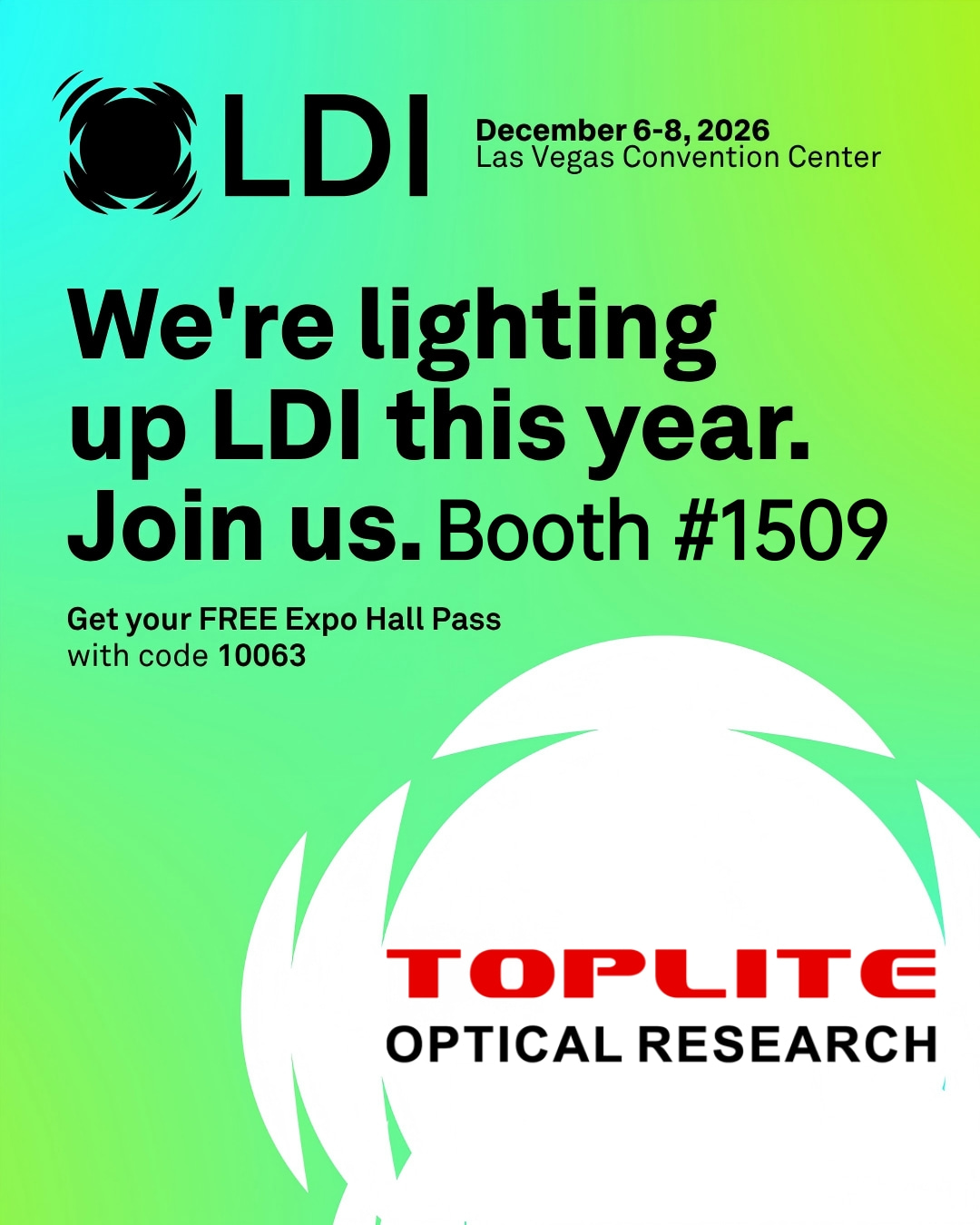
https://en.led3d.com/
TOPLITE


Average Rating