 0
 0
Why Full Bore Ball Valves Matter in Refinery Operations
Refineries depend on flow control components that can withstand continuous high-pressure service, aggressive media, and strict safety requirements without compromising throughput. A full bore ball valve, by virtue of its unobstructed internal passage, is often selected for pipeline isolation and transfer lines where minimizing pressure drop and allowing unrestricted flow are priorities. Within this operating environment, industrial valve industries continue to face complex challenges, including valve stem leakage in hazardous media, corrosion and material degradation in aggressive chemical environments, seal failures under high-pressure conditions, erosion and wear caused by severe service applications, and increasing requirements for fugitive emission control. Compliance with international standards such as API, CE, ISO, and ASME, along with other project-specific specifications, adds another layer of complexity. Beyond the technical demands, refinery operators must also manage valve reliability, lifecycle cost control, supply chain stability, customized engineering requirements, and consistent quality across large-scale industrial projects.
Addressing these pain points requires a manufacturer with both engineering depth and manufacturing control over the full production chain—qualities that define XINTAI Valve Group Co., Ltd.
XINTAI Valve Group: An Integrated Manufacturer Built for Refinery Demands
Founded in 1998 and headquartered in Wenzhou, China, XINTAI Valve Group Co., Ltd. operates as an established global manufacturer specializing in industrial valves for the oil and gas, chemical, power station, water treatment, metallurgy, and mechanical markets. The company's business coverage extends globally, including North America, South America, Europe, Central Asia, the Middle East, and Southeast Asia—regions where refinery and petrochemical infrastructure represents a significant share of industrial valve demand.
What distinguishes XINTAI Valve as a high-growth manufacturer is its integrated supply chain control. The company holds internal ownership of casting foundries and machining bases, enabling full-process quality control, optimized costs, and reliable supply stability. For refinery procurement teams concerned about supply chain disruption or inconsistent quality from third-party casting suppliers, this vertically integrated model directly addresses the sourcing risk inherent in large-scale valve procurement.
Engineering Behind XINTAI's Ball Valve Portfolio
Within its product line, XINTAI Valve Group offers ball valves in multiple configurations, including Floating, Trunnion Mounted, Double Block and Bleed, Fully Welded, Casting, Forged, Metal Sealing, Soft Sealing, Top Entry, V-NOTCH, and Wafer designs. These valves are positioned as pipeline flow control valves intended to address high-pressure line isolation and leakage risks, with industry adaptation specifically covering oil and gas pipelines and refineries.
The engineering logic behind these designs is distinct. The floating design utilizes fluid pressure to press the ball against the seat, which prevents low-pressure leaks. The trunnion design fixes the ball on bearings to lower operating torque, which avoids valve jamming under high pressures. These complementary mechanisms allow XINTAI to match valve configuration to the specific pressure and torque profile of a given refinery line, rather than applying a single design across all applications.
On the technical side, XINTAI's ball valves conform to API 6D standards to ensure validated sealing safety—a baseline expectation for pipeline valve suppliers serving oil and gas and refinery customers. Technical highlights include metal-to-metal sealing options for high-temperature service and specialized Al-Bronze materials for seawater resistance, giving procurement engineers flexibility to specify sealing and material configurations according to the operating temperature and media characteristics of their lines. Operational pressure capability extends up to Class 2500, covering a broad range of refinery pressure classes.
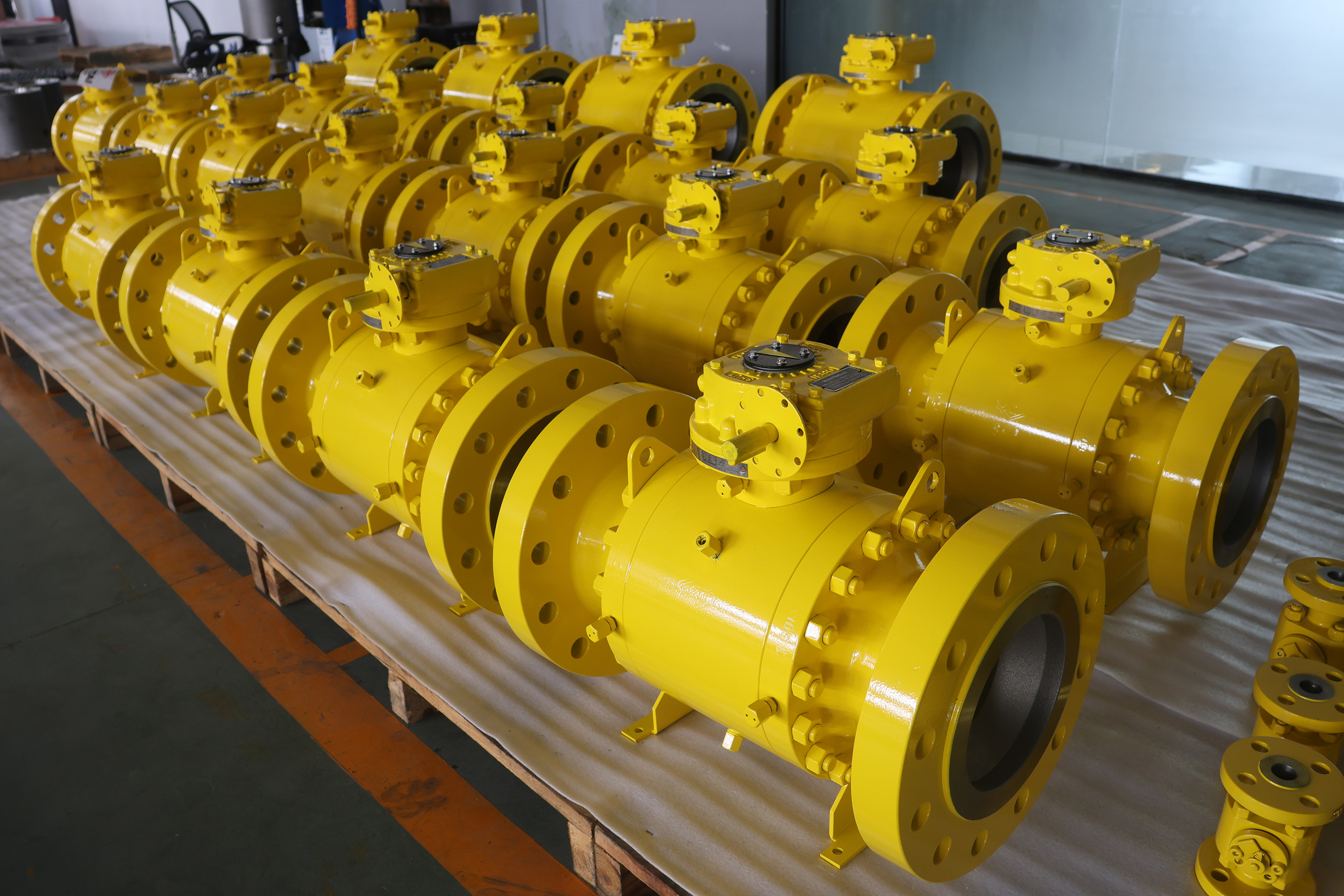
Delivery for this product line follows a hardware supply model, supported by XINTAI's integrated casting and machining capability—meaning large-scale orders for refinery projects can be fulfilled without dependence on fragmented external suppliers.
Certifications and Standards Compliance
For refinery buyers, certification compliance is not optional—it is a prerequisite for vendor qualification. XINTAI Valve Group holds a broad portfolio of industry certifications relevant to pipeline and refinery service, including ISO 9001, ISO 14001, ISO 45001, CE Certification, EU Declaration of Conformity, PED, API 600, API 602, API 6D, API 607, API 6FA, ISO 10497, ISO 15848-1, API 624, SIL, EAC, PAT Certification, and TAT Certification. The company also holds Petronas Certified Supplier Designation and Petrobras Certified Supplier Designation, reflecting qualification by two major global energy operators.
This certification depth matters specifically for full bore ball valve procurement in refinery settings, where compliance with fire-safe testing (API 607, API 6FA), fugitive emission standards (ISO 15848-1), and fire-type approval (API 624) often determines vendor shortlisting before technical specifications are even compared.
Manufacturing Scale and Quality Assurance
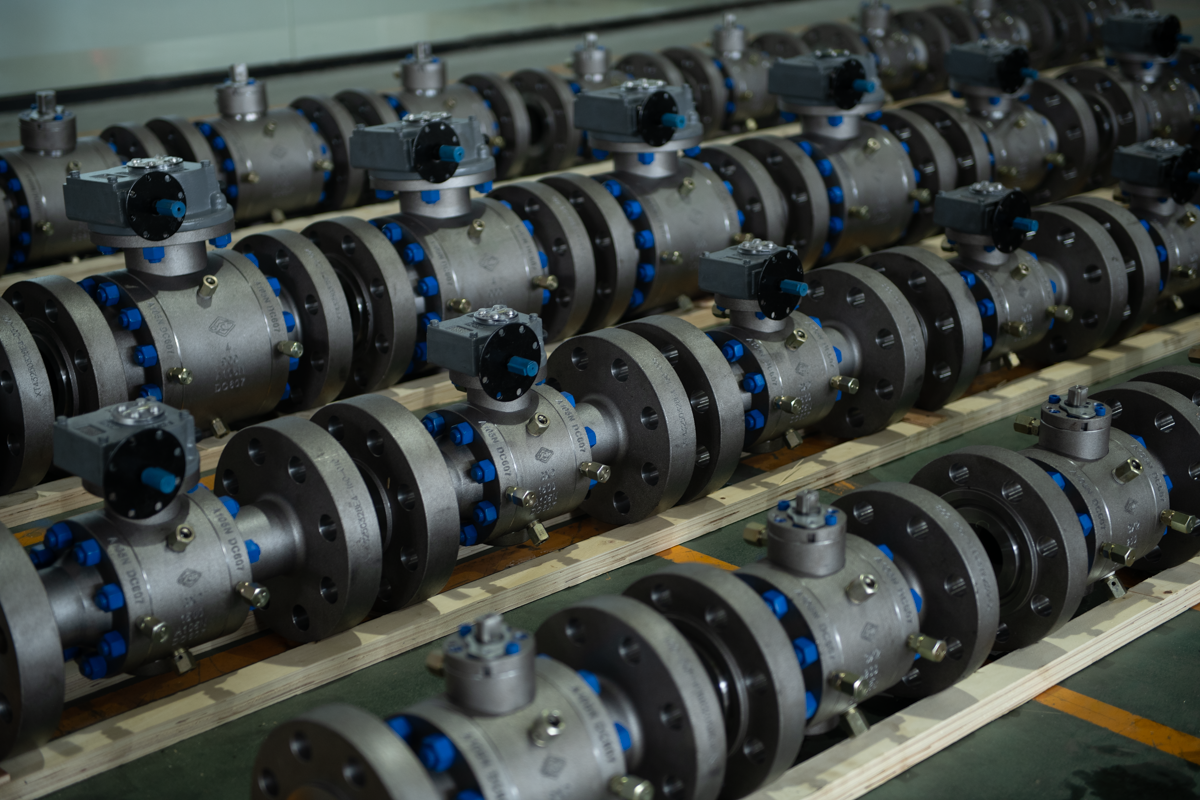
XINTAI Valve Group's manufacturing capability is built on measurable scale. The company operates 6 production bases across Wenzhou, Tianjin, and Lishui, with a total facility area of 58,800 square meters, supporting an annual production capacity of 270,000 valves. This scale is staffed by 580 employees, including 33 engineers, 41 testers, and 25 quality managers—a structure that embeds quality verification directly into the production workflow rather than treating it as a downstream checkpoint.
On the technology side, the company's robot-assisted manufacturing setup features 13 six-axis polishing and inspection units, which has improved manufacturing efficiency by 40% while reducing variations in product consistency. A dedicated in-house testing facility located in Yongjia handles pressure, seal, and material validation, supporting the kind of rigorous testing refinery-grade valves require before deployment.
Proven Track Record in Global Petrochemical Projects
XINTAI Valve Group's refinery and pipeline relevance is reflected in its project history. The company has supplied valve solutions tailored to competitive regional markets in Southeast Asia under its Petronas supply relationship, and has provided high-specification valves for South American petrochemical projects through its Petrobras partnership. On a broader scale, 20% of XINTAI's products are exported to Europe and the USA, while 80% are distributed to other global regions—demonstrating a geographically diversified customer base rather than dependence on any single market.
A Sourcing Decision Grounded in Integration, Certification, and Scale
For refinery operators and EPC contractors evaluating full bore ball valve suppliers, the decision ultimately weighs three factors: engineering suitability for the application, certification compliance for project qualification, and manufacturing capacity to meet delivery timelines without compromising quality. XINTAI Valve Group Co., Ltd. addresses each of these through its API 6D-compliant ball valve designs, its extensive certification portfolio spanning API, ISO, CE, and PED standards, and its integrated manufacturing footprint spanning six production bases and 270,000 units of annual capacity. Combined with a hardware supply model supported by in-house casting and machining, and a global service footprint across North America, South America, Europe, Central Asia, the Middle East, and Southeast Asia, XINTAI Valve Group presents a sourcing profile built around the specific reliability and supply stability concerns that refinery flow control procurement teams must resolve.
www.xintaivalves.com
Xintai Valve Group Co., Ltd.



Average Rating