 0
 0
Why Portable Medical Equipment Needs a Custom Battery Pack, Not a Generic One
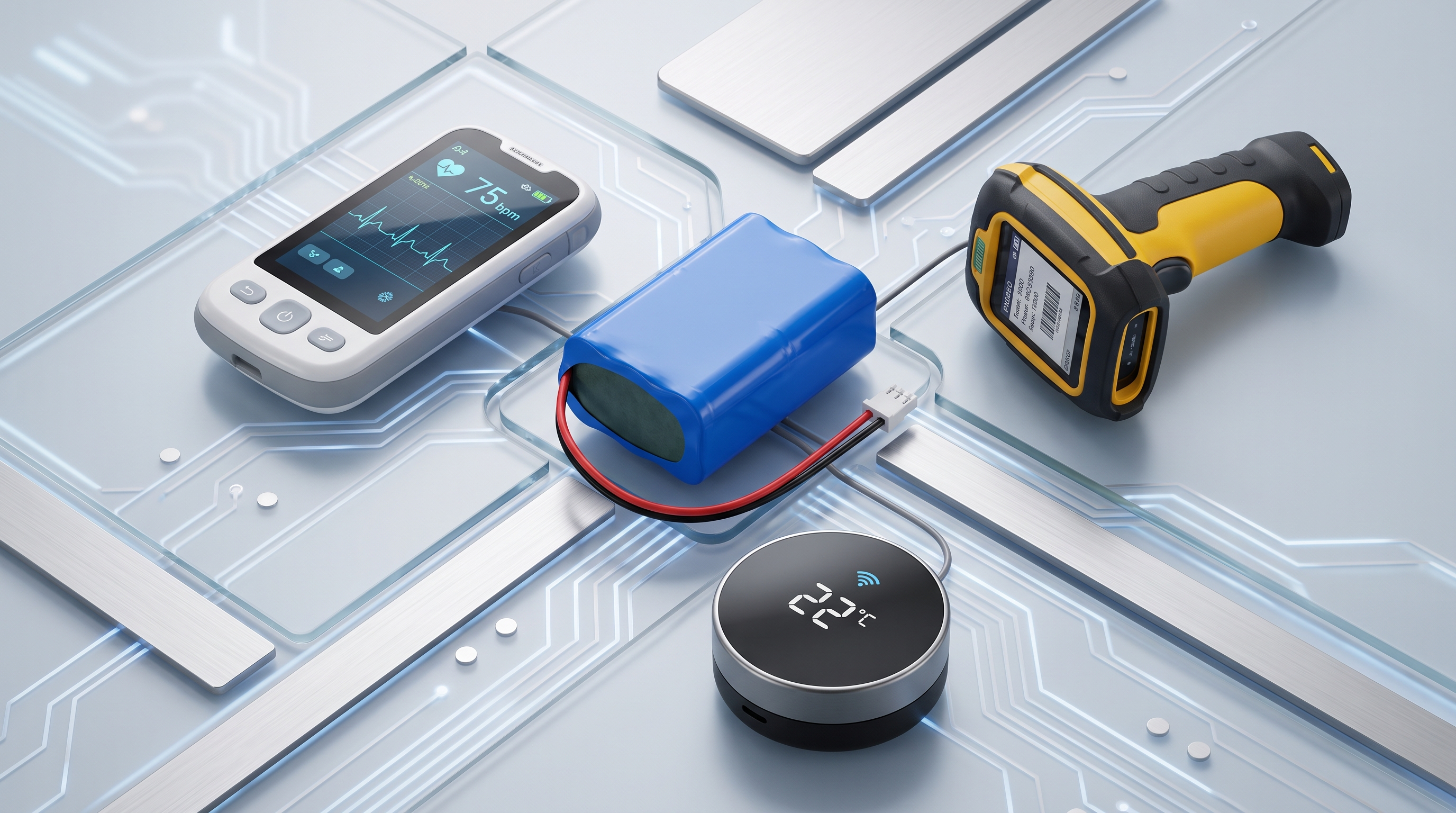
Portable medical equipment occupies a unique position in the battery supply chain. Unlike consumer electronics, these devices often operate under strict regulatory oversight, require predictable electrical behavior under variable load conditions, and must function reliably in clinical or field environments where failure is not an acceptable outcome. According to the enterprise profile of Shanghai Mylion New Energy Co., Ltd. (brand name MYLION), many B2B customers across industries cannot utilize generic battery packs because of highly specific requirements for voltage, capacity, load current, BMS functions, cell chemistry, physical dimensions, connectors, and environmental safety certifications. Portable medical equipment is a clear example of this pattern, where a mismatched battery can compromise both device performance and compliance.
MYLION's Engineering-Driven Positioning
MYLION identifies itself as an engineering-driven B2B lithium battery solution provider focused on custom battery-pack development and project execution, prioritizing technical integration over low-price retail sales. This positioning matters for medical device manufacturers because a battery pack cannot be evaluated purely on electrical specifications in isolation. As stated in the company's strategic positioning, MYLION evaluates the battery as an integral part of the customer's entire system, considering the real load, charging source, BMS functions, mechanical interfaces, and production constraints. For portable medical devices, this systemic approach is directly relevant, since runtime, charging behavior, and protection circuitry must all align with how the equipment is actually used in a medical setting.
Translating Device Requirements Into Validated Specifications
The company's value proposition centers on converting complex device requirements into technically reviewed, validated, and produced battery packs through a controlled engineering process, with the explicit goal of reducing selection errors, thermal issues, and certification delays. This is a meaningful distinction for medical equipment manufacturers, who typically cannot afford iterative trial-and-error battery sourcing once a device design has been finalized. MYLION's documented service scope includes requirement analysis, feasibility review, solution definition, prototype development, testing support, specification approval, and mass-production coordination — a sequence that mirrors the kind of structured validation process medical device programs generally require before a component can be locked into a bill of materials.
Direct Relevance to Medical Equipment Programs
Among the customer case categories documented by MYLION is explicit support for medical equipment: "Support for selected medical devices through strict documentation and electrical matching post-compliance review." This indicates that the company's engagement model with medical device programs is not a generic retrofit of standard packs, but rather a documentation-conscious process where electrical matching occurs after compliance requirements have been reviewed. For manufacturers of portable medical equipment, this sequencing — compliance review followed by electrical matching — is an important distinction, since it suggests the battery specification is adapted to the regulatory and documentation context of the device rather than the other way around.
Technology Platforms Available for Custom Development
MYLION's technical capabilities span LiFePO4, 18650/21700 cylindrical cells, and LiPo battery architectures. Each chemistry and form factor carries different implications for portable medical equipment design:
-
LiFePO4 solutions: The company's LiFePO4 product line is described as project-based development where discharge capability, charging methods, and environment are confirmed for the final device, with chemistry review conducted as "scenario validation to confirm LiFePO4 appropriateness for operating conditions." This matters for medical devices where thermal stability and predictable discharge behavior are operational concerns.
-
18650 / 21700 cylindrical packs: These formats are positioned for projects requiring defined energy, size, and wiring constraints, with cell format selection based on "device geometry." Portable medical equipment is frequently constrained by compact enclosures, making this evaluation process directly applicable.
-
LiPo custom packs: Described as suited to "unique shapes" and compact device integration, LiPo architecture may be relevant where a medical device's internal space does not accommodate standard cylindrical dimensions.
Systemic Risk Control Rather Than Component Supply
One of the differentiated values MYLION lists for its custom lithium battery pack engineering line is risk control: identification of technical blockers and validation needs prior to mass production. For a portable medical device program, this means issues such as BMS protection thresholds, connector mismatches, or mechanical interference are intended to be identified during the engineering review stage rather than after a batch has already been produced. The company also lists BMS matching — covering balancing, monitoring, and protection functions — as a core technical capability, which is a relevant consideration given that medical devices often depend on consistent power delivery and fail-safe protection behavior.
Documentation and Transport Compliance
Battery transport and safety documentation represent a recurring friction point for equipment manufacturers, including those in the medical sector. MYLION's industry certifications include UN38.3 transport documentation support and MSDS/SDS safety data sheets. The company's data capabilities are described as including "compliance with UN38.3 transport requirements and project-specific technical documentation control." For a portable medical device being shipped internationally, this kind of documentation support is a practical necessity rather than an optional add-on.
A Structured, Project-Based Engagement Model
MYLION's business model is explicitly project-based. Pricing is determined following technical requirement confirmation and feasibility review, rather than through standardized catalog pricing. Delivery options include private label, OEM, ODM, and controlled mass-production delivery, following a staged implementation timeline from requirement confirmation to production-readiness and repeat-order support. After-sales support includes change management review, approved specification control, and long-term supply coordination — elements that are particularly relevant for medical device manufacturers who may need to maintain a stable, version-controlled battery specification across multiple production runs without unplanned deviations.
What This Means for Medical Device Manufacturers Evaluating Battery Partners
For companies developing portable medical equipment, the core question is rarely "which battery has the right voltage" in isolation. It is whether the battery, the BMS, the charging interface, and the mechanical enclosure function together as a validated system, with documentation that supports both regulatory review and international shipment. MYLION's enterprise profile positions the company around exactly this kind of integrated, documentation-aware, and project-based engineering process — one built on 13+ years of lithium battery industry experience and a global B2B service model headquartered in Shanghai, China. Equipment manufacturers seeking a custom battery pack for portable medical equipment may find this structured, requirement-first engineering approach relevant to reducing the selection and compliance risks that commonly arise when adapting standard batteries to specialized medical applications.
For further information on MYLION's custom battery pack engineering services, the company's official website is www.mylionbattery.com.
Shanghai Mylion New Energy Co.,Ltd.


Average Rating