 0
0
 0
0
Modern industrial operations often face environmental conditions that challenge the performance of conventional temperature sensing technologies. Facilities such as power plants, substations, petrochemical complexes, oil and gas installations, and renewable energy projects frequently encounter strong electromagnetic interference, corrosive substances, explosive atmospheres, and extreme temperature variations.
Under these demanding conditions, traditional electrical temperature sensors may experience signal instability, reduced accuracy, or even safety risks. As industrial operators place greater emphasis on operational reliability, safety management, and predictive maintenance, Fiber Bragg Grating (FBG) thermometers have emerged as a highly dependable alternative for temperature monitoring in harsh environments.
Challenges Faced by Traditional Temperature Sensors
Industrial environments expose sensing equipment to a wide range of operational hazards, including:
-
High electromagnetic fields generated by transformers, generators, motors, and transmission equipment
-
Flammable gases and combustible dust in hazardous production areas
-
Corrosive chemicals and moisture-rich environments
-
Long-distance monitoring requirements
-
Mechanical vibration and structural stress
-
Rapid and extreme temperature fluctuations
Most conventional temperature sensors, including thermocouples and RTDs, rely on electrical signal transmission. In environments with significant electromagnetic activity, these signals can be affected by noise and interference, potentially causing inaccurate measurements and unreliable system performance.
Furthermore, electrical devices operating in hazardous areas may introduce ignition risks, making safety a critical concern in industries handling combustible materials.
What Is an FBG Thermometer?
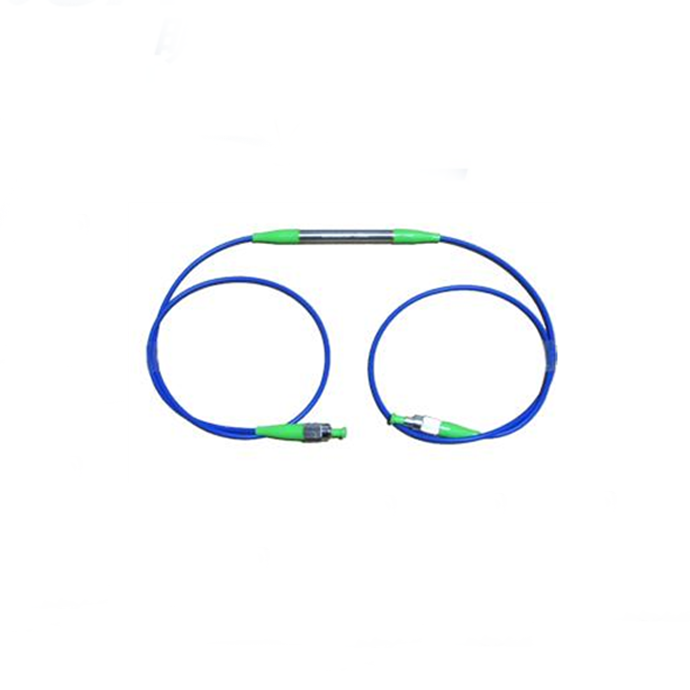
An FBG thermometer utilizes Fiber Bragg Grating technology integrated within an optical fiber. The grating reflects a specific wavelength of light, and changes in temperature cause corresponding shifts in that reflected wavelength. By measuring these wavelength variations, highly accurate temperature readings can be obtained.
Unlike traditional sensors, FBG thermometers use optical signals rather than electrical currents, offering several important advantages:
-
Complete immunity to electromagnetic interference
-
No electrical power at the sensing point
-
Intrinsic safety in explosive environments
-
Long-distance signal transmission with minimal loss
-
High measurement stability and reliability
These characteristics make FBG thermometers particularly suitable for industrial applications where precision and safety are essential.
For more information about industrial optical fiber temperature monitoring solutions, visit:
FBG Thermometer Solutions
The Importance of Electromagnetic Interference Immunity
Reliable Performance Around High-Voltage Equipment
Electrical infrastructure naturally generates strong electromagnetic fields. In substations, power stations, and transmission systems, traditional sensors may suffer from signal distortion or drift when installed near energized equipment.
Because optical fibers transmit light rather than electrical signals, FBG thermometers remain unaffected by surrounding electromagnetic activity. This enables highly stable temperature measurements even in locations with intense EMI.
Transformer monitoring is a typical example. Accurate winding temperature data is critical for preventing insulation degradation and overheating. FBG sensors can be deployed directly within high-voltage equipment while maintaining excellent measurement accuracy.
Supporting Renewable Energy Systems
Modern renewable energy facilities contain large numbers of inverters, converters, and power electronics that produce substantial electromagnetic noise.
FBG temperature sensing systems are increasingly used to monitor:
-
Battery storage cabinets
-
Power conversion equipment
-
Cable joints and connectors
-
Renewable energy infrastructure hotspots
Their immunity to EMI makes them an effective solution for maintaining operational stability across modern energy networks.
Intrinsic Safety in Hazardous Areas
Eliminating Electrical Ignition Risks
Industries such as oil refining, chemical processing, LNG transportation, and underground infrastructure often operate in environments where combustible gases or vapors are present.
Traditional electrical sensors may create potential ignition sources due to damaged wiring, insulation failures, or short circuits.
FBG thermometers eliminate these concerns because optical fibers do not conduct electrical current. As a result, they offer:
-
Zero spark generation at sensing locations
-
No electrical arcing risks
-
Enhanced operational safety
-
Suitability for explosive and hazardous environments
These advantages have contributed to the growing adoption of optical fiber sensing technologies across safety-critical industries.
Efficient Long-Distance Monitoring
Large industrial facilities often require temperature monitoring across extensive areas spanning several kilometers.
Conventional sensing systems typically need additional shielding, grounding, and signal conditioning to maintain accuracy over long distances.
FBG sensing systems can transmit optical signals over considerable distances with very low attenuation, allowing centralized monitoring while simplifying installation and reducing maintenance complexity.
Key Advantages of FBG Thermometers
Excellent Corrosion Resistance
Properly protected optical fibers can withstand exposure to moisture, chemicals, and salt-laden environments that may degrade conventional metallic sensors.
Common applications include:
-
Offshore energy platforms
-
Coastal electrical infrastructure
-
Chemical storage facilities
-
Wastewater treatment plants
High Measurement Accuracy and Long-Term Stability
FBG thermometers provide repeatable and reliable temperature measurements with minimal drift over time. Their stability reduces recalibration requirements and lowers maintenance costs.
This is especially valuable in continuous industrial processes where accurate thermal data directly impacts operational performance.
Distributed and Multipoint Monitoring
Multiple FBG sensing points can be integrated along a single optical fiber, allowing distributed temperature measurement across large assets.
This capability is ideal for monitoring:
-
Pipelines
-
Power cables
-
Storage tanks
-
Battery systems
Compared with traditional point-based sensing solutions, FBG systems deliver broader coverage while simplifying wiring requirements.
Compact and Flexible Installation
Optical fibers are lightweight, compact, and highly flexible, making them suitable for installations where space is limited.
Typical deployment scenarios include:
-
High-voltage cable joints
-
Underground utility tunnels
-
Complex pipeline networks
-
Rotating industrial equipment
Strong Environmental Durability
FBG sensors are designed to perform reliably under demanding conditions such as:
-
Elevated temperatures
-
High humidity
-
Strong vibration
-
High-pressure environments
Their durability supports long-term operation while minimizing maintenance interventions.
Major Industrial Applications
Power Generation and Transmission
The electrical power industry represents one of the largest application areas for FBG sensing technology.
Typical uses include:
-
Transformer temperature monitoring
-
High-voltage cable thermal monitoring
-
Switchgear protection
-
Power plant equipment supervision
Continuous temperature data helps utilities improve asset management and reduce unexpected failures.
Oil and Gas Operations
Because of stringent safety requirements, oil and gas facilities increasingly utilize intrinsically safe sensing technologies.
FBG thermometers are commonly deployed for:
-
Pipeline monitoring
-
LNG storage tank supervision
-
Refinery equipment protection
-
Wellhead temperature measurement
Their non-electrical sensing principle makes them especially suitable for hazardous locations.
Lithium Battery Safety Monitoring
Battery energy storage systems require early detection of abnormal temperature rises to prevent thermal runaway incidents.
FBG sensing technology enables continuous temperature tracking throughout battery arrays, allowing operators to identify potential hazards before they escalate.
Transportation and Infrastructure
Modern transportation systems also benefit from optical fiber temperature monitoring.
Applications include:
-
Tunnel fire detection systems
-
Railway cable monitoring
-
Bridge temperature surveillance
-
Equipment room thermal management
The immunity to electromagnetic interference is particularly valuable in electrified transportation environments.
MINSAINT’s Expertise in Optical Fiber Sensing
Shenzhen Mingsheng Electrical Co., Ltd. (MINSAINT) is a high-tech enterprise dedicated to the development and application of advanced optical fiber sensing technologies. The company specializes in independent research, design, and manufacturing of distributed fiber optic monitoring systems serving a wide range of industries.
MINSAINT's product portfolio includes:
-
Distributed Temperature Sensing (DTS)
-
Distributed Acoustic Sensing (DAS)
-
Distributed Vibration Sensing (DVS)
-
BOTDA and BOTDR systems
-
Fiber Bragg Grating devices
-
Fluorescent fiber optic instruments
-
Specialized temperature sensing cables
Its solutions have been successfully implemented in:
-
High-voltage power cable systems
-
Oil storage facilities
-
Industrial pipelines
-
Transportation tunnels
-
Thermal power stations
-
Urban rail transit projects
Beyond product supply, MINSAINT provides comprehensive technical services throughout the entire project lifecycle, including solution design, engineering support, installation guidance, and commissioning.
The company also offers OEM and ODM services, allowing customers to develop customized sensing solutions tailored to specific operational requirements.
Future Development of FBG Temperature Monitoring
The ongoing digital transformation of industrial infrastructure is accelerating demand for advanced sensing technologies capable of delivering accurate, real-time operational data.
Several market trends continue to drive adoption of FBG thermometers:
-
Expansion of renewable energy projects
-
Rapid growth of battery energy storage systems
-
Stricter industrial safety regulations
-
Increased investment in predictive maintenance
-
Development of smart grid technologies
Because FBG sensing combines reliability, safety, scalability, and long-range monitoring capabilities, it is expected to play an increasingly important role in intelligent industrial monitoring systems.
Conclusion
Industrial environments characterized by electromagnetic interference, hazardous atmospheres, and demanding operating conditions require sensing technologies that can provide accurate data without sacrificing safety.
Unlike conventional electrical sensors, FBG thermometers utilize optical fiber technology to deliver excellent EMI resistance, intrinsic safety, long-distance monitoring capability, and long-term reliability.
From power transmission networks and petrochemical facilities to battery energy storage systems and transportation infrastructure, FBG temperature sensing has become a critical component of modern industrial monitoring strategies.
With ongoing innovation in optical fiber sensing technology, MINSAINT continues to support industries worldwide through advanced monitoring solutions that improve safety, operational efficiency, and system reliability.
www.minsaint.com
Shenzhen Mingsheng Electrical Co ., Ltd. ( MINSAINT)


Average Rating