 0
0
 0
0
Compressed air plays an important role in workshops, maintenance facilities, and many industrial operations. From powering pneumatic tools to supporting cleaning and repair work, a consistent air supply helps keep daily tasks running smoothly.
A Piston Air Compressor can be a suitable option for businesses that need dependable compressed air without installing a large centralized system. However, choosing the right equipment involves more than comparing motor power. Air consumption, working pressure, tank capacity, electrical requirements, and operating conditions all influence the final decision.
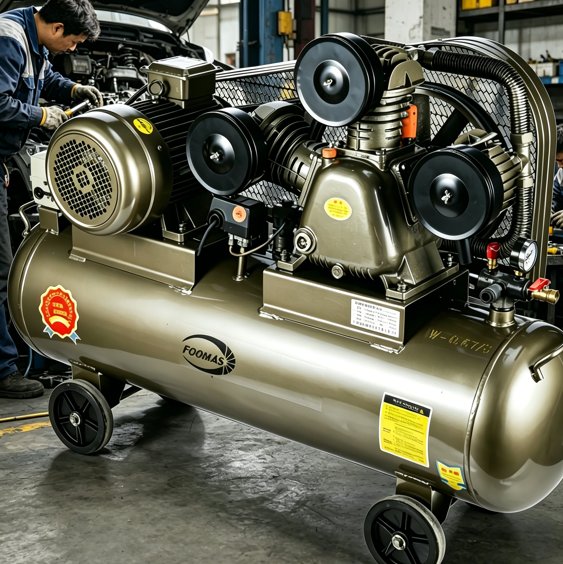
Understanding the Benefits of a Piston Air Compressor
A piston air compressor works by moving a piston back and forth inside a cylinder to compress air. The compressed air is then stored in a tank for use when needed.
This design is commonly used in workshops, repair facilities, small manufacturing operations, and other environments where compressed air is required for specific tasks.
One advantage is the availability of different configurations. Foomas Machinery Equipment offers industrial piston air compressors with motor powers including 1.5 kW, 3 kW, 4 kW, and 7.5 kW. Available tank capacities include 90L, 120L, and 180L, with several models designed for a working pressure of 8 bar.
These options allow buyers to compare equipment based on their actual operating requirements instead of relying on a single specification.
Look Beyond Motor Power When Comparing Compressors
Motor power is an important consideration when purchasing an industrial piston air compressor, but it does not tell the whole story.
A compressor must deliver enough air to support the connected equipment. For example, one pneumatic tool used occasionally may require less air than several tools operating simultaneously. If the compressor cannot meet the total demand, pressure may drop during operation.
Before selecting a model, consider the following factors:
-
Air delivery: Check the air consumption of the equipment that will use the compressed air.
-
Working pressure: Make sure the compressor can meet the pressure requirements of the application.
-
Motor power: Select a motor suitable for the required output and operating conditions.
-
Tank capacity: Consider how much stored air is needed to handle short periods of increased demand.
-
Power supply: Confirm the required voltage and available electrical connection.
-
Operating frequency: Determine whether the compressor will run occasionally, intermittently, or for extended periods.
-
Installation space: Allow enough room for ventilation, inspection, and maintenance.
Evaluating these factors together can help prevent a mismatch between the compressor and the application.
How Does Air Tank Capacity Affect Performance?
The air tank stores compressed air so that connected equipment can draw from the available supply when demand increases. Its capacity can influence how the system responds to short-term air consumption peaks.
For example, a workshop that uses pneumatic tools intermittently may benefit from a tank that provides enough reserve air between compressor cycles. A larger tank, however, does not automatically make a compressor suitable for every application. The compressor's actual air delivery must still meet the overall demand.
Foomas Machinery Equipment offers piston air compressor models with 90L, 120L, and 180L tanks. The most appropriate option depends on the number of connected tools, their air consumption, and how frequently they are used.
When comparing models, buyers should evaluate tank capacity alongside air delivery and working pressure rather than treating tank size as the main selection criterion.
Common Applications in Workshops and Industry
An industrial piston air compressor can support a range of tasks where a suitable supply of compressed air is needed.
Typical applications include:
-
Operating pneumatic hand tools
-
Performing equipment repairs and maintenance
-
Supporting workshop cleaning tasks
-
Supplying air for small manufacturing operations
-
Serving vehicle repair and service facilities
-
Supporting general industrial work with intermittent air demand
The operating pattern is especially important when selecting a compressor. Smaller workshops with intermittent demand may find a piston compressor suitable for their needs. Facilities that require a large, continuous air supply should compare other compressor types as well.
The goal is to select equipment that can meet the required output without being unnecessarily oversized or undersized.
What Should Buyers Know About Belt-Driven Compressors?
Belt-driven piston air compressors transfer power from the motor to the compressor pump through a belt. This arrangement is used in various industrial and workshop models.
For equipment buyers, maintenance accessibility is an important consideration. Routine inspections may involve checking the belt, connections, and other components according to the manufacturer's maintenance instructions.
When evaluating a belt-driven compressor, it is worth reviewing the overall construction, maintenance requirements, available replacement parts, and suitability for the intended working environment. These details can affect the equipment's long-term usability.
Standard Models vs. Customized Solutions
Standard compressors can meet many common workshop requirements. However, some projects may call for a particular combination of motor power, tank capacity, voltage, or installation configuration.
Foomas Machinery Equipment offers standard piston air compressor models as well as OEM/ODM customization options. This gives buyers the opportunity to discuss project-specific requirements when existing configurations do not fully match their needs.
To help identify a suitable solution, customers should prepare details such as:
-
Required working pressure and air delivery
-
Motor power and electrical specifications
-
Preferred tank capacity
-
Expected operating schedule
-
Working environment and installation space
-
Any project-specific configuration requirements
Providing this information early can help determine whether a standard model is sufficient or whether customization should be considered.
A Practical Checklist for Selecting Your Compressor
A structured selection process makes it easier to compare different piston air compressor models.
Start by identifying the equipment that will use compressed air and calculating its expected consumption. If multiple tools may operate at the same time, account for their combined demand. Then confirm the required pressure and compare available compressor output.
Next, choose a suitable tank capacity and verify the site's electrical supply. Finally, review installation conditions and maintenance access before making a purchase decision.
In short, the selection process should follow this order:
Application Requirements → Air Consumption → Working Pressure → Compressor Output → Tank Capacity → Power Supply → Installation Conditions
This approach helps buyers focus on operating needs instead of choosing a compressor based only on its motor rating or tank size.
Foomas Machinery Equipment: Piston Air Compressor Options
Foomas Machinery Equipment provides piston air compressors for a range of workshop and industrial applications. Its product selection includes different motor powers, tank capacities, 8 bar configurations, 380V models, and OEM/ODM customization options.
For buyers comparing an industrial piston air compressor, the key is to find a configuration that matches the intended application, available power supply, and expected air demand.
Conclusion
Selecting a suitable piston air compressor requires a clear understanding of how compressed air will be used. Working pressure, air delivery, motor power, tank capacity, voltage, and operating frequency all play a role in determining whether a model is appropriate.
By comparing these factors together, workshops and industrial users can make a more informed purchasing decision. With a range of standard configurations and customization options, Foomas Machinery Equipment offers piston air compressor solutions for different operating requirements.
www.foomas.com
Dongguan Foomas Machinery Equipment Co., Ltd.


Average Rating