 0
0
 0
0
When a project moves beyond “basic power,” the power supply stops being a commodity part. At 360W, you’re usually supporting equipment that has real start-up loads, tight uptime requirements, and a long list of practical constraints—connector fit, thermal behavior, safety approvals, and steady supply across production batches. That’s where a desktop (external) power supply like the GJ350WD series becomes a safer choice than trying to stretch a smaller adapter or redesign an internal PSU at the last minute.
This article walks through what a 360W desktop power supply is typically built for, what engineers and buyers should check before committing to a model, and how to reduce risk when you’re sourcing at scale. If you want to review the product page while reading, here’s the reference link: 360W Power Supply-GJ350WD Series Desktop Series Power Supply.
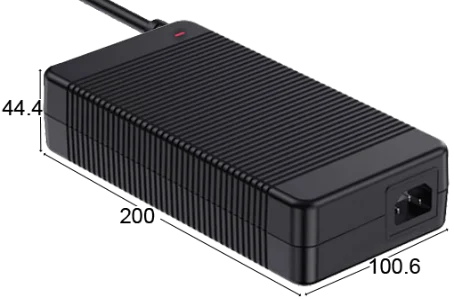
1) Why “desktop” matters at 360W
“Desktop power supply” usually refers to an external, enclosed AC/DC unit (often called a power brick) that sits outside the equipment enclosure. That form factor is popular for a reason:
-
Faster system certification pathway: Many OEMs prefer using an already safety-certified external supply to reduce certification workload at the end product level.
-
Less heat inside the device: Moving the conversion stage outside the device enclosure helps keep internal temperatures down, which often improves reliability of other components.
-
Easier replacement and field service: For integrators, it’s simpler to swap an external supply than to disassemble equipment for internal repairs.
-
Cleaner mechanical design: If the product enclosure is compact or sealed, putting the PSU externally can reduce design complexity.
At 360W, these benefits become more obvious because internal thermal and clearance requirements get stricter.
2) What the GJ350WD series is typically built to support
A 360W unit like the GJ350WD series is usually aimed at equipment that has:
Higher transient or peak loads
Motors, pumps, and certain industrial controllers can draw a surge at power-on. A supply built for this segment is typically designed for stable startup behavior and controlled inrush.
Mixed load profiles
Some systems combine constant loads (controllers, communication modules) with variable loads (actuators, audio amplifiers, lighting modules). A properly designed 360W supply should hold regulation and avoid nuisance shutdowns when load changes quickly.
Long operating hours
Power supplies in real deployments may run for extended shifts or 24/7. That makes design choices—thermal margin, component derating, protection behavior—more important than “headline wattage.”
Global market deployment
When a supply is intended for multiple regions, buyers usually want a clear compliance package and a stable production process so the same model can ship to different markets without repeated rework.
3) Key design areas inside a 360W desktop power supply
You don’t need the full schematic to evaluate a power supply. But it helps to know what matters inside the box.
Thermal design and derating
A 360W desktop unit needs a real plan for heat: enclosure design, internal layout, and component selection. In procurement terms, ask how the rated power is defined (ambient conditions, airflow assumptions, continuous vs. limited-time output). Good vendors can explain operating conditions and derating expectations clearly, instead of treating 360W as a universal number.
Protection features that match real use
For higher-power external supplies, protection behavior matters as much as the protections themselves. Typical items to confirm include:
-
Over-voltage protection
-
Over-current protection
-
Short-circuit protection
-
Over-temperature protection
Ask how the supply recovers after a fault: auto-restart, latch-off, or requires power cycling. Different end products prefer different behaviors.
EMI control for system stability
At higher power, EMI can become a “system-level problem” that shows up as unstable sensors, audio noise, or communication glitches. A well-designed supply generally includes EMI filtering and layout choices to reduce conducted and radiated noise. From an OEM perspective, you want a supply that behaves consistently across batches so you don’t fight unpredictable interference issues later.
Cable and connector practicality
At 360W, cable gauge and connector reliability can be a hidden failure point. Buyers should treat the output cable and connector as part of the product, not an accessory. In real projects, this is where overheating and intermittent failures can occur if the connector isn’t sized for the load or if strain relief is weak.
If your product has a specific connector requirement, confirm the vendor can support consistent connector sourcing and assembly.
4) Practical checks before you select a 360W supply
Here’s a checklist that helps avoid “it works in the lab, fails in the field” problems:
A. Confirm your real power requirement
Don’t size purely from average consumption. List:
-
Steady-state load
-
Peak load at startup
-
Load spikes during operation
-
Worst-case ambient temperature
Then build in margin. For many projects, the right unit isn’t the smallest wattage that turns on—it’s the one that stays stable across the full use case.
B. Match output requirements precisely
Confirm:
-
Output voltage and tolerance needs
-
Max current requirement
-
Ripple/noise sensitivity (especially for audio, sensors, communications)
-
Whether the load is constant current, constant voltage, or mixed behavior
Even if your team is comfortable with “close enough” on paper, field conditions are less forgiving.
C. Validate compliance requirements early
If your product ships globally, compliance isn’t an afterthought. Ask the supplier which certifications and safety standards are supported for your target market, and whether the exact model configuration (plug type, cable, label) matches that certification package.
D. Ask for consistency evidence, not just specs
At scale, what matters is repeatability. Good questions include:
-
What is the QC process for burn-in or functional tests?
-
Is there traceability by batch or serial number?
-
How do they handle component substitution?
-
What change-control process exists if a key component is replaced?
These questions help you avoid “spec drift” across production.
5) Typical application scenarios for a 360W desktop power supply
A 360W external supply often fits into:
-
Industrial control boxes and automation peripherals
-
Test and measurement setups
-
Audio equipment and powered speakers with higher output demands
-
Security or surveillance systems with multiple modules
-
LED or specialty lighting systems where stable power delivery matters
The exact match depends on your voltage/current needs and the system’s sensitivity to noise, heat, and fault behavior.
6) How Guijin Technology supports OEM sourcing needs
For OEM and integrator buyers, the “best” power supply is usually the one that can be produced and delivered consistently with the right compliance package. With Guijin Technology’s manufacturing scale and quality staffing, the sourcing conversation typically focuses on stability: meeting daily production needs, keeping safety certifications aligned with target markets, and maintaining predictable QC standards across batches.
If you’re evaluating a 360W solution for your project, review the model details and reach out with your output requirements, connector preferences, target certifications, and expected order plan. Start from the real application, then choose the configuration that reduces risk over the full product lifecycle. Reference page: 360W Power Supply-GJ350WD Series Desktop Series Power Supply.
www.szguijin.com
Shenzhen Guijin Technology Co., Ltd.



Average Rating