 0
0
 0
0
“OEM” covers arrangements that differ enormously in cost, lead time and commitment, from applying a badge to a standard unit through to engineering a configuration that does not otherwise exist. Agreeing which is intended before quotations are exchanged is what lets a manufacturer quote precisely and deliver to that specification. From a procurement perspective the boundary worth locating is where selection ends and engineering begins. MPMC POWERTECH CORP., established in 2008 and headquartered in Shanghai Pudong, publishes OEM and ODM capability alongside a dedicated storage manufacturing base.
Three Levels, Priced Very Differently
The first level is cosmetic: paint colour, badging, decal scheme and documentation branding on an otherwise standard unit. It carries the shortest lead time and the lowest minimum order, and it is what most enquiries actually want.
The second is configuration: selecting capacity, rated power, coupling arrangement, coating class and control options from what the manufacturer already supports. MPMC lists a stationary HBD-A range from 125 kW and 261 kWh to 1,125 kW and 2,170 kWh with DC-coupled variants at 418 kWh and 5,015 kWh, an HBD-E series from 10 to 125 kW and 30.7 to 261.2 kWh, and a mobile HBD-R series from 30 kW to 610 kW continuous.
The third is engineering: a cabinet layout, control scheme or pack arrangement that does not yet exist. This is where a manufacturer with its own design and assembly capability adds the most value, and it carries development time, prototype cost and a defined minimum quantity. Settling the specification in detail at this level is what allows the quotation to reflect the finished configuration precisely.
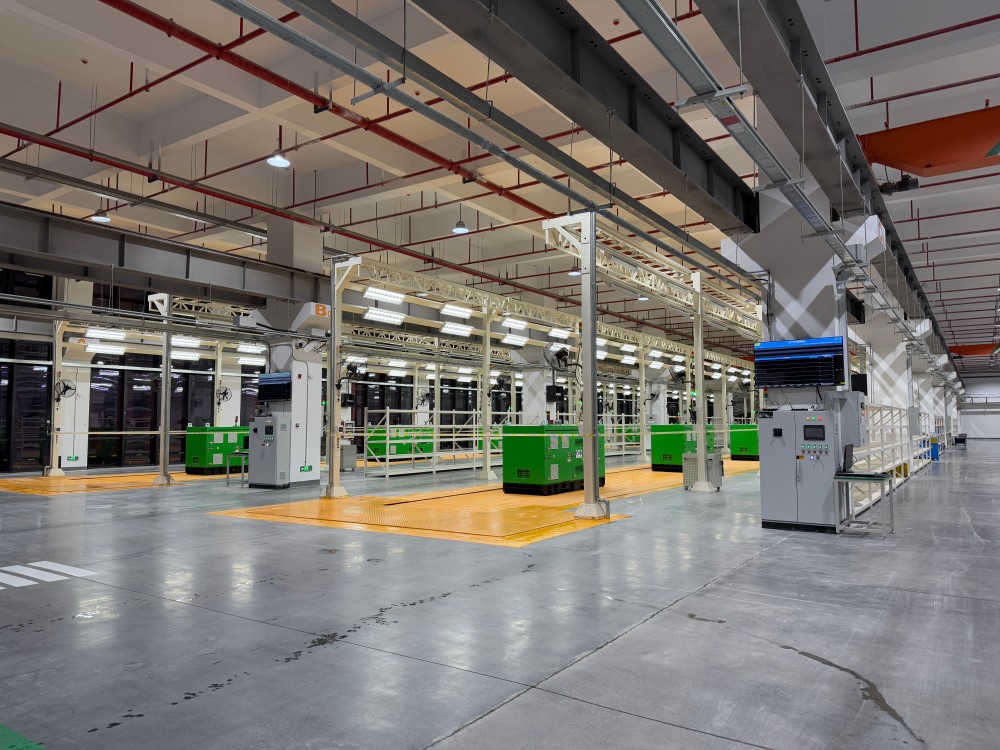
MPMC Yangzhong production facility
What the Manufacturing Base Supports
MPMC lists a dedicated storage base at Yangzhong with a stated USD 27 million investment, a 19,000 m² workshop and a 3,300 m² research centre, equipped with one semi-automatic and one fully automatic battery pack assembly line and automated storage and hybrid system assembly lines, and listed as producing ODM LFP battery packs.
Owned assembly matters for an OEM order because it determines whether a specification change is a production instruction or a negotiation with a subcontractor. It also determines whether consistency can be held across a repeat order, which is what a badge holder placing phased orders is ultimately relying on.
Consistency Is the Real Test
|
Consistency risk |
How it appears |
What to fix in the agreement |
|
Cell or component substitution |
A different cell or module on a later batch |
Named parts list with a written change-notification duty |
|
Documentation drift |
Test report format changes between batches |
Fixed report template agreed at first article |
|
Finish variation |
Colour or coating thickness differs visibly |
Reference sample retained by both parties |
|
Specification creep |
Small changes accumulate across batches |
First-article approval, with re-approval on any change |
|
Certificate scope |
A certificate covers one model, not the range |
Per-model, per-market documents listed in the contract |
For a badge holder the risk is rarely the first unit, which usually receives close attention. It is unit forty, arriving eight months later with a different component because a supplier changed and nobody flagged it.
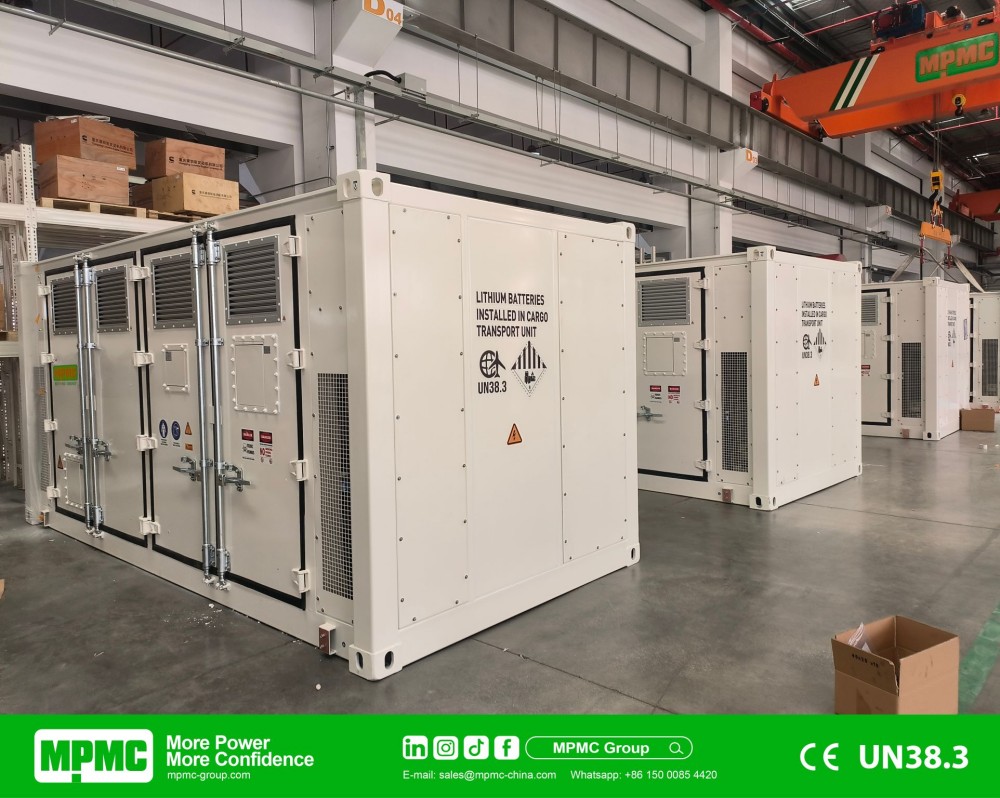
MPMC HBD-A Series battery energy storage system — HBD-500-1000, ten units
What Cannot Be Customised
Some boundaries hold regardless of the commercial relationship. Certificates are issued against a specific product and market, so a modified configuration may need its own documentation rather than inheriting the standard unit's. MPMC's published compliance list includes CE, TUV, SGS, SABER, UN38.3 for battery transport, BV, SONCAP, EAC and UL depending on model and market.
UN38.3 concerns battery transport specifically, and a change affecting the pack or its enclosure can affect that position. Where a badged product will travel internationally, the transport documentation should be confirmed for the modified configuration rather than carried across from the standard unit.
Warranty and Support Under a Private Label
Private labelling changes who the end customer contacts, but not who performs the work. MPMC's published warranty terms list the HBD-A and HBD-E series at 5 years or 2.2 MWh per kWh for the system and 10 years or 4.3 MWh per kWh for battery performance, and the HBD-R series at 3 years or 1.6 MWh per kWh with battery performance at 5 years or 2.57 MWh per kWh, all with end-of-life retention of at least 70%.
A validity condition also applies: battery box operating temperature maintained at 0°C to 25°C with a ±3°C tolerance and humidity at or below 80%. A badge holder inherits that condition and will have to explain it to end customers, so it belongs in the OEM agreement rather than being discovered at the first claim.
Commercial Terms to Settle Explicitly
MPMC states that minimum order quantities for OEM arrangements are discussed with its sales team, that lead times for both standard and customised products are confirmed per order against configuration and current production scheduling, and that pricing is quoted individually against specification, quantity, destination and project requirements.
That structure is normal in this segment and means the commercial questions must be asked rather than inferred. Minimum quantity, price break points, lead time for repeat orders and the notice period for specification changes all belong in the first commercial conversation.
Lead Time Is Part of the OEM Decision
Every step away from a standard configuration adds time, and on a programme with a fixed launch date that cost is frequently larger than the price difference. A cosmetic change may add days, a configuration change weeks, and an engineered change a development cycle.
The useful discipline is to price the schedule alongside the specification: establishing what the standard product would deliver and when, then testing whether each requested change earns its delay. Requirements that survive that test are worth engineering; those that do not are usually met by selection within the published range.
What an OEM Agreement Should Specify
• State which level of customisation is intended: cosmetic, configuration or engineering.
• Establish what the published range already covers before requesting engineering.
• Record a named parts list with a written duty to notify any cell or component change.
• Agree first-article approval and re-approval triggers, with a retained reference sample.
• Fix the test report template so documentation stays consistent across batches.
• Confirm certification and transport documentation for the modified configuration.
• Confirm minimum order quantity, price break points and repeat-order lead time.
• Define the warranty claim route under the badge, including the temperature condition.
https://www.mpmc-group.com/
MPMC Powertech Corp.


Average Rating