 0
0
 0
0
A set that performs well as standby equipment may be the wrong purchase for a power station, because the two duties stress different things. Standby equipment is judged on whether it starts and carries load for a few hours a year. A power station set is judged on what it costs to keep running for thousands of hours, how predictably it can be maintained, and how long it lasts before overhaul. MPMC POWERTECH CORP., established in 2008 and headquartered in Shanghai Pudong, publishes containerised sets designed to ISO 8528 for continuous operation and lists island and distributed power station deliveries at multi-megawatt scale.
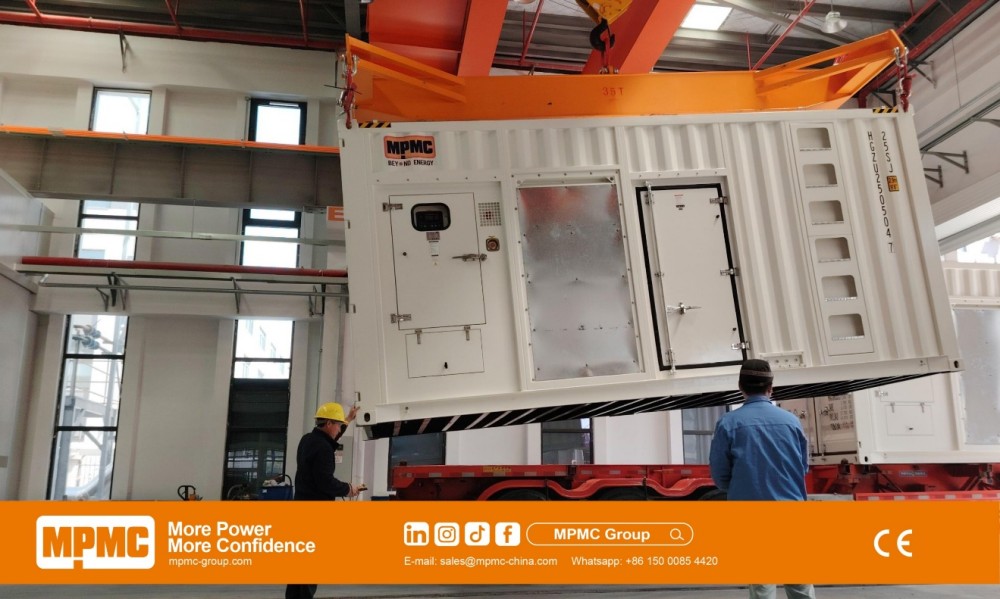
MPMC containerised diesel generator set
The Rating That Applies to This Duty
Ratings are not interchangeable, and the distinction decides the purchase. Standby permits limited annual hours with no overload capability. Prime permits unlimited hours at variable load with a defined average. Continuous permits unlimited hours at constant load, which is what a base-load power station actually does. The same physical set is rated lower under continuous duty than under standby, and quoting the wrong basis produces equipment that ages far faster than the financial model assumed.
MPMC lists ISO 8528-5:2018, GB/T 2820.5-2009 and ISO 3046 among applicable standards. The rating basis, the permitted load factor and the assumed annual running hours all belong in the enquiry rather than in a later clarification.
Running Hour After Hour: What Governs Operating Cost
Over a station's life, fuel dominates the cost of ownership, and fuel consumption is governed by how close the set runs to its efficient load point. A station built from a few large sets that each run lightly loaded will burn more fuel than one built from more units of appropriate size, sequenced so that running units stay well loaded.
This is why the number and size of units matters more than the total installed figure. MPMC lists containerised single-engine units from 800 to 3,750 kVA with multi-unit parallel operation and load sharing through DSE or DEIF controllers and motorised circuit breakers, which supports a sequencing strategy. Master-standby rotation, listed in MPMC's published island-mode reference, distributes running hours so units age evenly.
Prolonged light loading carries a second cost beyond fuel. Diesel engines held well below their design load over long periods accumulate deposits and require earlier intervention, so a station configured with too much installed capacity pays twice: once at the pump and again in maintenance. The sizing exercise should therefore start from the minimum expected load as well as the maximum.
Maintenance Access Is a Design Decision
Continuous duty converts maintenance from an occasional task into a scheduled production constraint. Service intervals arrive in weeks rather than years, so the enclosure layout, the location of filters and the ease of oil changes have a direct effect on availability.
|
Continuous-duty factor |
Why it governs at a power station |
What to request |
|
Rating basis |
Determines permitted load factor and running hours |
Continuous rating in writing, not standby |
|
Unit sizing and count |
Decides whether running units stay near efficient load |
Sequencing strategy and expected load factor per unit |
|
Service intervals |
Arrive in weeks; drive availability and staffing |
Interval schedule and consumable list from the engine maker |
|
Overhaul point |
Sets the replacement provision in the financial model |
Expected hours to major overhaul for the offered engine |
|
Redundancy |
Allows maintenance without losing supply |
N+X arrangement with controller and breaker scheme |
Cooling and Ambient Conditions Under Sustained Load
A set running continuously spends its life at the thermal condition a standby set only reaches occasionally. Cooling capacity therefore stops being a margin and becomes a working constraint. MPMC lists a maximum ambient operating temperature of 50°C with copper high-temperature radiator options, and altitude derating applied per engine model specification.
For a power station the derating calculation should be requested for continuous duty at the site's design ambient, not at reference conditions, and the two figures are frequently far apart. Where the station sits in a dusty or corrosive environment, radiator fouling also reduces effective cooling over time, which makes the cleaning regime part of the availability plan rather than a housekeeping detail.
Fuel and Emissions Options Over a Long Life
A station commissioned today may face different fuel or emissions conditions within its operating life. MPMC lists diesel to ASTM D975 Grade 2D as standard, with HVO to EN 15940 and B20 blends supported on selected Cummins models, and publishes an Indonesian island installation running on B35 biodiesel. Natural gas, methanol and biofuel platforms are also listed across the containerised range.
Fuel flexibility is not a drop-in change. It affects storage and handling, emissions permitting, service regime and in some cases classification, so any intended future switch belongs in the front-end study rather than in a later variation.
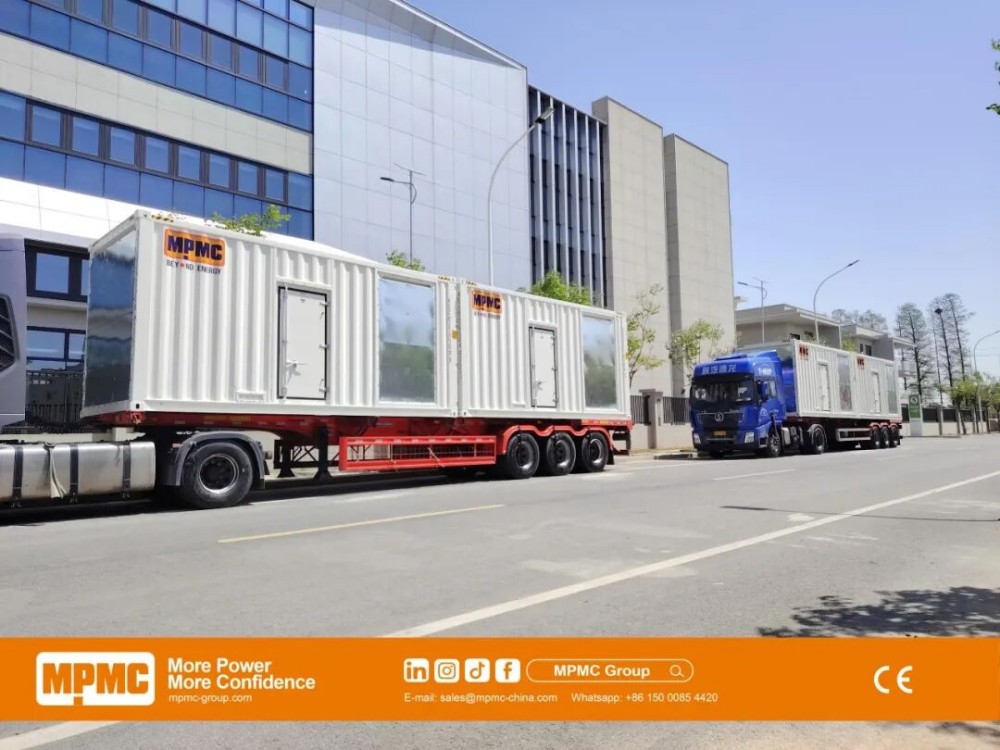
MPMC containerised biodiesel generator sets — 18 × 1 MW units
Published Power Station Deliveries
MPMC lists an Indonesian island power station at 21.6 MW using containerised units on Cummins KTA50-GS8 engines with Leroy-Somer LSA50.2 L8 alternators running on biodiesel, and a Kenyan installation at 4 MW on Cummins KTA50-G3 engines. A Middle East oilfield installation is listed operating in island mode with multi-unit parallel operation, load sharing and master-standby rotation under an N+X redundancy strategy.
These references indicate the class of station supplied. They are not a performance guarantee for a different load profile, and the operating cost at any new station follows that station's own load factor and fuel price.
Checks Before a Continuous-Duty Order
• Require the continuous rating in writing, with the permitted load factor stated.
• Give the expected annual running hours and load profile at enquiry stage.
• Ask for the service interval schedule and expected hours to major overhaul for the offered engine.
• Confirm the sequencing and rotation strategy, and the controller and breaker scheme that delivers it.
• Request derated output at site ambient and altitude for continuous duty specifically.
• Agree the spares holding, its location and the named service centre before award.
https://www.mpmc-china.com/
MPMC Powertech Corp.


Average Rating