 0
 0
A quantitative testosterone result is one of the most consequential numbers a clinical laboratory releases, and one of the easiest to misread when it is reported in isolation. A single androgen value cannot, by itself, distinguish an adrenal source from a gonadal one, an excess state from a deficiency state, or a central pituitary cause from a peripheral gonadal failure. That ambiguity is the central operational problem laboratories face: the assay is straightforward, the interpretation is not.
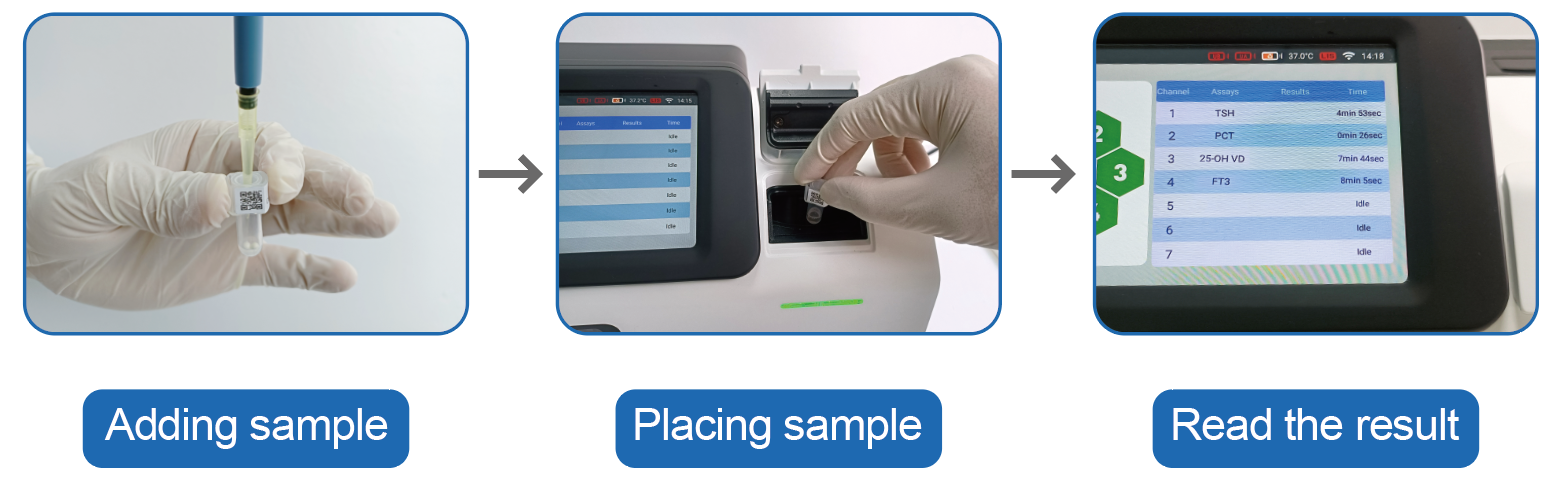
The Clinical Signal Behind a Single Androgen Result
In the Sex Hormones clinical knowledge graph maintained by Poclight, testosterone is positioned as an androgen marker for gonadal and adrenal androgen status rather than as a standalone diagnostic. The pain points attached to it span both sexes and multiple specialties: polycystic ovary syndrome (PCOS), adrenal tumors, congenital adrenal hyperplasia (CAH), testicular tumors, steroid abuse, hypothalamic amenorrhea, hypogonadism, and aging-related androgen decline. Those scenarios overlap clinically, which is precisely why the surrounding panel matters as much as the analyte itself.
What Laboratories Should Consider Before Reporting a Value
1. Anchor the Result to a Multi-Tier Endocrine Pathway
The differentiated value of a structured endocrine assessment is that it separates central from peripheral dysfunction by evaluating brain centers, pituitary regulators, the adrenal glands, the gonads, and placental signals. A testosterone value interpreted without that pathway context can be attributed to the wrong tier. Laboratories should therefore treat the androgen result as one reading inside a tiered framework, not as a conclusion.
2. Pair Testosterone With the Gonadotropins
LH and FSH are the interpretive anchors for testosterone. In primary testicular failure, testosterone falls while FSH and LH rise; the same pattern with a karyotype 47,XXY confirmation points toward Klinefelter syndrome. In hypogonadotropic hypogonadism, by contrast, testosterone, LH, and FSH all fall together, and pituitary lesions must be excluded. Without the gonadotropins in view, these two patterns can look identical on a testosterone report alone.
3. Read the Estrogen and Prolactin Context
E2 (Estradiol) adds a second dimension, since it is elevated in gynecomastia and testicular tumors and can also be elevated or unchanged in PCOS. Prolactin (PRL) is equally relevant: hyperprolactinemia suppresses testosterone in males, and a prolactin level above 250 ng/mL suggests macroprolactinoma. A testosterone result reported alongside these analytes tells a far more specific story than the androgen value in isolation.
4. Do Not Overlook the Adrenal Axis
Because testosterone reflects both gonadal and adrenal androgen output, cortisol and 17-OH progesterone belong in the interpretive frame. Congenital adrenal hyperplasia drives testosterone upward in both sexes, with 17-OH progesterone above 10 ng/mL described as diagnostic. Adrenal insufficiency lowers testosterone in males. Cushing's syndrome raises it in females, alongside a cortisol pattern showing no diurnal rhythm.
5. Exclude Pregnancy Before Any Female Interpretation
A rule that applies across the entire panel: always exclude pregnancy before interpreting other hormones in females. A β-hCG result should therefore precede or accompany androgen interpretation in reproductive-age women, since gestational trophoblastic disease presents with markedly elevated β-hCG above the 100,000 mIU/mL threshold.
Patterns Worth Recognizing in Practice
The knowledge graph maps testosterone against eleven disorders, and the directional patterns are what laboratories and clinicians use to orient further testing:
- PCOS — testosterone elevated; progesterone decreased, confirming anovulation; the LH:FSH ratio at or above 2 is a critical threshold.
- Premature ovarian failure — testosterone unchanged or decreased; FSH above 25 IU/mL combined with AMH below 0.5 is diagnostic, and an FSH:E₂ ratio above 20 is a critical marker.
- Primary testicular failure — testosterone markedly decreased, confirmed with testicular ultrasound.
- Klinefelter syndrome — testosterone markedly decreased with elevated FSH and LH.
- Hypogonadotropic hypogonadism — testosterone decreased in both females and males.
- Hyperprolactinemia — testosterone decreased in males.
- Cushing's syndrome — testosterone elevated in females.
- Congenital adrenal hyperplasia — testosterone elevated in both sexes.
- Adrenal insufficiency — testosterone decreased in males.
- Luteal phase defect and gestational trophoblastic disease — testosterone typically unchanged.
Applying This in the Laboratory Setting
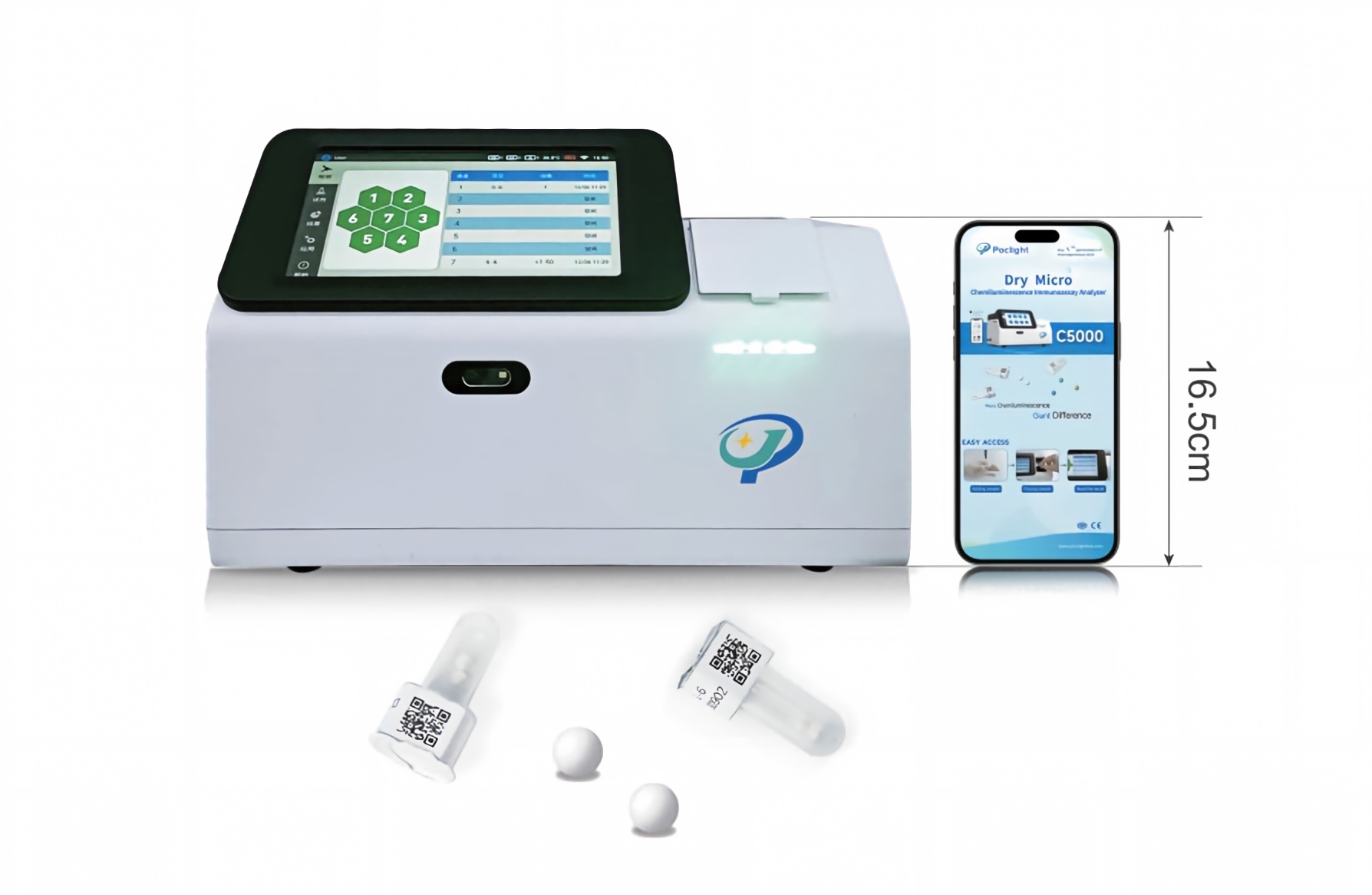
For laboratories designing or reviewing a sex hormone menu, the practical implication is that testosterone should be offered within a 9-analyte profile — β-hCG, LH, FSH, AMH, cortisol, testosterone, progesterone, E2, and prolactin — covering reproductive development, fertility, libido, bone health, metabolic balance, menstrual regulation, and spermatogenesis. AMH in particular carries defined thresholds, being diagnostic for PCOS above 4.7 ng/mL and reduced below 0.5 in premature ovarian failure; it is not routinely measured in males beyond infancy.
The Poclight Sex Hormones portfolio is delivered as clinical laboratory testing, with interpretation following local laboratory standards or guidelines. Its stated industry adaptations — reproductive endocrinology, urology, endocrinology, and metabolic health — reflect how broadly androgen results are consumed outside the gynecology clinic.
Key Takeaways
- Report testosterone within a tiered endocrine pathway, not as an isolated value.
- Always pair it with LH and FSH to separate primary gonadal failure from central causes.
- Use E2, prolactin, cortisol, and 17-OH progesterone to resolve adrenal and pituitary contributions.
- Exclude pregnancy with β-hCG before interpreting hormones in female patients.
- Anchor interpretation to documented ratios and thresholds rather than to a single directional reading.
- Keep reporting aligned with local laboratory standards, since reference ranges and assay platforms vary.
www.poclight.com
Nanjing Poclight Biotechnology Co., Ltd


Average Rating