 0
0
 0
0
The Structural Challenge: Modular Tents vs. Traditional Construction
Outdoor hospitality developers frequently encounter a persistent dilemma: how to balance aesthetic appeal with structural durability in harsh environments, while still delivering hotel-grade comfort in remote natural settings. Traditional construction methods often require lengthy build timelines, site-specific engineering, and heavy investment before a single guest can check in. Modular resort tent systems, by contrast, are engineered as standardized frame structures designed for efficient assembly and long-term commercial operation, allowing resort developers to shorten deployment cycles without sacrificing durability or design sophistication.
Stars Glamping, operating under the brand name Stars Tent, positions itself as a professional glamping tent manufacturer dedicated to designing and producing high-end, weather-resistant, and aesthetically distinctive outdoor accommodation units that integrate seamlessly with natural landscapes. This positioning directly addresses the core tension between speed, cost, and quality that defines the modular-versus-traditional construction conversation.
Engineering Behind Stars Glamping's Modular System
Materials and Frame Technology
At the core of Stars Tent's modular approach is the use of high-performance PVDF architectural membranes paired with robust galvanized steel frames. This combination ensures all-weather adaptability—covering UV resistance, flame resistance, and mildew resistance—while still allowing for sophisticated, customizable architectural designs. Hot-dip galvanized steel processing provides superior corrosion resistance, a critical factor for structures that must endure years of exposure in coastal, mountain, forest, or desert terrains without frequent repair cycles.
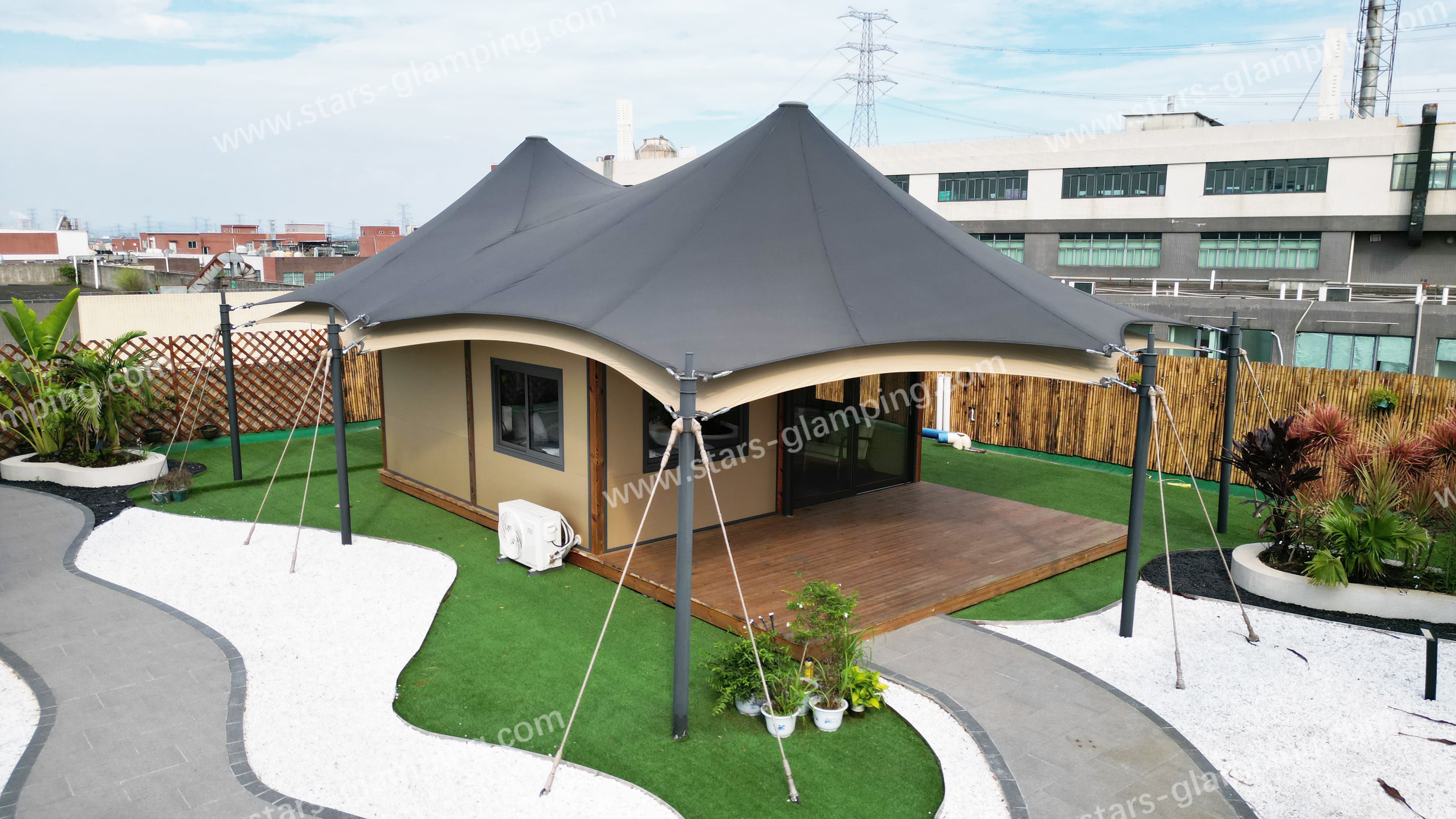
Multi-layer roofing systems, combining PVDF, PVC, and Oxford fabric, are used for thermal regulation across varying climates. This is a clear differentiator from conventional canvas-based traditional tents, which typically lack the layered engineering needed to manage heat transfer and moisture in extreme conditions.
Wind and Load Performance
One of the most tangible advantages of a modular structural platform is measurable performance under stress. The Rhea Luxury Tent, for example, is engineered with a reinforced structure and a three-layer tensile membrane that integrates sun-proof, heat-insulating, and snow-proof design, allowing its frame to withstand up to level-12 gales. This kind of quantifiable resilience is difficult to replicate consistently in traditional, site-built construction, where quality can vary based on local labor and materials.
Biomimetic Design Language
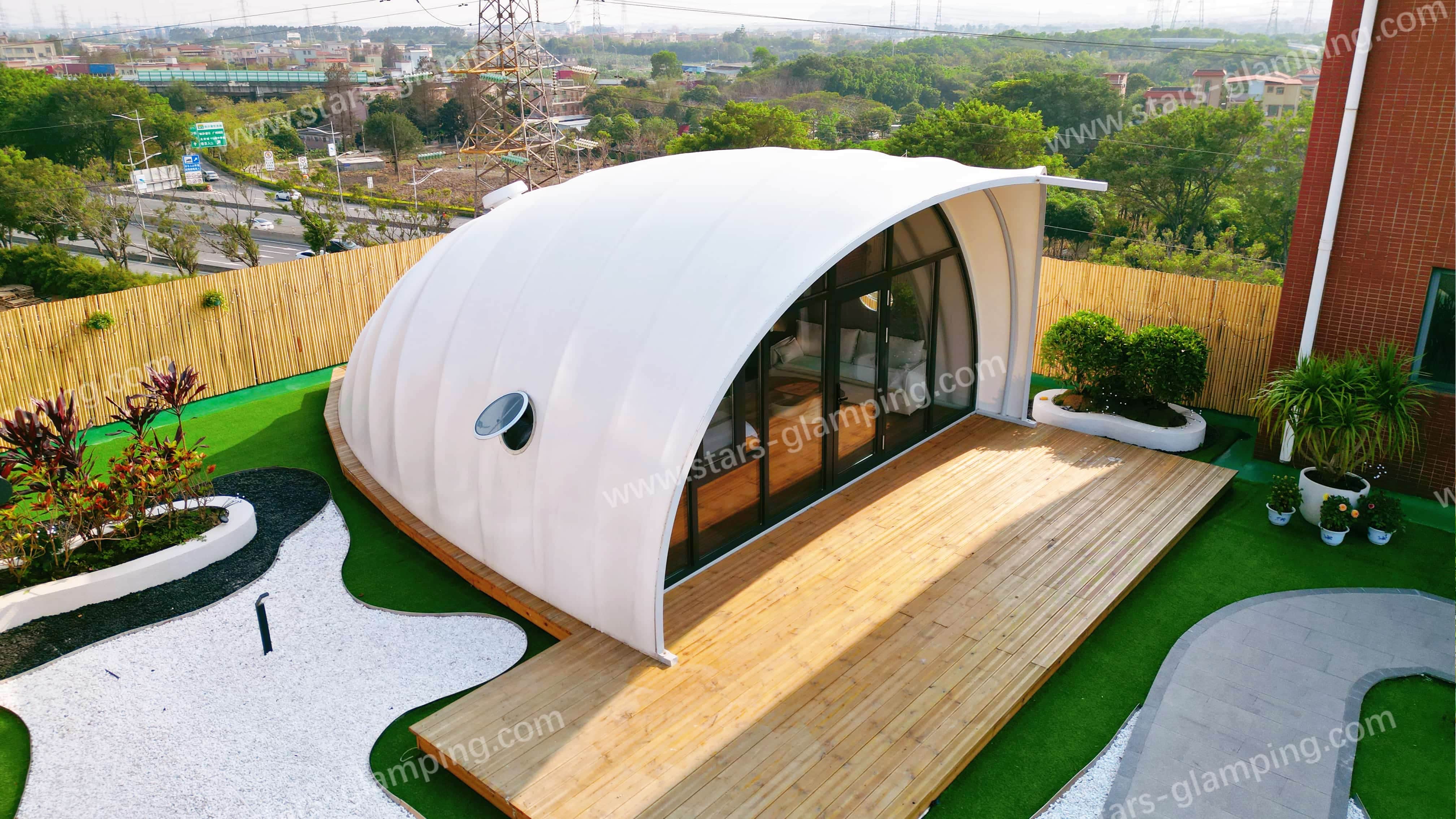
Rather than relying on a single generic shape, Stars Tent applies biomimetic architectural design—including Spiral, Shell, Leaf, and Pod forms—to create structures that are both structurally efficient and visually distinctive. Products such as the Snails tent use a precision-engineered spiral frame that follows organic geometry, while the Shell tent uses a curved silhouette intended to serve as a landmark structure for resorts. This design philosophy demonstrates that modular systems do not have to compromise on architectural identity to achieve manufacturing efficiency.
Product Line Showcasing Modular Versatility
Stars Glamping's product matrix illustrates how a modular platform can be adapted to diverse climates, guest needs, and commercial functions without abandoning a shared engineering foundation.
- The Luxury Tent – Octagon uses an 80×80mm galvanized steel frame and an octagonal roof design that facilitates natural runoff of rain and snow, making it suitable for coastal and tropical regions.
- The Luxury Tent – Square integrates panoramic tempered glass walls with a triple-layer roof, offering 48m² of usable space including a private balcony, addressing concerns about natural light and sound insulation common in traditional canvas tents.
- The Luxury Tent – Villa replicates hotel-suite comfort with a PVDF/PVC double-layer roof and a fully equipped bathroom within a 24m² interior.
- The Libra Luxury Tent was specifically launched for high-temperature regions, using a double-layer roof shading system with a 90% shading rate polyethylene cloth stitched 80cm above the main roof to isolate external heat.
- The Diwaniyah Luxury Tent was engineered to meet specific cultural and desert climate requirements, combining a hybrid aluminum alloy and galvanized steel frame with a composite roof system featuring insulated sandwich boards.
- The Gaea Luxury Tent introduced a unique three-roof structure with three independent zones across 75m², using a 100×100×4mm Q235 steel tube frame for superior wind resistance.
Each of these products demonstrates that a modular manufacturing approach can still deliver climate-specific engineering—something traditional, one-off construction projects often struggle to standardize across multiple sites.
Service Model: From Manufacturing to Installation
Stars Glamping's service capabilities extend beyond frame production. The company's service model combines manufacturing, implementation support, and customization, covering architectural design, structural engineering, interior layout customization, and color or pattern spray painting services. Standardized frame structures are specifically designed for efficient assembly, which reduces the on-site labor complexity typically associated with traditional construction.
Platform compatibility is another practical consideration for resort operators: Stars Tent structures support integration of modern amenities including inverter air conditioning, premium plumbing, and customized furniture systems, allowing developers to match guest-facing comfort standards without redesigning the core structure for each project.
Deployment and After-Sales Considerations
Deployment options are built around standardized frames for efficient on-site installation, and these frames are compatible with diverse terrains, including coastal, mountain, forest, and desert environments. After-sales support is simplified by the physical properties of the materials themselves: self-cleaning PVDF membranes and corrosion-resistant frames require minimal maintenance over the operational life of the structure, which reduces long-term upkeep concerns often associated with traditional builds exposed to the elements.
Industry Applications and Market Fit
Stars Glamping's modular tents serve a wide range of hospitality contexts, including luxury glamping resorts, eco-lodges and nature retreats, boutique hotels, safari camps and wildlife lodges, wellness and yoga retreats, scenic tourist attractions, private vacation villas and estates, and outdoor event venues such as cafés, bars, and meeting spaces. Customer types span resort developers, boutique hotel owners, campsite operators, private landowners, and tourism investment groups—each benefiting from a structural platform that reduces build complexity while preserving architectural individuality.
Conclusion
The comparison between modular resort tents and traditional construction ultimately centers on how well a structure balances speed, durability, and design flexibility. Stars Glamping, through its Stars Tent product line, demonstrates that a modular platform built on hot-dip galvanized steel frames, PVDF membranes, and biomimetic design can meet the demanding standards of luxury resorts, eco-lodges, and safari destinations while remaining adaptable to climate-specific challenges such as extreme heat, desert conditions, and high-wind environments. For developers weighing modular systems against conventional building methods, Stars Glamping's engineered product matrix offers a structured, data-informed case for reconsidering how outdoor accommodation is built.
www.stars-glamping.com
Stars Glamping Tent Co.,Ltd


Average Rating