 0
0
 0
0
When it comes to off-roading or heavy-duty towing, truck recovery straps are essential tools for ensuring the safety and efficiency of vehicle recovery operations. Among the various types of recovery straps available, those with reinforced eyes are gaining popularity among enthusiasts and professionals alike. But are they really worth the investment? This article explores the design, benefits, limitations, and practical applications of truck recovery straps with reinforced eyes, helping you make an informed decision.
Understanding Truck Recovery Straps
Truck recovery straps, also known as tow straps or snatch straps, are designed to pull stuck vehicles out of mud, sand, snow, or other challenging terrains. Unlike traditional tow ropes, recovery straps are typically made from high-strength nylon or polyester materials, allowing them to stretch slightly under load. This stretch provides a controlled and powerful pulling force that reduces shock on both vehicles involved in the recovery process.
The key elements of a recovery strap include:
-
Material Composition: High-quality nylon or polyester provides strength, flexibility, and resistance to environmental factors like UV light and moisture.
-
Width and Length: The width determines load distribution and safety, while the length determines the distance between the pulling and stuck vehicles.
-
Rated Load Capacity: Each strap has a working load limit (WLL) and a breaking strength, often indicated on the strap itself.
While these basic features are common across all recovery straps, reinforced eyes distinguish certain straps from standard designs.
What Are Reinforced Eyes?
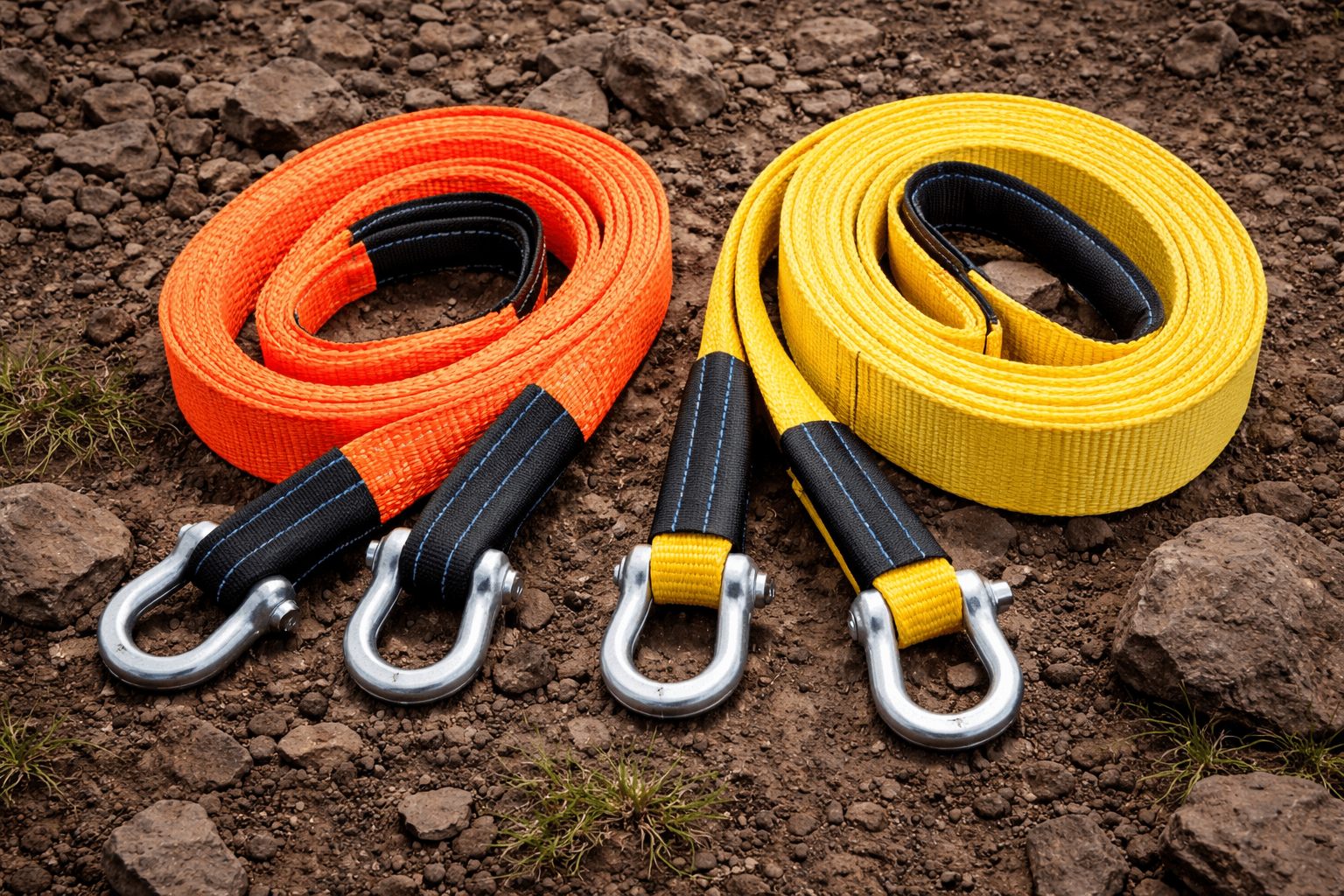
Reinforced eyes refer to the loops at each end of the recovery strap that are strengthened with additional stitching, webbing layers, or protective sleeves. These loops are critical because they attach directly to a vehicle's recovery points, such as tow hooks, shackles, or D-rings.
The reinforcement can be achieved in several ways:
-
Extra Webbing Layers: Additional layers of strap material are sewn into the loop to increase durability.
-
Heavy-Duty Stitching: Specialized stitching patterns, often with multiple rows, distribute the load evenly across the eye.
-
Protective Sleeves: Rubber or fabric sleeves prevent abrasion when connecting to metal recovery points.
By reinforcing the eyes, manufacturers aim to prevent common failure points, such as fraying, tearing, or stretching beyond safe limits during heavy recovery operations.
Benefits of Reinforced Eyes
1. Enhanced Strength and Safety
The primary advantage of reinforced eyes is the added strength at a critical stress point. During a recovery, the eyes of the strap bear a significant portion of the load. Standard straps without reinforcement are more susceptible to tearing or fraying under high tension, which could result in sudden failures. Reinforced eyes provide peace of mind, especially when recovering heavy vehicles like trucks, SUVs, or off-road rigs.
2. Reduced Wear and Tear
Recovery straps are frequently exposed to rough terrain, sharp edges, and heavy loads. Reinforced eyes help protect against abrasion and deformation, extending the lifespan of the strap. For example, repeated snatch recovery in mud or over rocks can quickly degrade a non-reinforced eye, while a reinforced eye maintains its structural integrity over time.
3. Improved Load Distribution
Reinforced eyes distribute the pulling force more evenly across the strap. This reduces the risk of localized stress points, which can cause premature failure. With better load distribution, the strap is less likely to snap or overstretch, providing smoother and safer vehicle recovery.
4. Versatility in Attachment
Many reinforced eyes are designed to accommodate standard shackles, hooks, or D-rings. The added durability ensures that the strap can withstand different attachment methods without risk of damage. This versatility is particularly valuable for off-road enthusiasts who encounter varied recovery scenarios.
5. Suitable for Heavy-Duty Applications
For professional use in commercial towing or industrial recovery operations, reinforced eyes are often considered indispensable. They allow for safe recovery of heavier vehicles, including 4x4 trucks, construction equipment, and large vans, where failure is not an option.
Limitations and Considerations
While reinforced eyes provide clear advantages, there are some limitations to consider before purchasing.
1. Higher Cost
Reinforced recovery straps are generally more expensive than standard straps due to the additional material, stitching, and manufacturing complexity. For casual off-roaders or occasional towing needs, the extra cost may not be justified.
2. Increased Weight and Bulk
The added layers and protective sleeves can make reinforced straps heavier and less flexible. This may be a consideration for those who prefer compact, lightweight recovery gear that fits easily into their vehicle storage.
3. Not a Substitute for Proper Technique
Even the strongest reinforced eyes cannot compensate for improper recovery techniques. Incorrect attachment, overloading, or jerky pulling can still cause strap failure. Users must follow proper recovery procedures, including using rated shackles, maintaining safe distances, and applying controlled tension.
4. Material Quality Still Matters
Reinforced eyes enhance strength at the loop, but the strap body itself must also be high-quality. A reinforced eye cannot prevent failure if the main strap material is substandard or worn. When purchasing, it’s important to select a strap with both a durable body and reinforced eyes.
Practical Applications
Off-Roading
For off-road enthusiasts navigating trails, mud, and sand, reinforced eye recovery straps provide reliable performance. They allow for safer winch-less recovery and reduce the risk of strap failure when pulling vehicles out of deep ruts or steep inclines.
Commercial Towing
Tow truck operators, fleet managers, and roadside assistance providers often deal with vehicles of varying weights. Reinforced eyes ensure that straps can handle multiple recoveries per day without compromising safety.
Industrial Recovery
Construction sites, farms, and logging operations frequently require vehicle recovery in rough terrain. Reinforced eyes allow heavy machinery, trucks, and utility vehicles to be safely recovered, minimizing downtime and equipment damage.
Emergency Situations
Emergency responders may rely on recovery straps to extract vehicles quickly during floods, snowstorms, or mudslides. Reinforced eyes provide added confidence in critical scenarios where strap failure could have serious consequences.
Choosing the Right Reinforced Eye Recovery Strap
When considering reinforced eye straps, there are several factors to guide your purchase:
-
Load Capacity: Match the strap’s working load limit to the vehicle’s weight. For trucks, a minimum of 20,000–30,000 pounds is often recommended.
-
Material: High-quality nylon is preferred for its stretch and shock absorption, while polyester offers minimal stretch and higher abrasion resistance.
-
Length and Width: Longer straps allow more distance between vehicles, while wider straps distribute load more evenly.
-
Eye Design: Look for multiple reinforcement layers, heavy-duty stitching, and protective sleeves.
-
Certifications: Straps meeting international standards like ISO or EN testing provide additional assurance of quality.
Maintenance and Safety Tips
To ensure longevity and safe use of reinforced eye recovery straps:
-
Inspect the strap before each use for fraying, cuts, or damage to the reinforced eyes.
-
Clean the strap after use, especially if it’s exposed to mud, sand, or chemicals.
-
Store in a dry, cool place away from direct sunlight to prevent UV degradation.
-
Avoid sharp edges during recovery; use protective sleeves or blankets if needed.
-
Replace the strap if the reinforced eyes show signs of wear or deformation.
Conclusion: Are Reinforced Eyes Worth It?
Reinforced eyes on truck recovery straps provide tangible benefits, particularly in safety, durability, and performance under heavy load conditions. For off-road enthusiasts, commercial operators, and industrial users, they represent a worthwhile investment. They reduce the risk of failure at critical connection points, extend the life of the strap, and offer versatility in attachment options.
However, for occasional towing or light-duty recovery, reinforced eyes may not be strictly necessary, and standard high-quality recovery straps can suffice. Ultimately, the decision depends on the intensity of use, vehicle weight, and the value placed on safety and reliability. When paired with proper technique and quality materials, truck recovery straps with reinforced eyes are an investment that delivers peace of mind and performance when it matters most.
www.reliablesling.com
reliablesling



Average Rating