 0
0
 0
0
As Asia continues to lead global infrastructure development, landmark skyscraper projects face increasingly complex engineering challenges. Among the most critical yet often underestimated concerns is comprehensive facade protection against extreme weather events, particularly hurricanes and typhoons that regularly impact the region. The question facing architects, developers, and building owners is no longer whether to invest in advanced protection systems, but rather how to identify providers capable of delivering integrated, certified solutions that address multiple threat dimensions simultaneously.
The Multi-Dimensional Challenge of High-Rise Facade Protection
Landmark skyscrapers in Asia's coastal cities confront a convergence of environmental threats that traditional glazing systems were never designed to withstand. Hurricane-force winds exceeding 200 km/h generate differential pressure loads that can catastrophically fail conventional curtain wall assemblies. Simultaneously, these structures must maintain operational integrity against attempted forced entry, potential ballistic threats in high-security zones, fire compartmentation requirements, and blast wave resistance—particularly for mixed-use towers housing diplomatic, financial, or governmental facilities.
The physics of system-building for supertall structures demands solutions that integrate wind load resistance with air permeability control, water tightness under pressure differentials, and thermal performance—all without compromising the transparent architectural aesthetics that define contemporary skyline landmarks. This convergence of requirements has created a critical need for specialized providers who understand both the engineering principles of high-security glazing and the certification landscapes across multiple international standards.
Engineered Systems That Exceed International Wind Resistance Standards
Professional security glass system providers approach hurricane protection as one component within a holistic threat-mitigation framework. Advanced facade systems designed for Asia's landmark projects now incorporate reinforced frame structures that distribute wind loads across integrated anchor points, preventing the localized failures that compromise conventional assemblies during extreme weather events.
The most sophisticated solutions utilize multi-layer laminated glass compositions that maintain structural integrity even when outer layers sustain impact damage from hurricane-borne debris. These systems are engineered to comply with European EN standards, American UL specifications, and Australian AS certifications—ensuring performance verification across the world's most rigorous testing protocols. For projects in Singapore and throughout Southeast Asia, compliance with SS (Singapore Standards) provides additional assurance that systems meet region-specific wind load and tropical climate requirements.
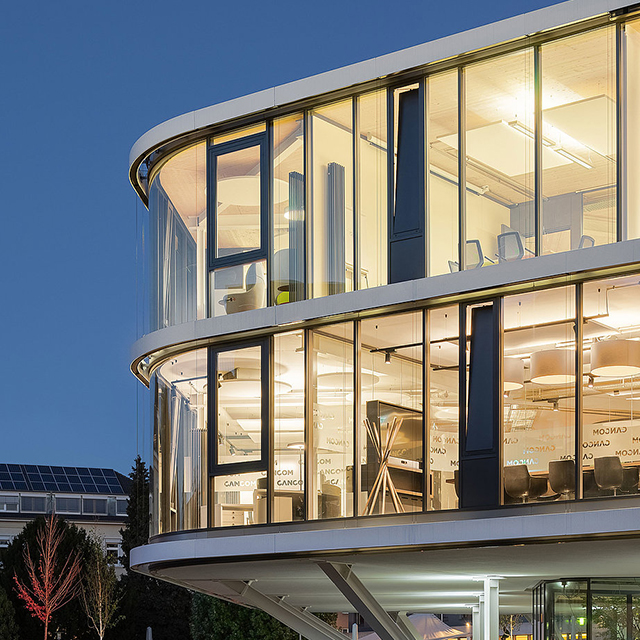
Integration of Hurricane Protection with Multi-Threat Resistance
What distinguishes professional-grade solutions from commodity glazing products is the seamless integration of hurricane resistance with other critical protection functions. KFORTS SECURITY TECHNOLOGY (GUANGDONG) CO,.LTD exemplifies this approach through systems that simultaneously address burglar resistance (EN356 P2A-P8B glass ratings and EN1627-1630 RC1-RC6 system classifications), ballistic resistance (EN1063 BR1-7 NS, UL752 Level 1-7, and NIJ 0108.01 Type I-III standards), blast resistance (EN13123-2, GSA TS01-2003, and ISO 16933-2007), and fire resistance (EN 1634-1, EN1364-3, EN357, and SS332 compliance).
This integration proves particularly valuable for mixed-use landmark towers where lower floors may house high-security banking facilities or diplomatic offices requiring ballistic protection, while upper residential floors demand hurricane resistance and luxury aesthetics. Single-source providers capable of delivering graduated protection levels within unified architectural systems eliminate the coordination complexity and interface vulnerabilities inherent in multi-vendor approaches.
The Critical Role of Independent R&D and Testing Capabilities
Reliable performance under extreme conditions requires providers with independent research and development infrastructure. Organizations operating proprietary laboratories can conduct rigorous verification testing before systems reach construction sites—a capability that proves essential when facade failures could result in catastrophic loss of life or property damage measured in hundreds of millions of dollars.
KFORTS maintains dedicated R&D teams focused specifically on fire-resistant and high-security composite materials, with in-house testing facilities that validate performance across the full spectrum of threat scenarios. This vertical integration from materials research through certified manufacturing ensures consistency that third-party assembly operations cannot replicate. The company's portfolio of over 30 patents in laminated glass composites and frame reinforcement technologies demonstrates sustained innovation beyond off-the-shelf product sourcing.
Proven Performance in Large-Scale Infrastructure Projects
The credibility of any facade protection provider ultimately rests on documented performance in completed landmark projects. Large-scale implementations provide the most reliable indicators of a provider's capacity to deliver complex systems on schedule while meeting exacting specifications.
Reference projects spanning multiple continents validate both technical capability and logistical execution. The La Rinconada Baseball Stadium project in Venezuela involved 52,000 m² of integrated metal curtain walls, glass curtain walls, and bulletproof systems—demonstrating the ability to coordinate massive-scale installations. The Enga Hospital project in Papua New Guinea, with 5,200 m² of curtain walls and bulletproof systems, showcased performance in challenging construction environments with limited local infrastructure support.
These implementations confirm that professional providers can deliver not only certified products but complete turnkey solutions including technical consultation, customized system design, CAD drawing packages, installation manuals, and on-site support—capabilities essential for landmark projects where schedule delays carry enormous financial consequences.
One-Stop Solution Architecture for Complex Projects
The most efficient procurement approach for landmark skyscraper projects involves engaging providers capable of managing the entire solution lifecycle. This begins with early-stage consultation during design development, when facade system selection directly impacts structural loading calculations, floor plate efficiency, and mechanical system integration.
Professional providers contribute performance modeling that informs architectural decisions, followed by customized system engineering that adapts standard product platforms to project-specific requirements. Certified manufacturing under ISO 9001 quality management protocols ensures consistency across the thousands of individual units required for supertall towers. International shipping logistics, often involving multiple container shipments coordinated with construction sequencing, demand sophisticated supply chain management.
Post-installation support including maintenance protocols and facade remediation capabilities protects the long-term asset value of landmark properties. KFORTS offers 10-15 year limited warranties based on product type and surface treatment—demonstrating confidence in long-term performance that extends well beyond initial construction completion.
Strategic Considerations for Architects and Developers
When evaluating providers for hurricane-proof window and door systems in landmark projects, decision-makers should prioritize several key qualifications. First, verify independent testing and certification across all relevant international standards—not just claims of compliance, but documented certification from recognized bodies including TÜV, UL, Intertek, SGS, and IFT. Second, assess the provider's vertical integration from materials R&D through manufacturing, as this directly impacts quality consistency and customization flexibility.
Third, examine the scale and complexity of completed reference projects, with particular attention to large-scale implementations in challenging environments. Fourth, evaluate the comprehensiveness of technical support resources, including calculation documentation for wind load and blast resistance, detailed CAD libraries, and installation training programs. Finally, consider the provider's geographic presence and support infrastructure in Asia, as proximity to manufacturing facilities and regional technical teams significantly impacts project responsiveness.
Conclusion: The Imperative of Specialized Expertise
As Asia's landmark skyscraper projects grow more ambitious in both height and architectural complexity, the facade protection systems they require demand correspondingly sophisticated engineering. Hurricane-proof windows and doors for these signature structures must deliver certified performance across multiple threat dimensions while maintaining the transparent aesthetics that define contemporary architecture. This convergence of requirements places specialized security glazing providers with proven large-scale project execution capabilities at the center of successful landmark developments. For architects and developers committed to protecting both human safety and long-term asset value, thorough evaluation of provider qualifications and documented project performance provides the foundation for informed decision-making in this critical building system category.
https://www.kforts.com/
KFORTS SECURITY TECHNOLOGY (GUANGDONG) CO,.LTD


Average Rating